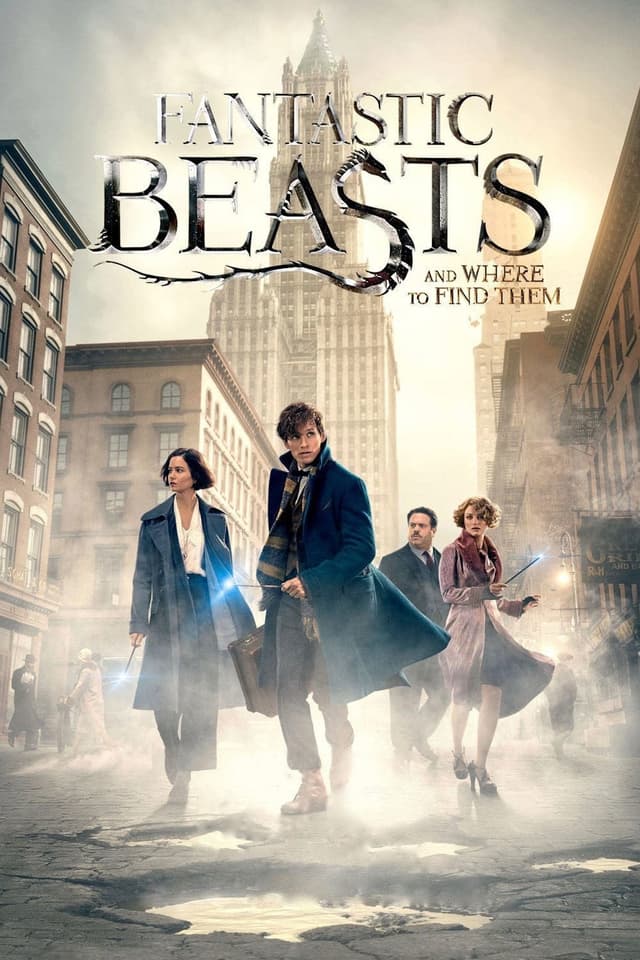
Fantastic Beasts and Where to Find Them Budget
 FantasyAdventure2h 13m
Updated
Synopsis
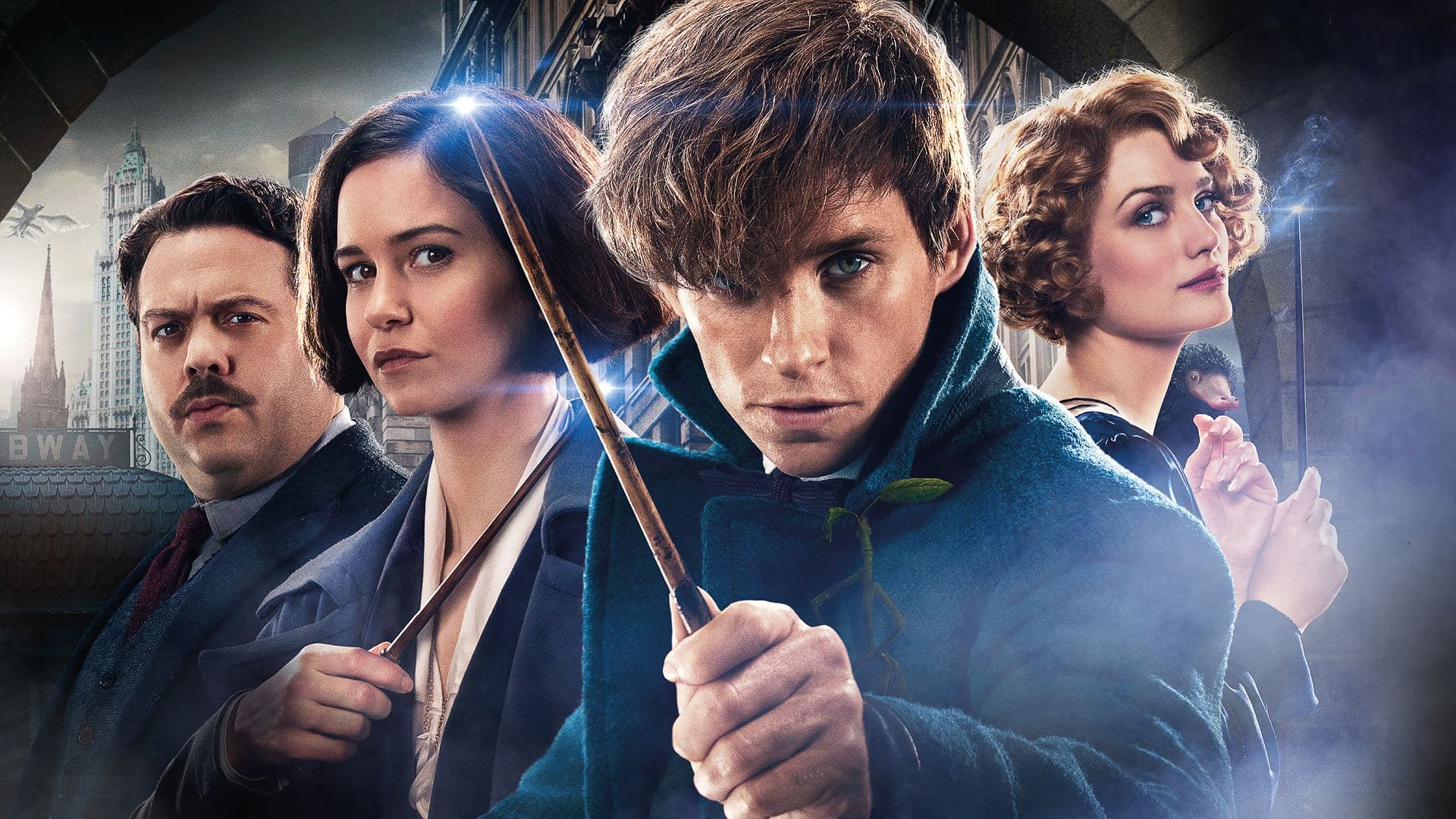
In 1926 New York, British magizoologist Newt Scamander arrives with a battered suitcase full of magical creatures, only to have several escape into the city just as the secret American wizarding community faces a mounting threat from a dark force known as the Obscurus. As Newt, demoted MACUSA auror Tina Goldstein, her mind-reading sister Queenie, and No-Maj baker Jacob Kowalski race to recapture the beasts, they collide with auror Percival Graves and the tormented orphan Credence Barebone in a confrontation that will reshape the wizarding world.
What Is the Budget of Fantastic Beasts and Where to Find Them (2016)?
Fantastic Beasts and Where to Find Them (2016), directed by David Yates and distributed by Warner Bros. Pictures, was produced on a reported budget of $180,000,000, with some industry estimates placing the figure between $175,000,000 and $200,000,000 once expanded creature design, second-unit photography, and the long pre-production needed to launch a new five-film series are factored in. The film was the opening installment of the Fantastic Beasts series, a spinoff and prequel to the eight Harry Potter films, and the first screenplay credit for author J.K. Rowling, who adapted her own 2001 Hogwarts textbook companion into a feature narrative set in 1926 New York.
The investment reflected Warner Bros. building a new tentpole architecture on the back of the Harry Potter franchise. Compared with the $250,000,000 spent on the final Potter chapter, the studio pulled back modestly while still committing enough capital for an Oscar-winning lead, full reconstruction of 1920s New York on the backlot at Warner Bros. Studios Leavesden, and a dense creature roster that ranged from the palm-sized Bowtruckle to the soaring Thunderbird. The math assumed Fantastic Beasts would clear roughly $500,000,000 worldwide to break even after marketing, a target the film comfortably exceeded on its way to $814,037,575.
Key Budget Allocation Categories
Fantastic Beasts' reported $180,000,000 budget was distributed across several core production areas:
- Above-the-Line Talent: Director David Yates, returning to the wizarding world after helming the final four Harry Potter films, commanded a top-tier feature-director rate. Oscar winner Eddie Redmayne, fresh off his Best Actor win for The Theory of Everything (2014), led the cast as magizoologist Newt Scamander, with Katherine Waterston, Dan Fogler, Alison Sudol, Colin Farrell, Ezra Miller, and Jon Voight filling out an ensemble priced for franchise launch. J.K. Rowling, as screenwriter and producer, received fees and back-end participation befitting her status as the property's architect.
- Period Production Design: Production designer Stuart Craig, a three-time Oscar winner who designed every Harry Potter film, oversaw a near-total reconstruction of 1926 Manhattan. Builds included a multi-block New York street set at Leavesden featuring the Steen National Bank exterior, the Goldstein sisters' boarding-house interior, the MACUSA headquarters lobby modeled on a vast Art Deco atrium, and Newt's enchanted suitcase environments. Period accuracy demanded archival research, custom signage, and street dressing down to candy wrappers and newsprint.
- Visual Effects: Roughly 1,300 visual-effects shots were divided among Framestore, Rodeo FX, ILM, Double Negative, Image Engine, and others. The creature roster (Niffler, Bowtruckle, Erumpent, Occamy, Thunderbird, Demiguise, and the destructive Obscurus cloud at the film's climax) demanded bespoke rigs, fur and feather simulation, and seamless plate integration. Framestore alone handled the Niffler and Bowtruckle, two of the year's most-discussed digital characters.
- Costume Design: Colleen Atwood, a three-time Oscar winner before Fantastic Beasts, designed roughly 1,000 costumes across the principal cast, MACUSA aurors, the New Salem Philanthropic Society, and Jazz Age New York extras. Newt's mustard peacoat, Tina's blue trench, and Queenie's pink swing coat each became merchandising anchors. Atwood's department went on to win the Academy Award for Best Costume Design, the franchise's first competitive Oscar win.
- Music and Score: Composer James Newton Howard scored his first wizarding-world entry, replacing John Williams's iconic Potter palette with a new thematic identity built around Newt's leitmotif and a recurring jazz-inflected New York motif. The score required full orchestra recording at Abbey Road and AIR Studios, plus licensing of period-appropriate jazz cues used in the Blind Pig speakeasy sequence.
- UK Studio Shoot and Tax Relief: Principal photography ran 79 days at Warner Bros. Studios Leavesden in Hertfordshire, with location work in Liverpool and London. Warner Bros. routed the production through the UK Film Tax Relief, which provides a payable cash rebate of up to 25 percent on qualifying UK expenditure for films passing the Cultural Test. For a production of this scale, the rebate offset tens of millions of dollars in below-the-line cost and was the primary reason a film set entirely in 1920s New York was shot in Hertfordshire rather than Atlanta or Brooklyn.
- Marketing and Franchise Launch: Warner Bros. spent an estimated $150,000,000 on global prints and advertising, opening the film in 64 markets on the same weekend. The campaign positioned the film as both a Potter-adjacent comfort watch and a self-contained adventure for new audiences, with merchandising deals covering Lego, Funko, Hot Topic, and Universal Studios theme-park integration at the Diagon Alley expansion.
How Does Fantastic Beasts and Where to Find Them's Budget Compare to Similar Films?
At $180,000,000, Fantastic Beasts sits at the lower end of David Yates wizarding-world tentpoles and modern franchise launches. The comparison set illustrates how its commercial outcome stacked up against its budgetary peers:
- Harry Potter and the Deathly Hallows Part 1 (2010): Budget $250,000,000 | Worldwide $976,949,544. The penultimate Potter film cost 39 percent more than Fantastic Beasts and earned roughly 20 percent more worldwide, a comparison that flatters the spinoff's efficiency relative to a property already saturated in a known fanbase.
- Harry Potter and the Half-Blood Prince (2009): Budget $250,000,000 | Worldwide $934,416,487. Yates's third Potter outing was another $250M production that grossed roughly $120,000,000 more than Fantastic Beasts, showing that the original-series brand still commanded a premium over the new spinoff at the same director's hand.
- Fantastic Beasts: The Crimes of Grindelwald (2018): Budget $200,000,000 | Worldwide $653,355,901. The direct sequel cost $20,000,000 more and earned $160,000,000 less, a steep franchise erosion that turned the planned five-film arc into a structural problem rather than a guaranteed run.
- Doctor Strange (2016): Budget $165,000,000 | Worldwide $677,718,395. The Marvel solo debut released two weeks before Fantastic Beasts cost less and earned less, putting the wizarding-world spinoff at the top of the late-2016 fantasy-franchise launch league.
- The Legend of Tarzan (2016): Budget $180,000,000 | Worldwide $356,743,061. Yates's other 2016 tentpole, made at the same budget, earned less than half of Fantastic Beasts and helped underwrite Warner Bros.' confidence in greenlighting the Beasts sequels in the first place.
- The Jungle Book (2016): Budget $175,000,000 | Worldwide $966,550,600. Disney's photoreal remake cost slightly less and earned roughly 19 percent more, the closest 2016 peer to Fantastic Beasts in both budget and worldwide haul.
Fantastic Beasts and Where to Find Them Box Office Performance
Fantastic Beasts and Where to Find Them opened on November 18, 2016, in 64 markets simultaneously, earning $74,403,387 over its domestic opening weekend and approximately $219,900,000 globally. The opening landed below the $125,000,000 domestic bow of Harry Potter and the Deathly Hallows Part 2 (2011) but well ahead of typical non-Potter wizarding launches, establishing the spinoff as a viable franchise architecture from its first weekend.
Against a reported production budget of $180,000,000, the film needed approximately $500,000,000 in worldwide gross to reach profitability when accounting for marketing and distribution costs. Here is the financial breakdown:
Box Office Breakdown
Fantastic Beasts and Where to Find Them

Fantastic Beasts returned approximately $2.47 in theatrical revenue for every $1 invested when measured against total estimated production and marketing spend, a comfortable financial win that locked in the four-sequel commitment Warner Bros. and J.K. Rowling had announced before release. The domestic share of the gross was $234,037,575 against an international share of $580,000,000, a 29/71 split heavily weighted toward overseas markets and a clear signal that the Potter-adjacent brand still traveled strongly across Europe, Latin America, and Asia.
The result greenlit the sequel slate at the existing budget tier. Warner Bros. moved Fantastic Beasts: The Crimes of Grindelwald (2018) into production almost immediately on a $200,000,000 budget, with the planned third, fourth, and fifth installments all expected to operate in the same range. The subsequent decline of the sequels relative to this opener became one of the franchise stories of the late 2010s.
Fantastic Beasts and Where to Find Them Production History
Development on Fantastic Beasts began in September 2013, when Warner Bros. announced that J.K. Rowling would adapt her 2001 Hogwarts textbook Fantastic Beasts and Where to Find Them, originally published as a Comic Relief charity title under the pseudonym Newt Scamander, into a feature screenplay. The project marked Rowling's first credited screenplay and was conceived from the outset as the launchpad for a multi-film series. David Heyman, who had produced every Harry Potter film, returned alongside Steve Kloves (writer of seven of the eight Potter films) and Lionel Wigram as producers.
David Yates, who directed the final four Harry Potter films (Order of the Phoenix, Half-Blood Prince, Deathly Hallows Part 1, and Deathly Hallows Part 2), signed on as director in March 2014, giving the spinoff visual and tonal continuity with the back half of the original octalogy. Eddie Redmayne was cast as Newt Scamander in June 2015, joined by Katherine Waterston (Tina Goldstein), Dan Fogler (Jacob Kowalski), Alison Sudol (Queenie Goldstein), Ezra Miller (Credence Barebone), Colin Farrell (Percival Graves), Carmen Ejogo (Seraphina Picquery), Samantha Morton (Mary Lou Barebone), and Jon Voight (Henry Shaw Sr.).
Principal photography ran from August 17, 2015 to January 22, 2016 at Warner Bros. Studios Leavesden in Hertfordshire, United Kingdom, with the production routed through the UK Film Tax Relief to capture a payable cash rebate of up to 25 percent on qualifying UK expenditure. Stuart Craig and his art-department team reconstructed 1926 New York on the Leavesden backlot across multiple blocks, building the Steen National Bank, the Goldsteins' boarding-house street, the MACUSA atrium, and Newt's enchanted suitcase environments as standing sets. Additional location work covered Liverpool, where St. George's Hall doubled for an interior of the Magical Congress, and the Lime Street and Cunard buildings stood in for 1920s New York streetscapes.
Post-production ran roughly nine months. James Newton Howard composed the score, replacing John Williams's Potter motifs with a new musical identity for the spinoff series. Roughly 1,300 visual-effects shots were delivered by Framestore (Niffler, Bowtruckle), Rodeo FX (Thunderbird, Manhattan rooftops), Industrial Light & Magic (Obscurus, climactic subway sequence), Double Negative, and Image Engine. Editor Mark Day, another Yates collaborator from the Potter run, cut the film. The 133-minute final feature premiered at Alice Tully Hall in New York on November 10, 2016, ahead of its November 18 wide release.
Awards and Recognition
Fantastic Beasts and Where to Find Them won the Academy Award for Best Costume Design for Colleen Atwood at the 89th Academy Awards in February 2017, the wizarding-world franchise's first competitive Oscar victory across all ten films released to that point. The film was also nominated for Best Production Design (Stuart Craig and Anna Pinnock), which it lost to La La Land.
At the 70th British Academy Film Awards (BAFTAs), the film won Best Production Design for Stuart Craig and Anna Pinnock, defeating Hail, Caesar!, La La Land, Doctor Strange, and Nocturnal Animals. It was additionally nominated for Best Special Visual Effects at the same ceremony.
Other recognition included nominations from the Critics' Choice Awards (Best Costume Design, Best Visual Effects, Best Production Design, Best Hair and Makeup), the Saturn Awards (multiple categories including Best Fantasy Film), the Art Directors Guild, the Costume Designers Guild, the Visual Effects Society, and the Empire Awards, where Eddie Redmayne won Best Actor and the film won Best Costume Design. The Oscar win for Costume Design became the highlight of the franchise's eventual ten-film awards trajectory.
Critical Reception
Fantastic Beasts and Where to Find Them received generally positive reviews. The film holds a 74 percent approval rating on Rotten Tomatoes based on 347 critic reviews, with a critical consensus that called it a charming if uneven return to the wizarding world. On Metacritic, the film scored 66 out of 100, indicating generally favorable reviews. Audiences surveyed by CinemaScore graded it A, a clear endorsement that helped drive strong word-of-mouth holds through the Thanksgiving and December corridors.
Critics broadly praised Eddie Redmayne's gentle, quietly eccentric performance as Newt Scamander, the period production design, and the creature work, but were divided on the screenplay's competing storylines and Rowling's decision to weave a darker Obscurus-and-Grindelwald subplot through what marketing had positioned as a lighter creature-collecting adventure. The Guardian's Peter Bradshaw called Redmayne "endearingly diffident" while flagging the film's structural overload, and Variety's Owen Gleiberman described it as "an enchanting, busy, often endearing trifle that gets a bit weighed down by its world-building."
Genre-press reaction was warmer. Empire and IGN praised the creature design, with Empire awarding four stars and calling the Niffler "an instant icon." The New York Times' A.O. Scott described the film as "less a movie than a holiday window display," a back-handed observation that nevertheless acknowledged its visual richness. Audience response was strong enough across opening and second weekends to validate the four-sequel slate Warner Bros. had committed to before release, even as critical enthusiasm cooled across subsequent installments.
Frequently Asked Questions
How much did it cost to make Fantastic Beasts and Where to Find Them (2016)?
The reported production budget was $180,000,000, with some industry estimates running between $175,000,000 and $200,000,000 once expanded creature design, second-unit photography, and the long pre-production needed to launch a new five-film series are factored in. Warner Bros. Pictures financed the production through its Heyday Films label, with the project routed through the UK Film Tax Relief on the Warner Bros. Studios Leavesden shoot.
How much did Fantastic Beasts and Where to Find Them earn at the box office?
The film grossed $234,037,575 domestically and approximately $580,000,000 internationally, for a worldwide total of $814,037,575. It opened to $74,403,387 in the United States and approximately $219,900,000 worldwide across 64 markets on its November 18, 2016 opening weekend.
Was Fantastic Beasts a box office success?
Yes. Against a $180,000,000 production budget and an estimated $150,000,000 in marketing spend, the film returned approximately $2.47 in worldwide gross for every $1 invested. It is one of the most decisive commercial wins of the 2016 calendar year and is the reason Warner Bros. moved Fantastic Beasts: The Crimes of Grindelwald (2018) into production at a $200,000,000 budget almost immediately.
Who directed Fantastic Beasts and Where to Find Them?
David Yates directed the film, working from a screenplay by J.K. Rowling that adapted her own 2001 Hogwarts textbook companion. Yates had previously directed the final four Harry Potter films: Order of the Phoenix (2007), Half-Blood Prince (2009), Deathly Hallows Part 1 (2010), and Deathly Hallows Part 2 (2011).
Where was Fantastic Beasts filmed?
Principal photography ran from August 17, 2015 to January 22, 2016 at Warner Bros. Studios Leavesden in Hertfordshire, England. Although the film is set entirely in 1926 New York, the production reconstructed Manhattan on the Leavesden backlot. Additional location work covered Liverpool, where St. George's Hall doubled for a MACUSA interior and the Lime Street and Cunard buildings stood in for 1920s New York streetscapes.
How does Fantastic Beasts compare to the Harry Potter films?
Fantastic Beasts cost $180,000,000, less than the $250,000,000 spent on Harry Potter and the Deathly Hallows Part 1 (2010) or Half-Blood Prince (2009), and earned $814,037,575 worldwide, roughly 20 percent less than the $976,949,544 those penultimate Potter films grossed. It is the highest-grossing Fantastic Beasts entry by a wide margin and roughly mid-pack across the ten wizarding-world films released to date.
Who plays Newt Scamander in Fantastic Beasts?
Eddie Redmayne plays Newt Scamander, the magizoologist hero of the Fantastic Beasts series. Redmayne came to the project after winning the Academy Award for Best Actor for The Theory of Everything (2014). He reprised the role in Fantastic Beasts: The Crimes of Grindelwald (2018) and Fantastic Beasts: The Secrets of Dumbledore (2022).
What awards did Fantastic Beasts win?
The film won the Academy Award for Best Costume Design for Colleen Atwood at the 89th Academy Awards, the wizarding-world franchise's first competitive Oscar across all ten films released to that point. It also won the BAFTA Award for Best Production Design for Stuart Craig and Anna Pinnock, and additional Empire Awards for Best Actor (Eddie Redmayne) and Best Costume Design.
What did critics think of Fantastic Beasts and Where to Find Them?
The film received generally positive reviews, with a 74 percent approval rating on Rotten Tomatoes (based on 347 critics) and a 66 out of 100 score on Metacritic. Audiences gave it an A CinemaScore. Critics broadly praised Eddie Redmayne's gentle performance, the period production design, and the creature work, while flagging the screenplay's competing storylines and the decision to weave a darker Obscurus-and-Grindelwald subplot through what marketing had positioned as a lighter creature-collecting adventure.
How many Fantastic Beasts films were planned?
Warner Bros. and J.K. Rowling announced a five-film series before the first installment's November 2016 release. The first two sequels, Fantastic Beasts: The Crimes of Grindelwald (2018) and Fantastic Beasts: The Secrets of Dumbledore (2022), declined sharply at the box office relative to the opener, with the third entry grossing $407,000,000 worldwide against a $200,000,000 budget. The planned fourth and fifth installments have not entered production.
Filmmakers
Fantastic Beasts and Where to Find Them

Official Trailer
Build budgets like this one in Saturation
Start from an industry-standard feature film template, import the schedule and rates you already have, and let the cost report keep itself current as you spend. Real-time collaboration, no spreadsheets.