Harry Potter and the Deathly Hallows Part 1 Budget
 AdventureFantasy2h 26m
Updated
Synopsis
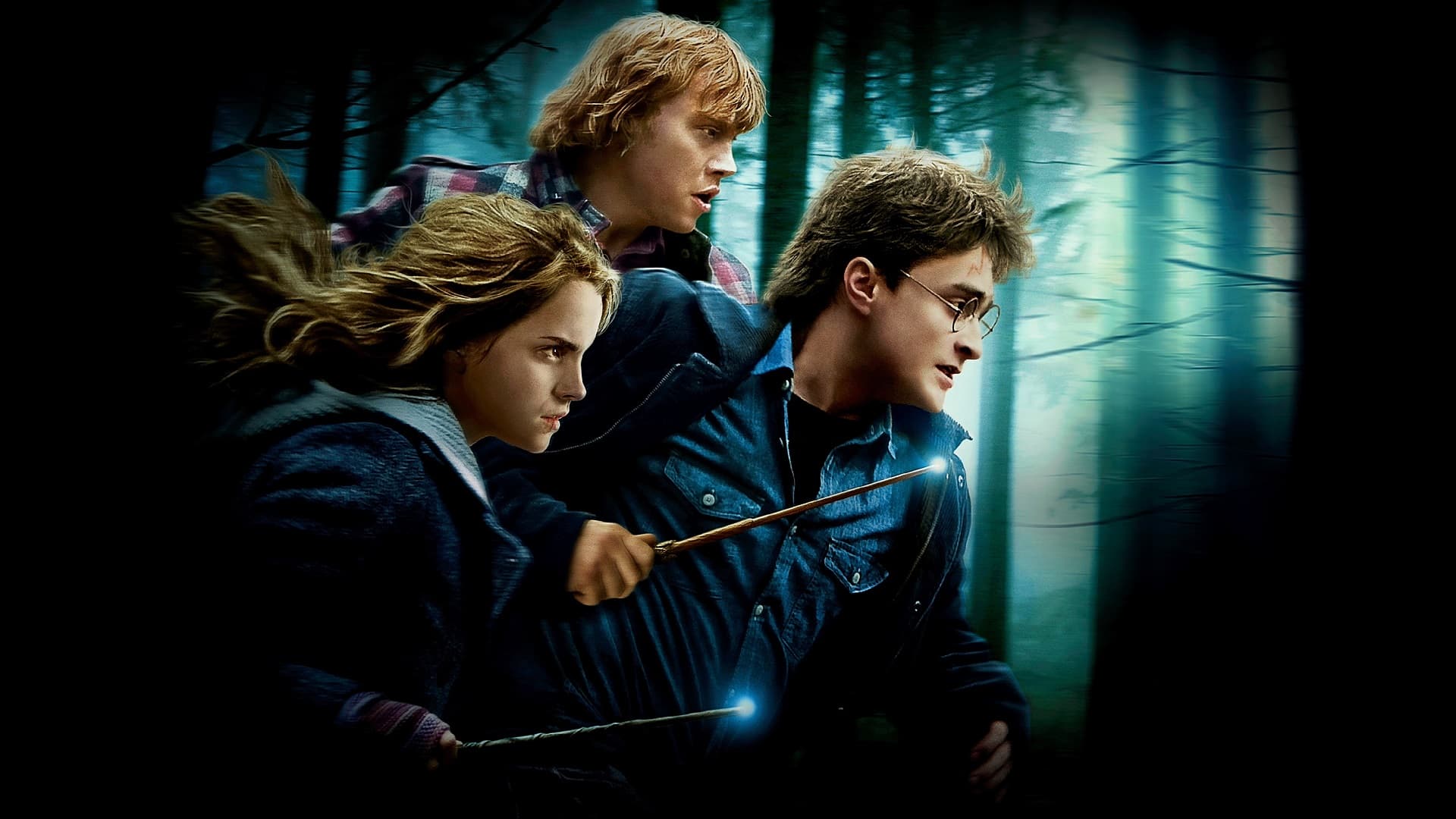
As Voldemort's power grows and the Ministry of Magic falls under Death Eater control, Harry Potter, Ron Weasley, and Hermione Granger abandon their final year at Hogwarts to find and destroy the remaining Horcruxes keeping the Dark Lord immortal. Hunted by Snatchers and betrayed by allies, the trio endures isolation, doubt, and loss as they uncover the legend of the Deathly Hallows, three legendary objects said to conquer death itself.
What Is the Budget of Harry Potter and the Deathly Hallows Part 1?
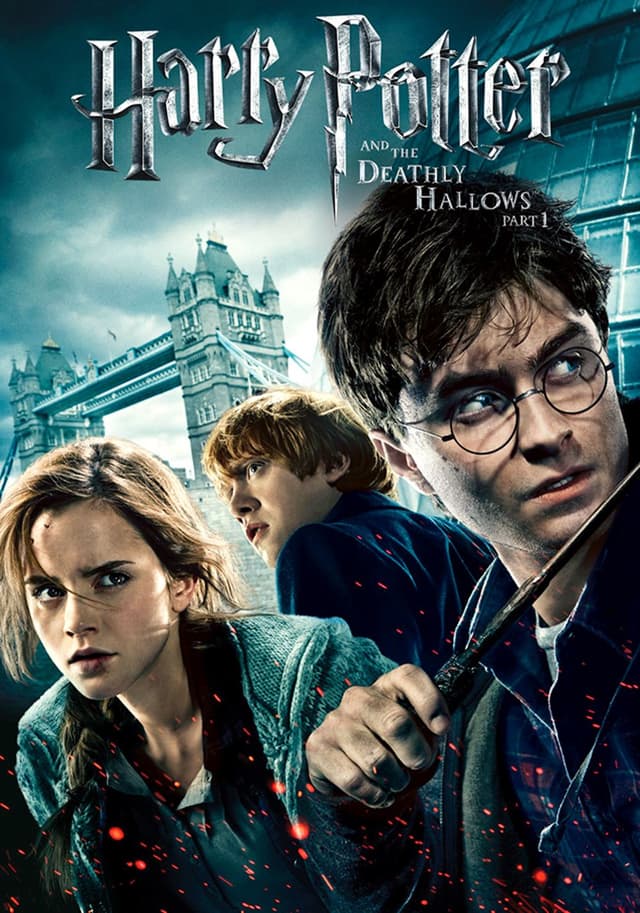
Harry Potter and the Deathly Hallows Part 1 (2010), directed by David Yates and distributed by Warner Bros. Pictures, was produced on a budget of $125,000,000. The seventh film in the Harry Potter franchise adapted the first half of J.K. Rowling's final novel, following Harry, Ron, and Hermione as they abandon Hogwarts to hunt Voldemort's Horcruxes. Warner Bros.' decision to split the final book into two films was a first for a major franchise and set a precedent that The Twilight Saga, The Hunger Games, and others would follow.
The $125 million budget represented a controlled spend for the franchise, lower than several earlier entries despite the film's ambitious scope. Costs were managed partly because the film relied less on large-scale set pieces and more on intimate, location-driven sequences as the trio travels through the English countryside while evading Death Eaters. Principal photography for both Part 1 and Part 2 was shot consecutively over approximately 14 months, allowing Warner Bros. to share certain overhead costs across both productions.
Key Budget Allocation Categories
Harry Potter and the Deathly Hallows Part 1 allocated its $125 million budget across the following production areas:
- Visual Effects: Double Negative, MPC, and Framestore handled the majority of VFX work, creating sequences including the Ministry of Magic infiltration (with Polyjuice-transformed characters), the animated Tale of the Three Brothers sequence (directed by Ben Hibon in a shadow-puppet style), the silver doe Patronus, and the destruction of the Horcrux locket. The animated sequence alone required months of specialized production separate from the live-action pipeline.
- Cast and Returning Ensemble: Daniel Radcliffe, Rupert Grint, and Emma Watson returned as the central trio, with their salaries reflecting a decade of franchise escalation. The supporting cast included Ralph Fiennes as Voldemort, Alan Rickman as Snape, Helena Bonham Carter as Bellatrix, Bill Nighy as Rufus Scrimgeour, and Rhys Ifans as Xenophilius Lovegood. The sheer size of the British ensemble cast, many on long-term contracts, represented a significant above-the-line expense.
- Production Design and Location Work: Production designer Stuart Craig, who designed every film in the series, built sets including Malfoy Manor, the Ministry of Magic, and Shell Cottage at Leavesden Studios. Unlike previous entries centered at Hogwarts, much of Deathly Hallows Part 1 takes place in forests, moorlands, and remote locations across England and Wales. The Forest of Dean, Freshwater West beach in Pembrokeshire, and Burnham Beeches provided key exteriors.
- Stunts and Action Sequences: The film features several major action sequences: the aerial Battle of the Seven Potters (with motorcycle chase and broomstick combat), the Snatchers chase through dense forest, and the Ministry of Magic break-in. Stunt coordinator Greg Powell coordinated practical wire work and motorcycle rigs for the Seven Potters sequence, which was later augmented with CG environments and digital doubles.
- Score and Sound Design: Alexandre Desplat composed the score, replacing Nicholas Hooper from the previous two films. Desplat brought a more textured, chamber-music sensibility to the franchise, with themes reflecting the isolation and vulnerability of the three leads. The score was recorded at Abbey Road Studios with the London Symphony Orchestra.
- Makeup and Prosthetics: Prosthetics and creature effects remained essential for characters including Dobby the house-elf (a blend of motion capture by Toby Jones and CG animation), the Polyjuice transformations, and the aged/disguised versions of the trio during the Ministry infiltration. Nick Dudman led the creature and makeup effects department across both parts.
How Does Harry Potter and the Deathly Hallows Part 1's Budget Compare to Similar Films?
At $125,000,000, Deathly Hallows Part 1 was one of the more economical entries in the franchise. Comparing it with other Potter films and fantasy franchise finales:
- Harry Potter and the Half-Blood Prince (2009): Budget $250,000,000 | Worldwide $934,000,000. The previous entry cost double but earned slightly less worldwide, partly due to a release-date shift from November to July 2009 and a more character-driven, less action-heavy narrative.
- Harry Potter and the Deathly Hallows Part 2 (2011): Budget $125,000,000 | Worldwide $1,342,000,000. The companion film matched the Part 1 budget but significantly outperformed it theatrically, benefiting from being the true series finale with the Battle of Hogwarts as its centerpiece.
- The Twilight Saga: Breaking Dawn Part 1 (2011): Budget $110,000,000 | Worldwide $712,200,000. The first franchise to copy the two-part finale model from Harry Potter, Breaking Dawn Part 1 spent less and earned less, confirming that the split-book strategy worked best with the strongest source material and the largest built-in audience.
- The Lord of the Rings: The Return of the King (2003): Budget $94,000,000 | Worldwide $1,146,000,000. Peter Jackson's fantasy finale cost 25% less (in 2003 dollars) and earned more, though the comparison is complicated by inflation and the different franchise structures.
- The Chronicles of Narnia: The Voyage of the Dawn Treader (2010): Budget $155,000,000 | Worldwide $415,700,000. Released the same year, this competing fantasy franchise spent more than Deathly Hallows Part 1 but earned less than half, illustrating the Potter franchise's dominant position in the genre.
Harry Potter and the Deathly Hallows Part 1 Box Office Performance
Harry Potter and the Deathly Hallows Part 1 opened in the United States on November 19, 2010, debuting to $125 million domestically in its opening weekend. The film was positioned as a pre-holiday tentpole, benefiting from school breaks and family audiences during the Thanksgiving corridor.
Box Office Breakdown
Harry Potter and the Deathly Hallows Part 1

At approximately +668%, Harry Potter and the Deathly Hallows Part 1 returned roughly $7.68 for every $1 of production budget invested during its theatrical run.
The first half of the two-part finale demonstrated that splitting a final installment could be commercially viable, setting a precedent that The Hunger Games and other franchises would later follow. The international gross of $664 million represented 69% of worldwide revenue, reflecting the Harry Potter franchise's consistently strong global appeal.
Harry Potter and the Deathly Hallows Part 1 Production History
Warner Bros. announced in March 2008 that Harry Potter and the Deathly Hallows would be split into two films, with David Yates returning to direct both parts. Yates had helmed Order of the Phoenix (2007) and Half-Blood Prince (2009), giving him more experience with the franchise than any other director. Steve Kloves, who had adapted every Potter novel except Order of the Phoenix, wrote the screenplays for both parts.
Principal photography began on February 19, 2009, and ran through June 12, 2010, with both Part 1 and Part 2 shot as a continuous production. Filming took place primarily at Leavesden Studios in Hertfordshire, which had served as the franchise's home base since the first film. Location shooting ranged across England and Wales: Freshwater West beach in Pembrokeshire served as the site of Shell Cottage, the Forest of Dean provided the backdrop for the camping sequences, and Dartford Crossing doubled for the elevated roadway in the Snatchers chase.
The decision to split the book created narrative challenges. Part 1 adapted approximately the first two-thirds of Rowling's novel, ending with Voldemort obtaining the Elder Wand from Dumbledore's tomb. This left the film without a traditional climactic battle, instead building tension through smaller, more personal confrontations. The approach divided critics but allowed the filmmakers to preserve key scenes, particularly Dobby's death at Malfoy Manor, that a single-film adaptation would have compressed.
Eduardo Serra replaced Bruno Delbonnel as cinematographer, bringing a naturalistic, desaturated aesthetic that emphasized the trio's isolation from the magical world. The forest camping sequences, shot over several weeks in practical locations, gave the film a road-movie quality distinct from the grand architectural settings of earlier entries. David Yates described the approach as stripping away the comforts of Hogwarts to leave the characters exposed.
Awards and Recognition
Harry Potter and the Deathly Hallows Part 1 received two Academy Award nominations: Best Visual Effects and Best Art Direction. The film lost both categories but the nominations acknowledged the consistently high craft standards maintained across the decade-long franchise.
The animated Tale of the Three Brothers sequence received particular critical attention, with its shadow-puppet aesthetic (directed by Ben Hibon) earning praise as one of the most inventive visual sequences in the entire series. The sequence was later cited by animation historians as an example of how animated interludes can enhance live-action storytelling.
At the BAFTA Awards, the film received nominations for Special Visual Effects and Production Design. Alexandre Desplat's score was nominated by the World Soundtrack Academy and received recognition from film music critics as a sophisticated departure from previous Potter scores.
Critical Reception
Harry Potter and the Deathly Hallows Part 1 earned a 77% approval rating on Rotten Tomatoes based on 289 reviews, with a consensus praising the mature tone and emotional depth while noting the slow pacing inherent in adapting only the first portion of the novel. On Metacritic, the film scored 65 out of 100, indicating "generally favorable reviews."
Critics who championed the film highlighted its willingness to abandon the familiar Hogwarts structure in favor of an intimate, character-driven narrative. The camping sequences, where Harry, Ron, and Hermione argue, struggle with the Horcrux locket's corrupting influence, and face the reality of their quest without adult guidance, were praised for bringing genuine emotional stakes to a franchise that had sometimes prioritized spectacle. The animated Tale of the Three Brothers and Dobby's death sequence were frequently cited as standout moments.
Detractors argued that the film suffered from its structural position as "half a story," with a slow middle section and an abrupt ending that denied audiences the cathartic resolution they expected. Some critics felt that Warner Bros.' commercial motivation for the split was transparent, stretching roughly 300 pages of source material across a 146-minute runtime. Despite these criticisms, the film's $960 million worldwide gross confirmed that audiences remained invested in the franchise through its penultimate chapter.
Frequently Asked Questions
How much did it cost to make Harry Potter and the Deathly Hallows Part 1?
The production budget was $125,000,000. Costs were managed by shooting both Part 1 and Part 2 consecutively over 14 months, sharing overhead across both productions. The film relied more on location shooting across England and Wales than on large-scale VFX set pieces.
How much did Harry Potter and the Deathly Hallows Part 1 earn at the box office?
The film grossed $296,000,000 domestically and $664,000,000 internationally, totaling $960,000,000 worldwide. It opened with $125 million domestically during the Thanksgiving corridor in November 2010.
Was splitting Deathly Hallows into two films financially successful?
Extremely. The combined worldwide gross of both parts exceeded $2.3 billion on a combined budget of approximately $250 million. Warner Bros.' strategy created a precedent that The Twilight Saga, The Hunger Games, and The Maze Runner franchises later copied.
Where was Harry Potter and the Deathly Hallows Part 1 filmed?
Principal photography took place at Leavesden Studios in Hertfordshire, England. Key locations included Freshwater West beach in Pembrokeshire (Shell Cottage), the Forest of Dean (camping sequences), Burnham Beeches, and Dartford Crossing. Filming ran from February 2009 through June 2010 for both parts.
Why does Deathly Hallows Part 1 feel different from earlier Harry Potter films?
The film abandons the familiar Hogwarts school-year structure in favor of a road-movie approach. Cinematographer Eduardo Serra used a desaturated, naturalistic style, and most scenes take place in forests, beaches, and remote locations rather than grand sets. Director David Yates described the approach as stripping away the comforts of Hogwarts.
Who composed the score for Deathly Hallows Part 1?
Alexandre Desplat composed the score, replacing Nicholas Hooper from the previous two films. Desplat brought a chamber-music sensibility emphasizing the trio's isolation, recorded at Abbey Road Studios with the London Symphony Orchestra. The score was nominated by the World Soundtrack Academy.
What is the animated sequence in Deathly Hallows Part 1?
The Tale of the Three Brothers, a wizarding fairy tale about the origins of the Deathly Hallows, was presented as an animated shadow-puppet sequence directed by Ben Hibon. The sequence took months of specialized production separate from the live-action pipeline and was praised as one of the most inventive visual moments in the entire franchise.
How does Deathly Hallows Part 1 compare to Part 2 at the box office?
Part 1 earned $960 million worldwide while Part 2 earned $1,342 million. Both cost approximately $125 million to produce. Part 2 outperformed because it contained the Battle of Hogwarts climax and the series' emotional conclusion, generating stronger repeat viewings.
What awards did Deathly Hallows Part 1 receive?
The film received two Academy Award nominations for Best Visual Effects and Best Art Direction. It also earned BAFTA nominations for Special Visual Effects and Production Design. The animated Tale of the Three Brothers sequence earned particular critical recognition for its innovative shadow-puppet aesthetic.
What is the Rotten Tomatoes score for Harry Potter and the Deathly Hallows Part 1?
The film holds a 77% approval rating on Rotten Tomatoes based on 289 reviews. Critics praised the mature tone and emotional depth but noted slow pacing from adapting only the first portion of the novel. On Metacritic it scored 65 out of 100.
Filmmakers
Harry Potter and the Deathly Hallows Part 1

Official Trailer
Build budgets like this one in Saturation
Start from an industry-standard feature film template, import the schedule and rates you already have, and let the cost report keep itself current as you spend. Real-time collaboration, no spreadsheets.