The Legend of Tarzan Budget
 Adventure
Updated
Synopsis
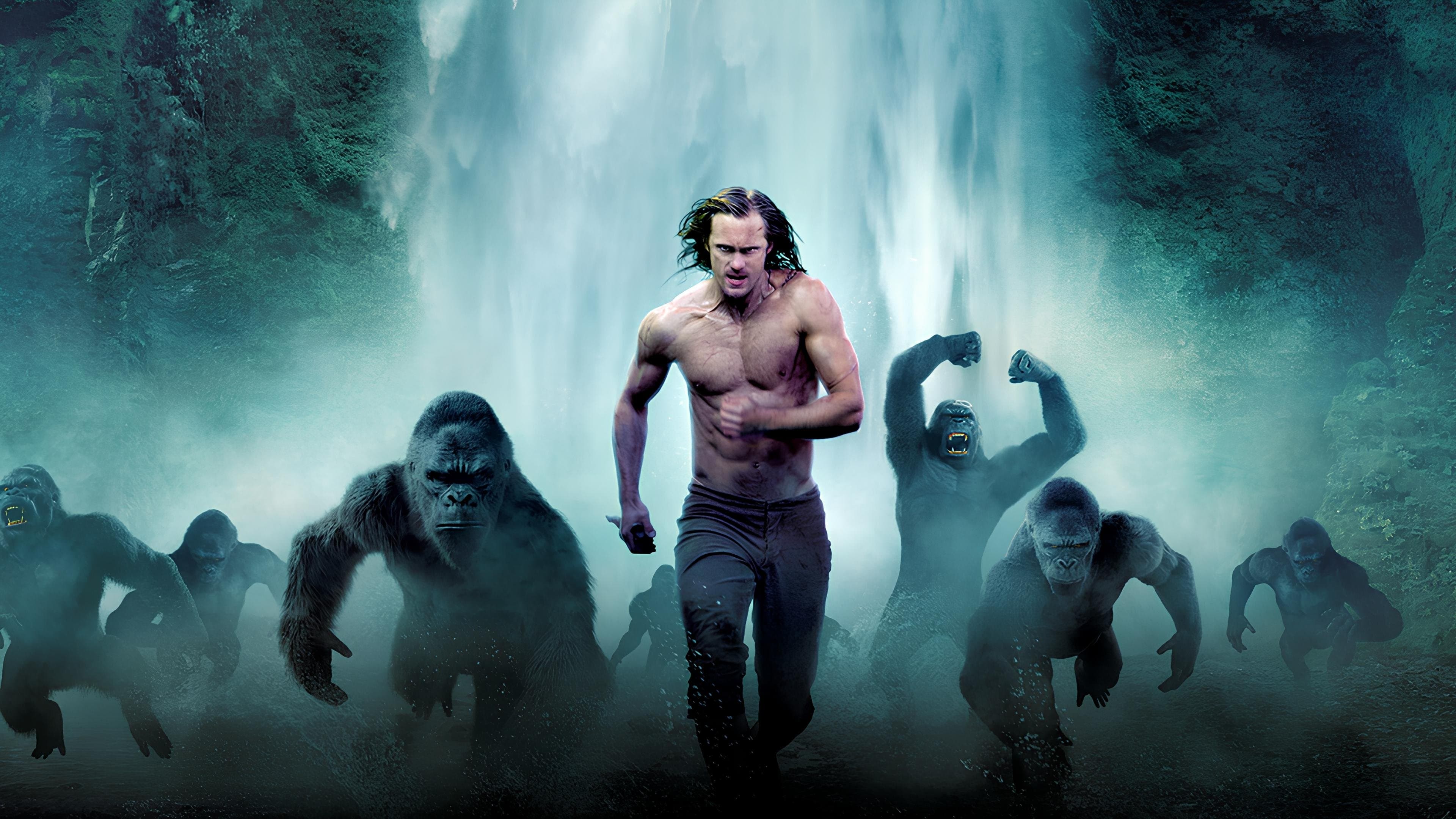
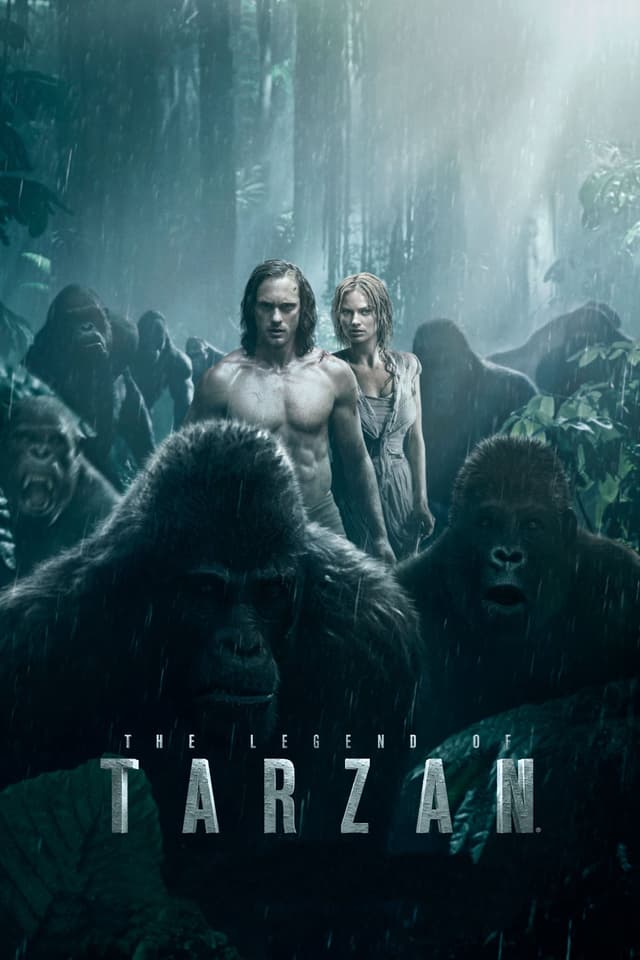
It has been years since the man once known as Tarzan left the jungles of Africa behind for a gentrified life as John Clayton III, Lord Greystoke, with his beloved wife, Jane at his side. Now, he has been invited back to the Congo to serve as a trade emissary of Parliament, unaware that he is a pawn in a deadly convergence of greed and revenge, masterminded by the Belgian, Captain Leon Rom. But those behind the murderous plot have no idea what they are about to unleash.
What Is the Budget of The Legend of Tarzan?
The Legend of Tarzan (2016) was produced with a budget of $180,000,000, making it one of the most expensive action-adventure films of its year. Directed by David Yates, the film was a joint production between Warner Bros. Pictures, Village Roadshow Pictures, and RatPac-Dune Entertainment. The substantial budget reflected Warner Bros.' ambition to relaunch the Tarzan franchise for modern audiences with a grittier, more politically conscious take on the classic story.
A significant portion of the budget went toward the elaborate set construction at Warner Bros. Studios Leavesden in Hertfordshire, England, where seven distinct jungle environments were built across soundstages using plants imported from Holland and sculpted artificial trees. The production also required extensive visual effects work to bring the jungle wildlife and action sequences to life, contributing to the film's premium price tag.
Key Budget Allocation Categories
With a $180,000,000 production budget, The Legend of Tarzan allocated its resources across several major categories to bring the ambitious reimagining to screen.
- Above-the-Line Talent: Alexander Skarsgard, Margot Robbie, Samuel L. Jackson, and Christoph Waltz comprised the principal cast, while David Yates directed. Combined salaries for the ensemble cast and director represented a substantial share of the budget.
- Visual Effects and CGI: The film required extensive digital effects to create realistic jungle environments, animal behaviors, and action sequences. VFX work spanned gorilla animation, sweeping aerial shots, and large-scale set extensions beyond the practical builds.
- Set Construction and Production Design: Seven different jungle sets were constructed at Leavesden Studios, incorporating live plants from Holland alongside sculpted trees and detailed terrain. Kedleston Hall in Derbyshire doubled as Greystoke Manor, and Highclere Castle grounds provided additional period settings.
- Location Filming: Six weeks of background footage was captured in Gabon via helicopter to provide authentic African landscapes for compositing. This location work added logistical complexity and cost to the production.
- Costumes, Makeup, and Period Detail: The film's 1880s Congo setting required extensive period-accurate wardrobe, military uniforms, and practical makeup effects across a large cast and hundreds of extras.
- Music and Post-Production: Rupert Gregson-Williams composed the original score, and Hozier contributed the end-credits song 'Better Love.' Post-production involved complex sound design, color grading, and 3D conversion for IMAX and RealD 3D releases.
How Does The Legend of Tarzan's Budget Compare to Similar Films?
The Legend of Tarzan's $180,000,000 budget placed it in the upper tier of action-adventure blockbusters released in 2016. Here is how it compares to other big-budget adventure films from the same era.
- The Jungle Book (2016): Budget $175,000,000 | Worldwide $966,550,600. Disney's live-action/CGI hybrid outperformed Tarzan by a wide margin, proving that audiences were receptive to jungle-set adventure films when executed with strong storytelling and visual spectacle.
- King Kong (2005): Budget $207,000,000 | Worldwide $562,363,449. Peter Jackson's epic creature feature carried a higher production cost but earned significantly more worldwide, demonstrating the potential ceiling for jungle-adventure properties.
- John Carter (2012): Budget $263,700,000 | Worldwide $284,139,100. Disney's adaptation of Edgar Rice Burroughs' other famous creation became one of the biggest box office bombs in history, a cautionary tale for high-budget adaptations of classic adventure IP.
- Tarzan (1999): Budget $130,000,000 | Worldwide $448,191,819. Disney's animated Tarzan earned considerably more at the box office on a lower budget, highlighting the enduring challenge of translating animated properties into successful live-action films.
The Legend of Tarzan Box Office Performance
The Legend of Tarzan opened in the United States on July 1, 2016, earning $38,500,000 in its opening weekend. While it finished second behind Finding Dory, it was the top-grossing new release of the weekend. Over the four-day Independence Day frame, the film pulled in $46,600,000 domestically. Internationally, the film opened across 19 territories simultaneously, with China ($45,100,000), Mexico ($13,700,000), and the United Kingdom ($11,900,000) serving as the strongest markets.
Box Office Breakdown
The Legend of Tarzan (2016)

For every $1 spent on production, The Legend of Tarzan returned approximately $1.94 at the worldwide box office. However, studios typically need a film to earn at least 2.5 times its production budget to break even after accounting for P&A, distribution fees, and exhibitor splits.
Industry analysts at Deadline Hollywood estimated Warner Bros. lost approximately $40,000,000 on the film, though the studio disputed this figure and claimed the film ultimately broke even when factoring in home video, television licensing, and ancillary revenue streams. The film's strong performance in China, where it received a rare summer release window for a foreign title, helped offset the underwhelming domestic returns.
The Legend of Tarzan Production History
Development of a new Tarzan adaptation began as early as 2003, cycling through multiple writers and directors over more than a decade. Screenwriter John August worked on early drafts, followed by John Collee. Guillermo del Toro was initially attached to direct before departing for The Hobbit franchise. By 2008, Stephen Sommers was developing a version modeled after Pirates of the Caribbean, but that iteration also stalled. Craig Brewer eventually rewrote the screenplay and was set to direct until David Yates, fresh off the final four Harry Potter films, was brought on board in 2012.
Casting proved equally lengthy. Alexander Skarsgard was announced as Tarzan in November 2012, beating out contenders including Henry Cavill, Tom Hardy, and Charlie Hunnam. Producer Jerry Weintraub had initially pursued Olympic swimmer Michael Phelps for the role before reconsidering. Margot Robbie secured the part of Jane Porter in January 2014, chosen over Emma Stone. Christoph Waltz signed on as the villainous Captain Leon Rom, while Samuel L. Jackson took the role of real historical figure George Washington Williams.
Principal photography began on June 30, 2014, at Warner Bros. Studios Leavesden in Hertfordshire, England, and wrapped on October 3, 2014, after 70 days of shooting. The production faced a temporary suspension in April 2013 due to budget concerns before filming commenced. Seven distinct jungle environments were constructed on the Leavesden soundstages, while six weeks of aerial background footage was shot in Gabon. Kedleston Hall in Derbyshire stood in for Greystoke Manor, and Highclere Castle provided additional exterior locations.
The film was released on July 1, 2016, in standard, RealD 3D, IMAX 3D, and 4DX formats following a premiere at the Dolby Theatre in Los Angeles on June 29. Despite the decade-long development process and Warner Bros.' hopes of launching a franchise, the film's mixed critical reception and underwhelming domestic performance meant no sequel was greenlit.
Awards and Recognition
The Legend of Tarzan received limited recognition during the 2016-2017 awards season. The film was nominated for Best Action or Adventure Film at the 45th Saturn Awards, presented by the Academy of Science Fiction, Fantasy and Horror Films. Margot Robbie received a nomination for the Jupiter Award for Best International Actress from German film magazine Cinema. The film did not receive nominations from major awards bodies such as the Academy Awards, BAFTA, or the Golden Globes, reflecting its mixed critical reception.
Critical Reception
The Legend of Tarzan received predominantly negative reviews from critics. On Rotten Tomatoes, the film holds a 36% approval rating based on 258 reviews, with an average score of 5.1 out of 10. The critical consensus states that the film "has stronger ambitions than typical Tarzan adaptations, yet falls short due to uninspired plotting and sluggish pacing." On Metacritic, the film scored 44 out of 100 based on 41 critic reviews, indicating "mixed or average reviews." Audiences were more receptive, awarding the film a CinemaScore grade of A-minus.
Manohla Dargis of The New York Times offered a relatively positive assessment, noting that the filmmakers "delivered a thoughtful, imperfect reimagining" of the classic story. Peter Travers of Rolling Stone gave measured praise, writing that "at least it's watchable. In summer, baby, that's high praise." Less favorable reviews came from Peter Debruge of Variety, who described the film as "talky and mostly turgid," and Jordan Hoffman of The Guardian, who criticized the film's "uncomfortable colonial optics, uninspiring CGI and tedious plotlines." Several critics noted the tension between the film's attempts at political correctness regarding colonialism and its inherent white savior narrative.
Frequently Asked Questions
How much did The Legend of Tarzan cost to make?
The production budget was $180,000,000. Warner Bros. and Village Roadshow Pictures co-financed the film, with the high cost reflecting extensive CGI work for jungle environments, animal performances, and the recreation of late-19th-century Congo Free State.
How much did The Legend of Tarzan earn at the box office?
The film grossed $126,643,061 domestically and $230,100,000 internationally, for a worldwide total of approximately $356,700,000. It opened to $38,527,000 on July 1, 2016, finishing second behind Finding Dory in its second week.
Who stars in The Legend of Tarzan?
Alexander Skarsgard stars as Tarzan, with Margot Robbie as Jane, Samuel L. Jackson as George Washington Williams, Christoph Waltz as Belgian envoy Leon Rom, and Djimon Hounsou as Chief Mbonga.
Who directed The Legend of Tarzan?
David Yates directed the film. Yates had previously directed the final four Harry Potter films, beginning with Harry Potter and the Order of the Phoenix (2007), and went on to direct the Fantastic Beasts trilogy starting in 2016.
Where was The Legend of Tarzan filmed?
Principal photography took place primarily at Warner Bros. Studios Leavesden in Hertfordshire, England, with location work in Gabon for jungle exterior plates. The UK High-End Television Tax Relief and equivalent film incentives offset a substantial portion of the production budget.
How long did Alexander Skarsgard train for Tarzan?
Skarsgard underwent a four-month physical preparation under trainer Magnus Lygdback, gaining approximately 25 pounds of muscle while maintaining low body fat. He followed a 5,000-calorie daily diet during the bulking phase, dropping to a leaner physique for shirtless sequences late in production.
What did critics think of The Legend of Tarzan?
Reviews were mixed, with a 37% approval rating on Rotten Tomatoes and a 44 out of 100 score on Metacritic. Critics praised Skarsgard's physical commitment and the production design but objected to a sluggish pace and tonal inconsistencies between the period adventure and pulp action elements.
Was The Legend of Tarzan profitable?
The theatrical performance was at break-even at best. Against the $180,000,000 production budget and an estimated $100,000,000 to $150,000,000 in worldwide marketing spend, the worldwide gross of $356,700,000 fell short of the typical 2.5x rule for theatrical profitability. Home video, cable, and streaming revenue brought the film into modest aggregate profit.
How does The Legend of Tarzan compare to other Tarzan films?
The Legend of Tarzan grossed more than Greystoke: The Legend of Tarzan, Lord of the Apes (1984, $33,000,000 budget, $45,900,000 worldwide) but represented a significantly different financial profile given inflation and the modern blockbuster cost structure. The animated Disney Tarzan (1999) remains the highest-grossing entry in the property at $448,200,000 worldwide.
Was there a sequel to The Legend of Tarzan?
No theatrical sequel has been produced. The film's mixed reception and break-even financial performance discouraged Warner Bros. from continuing the franchise. Subsequent Edgar Rice Burroughs Tarzan adaptations have remained in development without firm production commitments.
Filmmakers
The Legend of Tarzan (2016)

Official Trailer
Build budgets like this one in Saturation
Start from an industry-standard feature film template, import the schedule and rates you already have, and let the cost report keep itself current as you spend. Real-time collaboration, no spreadsheets.