Django Unchained Budget
 DramaWestern2h 45m
Updated
Synopsis
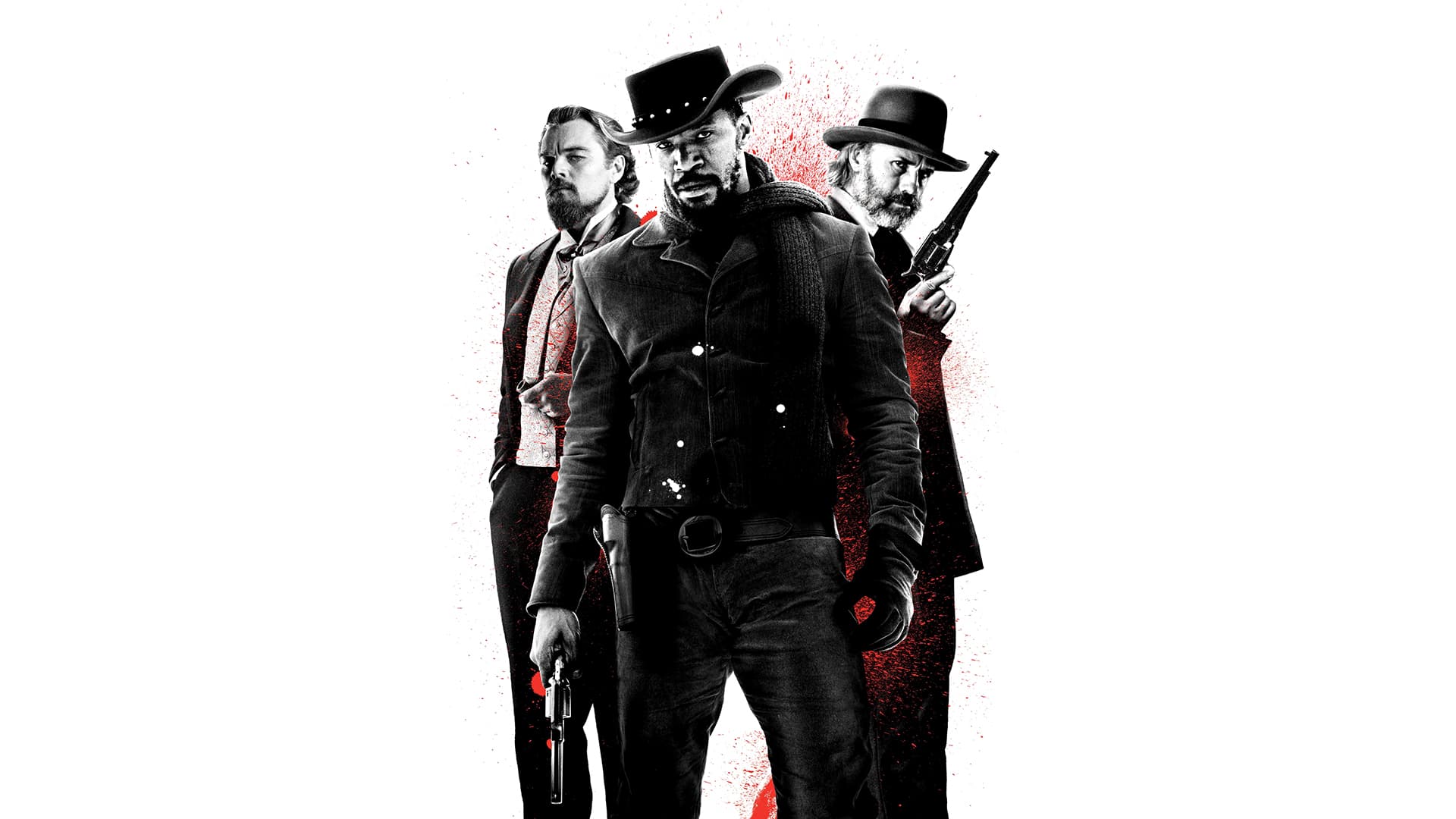
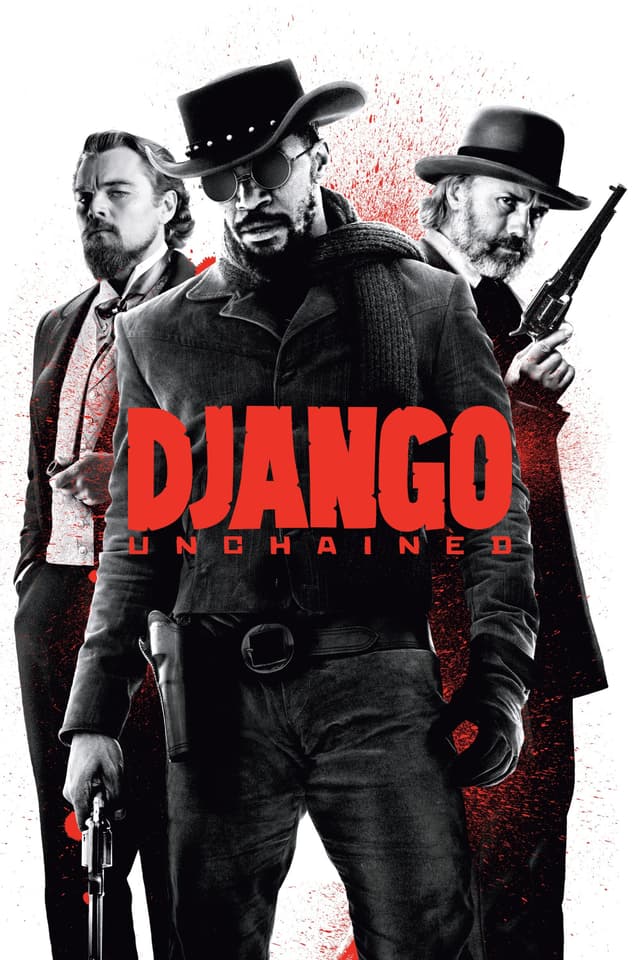
In the antebellum American South of 1858, a German bounty hunter named Dr. King Schultz frees an enslaved man, Django, and trains him as his deputy in exchange for help tracking down a trio of outlaws. Together they ride south to a notorious Mississippi plantation, Candyland, to rescue Django's wife, Broomhilda, from the sadistic planter Calvin Candie and his loyal head house slave Stephen.
What Is the Budget of Django Unchained (2012)?
Django Unchained (2012), written and directed by Quentin Tarantino and distributed by The Weinstein Company in North America and Sony Pictures Releasing internationally, was produced on a reported budget of $100,000,000. The figure represented Tarantino's largest production cost to date, a significant escalation from the $70,000,000 spent on Inglourious Basterds (2009) and well above the working budgets of his earlier features. Financing was assembled by The Weinstein Company with Columbia Pictures coming on as an international partner, and the project benefited from foreign pre-sales driven by the combination of Tarantino's post-Basterds commercial peak and a marquee cast led by Jamie Foxx, Christoph Waltz, Leonardo DiCaprio, Kerry Washington, and Samuel L. Jackson.
The budget reflected the demands of a 130-day production schedule spanning three states, period costume and production design covering the antebellum American South of 1858, an elaborate climactic shootout requiring extensive squib work and set destruction, and the assembled compensation packages for one of the most expensive ensembles Tarantino had ever fielded. The math assumed Django needed to clear roughly $200,000,000 worldwide to break even after marketing. It cleared that bar inside its first month and went on to become the highest-grossing film of Tarantino's career to that point.
Key Budget Allocation Categories
Django Unchained's $100,000,000 budget was distributed across several core production areas:
- Above-the-Line Talent: Quentin Tarantino took a backend-heavy compensation package consistent with his Weinstein-era deals, while the assembled cast commanded substantial upfront fees. Jamie Foxx came off his Academy Award win for Ray (2004) and roles in Collateral (2004) and Miami Vice (2006). Christoph Waltz had just won an Oscar for Inglourious Basterds (2009), Leonardo DiCaprio was at his post-Inception peak, Kerry Washington was on the verge of Scandal, and Samuel L. Jackson was in his fifth Tarantino collaboration. The combined above-the-line spend was the largest of any Tarantino film up to that point.
- Multi-State Location Shoot: Principal photography ran across Wyoming, Louisiana, and California, with additional unit work in Mammoth Lakes. Each move incurred travel, accommodation, and per diem costs for a crew of several hundred, plus location fees, sheriff and ranger coordination, and rebuilds of period-accurate exteriors. Wyoming carried the opening winter sequences, Louisiana hosted the antebellum plantation work at Evergreen Plantation, and California stages and exteriors covered everything in between.
- Period Production Design: Production designer J. Michael Riva (in his final completed film before his death during post-production) constructed Candyland and the wider plantation world, dressed period townscapes, sourced 1858-correct vehicles, weaponry, and tack, and supervised the destruction sequences. The detail-heavy aesthetic of Tarantino's historical revisionism, blood-spatter staging included, requires high prep and consumables budgets.
- Costume Design: Sharen Davis dressed the cast across two distinct fashion idioms, the dusty western frontier of Schultz and Django's bounty hunting circuit and the lavish, mannered antebellum aristocracy of Calvin Candie's world. Django's blue valet suit alone became an iconic costume study, and the volume of period-correct extras costuming for the plantation sequences pushed wardrobe spend well above genre norms.
- Stunts, Squibs, and Practical Effects: The Candyland climax features one of the most squib-heavy shootouts of the post-2000 studio era, with practical blood gags engineered to read as Tarantino-grade exaggeration. Stunt coordinator Jeff Dashnaw oversaw extensive gun work, horse falls, and the closing demolition of the plantation manor, which required a real building destruction shoot rather than a CG composite.
- Score and Music Licensing: The film famously eschewed an original composer in favor of a curated soundtrack mixing Ennio Morricone, Luis Bacalov, Jim Croce, Johnny Cash, John Legend, Rick Ross, and Anthony Hamilton. Music licensing on a Tarantino project of this scale, with multiple needle drops anchoring set pieces, runs into the millions before factoring in the John Legend original "Who Did That to You?" commissioned for the closing credits.
- Post-Production and Reshoots: Editor Sally Menke, Tarantino's longtime collaborator, had died in 2010, and Fred Raskin took over for Django. The post schedule was compressed against a Christmas Day 2012 release, with last-minute trims to bring the runtime down from over three hours and additional pickups including dialogue ADR. The compressed timeline added overtime costs across editorial and sound.
How Does Django Unchained's Budget Compare to Similar Films?
At $100,000,000, Django Unchained sits in the upper tier of Tarantino's filmography and on the higher end of revisionist Westerns. The comparison set illustrates both its budgetary peers and its commercial outperformance:
- Inglourious Basterds (2009): Budget $70,000,000 | Worldwide $321,455,689. Tarantino's immediately preceding film spent 30% less and earned 25% less, establishing the financial template Django would extend.
- The Hateful Eight (2015): Budget $44,000,000 | Worldwide $156,000,000. Tarantino's follow-up Western cost less than half of Django and earned barely a third of its worldwide gross, a reminder of how unusual Django's commercial reach was.
- Once Upon a Time in Hollywood (2019): Budget $90,000,000 | Worldwide $377,571,367. The director's next ensemble period piece landed at roughly the same budget tier and crossed $375M, making it the only later Tarantino film to approach Django's commercial scale.
- Pulp Fiction (1994): Budget $8,500,000 | Worldwide $213,928,762. Tarantino's breakthrough cost less than 10% of Django and earned half its worldwide haul, illustrating the leverage a writer-director can command once the brand is established.
- True Grit (2010): Budget $38,000,000 | Worldwide $252,276,927. The Coen brothers' Western remake spent a third of Django's budget and earned more than half as much worldwide, the closest like-for-like genre comparison from the same release window.
- The Revenant (2015): Budget $135,000,000 | Worldwide $533,000,000. Iñárritu's frontier survival epic spent 35% more than Django and earned 24% more worldwide, the modern benchmark for prestige Westerns.
Django Unchained Box Office Performance
Django Unchained opened on Christmas Day, December 25, 2012, in 3,010 North American theaters. It grossed $30,122,888 over its opening five-day frame and $63,489,952 across the extended holiday weekend through New Year's, building word-of-mouth that carried it through January and February. The film never opened at number one (it opened second behind The Hobbit: An Unexpected Journey in its first weekend), but it posted long-legged daily holds that pushed it past the $100M domestic mark by mid-January and past $400M worldwide by March.
Against a reported production budget of $100,000,000, the film needed approximately $200,000,000 in worldwide gross to reach profitability when accounting for marketing and distribution costs. Here is the financial breakdown:
Box Office Breakdown
Django Unchained

Django Unchained returned approximately $2.24 in theatrical revenue for every $1 invested when measured against total estimated production and marketing spend, placing it among the most decisive commercial successes of the 2012 to 2013 awards season. The domestic share was $162,805,434 against an international share of $263,268,939, a 38/62 split that demonstrated unusually strong overseas reach for an American genre film built around slavery-era subject matter.
At $426,074,373 worldwide, Django became the highest-grossing film of Tarantino's career, a record it held until Once Upon a Time in Hollywood (2019) edged past it. It was also the most commercially successful project The Weinstein Company released up to that point and was a meaningful contributor to the company's 2012 to 2013 financial results before its later collapse.
Django Unchained Production History
Tarantino began drafting Django Unchained in 2007, returning to a genre exercise he had floated for years: a "Southern" that would map the conventions of the Italian spaghetti Western (Sergio Corbucci's 1966 Django above all) onto the American antebellum South. He completed the screenplay in April 2011 and circulated it that summer. The project was set up at The Weinstein Company with Columbia Pictures handling international distribution, and pre-production accelerated through autumn 2011 with a tight goal of opening on Christmas Day 2012.
Casting moved quickly. Christoph Waltz was attached early as Dr. King Schultz, the bounty hunter who liberates Django, on the back of his Inglourious Basterds Oscar. Will Smith was Tarantino's first choice for Django and met repeatedly with the director before passing because he wanted the character to be the lead rather than co-lead and the schedule would have conflicted with After Earth. Idris Elba, Chris Tucker, Terrence Howard, Michael K. Williams, and Tyrese Gibson were among the actors who passed or were not cast before Jamie Foxx was hired in September 2011. Leonardo DiCaprio came on as Calvin Candie shortly after, marking his first villain role since The Man in the Iron Mask. Kevin Costner and Kurt Russell were initially attached as Ace Woody but dropped out before production; the role was ultimately reworked. Samuel L. Jackson signed on as Stephen, in his fifth and most provocative Tarantino collaboration.
Principal photography ran from November 28, 2011 through July 27, 2012, an unusually long shoot of approximately 130 days. The production began in Wyoming for the opening winter sequences shot in Lone Pine and in the Jackson Hole area, capturing the snowy mountain trails where Schultz first encounters the chained slave coffle. The unit then relocated to Louisiana for the antebellum plantation work, shooting at Evergreen Plantation in Edgard for the Candyland exteriors and main house sequences, with additional Louisiana locations standing in for Mississippi towns. The closing third of the schedule moved to California for soundstage interiors at the Melody Ranch in Santa Clarita, the National Historic Landmark Western set previously used for Deadwood, plus additional desert and town exteriors. Tarantino's Louisiana and California tax credit qualification offset a meaningful portion of below-the-line spend.
Cinematographer Robert Richardson, shooting his fourth Tarantino feature after Kill Bill: Volume 1, Kill Bill: Volume 2, and Inglourious Basterds, captured the film on 35mm anamorphic, using Panavision Panaflex Millennium XL2 cameras and Primo lenses. The visual scheme deliberately stayed within Western genre conventions, sun-bleached exteriors, lantern-lit interiors, telephoto landscape sweeps, while leaving room for the operatic violence of the Candyland third act. The climactic plantation shootout was staged practically, with squibs, real blood gags, and a real-time demolition of the manor house.
Editor Sally Menke had died in 2010 after editing every Tarantino feature from Reservoir Dogs through Inglourious Basterds, and Fred Raskin took over for Django, becoming the first new editor in Tarantino's career. Post-production was compressed against the December 25 release, requiring last-minute trims that brought the runtime down from a longer assembly to the released 165 minutes. Reshoots and pickups in summer 2012 added incremental cost. The film was rated R by the MPAA for "strong graphic violence throughout, a vicious fight, language and some nudity," a rating Tarantino welcomed publicly.
Awards and Recognition
Django Unchained received five Academy Award nominations and won two: Best Original Screenplay for Quentin Tarantino and Best Supporting Actor for Christoph Waltz, Waltz's second Tarantino-driven win in four years after Inglourious Basterds. The other three nominations were Best Picture (one of nine nominees that year), Best Cinematography for Robert Richardson, and Best Sound Editing. Tarantino's win was his second Best Original Screenplay Oscar after Pulp Fiction (1994) and remains his most recent competitive Academy Award.
At the Golden Globes, Tarantino won Best Screenplay and Christoph Waltz won Best Supporting Actor, repeating both wins at the Oscars later that ceremony season. Django was also nominated for Best Motion Picture, Drama and Best Director (Quentin Tarantino). At the BAFTAs the film took Best Original Screenplay and Best Supporting Actor (Christoph Waltz) and was nominated for five other categories including Best Film. The Critics' Choice Movie Awards and the Writers Guild of America Awards both honored Tarantino's screenplay, while the Screen Actors Guild nominated the ensemble.
Django Unchained was selected to compete for the Palme d'Or at the 2013 Cannes Film Festival in some early reports, but Tarantino opted to premiere it in late December 2012 to qualify for that year's awards cycle and skipped the Cannes berth. It did receive selection at the 2013 Tarantino Cinemania retrospective in Cannes' sidebar and at the Berlin International Film Festival's out-of-competition screenings. The film also won AFI Movie of the Year recognition and was named one of the Top Ten Films of 2012 by the American Film Institute.
Critical Reception
Django Unchained received broadly positive reviews. The film holds an 86% approval rating on Rotten Tomatoes based on 309 critic reviews, with a critical consensus that called it "bloody, bawdy, and exhilarating, even if it's about half an hour too long." On Metacritic, the film scored 81 out of 100, indicating universal acclaim. Audiences surveyed by CinemaScore gave the film an A-, a strong result for a 165-minute R-rated Western dealing directly with slavery.
Roger Ebert awarded the film four out of four stars, writing that "Tarantino once again makes movies for movie-lovers, knowing that they will catch what most audiences will miss," and singling out Christoph Waltz's "delicious" Schultz as the picture's anchor. A.O. Scott in The New York Times called it "a troubling and important movie about slavery and racism," while Manohla Dargis described Waltz as "scene-stealing" and DiCaprio as "spellbinding." Peter Travers at Rolling Stone wrote that Django was "fun, fierce, and outrageously good," giving the film three and a half out of four stars.
The film also generated substantial public debate. Director Spike Lee announced that he would not see the film, calling it "disrespectful to my ancestors," and the depiction of slavery, the frequency of racial slurs, and the operatic violence drew commentary from academics, novelists (including Henry Louis Gates Jr., who endorsed the film after consulting with Tarantino during development), and the broader Black press. The conversation around Django outlasted its theatrical run and remained a touchpoint in subsequent debates about how Hollywood depicts American slavery, a debate revisited in coverage of 12 Years a Slave a year later.
Frequently Asked Questions
How much did it cost to make Django Unchained (2012)?
The reported production budget was $100,000,000, the largest of Quentin Tarantino's career at the time and a step up from the $70,000,000 spent on Inglourious Basterds (2009). The Weinstein Company financed the production in North America with Columbia Pictures handling international distribution, supported by foreign pre-sales driven by the post-Basterds Tarantino brand and the assembled cast of Jamie Foxx, Christoph Waltz, Leonardo DiCaprio, Kerry Washington, and Samuel L. Jackson.
How much did Django Unchained earn at the box office?
Django Unchained grossed $162,805,434 domestically and $263,268,939 internationally, for a worldwide total of $426,074,373. It opened on Christmas Day 2012, finishing second behind The Hobbit: An Unexpected Journey on its opening weekend, before posting long holiday holds that carried it past $100M domestic by mid-January and past $400M worldwide by March 2013.
Was Django Unchained profitable?
Yes, decisively. Against a $100,000,000 production budget and an estimated $70,000,000 to $90,000,000 in marketing spend, the film returned approximately $2.24 in worldwide gross for every $1 invested, generating roughly $236M in pre-ancillary profit. It was the highest-grossing film of Tarantino's career until Once Upon a Time in Hollywood (2019) edged past it, and one of The Weinstein Company's most commercially successful releases.
Who directed Django Unchained?
Quentin Tarantino wrote and directed Django Unchained, his seventh feature as director after Reservoir Dogs, Pulp Fiction, Jackie Brown, the two Kill Bill volumes, and Inglourious Basterds. The screenplay won him his second Academy Award for Best Original Screenplay, eighteen years after his first for Pulp Fiction.
Where was Django Unchained filmed?
Principal photography ran from November 2011 to July 2012 across three states. The opening winter sequences were shot in Wyoming around Jackson Hole and Lone Pine. The antebellum plantation work was filmed in Louisiana, primarily at Evergreen Plantation in Edgard. The closing portion of the shoot took place in California at the Melody Ranch in Santa Clarita and other Western backlot and desert locations.
Who plays Django in the 2012 film?
Jamie Foxx plays Django Freeman, a freed slave turned bounty hunter. Will Smith was Tarantino's first choice and met repeatedly with the director before passing because he wanted the role to be the clear lead rather than co-lead, and his After Earth schedule conflicted. Idris Elba, Chris Tucker, Terrence Howard, Michael K. Williams, and Tyrese Gibson were among the other actors considered before Foxx was cast in September 2011.
How does Django Unchained compare to other Tarantino films?
At $100,000,000 production budget and $426,074,373 worldwide, Django sits in the upper tier of the Tarantino filmography. Inglourious Basterds (2009) cost $70,000,000 and earned $321,455,689 worldwide. The Hateful Eight (2015) cost $44,000,000 and earned $156,000,000. Once Upon a Time in Hollywood (2019) cost $90,000,000 and earned $377,571,367. Pulp Fiction (1994) earned $213,928,762 against an $8,500,000 budget. Only Once Upon a Time in Hollywood comes close to Django's commercial peak.
How many Oscars did Django Unchained win?
Django Unchained won two Academy Awards from five nominations. Quentin Tarantino won Best Original Screenplay, his second after Pulp Fiction. Christoph Waltz won Best Supporting Actor for his portrayal of Dr. King Schultz, his second Tarantino-driven win after Inglourious Basterds. The film was also nominated for Best Picture, Best Cinematography (Robert Richardson), and Best Sound Editing.
What did critics think of Django Unchained?
The film received broadly positive reviews, with an 86% approval rating on Rotten Tomatoes based on 309 critic reviews and a Metacritic score of 81 out of 100. Audiences gave it an A- CinemaScore. Roger Ebert awarded four out of four stars and singled out Christoph Waltz as the picture's anchor. Spike Lee publicly declined to see the film, calling its depiction of slavery "disrespectful to my ancestors," a position that drove sustained cultural debate alongside the film's commercial run.
Who shot Django Unchained?
Robert Richardson shot the film on 35mm anamorphic using Panavision Panaflex Millennium XL2 cameras and Primo lenses. It was his fourth Tarantino collaboration after Kill Bill: Volume 1, Kill Bill: Volume 2, and Inglourious Basterds. He received an Academy Award nomination for Best Cinematography on Django, one of five nominations for the film at the 85th Academy Awards.
Filmmakers
Django Unchained

Official Trailer
Build budgets like this one in Saturation
Start from an industry-standard feature film template, import the schedule and rates you already have, and let the cost report keep itself current as you spend. Real-time collaboration, no spreadsheets.