The Hateful Eight Budget
 DramaMysteryWestern3h 8m
Updated
Synopsis
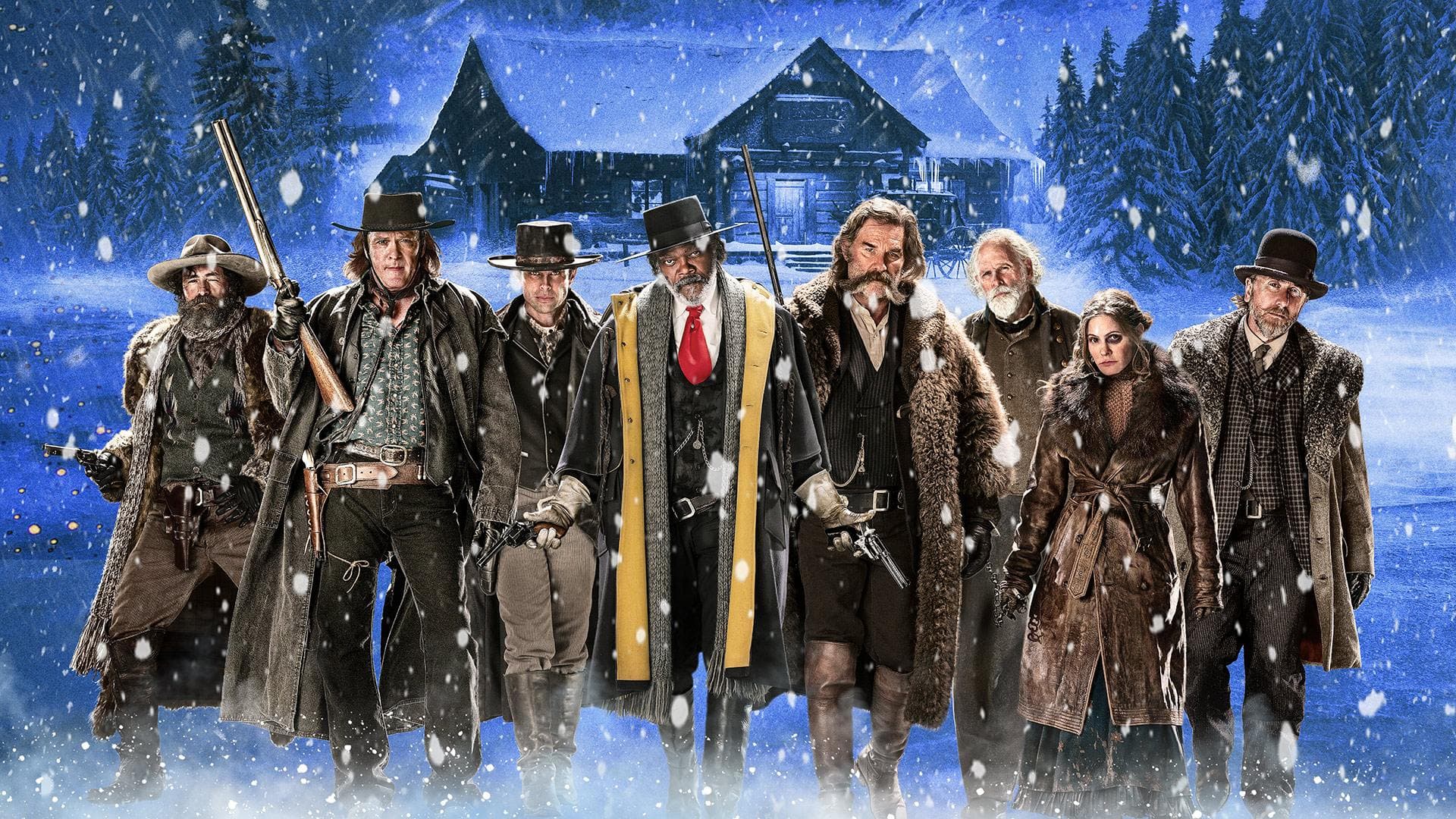
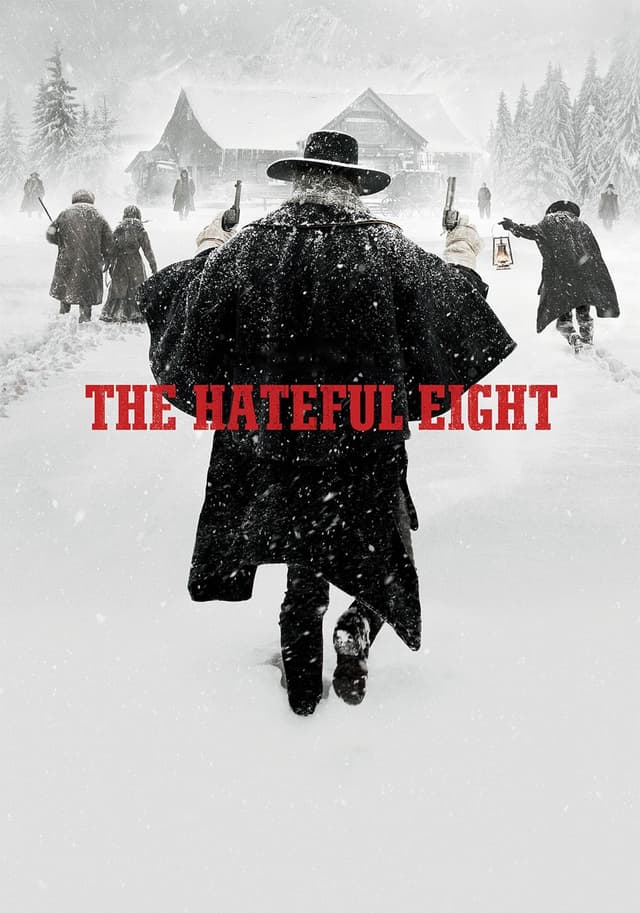
Six or eight or twelve years after the Civil War, a stagecoach hurtles through the wintry Wyoming landscape. The passengers, bounty hunter John Ruth and his fugitive Daisy Domergue, race towards the town of Red Rock where Ruth, known in these parts as “The Hangman,” will bring Domergue to justice. Along the road, they encounter two strangers: Major Marquis Warren, a black former union soldier turned infamous bounty hunter, and Chris Mannix, a southern renegade who claims to be the town’s new Sheriff. Losing their lead on the blizzard, Ruth, Domergue, Warren and Mannix seek refuge at Minnie’s Haberdashery, a stagecoach stopover on a mountain pass. When they arrive at Minnie’s, they are greeted not by the proprietor but by four unfamiliar faces. Bob, who’s taking care of Minnie’s while she’s visiting her mother, is holed up with Oswaldo Mobray, the hangman of Red Rock, cow-puncher Joe Gage, and Confederate General Sanford Smithers. As the storm overtakes the mountainside stopover, our eight travelers come to learn they may not make it to Red Rock after all…
What is the budget of The Hateful Eight?
"The Hateful Eight," a drama released in 2015, was directed by Quentin Tarantino and stars Samuel L. Jackson, Kurt Russell. The production budget was $44,000,000, placing it in the mid-budget range for drama productions of its era.
Key Budget Allocation Categories
While specific budget breakdowns are not publicly available, typical cost drivers for a drama production like this include:
- Above-the-Line Talent: Drama films live or die on the strength of their performances.
- Location Filming & Period Production Design: Authentic locations , whether contemporary or historical , require scouting, permits, travel, lodging, and often significant dressing to match the story's time period.
- Post-Production, Color Grading & Score: The editorial process for dramas is typically longer than genre films, with careful attention to pacing and tone.
- Casting: On September 23, 2014, it was revealed that Viggo Mortensen was in discussion with Tarantino for a role in the film.
What were the major cost factors in The Hateful Eight?
Several factors contributed to the overall production costs of "The Hateful Eight."
- Above-the-Line Talent: Above-the-Line Talent is one of the primary cost drivers in drama productions of this scale.
- Location Filming: Location Filming & Period Production Design is one of the primary cost drivers in drama productions of this scale.
- Post-Production: Post-Production, Color Grading & Score is one of the primary cost drivers in drama productions of this scale.
How Does The Hateful Eight's Budget Compare to Similar Films?
At $44,000,000, The Hateful Eight sits in the mid-budget range. Here is how it compares to productions with a similar budget:
- Charlie St. Cloud (2010): Budget $44,000,000, Worldwide Gross $48,200,000
- Cleopatra (1963): Budget $44,000,000, Worldwide Gross $57,779,280
- Heaven's Gate (1980): Budget $44,000,000, Worldwide Gross $3,484,331
- Nixon (1995): Budget $44,000,000, Worldwide Gross $13,681,765
- Sleepers (1996): Budget $44,000,000, Worldwide Gross $165,600,000
The median budget for wide-release drama films in the 2010s ranges from $30 to 80M for mid-budget to $150M+ for tentpoles.
The Hateful Eight Box Office Performance
"The Hateful Eight" earned $54,117,416 domestically and $155,760,117 worldwide at the box office. Against a production budget of $44,000,000, the film performed strongly at the box office.
A film typically needs to earn approximately twice its production budget to cover marketing and distribution costs. For "The Hateful Eight," that break-even threshold was roughly $88,000,000. With worldwide earnings of $155,760,117, the film cleared that threshold comfortably.
Box Office Breakdown
The Hateful Eight

At 254%, "The Hateful Eight" earned roughly $3.54 for every $1 invested in production.
The Hateful Eight Production History
On September 23, 2014, it was revealed that Viggo Mortensen was in discussion with Tarantino for a role in the film. Mortensen had passed on the film due to scheduling conflicts. Tarantino met with Jennifer Lawrence about portraying Daisy Domergue, but she declined due to her commitments with Joy and The Hunger Games films.
On September 26, 2014, the state of Colorado had signed to fund the film's production with $5 million, and the complete film would be shot in Southwest Colorado. A 900-acre ranch was leased to the production for the filming. There was a meeting on October 16, and the county's planning commission issued a permit for the construction of a temporary set.
Tarantino announced at the 2015 San Diego Comic-Con that Ennio Morricone would compose the score for The Hateful Eight; it is the first Western scored by Morricone in 34 years, since Buddy Goes West, and Tarantino's first film to use an original score. Tarantino had previously used Morricone's music in Kill Bill, Death Proof (2007; a part of the double-feature Grindhouse), Inglourious Basterds, and Django Unchained, and Morricone also wrote an original song, "Ancora Qui", for the last. Morricone had previously made statements that he would "never work" with Tarantino after Django Unchained, but ultimately changed his mind and agreed to score The Hateful Eight.
Awards and Recognition
Won 1 Oscar. 46 wins & 116 nominations total
- Academy Award for Best Original Score: Ennio Morricone (88th Academy Awards)
- National Board of Review: Top Ten Films
Critical Reception
On the review aggregator website Rotten Tomatoes, The Hateful Eight holds an approval rating of based on reviews, with an average rating of . Its critical consensus reads, "The Hateful Eight offers another well-aimed round from Quentin Tarantino's signature blend of action, humor, and over-the-top violence , all while demonstrating an even stronger grip on his filmmaking craft." Metacritic, which uses a weighted average, assigned The Hateful Eight a score of 68 out of 100 based on 51 critics, indicating "generally favorable reviews".
Frequently Asked Questions
How much did The Hateful Eight cost to make?
The production budget was $44,000,000. The Weinstein Company financed the film alongside Quentin Tarantino's production banner Visiona Romantica, with Domain Capital providing additional production financing.
How much did The Hateful Eight earn at the box office?
The film grossed $54,117,416 domestically and $101,500,000 internationally, for a worldwide total of approximately $156,000,000. It opened to a Christmas Day limited 70mm roadshow on December 25, 2015, expanding to wide release on December 30, 2015.
What was the 70mm roadshow release of The Hateful Eight?
Tarantino insisted on a limited 70mm Ultra Panavision roadshow release of approximately 100 prints in select theaters, complete with an overture, intermission, and a longer 187-minute runtime. The roadshow opened December 25, 2015 with the standard 167-minute version opening wide on December 30. The 70mm version required theaters to install or recommission Ultra Panavision projection equipment.
Who directed The Hateful Eight?
Quentin Tarantino wrote and directed the film, his eighth feature. The Hateful Eight marked Tarantino's second western after Django Unchained (2012, $425,400,000 worldwide).
Who stars in The Hateful Eight?
The ensemble includes Samuel L. Jackson, Kurt Russell, Jennifer Jason Leigh, Walton Goggins, Demian Bichir, Tim Roth, Michael Madsen, Bruce Dern, and Channing Tatum. Several cast members had previously appeared in earlier Tarantino films.
Where was The Hateful Eight filmed?
Principal photography took place in Telluride, Colorado, with extensive interior work at Red Studios in Los Angeles. Telluride provided the snowbound mountain exteriors, with cold-weather production conditions complicated by an unseasonably warm winter that required imported artificial snow.
What did critics think of The Hateful Eight?
The film received largely positive reviews, with a 75% approval rating on Rotten Tomatoes and a 68 out of 100 score on Metacritic. Critics praised Ennio Morricone's score, Jennifer Jason Leigh's performance, and the practical cinematography by Robert Richardson, while some objected to the violence and lengthy runtime.
Did The Hateful Eight win any awards?
Ennio Morricone won the Academy Award for Best Original Score, his first competitive Oscar after multiple honorary nominations. The film also received nominations for Best Supporting Actress (Jennifer Jason Leigh) and Best Cinematography (Robert Richardson).
Who composed the music for The Hateful Eight?
Ennio Morricone composed the film's original score, his first western score in over 35 years. Morricone won both the Academy Award and the Golden Globe for Best Original Score for the work, capping a career that included Sergio Leone's Spaghetti Westerns including The Good, the Bad and the Ugly (1966).
Was there a Netflix version of The Hateful Eight?
Yes. In April 2019, Netflix released a four-episode extended cut titled The Hateful Eight: Extended Version, reorganizing the theatrical cut into four chapters with additional material totaling roughly 25 extra minutes compared with the wide-release theatrical version.
Official Trailer
Build budgets like this one in Saturation
Start from an industry-standard feature film template, import the schedule and rates you already have, and let the cost report keep itself current as you spend. Real-time collaboration, no spreadsheets.