Pulp Fiction
Synopsis
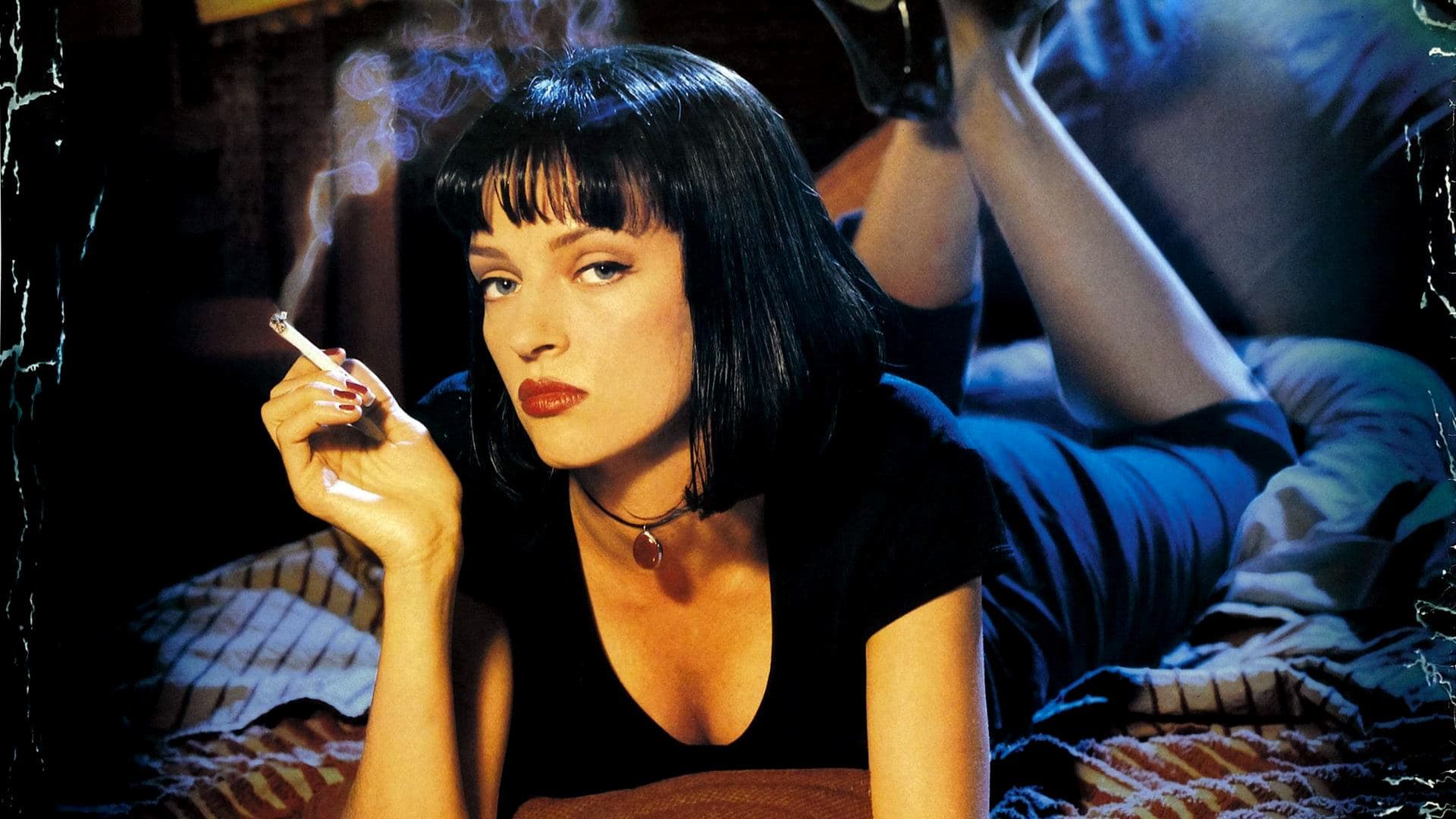
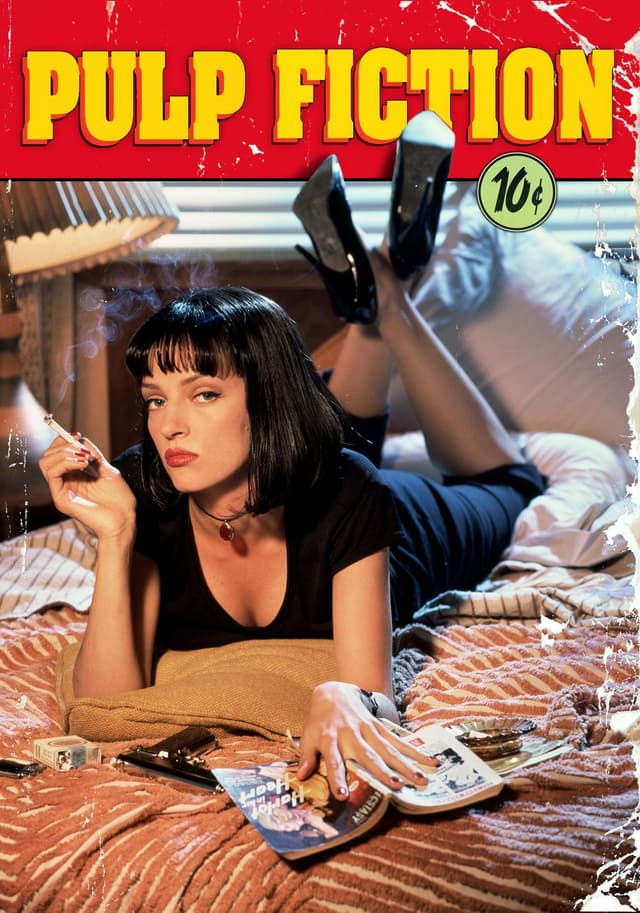
Jules Winnfield (Samuel L. Jackson) and Vincent Vega (John Travolta) are two hit men who are out to retrieve a suitcase stolen from their employer, mob boss Marsellus Wallace (Ving Rhames). Wallace has also asked Vincent to take his wife Mia (Uma Thurman) out a few days later when Wallace himself will be out of town. Butch Coolidge (Bruce Willis) is an aging boxer who is paid by Wallace to lose his fight. The lives of these seemingly unrelated people are woven together comprising of a series of funny, bizarre and uncalled-for incidents.
Production Budget Analysis
What was the production budget for Pulp Fiction?
Directed by Quentin Tarantino, with John Travolta, Samuel L. Jackson, Uma Thurman leading the cast, Pulp Fiction was produced by Miramax with a confirmed budget of $8,000,000, placing it in the micro-budget category for thriller films.
At $8,000,000, Pulp Fiction was produced on a modest budget. Lower-budget films benefit from reduced break-even thresholds, with profitability achievable at approximately $20,000,000.
Budget Comparison — Similar Productions
• Mutant Chronicles (2008): Budget $8,000,000 | Gross $2,131,057 → ROI: -73% • I'm Still Here (2024): Budget $8,000,000 | Gross $36,361,572 → ROI: 355% • Little Miss Sunshine (2006): Budget $8,000,000 | Gross $100,523,351 → ROI: 1157% • My Life as a Zucchini (2016): Budget $8,000,000 | Gross $5,873,256 → ROI: -27% • Stand by Me (1986): Budget $8,000,000 | Gross $52,289,686 → ROI: 554%
Key Budget Allocation Categories
▸ Talent & Director Compensation Thrillers depend on compelling lead performances to sustain tension, making cast compensation a primary budget concern. Directors with proven thriller credentials command premium fees.
▸ Cinematography & Location Photography Thriller aesthetics demand specific visual languages — surveillance-style photography, claustrophobic framing, or expansive location work across multiple cities or countries.
▸ Editorial & Sound Post-Production Precision editing — controlling information flow, building suspense through pacing, and orchestrating reveals — requires extended post-production schedules.
Key Production Personnel
CAST: John Travolta, Samuel L. Jackson, Uma Thurman, Bruce Willis, Ving Rhames Key roles: John Travolta as Vincent Vega; Samuel L. Jackson as Jules Winnfield; Uma Thurman as Mia Wallace; Bruce Willis as Butch Coolidge
DIRECTOR: Quentin Tarantino CINEMATOGRAPHY: Andrzej Sekula EDITING: Sally Menke PRODUCTION: Miramax, A Band Apart, Jersey Films FILMED IN: United States of America
Box Office Performance
Pulp Fiction earned $107,928,762 domestically and $106,000,000 internationally, for a worldwide total of $213,928,762. Revenue was split 50% domestic / 50% international.
Break-Even Analysis
Using the industry-standard 2.5x multiplier (P&A + exhibitor shares of 40–50% + distribution fees), Pulp Fiction needed approximately $20,000,000 to break even. The film surpassed this threshold by $193,928,762.
Return on Investment (ROI)
Revenue: $213,928,762 Budget: $8,000,000 Net: $205,928,762 ROI: 2574.1%
Profitability Assessment
VERDICT: Highly Profitable
Pulp Fiction was a clear financial success, generating $213,928,762 worldwide against a $8,000,000 production budget — a 2574% ROI. After estimated marketing costs, the film still delivered substantial profit to Miramax.
INDUSTRY IMPACT
The outsized success of Pulp Fiction likely influenced studio greenlight decisions for similar thriller projects.
Pulp Fiction quickly came to be regarded as one of the most significant films of its era. In 1995, in a special edition of Siskel & Ebert devoted to Tarantino, Gene Siskel argued that the work posed a major challenge to the "ossification of American movies with their brutal formulas". In Siskel's view,
the violent intensity of Pulp Fiction calls to mind other violent watershed films that were considered classics in their time and still are. Hitchcock's Psycho [1960], Arthur Penn's Bonnie and Clyde [1967], and Stanley Kubrick's A Clockwork Orange [1971]. Each film shook up a tired, bloated movie industry and used a world of lively lowlifes to reflect how dull other movies had become. And that, I predict, will be the ultimate honor for Pulp Fiction. Like all great films, it criticizes other movies.
Ken Dancyger writes that its "imitative and innovative style" – like that of its predecessor, Reservoir Dogs – represents
a new phenomenon, the movie whose style is created from the context of movie life rather than real life. The consequence is twofold – the presumption of deep knowledge on the part of the audience of those forms such as the gangster films or Westerns, horror films or adventure films.
PRODUCTION NOTES
▸ Writing
The roots of Pulp Fiction can be traced back to the late 1980s, when Quentin Tarantino and Roger Avary worked together at Video Archives, a video store in Southern California. Avary wrote the first element of what would become the film's screenplay in the fall of 1990, titled "Pandemonium Reigns," which eventually expanded into a feature-length screenplay.
With work on Reservoir Dogs completed, Tarantino returned to the notion of a trilogy film: "I got the idea of doing something that novelists get a chance to do but filmmakers don't: telling three separate stories, having characters float in and out with different weights depending on the story." Tarantino explains that the idea "was basically to take like the oldest chestnuts that you've ever seen when it comes to crime stories – the oldest stories in the book ... You know, 'Vincent Vega and Marsellus Wallace's Wife' – the oldest story about ... the guy's gotta go out with the big man's wife and don't touch her. You know, you've seen the story a zillion times." "I'm using old forms of storytelling and then purposely having them run awry", he says. In at least one case, boxer Butch Coolidge, Tarantino had in mind a specific character from a classic Hollywood crime story: "I wanted him to be basically like Ralph Meeker as Mike Hammer in Aldrich's Kiss Me Deadly [1955]. I wanted him to be a bully and a jerk".
Tarantino went to work on the script for Pulp Fiction in Amsterdam in March 1992, possibly at the Winston Hotel in the Red Light District. He was joined there by Avary, who contributed "Pandemonium Reigns" to the project and participated in its rewriting as well as the development of the new storylines that would link up with it. The script included a couple of made-up commercial brands that often featured in later Tarantino films: Big Kahuna burgers (a Big Kahuna soda cup appears in Reservoir Dogs) and Red Apple cigarettes.
▸ Casting
Danny DeVito, one of the film's executive producers, recalls that Weinstein suggested casting Daniel Day-Lewis, who had just won an Academy Award for My Left Foot. DeVito responded by stating that Tarantino wanted John Travolta and reminded Weinstein that he had final cut and cast approval. He later reflected: "I think he [Weinstein] called me every name in the book, but of course, Quentin got what he wanted, and he was absolutely right, and the rest is history."
Bender noted that during the casting process, while Samuel L. Jackson's initial audition was impressive, another candidate later delivered a performance that "blew them away." This prompted Bender to inform Jackson's agent that they might need to consider the other actor. The agent firmly insisted, "No, no, no, you can't do that. Sam will come back." Initially hesitant to ask him for another audition, Bender discovered that Jackson believed he was simply reading for the role, not auditioning. On his return audition, Jackson said that he was annoyed that he had to come back, and when he arrived an assistant called him "Mr. Fishburne", which made him even more angry. He had also been hungry and had bought a hamburger, which he still had with him. He went on to read his lines, angrily waving the hamburger, which was so real that it became part of the scene and guaranteed him the job.
Tim Roth, initially interested in the role meant for Willis, suggested Amanda Plummer as a co-star, insisting she should have a gun as he thought it would be "terrifying" - a notion Tarantino later incorporated into the script.
Harvey Keitel played a crucial role in getting Reservoir Dogs made and introduced Bruce Willis to Tarantino. Bender and Tarantino went to see Willis at his house in Malibu, where they learned that he could recite practically the entire movie of Reservoir Dogs, a movie he loved.
▸ Filming & Locations
right| Principal photography commenced on September 20, 1993. The lead offscreen talent had all worked with Tarantino on Reservoir Dogs – cinematographer Andrzej Sekuła, film editor Sally Menke, production designer David Wasco, and costume designer Betsy Heimann. According to Tarantino: "[W]e had $8 million. I wanted it to look like a $20–25 million movie. I wanted it to look like an epic. It's an epic in everything – in invention, in ambition, in length, in scope, in everything except the price tag." The film, he says, was shot "on 50 ASA film stock, which is the slowest stock they make. The reason we use it is that it creates an almost no-grain image, it's lustrous. It's the closest thing we have to 50s Technicolor." The largest chunk of the budget – $150,000 – went to creating the Jack Rabbit Slim's set. It was built in a Culver City warehouse, where it was joined by several other sets, as well as the film's production offices. The diner sequence was shot on location in Hawthorne at the Hawthorne Grill, known for its Googie architecture. For the costumes, Tarantino took his inspiration from French director Jean-Pierre Melville, who believed that the clothes his characters wore were their symbolic suits of armor. Tarantino cast himself in a modest-sized role as he had in Reservoir Dogs. One of his pop totems, Fruit Brute, a long-discontinued General Mills cereal, also returned from the earlier film. The shoot wrapped on November 30. Before Pulp Fictions premiere, Tarantino convinced Avary to forfeit his agreed-on cowriting credit and accept a "story by" credit, so the line "Written and directed by Quentin Tarantino" could be used in advertising and onscreen.
[Filming] right| Principal photography commenced on September 20, 1993. The lead offscreen talent had all worked with Tarantino on Reservoir Dogs – cinematographer Andrzej Sekuła, film editor Sally Menke, production designer David Wasco, and costume designer Betsy Heimann.
▸ Music & Score
No film score was composed for Pulp Fiction; Quentin Tarantino instead used an eclectic assortment of surf music, rock and roll, soul, and pop songs. Dick Dale's rendition of "Misirlou" plays during the opening credits. Tarantino chose surf music as the basic musical style for the film, but not, he insists, because of its association with surfing culture: "To me it just sounds like rock and roll, even Morricone music. It sounds like rock and roll spaghetti Western music." Tarantino planned to use a power pop song, "My Sharona" by The Knack, during the film's rape scene, but ultimately discounted it. The soundtrack album was released along with the film in 1994. The album peaked on the Billboard 200 chart at number 21. The single, Urge Overkill's cover of the Neil Diamond song "Girl, You'll Be a Woman Soon", reached number 59.
Estella Tincknell describes how the particular combination of well-known and obscure recordings helps establish the film as a "self-consciously 'cool' text. [The] use of the mono-tracked, beat-heavy style of early 1960s U.S. 'underground' pop mixed with 'classic' ballads such as Dusty Springfield's 'Son of a Preacher Man' is crucial to the film's postmodern knowingness." She contrasts the soundtrack with that of Forrest Gump, the highest-grossing film of 1994, which also relies on period pop recordings: "[T]he version of 'the sixties' offered by Pulp Fiction ... is certainly not that of the publicly recognized counter-culture featured in Forrest Gump, but is, rather, a more genuinely marginal form of sub-culture based around a lifestyle – surfing, 'hanging' – that is resolutely apolitical." The soundtrack is central, she says, to the film's engagement with the "younger, cinematically knowledgeable spectator" it solicits.
AWARDS & RECOGNITION
Summary: Won 1 Oscar. 69 wins & 72 nominations total
Awards Won: ★ National Board of Review Award for Best Director — Quentin Tarantino ★ Independent Spirit Award for Best Director — Quentin Tarantino ★ Dallas-Fort Worth Film Critics Association Award for Best Film ★ National Society of Film Critics Award for Best Screenplay — Quentin Tarantino ★ National Board of Review: Top Ten Films ★ Los Angeles Film Critics Association Award for Best Actor — John Travolta ★ National Society of Film Critics Award for Best Director — Quentin Tarantino ★ MTV Movie Award for Best Dance Sequence — Uma Thurman ★ Independent Spirit Award for Best Male Lead — Samuel L. Jackson ★ Golden Globe Award for Best Screenplay — Quentin Tarantino ★ Independent Spirit Award for Best Screenplay — Roger Avary ★ National Society of Film Critics Award for Best Film ★ Academy Award for Best Writing, Original Screenplay — Quentin Tarantino (67th Academy Awards) ★ Academy Award for Best Writing, Original Screenplay — Roger Avary (67th Academy Awards) ★ BAFTA Award for Best Actor in a Supporting Role — Samuel L. Jackson ★ Palme d'Or — Quentin Tarantino ★ Los Angeles Film Critics Association Award for Best Director — Quentin Tarantino ★ MTV Movie Award for Best Movie ★ London Film Critics Circle Award for Actor of the Year — John Travolta ★ David di Donatello for Best Foreign Actor — John Travolta ★ BAFTA Award for Best Original Screenplay — Quentin Tarantino ★ Los Angeles Film Critics Association Award for Best Film ★ National Board of Review Award for Best Film — Quentin Tarantino ★ New York Film Critics Circle Award for Best Director — Quentin Tarantino
Nominations: ○ Academy Award for Best Supporting Actress (67th Academy Awards) ○ BAFTA Award for Best Film ○ National Society of Film Critics Award for Best Film ○ Golden Globe Award for Best Screenplay ○ Academy Award for Best Supporting Actor (67th Academy Awards) ○ Academy Award for Best Actor (67th Academy Awards) ○ BAFTA Award for Best Original Screenplay ○ Screen Actors Guild Award for Outstanding Performance by a Male Actor in a Leading Role ○ Japan Academy Prize for Outstanding Foreign Language Film ○ Golden Globe Award for Best Supporting Actress – Motion Picture ○ Independent Spirit Award for Best Screenplay ○ Golden Globe Award for Best Motion Picture – Drama ○ BAFTA Award for Best Editing ○ National Society of Film Critics Award for Best Supporting Actor ○ MTV Movie Award for Best Dance Sequence ○ Academy Award for Best Writing, Original Screenplay (67th Academy Awards) ○ BAFTA Award for Best Direction ○ Australian Film Institute Award for Best Foreign Film ○ MTV Movie Award for Best On-Screen Duo ○ David di Donatello for Best Foreign Actress ○ Independent Spirit Award for Best Male Lead ○ National Society of Film Critics Award for Best Actor ○ Screen Actors Guild Award for Outstanding Performance by a Female Actor in a Supporting Role ○ Independent Spirit Award for Best Director ○ Golden Globe Award for Best Director ○ Independent Spirit Award for Best Supporting Male ○ Golden Globe Award for Best Supporting Actor – Motion Picture ○ Academy Award for Best Picture (67th Academy Awards) ○ MTV Movie Award for Best Female Performance ○ Academy Award for Best Director (67th Academy Awards) ○ MTV Movie Award for Best Male Performance ○ Directors Guild of America Award for Outstanding Directing – Feature Film ○ Academy Award for Best Film Editing (67th Academy Awards) ○ César Award for Best Foreign Film ○ National Society of Film Critics Award for Best Supporting Actress ○ BAFTA Award for Best Actor in a Supporting Role ○ David di Donatello for Best Foreign Actor ○ Golden Globe Award for Best Actor – Motion Picture Drama ○ National Society of Film Critics Award for Best Screenplay ○ National Society of Film Critics Award for Best Director ○ BAFTA Award for Best Actress in a Leading Role ○ MTV Movie Award for Best Movie ○ BAFTA Award for Best Actor in a Leading Role ○ BAFTA Award for Best Sound ○ Screen Actors Guild Award for Outstanding Performance by a Male Actor in a Supporting Role
Additional Recognition: Pulp Fiction won eight major awards from a total of twenty-six nominations, including a Best Original Screenplay win at the 67th Academy Awards. Also, in the balloting by the National Society of Film Critics, Samuel L. Jackson was the runner-up in both the Best Actor and the Best Supporting Actor categories. * AFI's 100 Years ... 100 Laughs – Nominated * AFI's 100 Years ... 100 Thrills – * AFI's 100 Years ... 100 Heroes & Villains: ** Vincent Vega and Jules Winnfield – Nominated Villains * AFI's 100 Years ... 100 Movie Quotes: ** "Bring out the Gimp" – Nominated Quote ** "They call it a Royale with Cheese" – Nominated Quote * AFI's 100 Years ... 100 Movies (10th Anniversary Edition) – * AFI's 10 Top 10 – gangster film
CRITICAL RECEPTION
On Metacritic, the film has a weighted average score of 95 out of 100, based on 25 critics, indicating "universal acclaim". Audiences polled by CinemaScore gave the film an average grade of "B+" on an A+ to F scale.
The response of major American film reviewers was widely favorable. Roger Ebert called it "a comedy about blood, guts, violence, strange sex, drugs, fixed fights, dead body disposal, leather freaks and a wristwatch that makes a dark journey down through the generations... The screenplay by Tarantino and Roger Avary so well-written in a scruffy, fanzine way that you want to rub noses in it – the noses of those zombie writers who take 'screenwriting' classes that teach them the formulas for 'hit films. Richard Corliss of Time wrote: "It towers over the year's other movies as majestically and menacingly as a gang lord at a preschool. It dares Hollywood films to be this smart about going this far. If good directors accept Tarantino's implicit challenge, the movie theater could again be a great place to live in." In Newsweek, David Ansen wrote: "The miracle of Quentin Tarantino's Pulp Fiction is how, being composed of secondhand, debased parts, it succeeds in gleaming like something new." "You get intoxicated by it," wrote Entertainment Weeklys Owen Gleiberman, "high on the rediscovery of how pleasurable a movie can be. I'm not sure I've ever encountered a filmmaker who combined discipline and control with sheer wild-ass joy the way that Tarantino does."
The Los Angeles Times was one of the few major news outlets to publish a negative review on the film's opening weekend. Kenneth Turan wrote: "The writer-director appears to be straining for his effects.


Budget Templates
Build your own production budget
Create professional budgets with industry-standard feature film templates. Real-time collaboration, no spreadsheets.

Start Budgeting Free