Batman v Superman: Dawn of Justice Budget
 ActionAdventureFantasy2h 31m
Updated
Synopsis
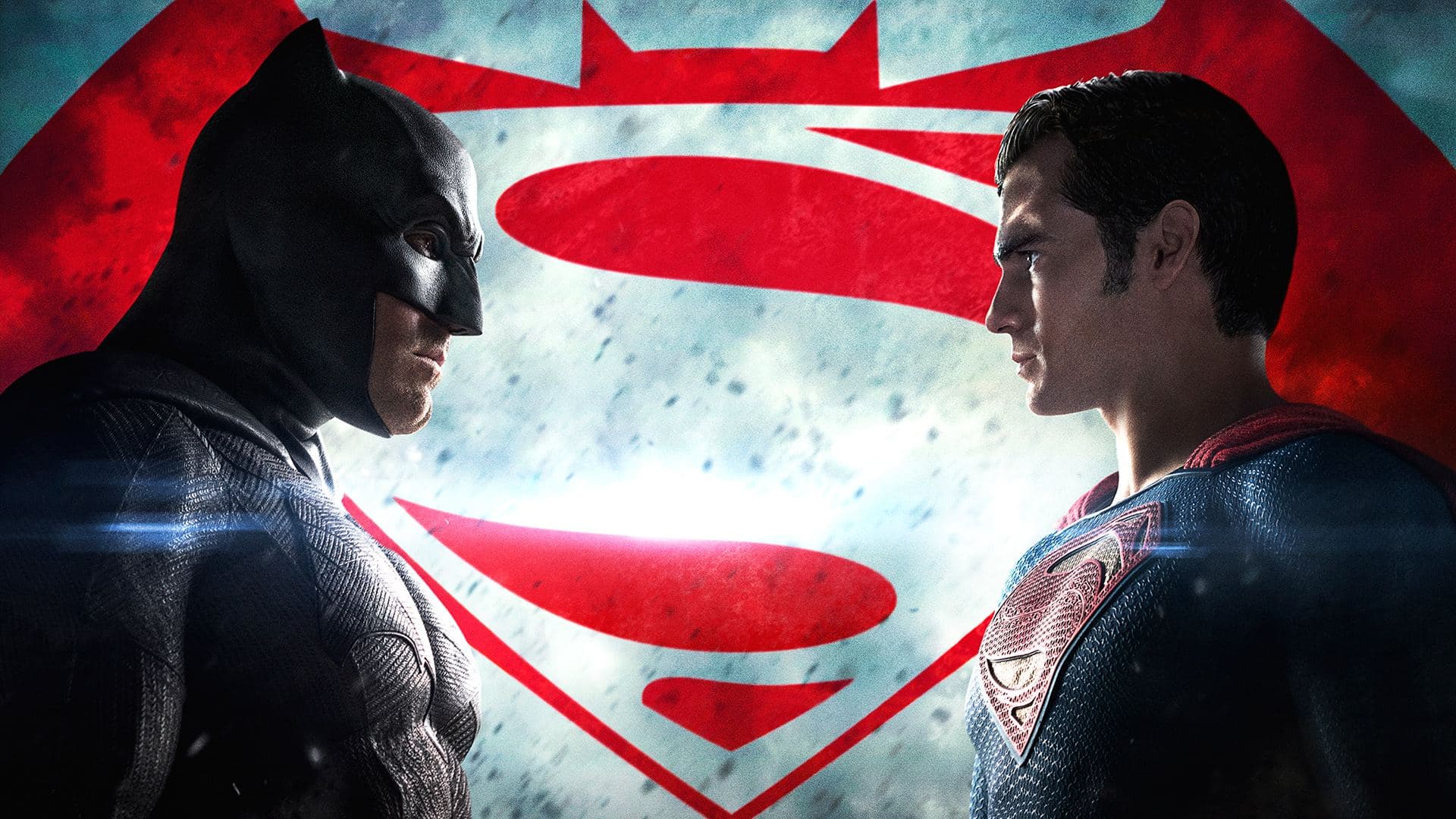
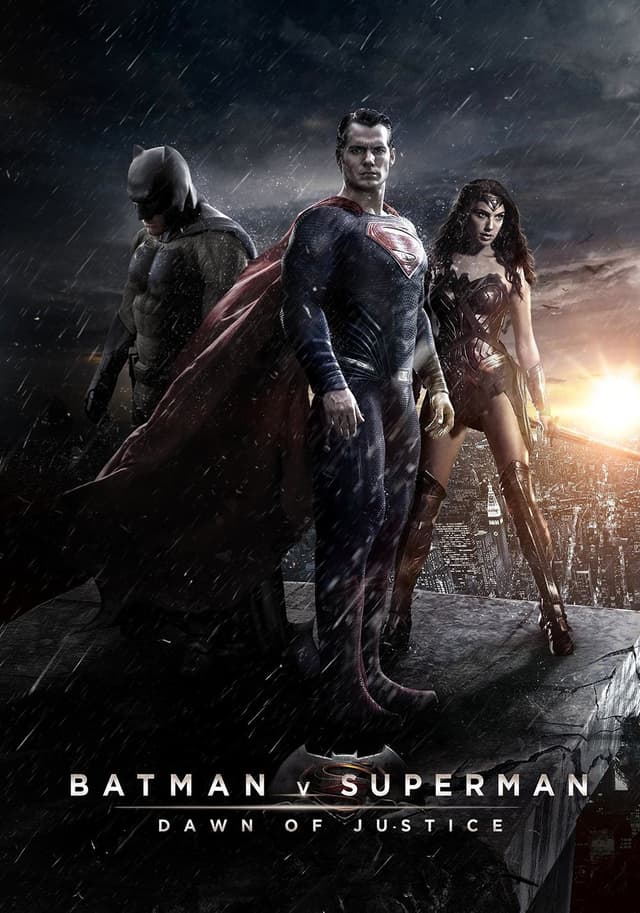
Eighteen months after Superman's battle with General Zod destroyed much of Metropolis, Bruce Wayne becomes convinced that the alien represents an existential threat to humanity. As Batman prepares to confront Superman using kryptonite weapons, Lex Luthor manipulates both heroes from the shadows, kidnapping Martha Kent to force Superman into battle with Batman while simultaneously creating Doomsday, a Kryptonian abomination, from Zod's corpse. When Batman discovers that Superman is not the enemy he imagined, the two heroes must join forces with the mysterious Diana Prince, Wonder Woman, to stop Doomsday before the creature destroys everything they have sworn to protect.
What Is the Budget of Batman v Superman: Dawn of Justice?
Batman v Superman: Dawn of Justice (2016), directed by Zack Snyder and distributed by Warner Bros. Pictures, was produced on a budget of $250,000,000. The film served as the second entry in the DC Extended Universe (DCEU), following Man of Steel (2013), and introduced Ben Affleck's Batman, Gal Gadot's Wonder Woman, and the broader Justice League mythology. The story picks up 18 months after the destruction of Metropolis, as Bruce Wayne, traumatized by Superman's unchecked power, embarks on a campaign to neutralize the alien hero while Lex Luthor (Jesse Eisenberg) manipulates both into conflict.
The $250 million budget reflected Warner Bros.' ambition to establish a DC cinematic universe that could compete with Marvel's box office dominance. Costs were driven by the film's dual role as both a narrative sequel to Man of Steel and a franchise-launching platform introducing Batman, Wonder Woman, the Flash, Aquaman, and Cyborg. Principal photography took place primarily at Michigan Motion Picture Studios in Pontiac, Michigan, with additional work in New Mexico, Chicago, and various locations in the Detroit metropolitan area. The production leveraged Michigan's film tax incentive program, which offered a 25-42% tax credit on qualified expenditures.
Key Budget Allocation Categories
Batman v Superman: Dawn of Justice distributed its $250 million budget across the following production areas:
- Visual Effects and Action Sequences: The film's VFX requirements were extensive, encompassing the Metropolis destruction flashback, the Batmobile chase through Gotham's industrial district, the Knightmare sequence (a post-apocalyptic vision of Superman's dystopia), and the climactic Doomsday battle. Double Negative, Scanline VFX, Weta Digital, and multiple additional houses contributed to the estimated 2,500+ VFX shots. The Doomsday creature, a fully CG antagonist for the final act, required months of animation and rendering work. The Batman warehouse fight, widely praised as one of the best Batman action sequences ever filmed, blended practical stunt choreography with strategic VFX enhancement.
- Production Design and Michigan Studio Base: Production designer Patrick Tatopoulos built elaborate sets at Michigan Motion Picture Studios in Pontiac, Michigan. Key builds included the Batcave, Wayne Manor, LexCorp headquarters, the abandoned Kryptonian ship, the Metropolis and Gotham cityscapes (which were designed as twin cities separated by a bay), and the U.S. Capitol building interior for the Senate hearing sequence. The Michigan studio base provided large soundstage capacity at lower rental rates than California facilities, complemented by the state's film tax incentives.
- Cast and Above-the-Line Talent: Ben Affleck's casting as Batman in December 2013 generated massive public controversy (the "Batfleck" debate) but commanded a significant salary. Henry Cavill returned as Superman, Gal Gadot debuted as Wonder Woman, and Jesse Eisenberg took on a radically reimagined Lex Luthor. Amy Adams, Laurence Fishburne, Diane Lane, and Jeremy Irons rounded out the cast. Zack Snyder's directing fee, producer Charles Roven's costs, and above-the-line writing fees for Chris Terrio and David S. Goyer completed the talent allocation.
- Practical Stunts and Vehicle Work: The Batmobile chase through Gotham was one of the film's most practically executed sequences, with multiple full-scale Batmobile builds used alongside CG augmentation. Stunt coordinator Damon Caro designed the Batman warehouse fight using techniques from martial arts, Krav Maga, and Keysi Fighting Method, creating what many fans consider the most comic-accurate Batman combat ever filmed. Ben Affleck performed a significant portion of his own stunts, supported by stunt double Richard Cetrone.
- Score and Sound Design: Hans Zimmer and Junkie XL (Tom Holkenborg) co-composed the score, with Zimmer handling Superman's themes (continuing from Man of Steel) and Junkie XL developing Batman's sonic identity. Wonder Woman's theme, featuring the electric cello riff by Tina Guo, became an iconic piece of superhero film music. The dual-composer arrangement, while creatively productive, required separate orchestral recording sessions and coordination costs.
- World-Building and Justice League Setup: A portion of the budget supported sequences designed primarily to establish the broader DCEU: the Knightmare sequence, Bruce Wayne's computer files on metahumans (introducing Flash, Aquaman, and Cyborg via surveillance footage), and the Flash's time-travel warning. These sequences, while criticized for disrupting the film's narrative flow, represented Warner Bros.' investment in franchise infrastructure intended to pay off across multiple subsequent films.
How Does Batman v Superman: Dawn of Justice's Budget Compare to Similar Films?
At $250,000,000, Batman v Superman matches the upper tier of superhero franchise films. Comparing it with other DC entries and its direct Marvel competitor:
- Captain America: Civil War (2016): Budget $250,000,000 | Worldwide $1,153,300,000. Released just six weeks after Batman v Superman on an identical budget, Marvel's superhero crossover earned 32% more worldwide. The comparison defined the Marvel vs. DC rivalry in the public consciousness, with Civil War's superior critical reception and audience legs demonstrating the commercial value of character-driven storytelling over spectacle-driven franchise building.
- Man of Steel (2013): Budget $225,000,000 | Worldwide $668,000,000. Snyder's Superman reboot cost 10% less and earned 24% less than Batman v Superman, reflecting the sequel's ability to generate greater opening weekend hype through the Batman brand while also carrying a heavier budget burden.
- The Dark Knight Rises (2012): Budget $250,000,000 | Worldwide $1,081,000,000. Christopher Nolan's Batman trilogy finale matched the same budget and earned 24% more worldwide, demonstrating that the Batman brand could achieve higher returns when paired with critical acclaim and audience trust built over a trilogy.
- Wonder Woman (2017): Budget $149,000,000 | Worldwide $822,900,000. Gal Gadot's standalone debut, launched from her Batman v Superman introduction, cost 40% less and earned 94% as much, proving that the DCEU could achieve near-equivalent commercial results at dramatically lower budgets when critical reception was strong.
- Justice League (2017): Budget $300,000,000 | Worldwide $657,900,000. The team-up sequel that Batman v Superman was designed to set up cost 20% more and earned 25% less, representing the nadir of the DCEU's audience erosion and the commercial cost of Batman v Superman's divisive reception.
Batman v Superman: Dawn of Justice Box Office Performance
Batman v Superman: Dawn of Justice opened in the United States on March 25, 2016, debuting to $166 million domestically in its opening weekend, the largest March opening at the time and a figure that reflected enormous anticipation for the first live-action meeting of DC's two most iconic superheroes. However, the film experienced a historic 69% second-weekend decline, one of the steepest drops ever recorded for a film of its scale, signaling severely negative audience word-of-mouth.
Box Office Breakdown
Batman v Superman: Dawn of Justice

At approximately +249%, Batman v Superman: Dawn of Justice returned roughly $3.49 for every $1 of production budget invested during its theatrical run.
Despite crossing $873 million worldwide, Batman v Superman was widely regarded as a commercial disappointment given its two iconic leads and franchise-launching ambitions. The film suffered a historic 69% second-weekend domestic drop, one of the steepest ever for a superhero film, driven by divisive critical reception (29% Rotten Tomatoes, B CinemaScore). The international gross of $543.2 million (62% of worldwide) underperformed expectations for a global tentpole.
Batman v Superman: Dawn of Justice Production History
Warner Bros. announced that the Man of Steel sequel would feature Batman in July 2013 at San Diego Comic-Con, with Zack Snyder reading a quote from Frank Miller's The Dark Knight Returns to thunderous applause. The decision to introduce Batman directly into Man of Steel's sequel, rather than building toward a crossover through separate solo films (as Marvel had done), reflected Warner Bros.' aggressive strategy to fast-track a DC cinematic universe that could compete with the MCU's established multi-billion-dollar franchise model.
Ben Affleck's casting as Batman in August 2013 provoked one of the most intense fan reactions in superhero cinema history, with an online petition to remove him gathering over 100,000 signatures. Chris Terrio, fresh from winning an Academy Award for Argo's screenplay, was hired to rewrite David S. Goyer's initial script, bringing a more literary and mythologically ambitious approach to the material. The addition of Wonder Woman, the Justice League teases, and the Doomsday climax expanded the film's scope significantly beyond its original conception as a Batman/Superman conflict.
Principal photography ran from May to December 2014 at Michigan Motion Picture Studios in Pontiac, Michigan. The production was among the largest in Michigan's film history, employing thousands of local crew and extras. Additional filming took place in New Mexico (desert sequences), Chicago (standing in for Metropolis exteriors), and various locations in the Detroit metropolitan area. The Michigan film tax incentives, which offered a 25-42% credit on qualified spending, were a significant factor in the production's location choice, though the program was subsequently modified by the state legislature.
Post-production proved challenging as Snyder and editor David Brenner worked to cut a narrative-dense, 3+ hour assembly down to a releasable theatrical runtime. The 151-minute theatrical cut, while still long by blockbuster standards, omitted substantial material including a subplot about African warlord protests framing Superman, additional Congressional investigation scenes, and character moments for Clark Kent's investigative journalism. These omissions, particularly the Africa subplot, created narrative gaps that confused audiences and contributed to the film's negative reception. The 183-minute Ultimate Edition, released on Blu-ray, restored this material and was widely regarded as a more coherent, though still divisive, film.
Awards and Recognition
Batman v Superman: Dawn of Justice did not receive mainstream awards recognition from the major ceremonies, a reflection of its deeply polarized reception. The film was nominated for multiple Razzie Awards, including Worst Picture, Worst Director (Zack Snyder), and Worst Screenplay, though these nominations were themselves controversial given the film's visual ambition and genuine creative vision.
The Batman warehouse fight sequence received widespread recognition from action filmmaking communities as one of the finest superhero fight scenes ever produced, with choreography that translated the Arkham video game combat style to live action. The film's production design, particularly the Batcave and the Kryptonian ship interiors, was praised by design professionals. Wonder Woman's entrance in the final battle, accompanied by Junkie XL and Hans Zimmer's electric cello theme, became an iconic moment in DC cinema despite the film's overall critical struggles.
Critical Reception
Batman v Superman: Dawn of Justice earned a 29% approval rating on Rotten Tomatoes based on 413 reviews, making it one of the most poorly reviewed superhero films of the modern era. On Metacritic, the film scored 44 out of 100, indicating "mixed or average reviews." Audiences gave it a B on CinemaScore, the lowest grade for a DC film since Green Lantern.
The minority of positive reviews praised Zack Snyder's visual ambition, Ben Affleck's Batman performance (which was widely considered the film's strongest element), the warehouse fight choreography, and Larry Fong's cinematography. Gal Gadot's Wonder Woman, though given limited screen time, was praised as a compelling debut that generated genuine excitement for her standalone film.
The majority of negative reviews centered on the film's overstuffed narrative, which attempted to serve as Man of Steel sequel, Batman introduction, Wonder Woman debut, Justice League setup, and Doomsday showdown simultaneously. Jesse Eisenberg's manic, twitchy Lex Luthor divided audiences sharply, with detractors finding the interpretation grating and tonally inconsistent with the film's operatic gravity. The "Martha" scene, where Batman halts his killing blow upon learning that his and Superman's mothers share the same name, became a widely mocked cultural moment, though defenders argued it represented a genuine thematic point about shared humanity that was undermined by execution rather than concept. The critical consensus held that Batman v Superman prioritized world-building and visual spectacle over the character-driven storytelling that could have made its central conflict resonate emotionally.
Frequently Asked Questions
How much did it cost to make Batman v Superman: Dawn of Justice?
The production budget was $250,000,000. Costs were driven by extensive VFX work including 2,500+ shots, elaborate sets at Michigan Motion Picture Studios in Pontiac, the large ensemble cast, and practical stunt work for the Batmobile chase and Batman warehouse fight sequences.
How much did Batman v Superman earn at the box office?
The film grossed $330,400,000 domestically and $543,200,000 internationally, totaling $873,600,000 worldwide. It opened with a massive $166 million domestic weekend but dropped 69% in its second weekend, one of the steepest declines ever for a major blockbuster.
Was Batman v Superman considered a box office disappointment?
Yes. While the film was technically profitable at $873.6 million worldwide on a $250 million budget, Warner Bros. had reportedly projected over $1 billion. The toxic word-of-mouth from the 29% Rotten Tomatoes score, the historic 69% second-weekend drop, and the failure to reach $1 billion were widely considered disappointing for the first live-action meeting of DC's two biggest heroes.
Where was Batman v Superman filmed?
Principal photography ran from May to December 2014 at Michigan Motion Picture Studios in Pontiac, Michigan. Additional filming took place in New Mexico, Chicago, and the Detroit metropolitan area. The production leveraged Michigan's film tax incentive program, which offered a 25-42% credit on qualified expenditures.
What is the Ultimate Edition of Batman v Superman?
The Ultimate Edition is a 183-minute extended cut released on Blu-ray, adding 31 minutes to the 151-minute theatrical version. It restores subplots including an African warlord investigation, additional Congressional scenes, and Clark Kent investigative journalism sequences. It is widely regarded as a significantly improved, more coherent version of the film.
Why did Batman v Superman receive such negative reviews?
Critics cited the overstuffed narrative (simultaneously serving as Man of Steel sequel, Batman introduction, Wonder Woman debut, and Justice League setup), Jesse Eisenberg's divisive Lex Luthor interpretation, the "Martha" scene's polarizing execution, and the feeling that world-building and spectacle were prioritized over character-driven storytelling. The 29% RT score made it one of the most poorly reviewed modern superhero films.
How did Batman v Superman compare to Captain America: Civil War?
Both films had $250 million budgets and released within six weeks of each other in 2016. Civil War earned $1,153,300,000 (32% more) with a 90% RT score, while Batman v Superman earned $873,600,000 with a 29% RT score. The head-to-head comparison was widely seen as a defining moment in the Marvel vs. DC rivalry.
Who plays Batman in Batman v Superman?
Ben Affleck plays Bruce Wayne/Batman. His casting in August 2013 generated intense controversy, with an online petition gathering over 100,000 signatures. Despite the backlash, Affleck's performance was widely considered the film's strongest element, with the warehouse fight and his brooding, world-weary interpretation praised by critics and fans alike.
What is the "Martha" scene in Batman v Superman?
In the climactic fight, Batman is about to kill Superman with a kryptonite spear when Superman says "Save Martha," referring to his kidnapped mother. Batman halts because his own mother was also named Martha. The scene became widely mocked but defenders argue it represents a genuine thematic point about shared humanity that was undermined by its execution.
What is the Rotten Tomatoes score for Batman v Superman?
The film holds a 29% approval rating on Rotten Tomatoes based on 413 reviews and scored 44 out of 100 on Metacritic. Audiences gave it a B on CinemaScore. While one of the most poorly reviewed superhero films of the modern era, the film has a vocal defender community who praise Snyder's visual ambition, Affleck's Batman, and the extended Ultimate Edition.
Filmmakers
Batman v Superman: Dawn of Justice

Official Trailer
Build budgets like this one in Saturation
Start from an industry-standard feature film template, import the schedule and rates you already have, and let the cost report keep itself current as you spend. Real-time collaboration, no spreadsheets.