Justice League Budget
 ActionAdventureScience Fiction2h
Updated
Synopsis
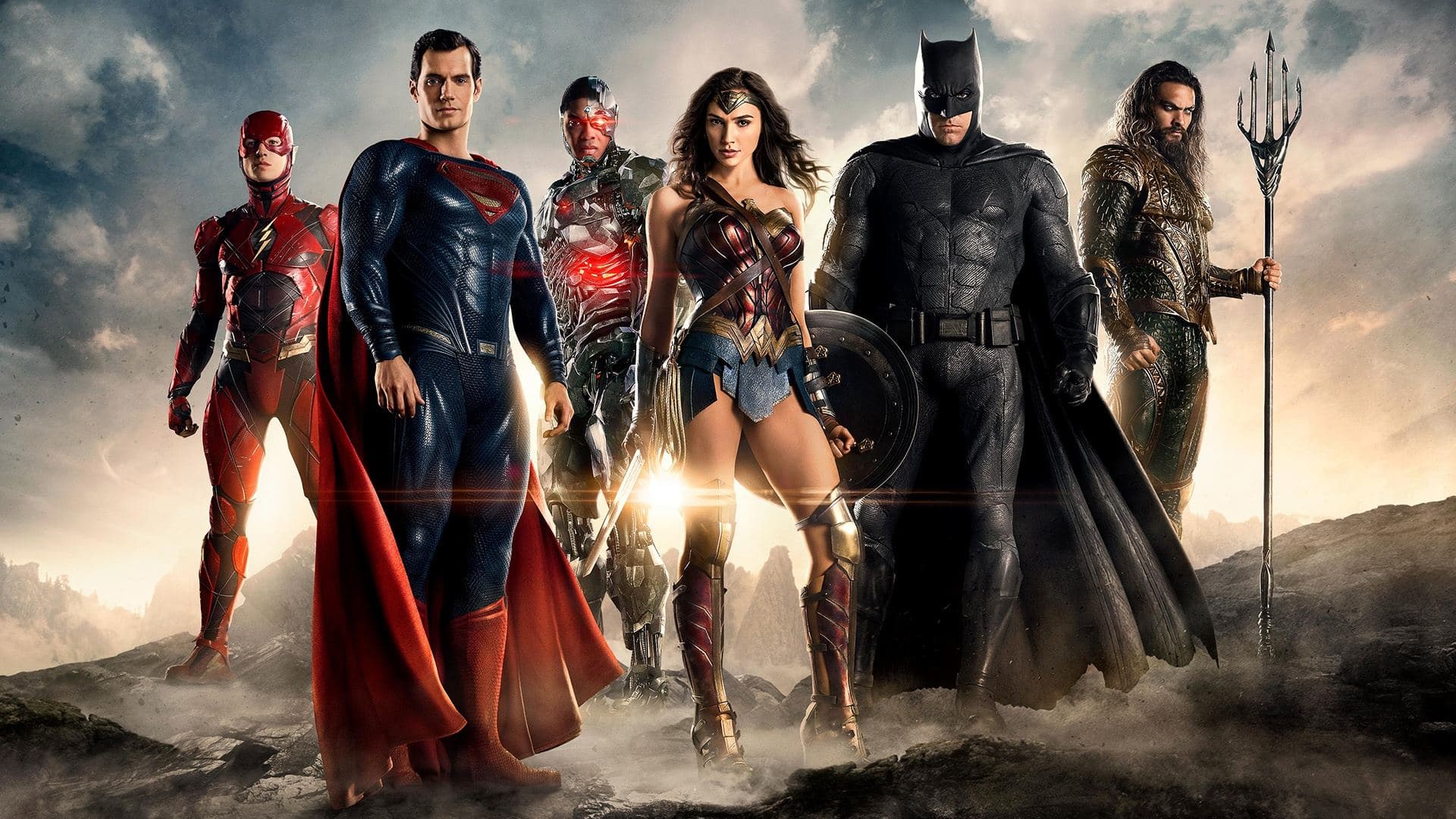
In the wake of Superman's death, Batman and Wonder Woman assemble a team of metahumans, recruiting Aquaman, The Flash, and Cyborg, to face an imminent alien threat. Steppenwolf, a lieutenant of the otherworldly tyrant Darkseid, arrives on Earth to recover three ancient Mother Boxes that, when combined, will terraform the planet. The newly formed Justice League must overcome their differences, resurrect Superman, and unite to stop Steppenwolf before the Mother Boxes are unified and Earth is destroyed.
What Is the Budget of Justice League?
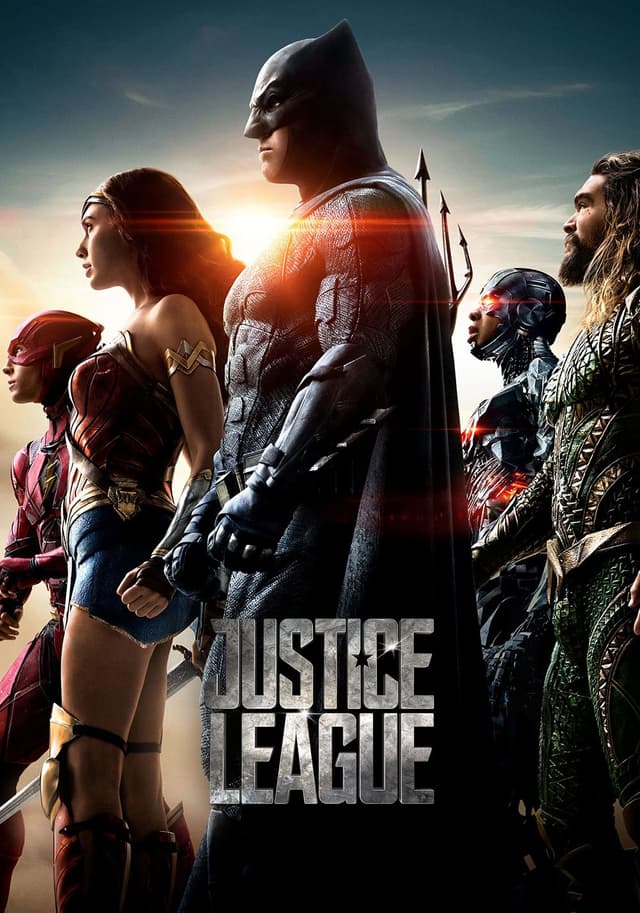
Justice League (2017), directed by Zack Snyder with substantial uncredited reshoots by Joss Whedon, was produced by Warner Bros. Pictures on a budget of $300 million. The film represents one of the most troubled and expensive productions in modern blockbuster history, with its costs ballooning due to extensive reshoots that effectively reconstructed large portions of the film under a new creative vision. The theatrical release assembled DC's premiere superhero team, bringing together Batman, Wonder Woman, Aquaman, The Flash, and Cyborg to face the alien conqueror Steppenwolf.
The $300 million figure accounts for both Snyder's original photography and Whedon's extensive reshoots. Snyder stepped away from the project during post-production following a family tragedy, and Warner Bros. hired Whedon to oversee the film's completion. What was initially described as minor additional photography evolved into a fundamental reshaping of the film's tone, structure, and content, with Whedon reportedly rewriting and reshooting enough material to constitute a substantially different film from Snyder's intended vision. The gap between the two versions became the basis for the fan campaign that ultimately produced Zack Snyder's Justice League in 2021.
Key Budget Allocation Categories
The $300 million budget was distributed across several major production areas:
- Ensemble Cast Compensation: Ben Affleck (Batman), Gal Gadot (Wonder Woman), Jason Momoa (Aquaman), Ezra Miller (The Flash), Ray Fisher (Cyborg), and Henry Cavill (Superman) collectively represented enormous above-the-line costs. Affleck and Gadot, as the highest-profile members coming off Batman v Superman and Wonder Woman respectively, commanded the largest individual fees.
- Extensive Reshoots Under Joss Whedon: The reshoot phase, which ran from July through October 2017, was reportedly budgeted at $25-50 million but likely exceeded those estimates. The reshoots required reassembling the principal cast (with scheduling conflicts around Henry Cavill's mustache for Mission: Impossible - Fallout becoming notorious), rebuilding sets that had been struck, and generating new visual effects for reshot sequences. The digital removal of Cavill's mustache alone required significant VFX resources.
- Visual Effects: Multiple VFX houses handled the film's extensive digital work, including the fully CG villain Steppenwolf, Superman's digitally altered upper lip, large-scale battle environments, and the individual superpowers of each team member. The compressed post-production timeline following Whedon's reshoots forced VFX vendors to deliver work under extreme time pressure, contributing to the finished film's uneven visual quality.
- Production Design and Set Construction: Large-scale practical sets were constructed for the Batcave, the underground tunnels, Themyscira, and various battle environments. Many of these sets were built at Warner Bros. Studios Leavesden in the United Kingdom and had to be partially reconstructed for Whedon's reshoots after they were initially struck following Snyder's principal photography.
- Two Full Post-Production Cycles: The film effectively went through post-production twice: once under Snyder's supervision and again under Whedon's. This doubled the editorial, sound design, color grading, and music costs. Danny Elfman composed a new score that replaced Junkie XL's (Tom Holkenborg's) original compositions, adding the expense of a second full orchestral score.
How Does Justice League's Budget Compare to Similar Films?
At $300 million, Justice League ranks among the most expensive superhero films ever produced. Comparing it with DC and Marvel contemporaries:
- The Avengers (2012): Budget $220,000,000 | Worldwide $1,518,815,515. Marvel's first team-up film, which Justice League was explicitly positioned to rival, cost 27% less and earned more than double at the box office. The Avengers benefited from five preceding solo films that established audience investment in each character.
- Batman v Superman: Dawn of Justice (2016): Budget $250,000,000 | Worldwide $873,634,919. The direct predecessor to Justice League cost $50 million less and earned significantly more, though its front-loaded box office (with a massive opening weekend followed by steep drops) signaled audience dissatisfaction that carried over to Justice League.
- Avengers: Age of Ultron (2015): Budget $365,000,000 | Worldwide $1,395,316,979. Marvel's sequel cost more than Justice League but earned over double worldwide, demonstrating that audiences would support expensive ensemble superhero films when the franchise had earned their trust.
- Wonder Woman (2017): Budget $149,000,000 | Worldwide $822,854,286. Released just months before Justice League, Patty Jenkins' film cost half as much and earned 25% more worldwide, suggesting that a focused single-character story resonated more strongly than DC's rushed ensemble approach.
- Aquaman (2018): Budget $200,000,000 | Worldwide $1,148,461,807. Released just one year after Justice League, James Wan's Aquaman spinoff cost a third less and outgrossed it by 75%, demonstrating that the DC brand could still perform when the material connected with audiences.
Justice League Box Office Performance
Justice League opened in the United States on November 17, 2017, earning $93.8 million in its opening weekend. While this was a solid opening, it fell below industry tracking estimates of $110-120 million and significantly below Batman v Superman's $166 million debut.
Box Office Breakdown
Justice League

At approximately +120%, Justice League returned roughly $2.20 for every $1 of production budget invested during its theatrical run.
Justice League was a significant financial loss for Warner Bros. With a worldwide gross of $657.9 million against a $300 million production budget plus estimated $150-175 million in marketing, the total investment approached $475 million. After theatrical distribution fees (studios receive approximately 50% of domestic and 40% of international grosses), the film generated an estimated $275-300 million in theatrical revenue against $475 million in costs, resulting in a theatrical loss estimated at $60-100 million.
The domestic gross of $229 million was especially alarming, representing the lowest domestic total for any DCEU film at that point. The 60% second-weekend drop indicated poor word-of-mouth, and the film's 120-minute runtime (mandated by Warner Bros. to allow more daily showings) left audiences feeling the story was incomplete. The international performance of $428.9 million, while larger than domestic, fell well below the expectations for DC's premiere superhero team.
Justice League Production History
Warner Bros. announced Justice League as the centerpiece of its DC Extended Universe strategy, with Zack Snyder directing directly following Batman v Superman: Dawn of Justice. Snyder envisioned a darker, more mythological approach to the team-up story, with Steppenwolf serving as a harbinger of the larger threat of Darkseid. Chris Terrio wrote the screenplay, building on characters and conflicts established in Batman v Superman and Wonder Woman.
Principal photography began in April 2016 at Warner Bros. Studios Leavesden in England and continued through October 2016. Snyder shot extensive material establishing the team's formation, individual character arcs for Aquaman, Flash, and Cyborg, and a version of the Steppenwolf conflict that was reportedly darker and more complex than what appeared in the theatrical cut. The film was intended to be approximately 2.5 to 3 hours long, following the extended runtime model of Batman v Superman.
In early 2017, Snyder stepped away from the project following the death of his daughter. Warner Bros. hired Joss Whedon, fresh from directing both Avengers films for Marvel, to complete the film. What began as finishing touches evolved into substantial reshoots from July to October 2017. Whedon rewrote significant portions of the script, adding humor and lightness while cutting much of Snyder's darker material. Warner Bros. mandated a two-hour theatrical cut, requiring the removal of approximately an hour of material.
The reshoot period was marked by behind-the-scenes tensions. Henry Cavill had grown a mustache for Mission: Impossible - Fallout and was contractually prohibited from shaving it, forcing the production to digitally remove it in post, a process that produced visually inconsistent results. Ray Fisher later alleged unprofessional conduct during the reshoots, sparking a public dispute with the studio. The compressed post-production timeline forced VFX vendors to deliver work at speeds that compromised quality, most visibly in Steppenwolf's final design and several composite shots.
Awards and Recognition
Justice League received no significant awards recognition, consistent with its troubled production and mixed reception. The film was nominated for multiple Razzie Awards, including Worst Sequel and Worst Screen Combo. The digital effects work, particularly the controversial Superman facial effects, became a subject of industry discussion about the dangers of compressed VFX timelines.
The film's primary legacy in the awards and cultural conversation was the "Release the Snyder Cut" movement, a sustained fan campaign that ultimately led Warner Bros. to finance the completion and release of Zack Snyder's Justice League in 2021. The Snyder Cut, running 242 minutes and featuring an entirely different score by Junkie XL, received significantly more favorable critical and audience response than the 2017 theatrical version, validating the fan movement's thesis that a substantially different and better film existed.
Critical Reception
Justice League received negative reviews, earning a 40% approval rating on Rotten Tomatoes and a 45 out of 100 on Metacritic. Critics identified the film as a compromise product that satisfied neither Snyder's original vision nor Whedon's attempt to lighten the DCEU's tone.
The most common criticism was the film's tonal inconsistency, with Snyder's darker mythological material sitting uneasily alongside Whedon's quippier, more lighthearted additions. Steppenwolf was widely criticized as a generic, poorly rendered villain with unclear motivations. The 120-minute runtime, mandated by Warner Bros., left the film feeling rushed and incomplete, with character arcs for Cyborg, Flash, and Aquaman receiving insufficient development.
Some critics found elements to praise: Gal Gadot's Wonder Woman remained a compelling screen presence, Ezra Miller's Flash provided genuine comic relief, and the film's final battle had moments of effective spectacle. Jason Momoa's Aquaman was seen as charismatic enough to justify the subsequent solo film. Ben Affleck's Batman, however, was viewed as notably less engaged than in Batman v Superman, with reports of the actor's own dissatisfaction with the production echoing in his on-screen performance. Henry Cavill's Superman, limited to the film's final act, was well-received when not obscured by the digital lip alteration.
Frequently Asked Questions
How much did it cost to make Justice League (2017)?
Justice League had a production budget of $300 million. The budget was inflated by extensive reshoots under Joss Whedon (estimated at $25-50 million), the large ensemble cast, sets that had to be rebuilt for reshoots, two separate post-production cycles, and two complete film scores (Danny Elfman replaced Junkie XL).
How much did Justice League earn at the box office?
The film grossed $229,024,295 domestically and $428.9 million internationally for a worldwide total of $657,924,295. It opened at $93.8 million domestically, below tracking estimates of $110-120 million.
Was Justice League a box office bomb?
Effectively yes. Against a $300 million production budget plus $150-175 million in marketing, the total investment was approximately $475 million. After theatrical distribution fees, the film generated an estimated $275-300 million in revenue, resulting in a theatrical loss of $60-100 million.
Why did Zack Snyder leave Justice League?
Snyder stepped away from the production in early 2017 following the death of his daughter. Warner Bros. hired Joss Whedon to complete the film, but what began as finishing work evolved into substantial reshoots that fundamentally changed the film's tone and structure.
What is the Snyder Cut?
Zack Snyder's Justice League (2021) is the director's original vision, released on HBO Max after a sustained fan campaign. Running 242 minutes with a different score by Junkie XL, it received significantly more favorable reviews than the 2017 theatrical version and is considered a substantially different film.
Why was Superman's face digitally altered in Justice League?
Henry Cavill had grown a mustache for Mission: Impossible - Fallout and was contractually prohibited from shaving it during Justice League reshoots. The production digitally removed the mustache in post-production, but the results were visually inconsistent and became one of the film's most discussed technical issues.
What did critics think of Justice League?
The film received negative reviews: 40% on Rotten Tomatoes and 45 on Metacritic. Critics found it tonally inconsistent, with Snyder's darker material sitting uneasily alongside Whedon's lighter additions. Steppenwolf was criticized as a generic villain, and the 120-minute runtime felt rushed.
How does Justice League compare to The Avengers at the box office?
Justice League earned $657.9 million worldwide on a $300 million budget, while The Avengers (2012) earned $1.519 billion on a $220 million budget. Marvel's approach of building audience investment through individual character films before the team-up proved far more commercially effective than DC's faster-tracked strategy.
Who directed Justice League?
Zack Snyder directed principal photography (April to October 2016). Joss Whedon directed the extensive reshoots (July to October 2017) and oversaw the final cut, though he received only a screenwriting credit. The 2017 theatrical version represents a hybrid of both directors' work.
Why was Justice League only 2 hours long?
Warner Bros. mandated a 120-minute theatrical cut to allow more daily screenings and maximize ticket revenue. This required removing approximately an hour of material from Snyder's longer intended cut, a decision that left character arcs for Cyborg, Flash, and Aquaman underdeveloped.
Filmmakers
Justice League

Official Trailer
Build budgets like this one in Saturation
Start from an industry-standard feature film template, import the schedule and rates you already have, and let the cost report keep itself current as you spend. Real-time collaboration, no spreadsheets.