Captain America: Civil War Budget
 AdventureActionScience Fiction2h 27m
Updated
Synopsis
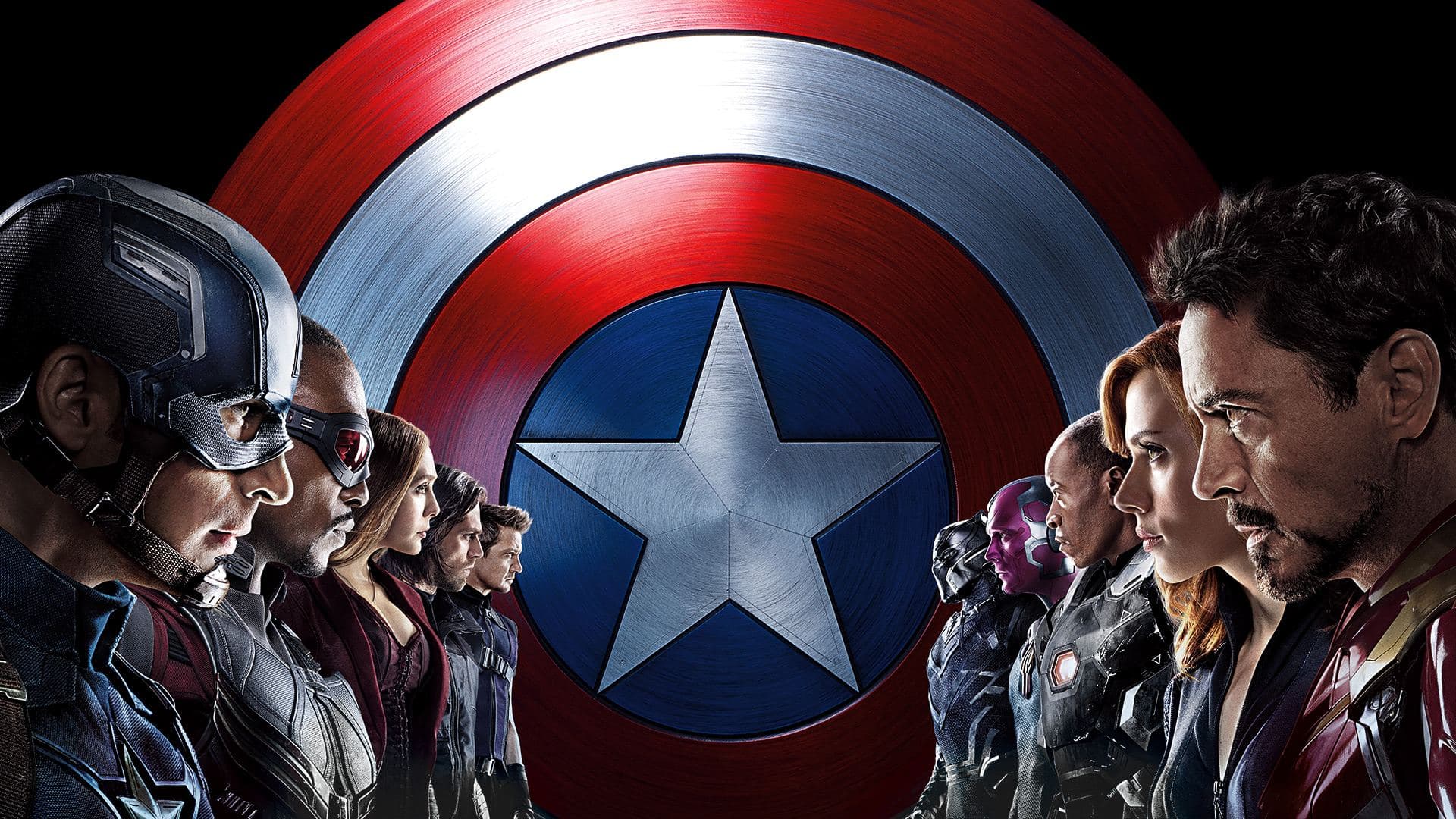
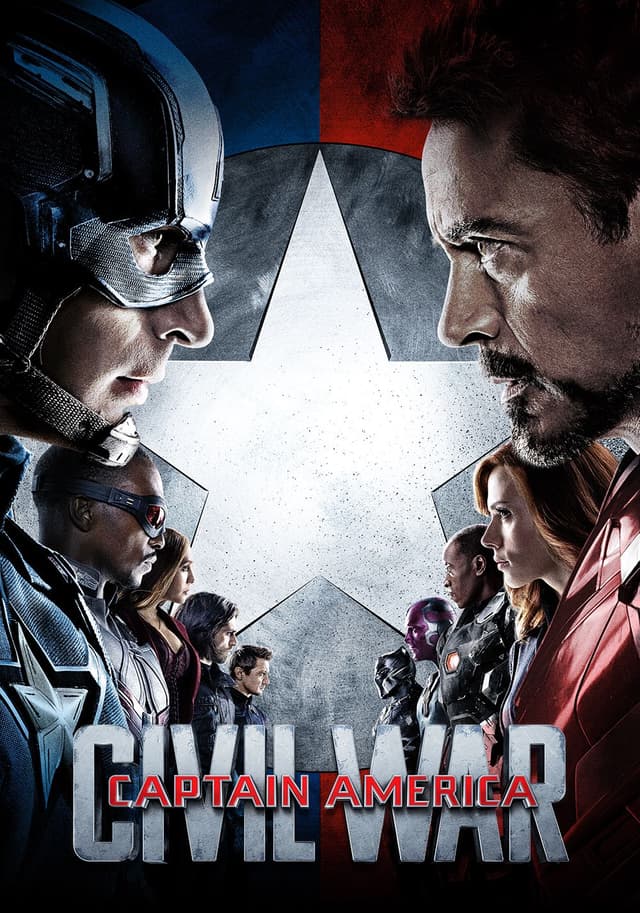
After an Avengers mission in Lagos results in civilian casualties, the United Nations drafts the Sokovia Accords to establish government oversight of the team. Tony Stark supports the legislation, haunted by guilt over Ultron, while Steve Rogers opposes it, distrusting institutional control after SHIELD's collapse. When the Winter Soldier is framed for a bombing at the UN ratification ceremony, Rogers goes rogue to protect his old friend Bucky Barnes, forcing each Avenger to choose a side. As the team fractures into open conflict at Leipzig airport, a hidden puppeteer manipulates events to expose a devastating secret that will shatter the bond between Captain America and Iron Man forever.
What Is the Budget of Captain America: Civil War?
Captain America: Civil War (2016), directed by Anthony and Joe Russo and distributed by Walt Disney Studios Motion Pictures, was produced on a budget of $250,000,000. The thirteenth film in the Marvel Cinematic Universe adapted elements from Mark Millar's 2006 comic book storyline while building on the political tensions established in Captain America: The Winter Soldier (2014). The film pitted Steve Rogers against Tony Stark over the Sokovia Accords, government oversight legislation that divided the Avengers into opposing factions after collateral damage from their missions reached a political tipping point.
The $250 million budget reflected the film's scope as essentially an Avengers ensemble film under the Captain America banner. Costs were driven by the large cast of returning heroes, each commanding significant salaries, the production of elaborate action sequences including the landmark airport battle in Leipzig, and extensive visual effects work across multiple international locations. Principal photography took place primarily at Pinewood Atlanta Studios in Fayette County, Georgia, with additional shooting in Berlin, Leipzig, and other locations in Germany.
Key Budget Allocation Categories
Captain America: Civil War distributed its $250 million budget across the following production areas:
- Cast and Above-the-Line Talent: Civil War assembled one of the largest superhero casts to that point, with Robert Downey Jr., Chris Evans, Scarlett Johansson, Sebastian Stan, Anthony Mackie, Don Cheadle, Jeremy Renner, Paul Bettany, Elizabeth Olsen, Paul Rudd, and Emily VanCamp reprising their MCU roles. The film also introduced Chadwick Boseman as Black Panther and Tom Holland as Spider-Man. Downey's salary alone was reported at approximately $40 million, reflecting his leverage as the MCU's anchor performer. The Russo Brothers' directing fees and Kevin Feige's producing costs added to a substantial above-the-line allocation.
- Visual Effects and Action Sequences: The centerpiece airport battle sequence, filmed at Leipzig/Halle Airport and expanded dramatically through VFX, required months of pre-visualization, motion capture, and digital compositing. Industrial Light & Magic led the VFX work alongside multiple vendor studios. The sequence featured Giant-Man's first appearance, the debut of Spider-Man's web-swinging in an MCU battle, and coordinated action between twelve heroes. The final act bunker fight between Captain America, Iron Man, and the Winter Soldier blended practical stunt work with digital face replacement and suit augmentation.
- Production Design and International Locations: Production designer Owen Paterson created sets at Pinewood Atlanta Studios in Fayette County, Georgia, including the Avengers compound, the Raft prison, and the Siberian Hydra facility. Location shooting in Germany provided the Leipzig airport and Berlin street scenes. Additional shooting took place in Puerto Rico (standing in for Lagos, Nigeria), Atlanta, and the Falkenstein Castle in Saxony. The international scope required substantial location management and travel logistics for the large cast and crew.
- Stunt Coordination and Practical Action: Stunt coordinator Sam Hargrave (who later directed Extraction) designed the hand-to-hand combat sequences, particularly the close-quarters fights in the Lagos marketplace, the Bucharest apartment pursuit, and the Siberian bunker confrontation. Civil War emphasized a grounded, physical fighting style that distinguished it from the VFX-heavy spectacle of the Avengers films. Extensive wire work, fight choreography rehearsals, and stunt double coordination for twelve heroes in the airport battle required a large stunt team working across several months.
- Score and Post-Production: Henry Jackman returned to compose the score after his work on The Winter Soldier, maintaining the grounded, thriller-influenced musical identity of the Captain America sub-franchise. Post-production ran from August 2015 through early 2016, with VFX work continuing up to the release date. Sound design for the airport battle demanded detailed layering of each hero's distinct audio signature across a single extended sequence.
- Spider-Man and Black Panther Integration: The introduction of Tom Holland's Spider-Man required coordination with Sony Pictures, which held the Spider-Man film rights. A separate deal between Disney and Sony allowed Spider-Man's MCU debut, with costume design, web-slinging VFX, and Holland's performance requiring dedicated VFX resources. Chadwick Boseman's Black Panther similarly received a full costume design, vibranium suit VFX treatment, and dedicated action choreography that would carry into his standalone film.
How Does Captain America: Civil War's Budget Compare to Similar Films?
At $250,000,000, Civil War sits in the upper tier of MCU budgets for its era. Comparing it with other ensemble superhero films and franchise entries:
- Avengers: Age of Ultron (2015): Budget $365,000,000 | Worldwide $1,405,400,000. The preceding Avengers ensemble cost 46% more but earned only 22% more worldwide, suggesting Civil War achieved comparable audience appeal at a lower production cost by framing the story through Captain America rather than assembling the full Avengers spectacle.
- Batman v Superman: Dawn of Justice (2016): Budget $250,000,000 | Worldwide $873,600,000. Released just six weeks before Civil War on the same budget, Warner Bros.' superhero crossover earned 24% less worldwide. The head-to-head comparison became a defining moment in the Marvel vs. DC rivalry, with Civil War's superior critical reception translating into stronger legs at the box office.
- Captain America: The Winter Soldier (2014): Budget $177,000,000 | Worldwide $714,300,000. The predecessor cost 29% less and earned 38% less, reflecting the franchise's growth as Civil War expanded from a solo Captain America film into an ensemble event.
- Spider-Man: Homecoming (2017): Budget $175,000,000 | Worldwide $880,200,000. Tom Holland's standalone debut, launched off his Civil War introduction, cost 30% less. Civil War's airport battle and the chemistry between Holland and Downey effectively served as a $250 million marketing campaign for the Spider-Man franchise's MCU relaunch.
- Black Panther (2018): Budget $200,000,000 | Worldwide $1,347,600,000. Chadwick Boseman's standalone debut, similarly launched from Civil War, surpassed its parent film's worldwide gross by 17% on a 20% lower budget, becoming a cultural phenomenon that validated Civil War's investment in introducing the character.
Captain America: Civil War Box Office Performance
Captain America: Civil War opened in the United States on May 6, 2016, debuting to $179.1 million domestically in its opening weekend, the fifth-largest opening at that time. The film had already earned substantial international revenue from its earlier global rollout, which began on April 27 in select markets.
Box Office Breakdown
Captain America: Civil War

At approximately +361%, Captain America: Civil War returned roughly $4.61 for every $1 of production budget invested during its theatrical run.
Civil War crossed the $1 billion mark with a nearly even domestic/international split: $408.1 million domestic (35%) and $745.2 million international (65%). The film outperformed its predecessor The Winter Soldier ($714.3 million worldwide) by 61%, validating Marvel's strategy of escalating the Captain America sub-franchise into an ensemble event film.
Captain America: Civil War Production History
Development on a third Captain America film began during the production of The Winter Soldier, with Christopher Markus and Stephen McFeely returning as screenwriters. The decision to adapt the Civil War storyline, which in the comics involved hundreds of characters and a mutant registration act, required significant reimagining for the MCU's existing roster. Markus and McFeely shifted the conflict from registration to government oversight via the Sokovia Accords, grounding the political divide in the personal relationship between Steve Rogers and Tony Stark.
Anthony and Joe Russo returned to direct after The Winter Soldier's critical and commercial success. Their pitch to Kevin Feige centered on making a politically charged thriller that happened to feature superheroes, maintaining the espionage tone of The Winter Soldier while escalating to a larger ensemble. The Russos' vision won over Feige's team against alternative approaches that would have kept the film closer to a traditional Captain America solo adventure.
Principal photography ran from April to August 2015, primarily at Pinewood Atlanta Studios in Fayette County, Georgia. The production utilized the state's film tax incentives, which offered a 20% base credit plus an additional 10% for including the Georgia peach logo in end credits. Location work in Germany included the Leipzig/Halle Airport, which was partly shut down for filming, and streets in Berlin for the Bucky Barnes pursuit sequence. Additional locations in Puerto Rico doubled for Lagos, Nigeria, in the film's opening action sequence.
The airport battle sequence required three weeks of dedicated shooting and months of pre-visualization work. The Russos employed a "previz-on-steroids" approach, working with The Third Floor visualization studio to block out every beat of the twelve-hero battle before cameras rolled. The Giant-Man reveal, one of the film's signature moments, was kept secret from most of the cast until late in production. Tom Holland's Spider-Man scenes were filmed separately and integrated during post-production, reflecting the late-stage nature of the Sony-Disney deal that brought the character into the MCU.
Awards and Recognition
Captain America: Civil War was nominated for Best Visual Effects at the 89th Academy Awards but lost to The Jungle Book. The film's airport battle sequence was widely cited as one of the most technically ambitious action sequences in superhero cinema, though the Academy ultimately favored The Jungle Book's photorealistic animal animation.
The film received additional nominations from the Visual Effects Society, the Saturn Awards (winning Best Comic-to-Film Motion Picture), and multiple Critics' Choice and People's Choice awards. Chadwick Boseman's debut as Black Panther earned him a nomination for Best Action Movie Actor at the Critics' Choice Awards, and Tom Holland's Spider-Man introduction was widely praised as the definitive live-action portrayal of a teenage Peter Parker.
Civil War's lasting industry legacy extends beyond awards. The Russo Brothers' work on the film led directly to their assignment on Avengers: Infinity War and Endgame, the culmination of the MCU's first decade. The film's success in balancing a large ensemble while maintaining character-driven emotional stakes became the template for Marvel's crossover events.
Critical Reception
Captain America: Civil War earned a 90% approval rating on Rotten Tomatoes based on 405 reviews, with a critics consensus praising the film's ability to juggle a massive cast while maintaining emotional depth and delivering spectacular action. On Metacritic, the film scored 75 out of 100, indicating "generally favorable reviews." Audiences gave it an A on CinemaScore, matching the grade of The Winter Soldier and reflecting strong word-of-mouth support.
Critics praised the Russo Brothers' ability to balance the political thriller elements of The Winter Soldier with the ensemble spectacle expected of an Avengers-scale crossover. The airport battle was nearly universally lauded as the finest action sequence in the MCU to that point, with the character interactions, humor, and choreographic inventiveness drawing comparisons to the first Avengers' Battle of New York. Robert Downey Jr. and Chris Evans received particular acclaim for grounding the ideological conflict in their personal relationship, preventing the film from devolving into a generic hero-vs-hero slugfest.
The film's primary criticisms centered on the villain Helmut Zemo (Daniel Bruhl), whose understated scheme felt underwhelming to viewers expecting a more action-oriented antagonist, and on the sense that Marvel had effectively made an Avengers film under the Captain America banner to avoid Avengers sequel fatigue. However, the majority of reviewers considered these minor concerns in the context of a film that successfully launched two new franchises (Black Panther and Spider-Man), delivered the MCU's most emotionally resonant climax, and proved that superhero fatigue could be forestalled by prioritizing character and consequence over spectacle.
Frequently Asked Questions
How much did it cost to make Captain America: Civil War?
The production budget was $250,000,000. Major cost drivers included the large ensemble cast with Robert Downey Jr. earning approximately $40 million, elaborate action sequences including the airport battle filmed at Leipzig/Halle Airport, and extensive VFX work at Pinewood Atlanta Studios in Georgia.
How much did Captain America: Civil War earn at the box office?
The film grossed $408,100,000 domestically and $745,200,000 internationally, totaling $1,153,300,000 worldwide. It was the highest-grossing film of 2016 and the first Captain America film to surpass $1 billion.
Was Captain America: Civil War more successful than Batman v Superman?
Yes. Both films had $250 million budgets, but Civil War earned $1,153,300,000 worldwide compared to Batman v Superman's $873,600,000, a difference of $279.7 million. Civil War also received significantly stronger reviews (90% vs 29% on Rotten Tomatoes) and better audience scores.
Where was Captain America: Civil War filmed?
Principal photography took place from April to August 2015, primarily at Pinewood Atlanta Studios in Fayette County, Georgia. Location work included Leipzig/Halle Airport and Berlin streets in Germany, and Puerto Rico doubling for Lagos, Nigeria. The production utilized Georgia's film tax incentives.
How was the airport battle scene in Civil War filmed?
The airport sequence required three weeks of dedicated shooting and months of pre-visualization by The Third Floor studio. The Russos used a detailed previz process to choreograph all twelve heroes' movements before filming. Giant-Man's reveal was kept secret from most cast members, and Tom Holland's Spider-Man scenes were shot separately and composited in post-production.
How did Spider-Man end up in Captain America: Civil War?
A deal between Disney and Sony Pictures, finalized in February 2015, allowed Spider-Man to appear in MCU films while Sony retained distribution rights for standalone Spider-Man movies. Tom Holland was cast in June 2015 and his scenes were filmed separately, then integrated during post-production. His Civil War appearance served as a launchpad for Spider-Man: Homecoming (2017).
What awards did Captain America: Civil War receive?
The film was nominated for Best Visual Effects at the 89th Academy Awards, losing to The Jungle Book. It won Best Comic-to-Film Motion Picture at the Saturn Awards and received nominations from the Visual Effects Society, Critics' Choice Awards, and People's Choice Awards.
How does Civil War compare to The Winter Soldier?
Civil War cost $250 million versus The Winter Soldier's $177 million and earned $1.153 billion versus $714.3 million worldwide. Both earned A grades on CinemaScore and strong Rotten Tomatoes scores (90% vs 90%), but Civil War expanded the scope from a solo thriller into an ensemble event that effectively functioned as Avengers 2.5.
Who composed the score for Captain America: Civil War?
Henry Jackman composed the score, returning after his work on The Winter Soldier. He maintained the grounded, thriller-influenced musical identity of the Captain America sub-franchise while expanding the palette to accommodate the larger ensemble cast and the emotional weight of the Steve-Tony conflict.
What is the Rotten Tomatoes score for Captain America: Civil War?
The film holds a 90% approval rating on Rotten Tomatoes based on 405 reviews and scored 75 out of 100 on Metacritic. Audiences gave it an A on CinemaScore. Critics praised the Russo Brothers' ability to balance the political thriller tone with spectacular ensemble action, particularly the airport battle and the emotionally charged Siberian bunker climax.
Filmmakers
Captain America: Civil War

Official Trailer
Build budgets like this one in Saturation
Start from an industry-standard feature film template, import the schedule and rates you already have, and let the cost report keep itself current as you spend. Real-time collaboration, no spreadsheets.