Antz Budget
 AnimationComedyAdventure1h 23m
Updated
Synopsis
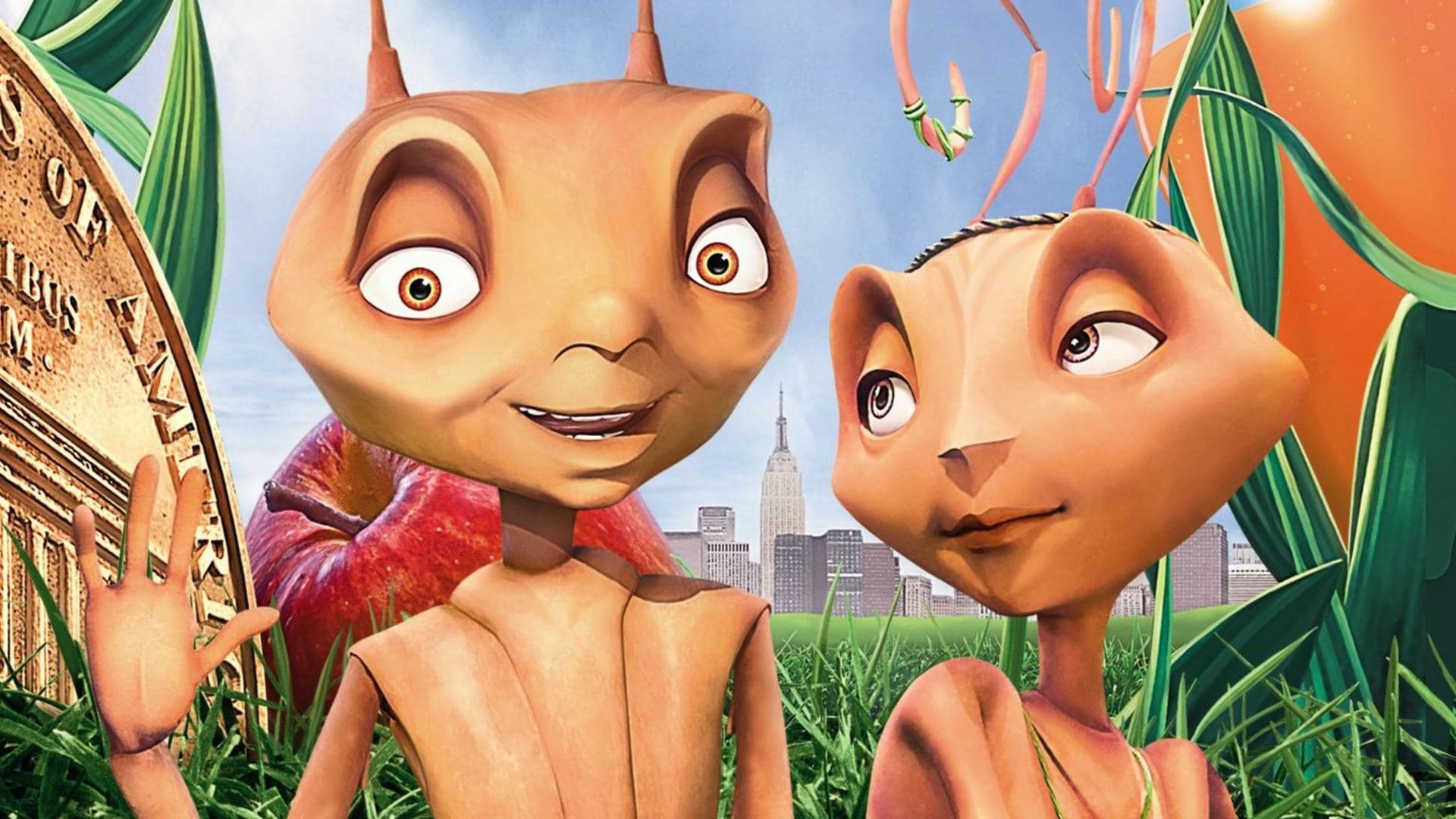
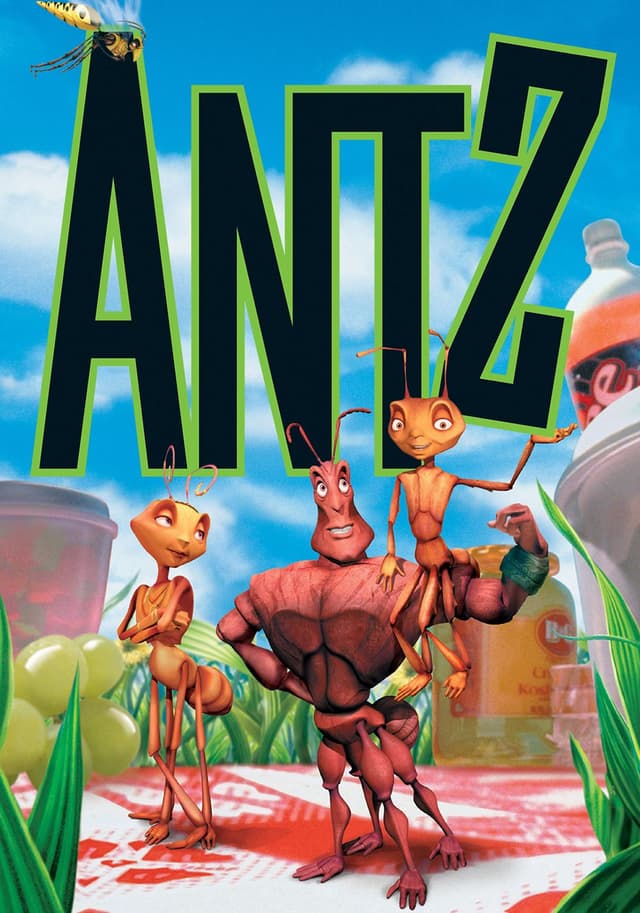
"Antz" is an animated film that takes viewers into the bustling underground world of ants. The story follows Z, a worker ant who feels out of place in his highly structured society. Struggling with his identity and yearning for individuality, Z embarks on a journey of self-discovery. His life takes a dramatic turn when he accidentally switches places with a soldier ant, leading him to meet the beautiful Princess Bala. As Z navigates the challenges of his new role, he uncovers a sinister plot that threatens the colony. With the help of his friends, Z must rally the ants to fight for their freedom and embrace the idea that being different is what makes them strong. This heartwarming tale explores themes of conformity, bravery, and the importance of standing up for oneself.
What Is the Budget of Antz?
Antz (1998) carried a production budget reported by DreamWorks at approximately $42 million, though industry analysts and contemporaneous reporting placed the true all-in cost considerably higher, with estimates ranging up to $105 million once PDI infrastructure and start-up costs are included. The Los Angeles Times noted at the time that the $42 million figure was widely doubted, given that competing CGI productions routinely cost twice that amount.
Whatever the precise figure, Antz was a landmark production: DreamWorks Animation's first fully computer-generated feature film, built at a breakneck pace to reach theaters before Pixar's A Bug's Life. The film assembled one of the most expensive and recognizable voice casts in animation history, with Woody Allen, Gene Hackman, Sharon Stone, Sylvester Stallone, Jennifer Lopez, and Christopher Walken all contributing performances.
Released on October 2, 1998, Antz arrived in theaters six weeks before A Bug's Life. It earned $90.7 million domestically and $171.8 million worldwide, outpacing its conservative reported budget but falling short of A Bug's Life during the holiday season.
Key Budget Allocation Categories
- Above-the-Line Voice Talent: Woody Allen, Gene Hackman, Sharon Stone, Sylvester Stallone, Jennifer Lopez, and Christopher Walken commanded fees that made this one of the costliest voice ensembles ever assembled for an animated feature, consuming a substantial portion of the above-the-line budget
- CGI Infrastructure and Pipeline: DreamWorks built its computer animation pipeline largely from scratch in partnership with PDI (Pacific Data Images), whose operational start-up costs were significant and disputed; the studio needed to establish rendering capacity, simulation tools, and crowd animation systems that had never been deployed at this scale
- Story Development and Rewrites: The screenplay went through multiple writers including Todd Alcott, Chris Weitz, and Paul Weitz, with Woody Allen's improvisations and neurotic sensibility woven into the fabric of the script throughout production, requiring ongoing creative iteration
- Original Score: Harry Gregson-Williams and John Powell composed a full orchestral score blending action-adventure and comedic registers, recorded with a live orchestra; both composers won an ASCAP Film and Television Music Award for the work
- Marketing and Release Campaign: An aggressive marketing push was required to establish DreamWorks Animation as a credible CGI competitor to Pixar and to win the release-date race against A Bug's Life, driving significant promotional spend in the months before the October 1998 opening
- Accelerated Production Timeline: DreamWorks greenlit Antz in May 1996 and delivered in October 1998, an unusually compressed schedule for a feature-length CGI film; the pace required additional crew, extended rendering resources, and overtime costs across the pipeline
How Does Antz Compare to Similar Films?
Antz arrived at the precise moment CGI animation was becoming commercially dominant. Its financial and creative performance can best be understood alongside the films it competed with and inspired.
- A Bug's Life (1998): A Bug's Life (1998) -- Budget $120M | Worldwide $363.3M. The direct competitor released six weeks after Antz, A Bug's Life ultimately outgrossed it more than two to one. The two films share remarkably similar premises, and their simultaneous development is one of Hollywood animation's defining rivalries.
- Toy Story (1995): Toy Story (1995) -- Budget $30M | Worldwide $373.5M. The Pixar film that established the commercial viability of feature CGI animation, Toy Story demonstrated that computer-animated films could reach enormous audiences with a modest budget; Antz cost several times more for a considerably smaller return.
- The Prince of Egypt (1998): Budget $70M | Worldwide $218.6M. The other major DreamWorks animated release of 1998, The Prince of Egypt was a traditionally animated epic that outperformed Antz internationally and earned an Academy Award for Best Original Song, illustrating the range of the studio's ambitions in its first full year.
Antz Box Office Performance
Antz opened on October 2, 1998 to a strong domestic debut, earning approximately $17.7 million in its opening weekend from 2,929 theaters. The film benefited from significant marketing momentum and the novelty of seeing a star-studded adult-skewing animated comedy, though it faced competition from A Bug's Life once that film opened in late November.
Box Office Breakdown
Antz

At the $60 million production budget figure, the film returned roughly $2.86 for every $1 invested in production alone, before marketing. Home video sales, cable licensing, and a robust merchandise program improved the overall return substantially.
A Bug's Life ultimately earned more than double Antz's worldwide total, establishing Pixar's dominance in the family CGI space. Still, Antz proved that DreamWorks could compete at the highest level of the industry and laid the groundwork for subsequent successes including Shrek and Madagascar.
Antz Production History
The origins of Antz are inseparable from one of Hollywood's most storied personal rivalries. Jeffrey Katzenberg was fired from Disney in 1994 after being passed over for the studio's presidency following the death of Frank Wells. He departed furious, later sued Disney for $280 million in unpaid bonuses, and co-founded DreamWorks SKG with Steven Spielberg and David Geffen.
In 1995, Katzenberg attended a meeting with Pixar's John Lasseter, where details of the then-in-development A Bug's Life were discussed. According to multiple accounts, Katzenberg left that meeting and greenlit an ant-colony film at DreamWorks within months. Pixar and Disney cried foul, accusing DreamWorks of deliberately copying their concept to undercut the release. Katzenberg denied direct theft, arguing that the idea of a worker ant was hardly proprietary.
Production on Antz began in May 1996 at PDI in Redwood City, California, the company DreamWorks would later acquire outright. The timeline was aggressive: DreamWorks wanted the film in theaters before A Bug's Life, and every department was under pressure to deliver. The production ultimately shipped in approximately 26 months, unusually fast for a feature-length CGI film.
Casting was central to Katzenberg's strategy for differentiating Antz from Pixar's more family-focused aesthetic. Woody Allen was cast as Z-4195, the neurotic worker ant, and his improvisational sessions with directors Eric Darnell and Tim Johnson shaped the character's distinctive voice. Allen's casting also signaled Antz's adult ambitions: this was a film with Marxist undertones, existential anxiety, and a PG rating that surprised many parents expecting something closer to The Lion King.
Gene Hackman, Sharon Stone, Sylvester Stallone, Jennifer Lopez, Christopher Walken, Dan Aykroyd, and Anne Bancroft were added in succession, each contributing to a voice ensemble unlike anything animation had assembled before. The sheer weight of the cast became a marketing asset and a production challenge, as recording sessions needed to accommodate major stars' schedules across a compressed window.
Antz opened on October 2, 1998, six weeks before A Bug's Life arrived on November 25. Katzenberg's gambit worked in one sense: Antz was first. But A Bug's Life opened during Thanksgiving weekend, the most valuable release window in family entertainment, and ultimately earned far more. The rivalry defined the opening chapter of DreamWorks Animation's history and set the stage for the studio's more successful confrontations with Pixar in subsequent years.
Awards and Recognition
Antz received recognition across multiple award bodies, with particular strength in technical and music categories.
At the 27th Annie Awards, the film received four nominations: Directing in a Feature Production (Eric Darnell, Tim Johnson), Writing in a Feature Production (Todd Alcott, Chris Weitz, Paul Weitz), Production Design in a Feature Production (John Bell), and Music in a Feature Production (Harry Gregson-Williams, John Powell). The film did not win in any of the Annie categories.
At the BAFTA Film Awards, Antz received a nomination for Best Special Effects (Ken Bielenberg, Philippe Gluckman, John Bell, Kendal Cronkhite), recognizing the technical achievement of building a believable insect world populated with hundreds of CGI characters simultaneously on screen.
The film scored two wins in music recognition: an ASCAP Film and Television Music Award for Top Box Office Films, shared by Harry Gregson-Williams and John Powell, and a BMI Film Music Award for Harry Gregson-Williams. The Golden Reel Award for Best Sound Editing of Music in an Animated Feature went to Adam Milo Smalley and Brian Richards. The film also received a special FFCC Award Special Notice alongside A Bug's Life, Mulan, and The Prince of Egypt, recognizing the exceptional year for animated features.
Critical Reception
Antz landed with strong reviews, earning a 92% approval rating on Rotten Tomatoes from 90 critics with an average rating of 7.60 out of 10. On Metacritic, the film holds a score of 73 out of 100 based on 26 critic reviews, indicating generally favorable reception. Audiences polled by CinemaScore gave the film a B+, reflecting a slightly more divided reaction from general moviegoers than from professional critics.
The critical consensus centered on the film's unusual sophistication for a mainstream animated release. Entertainment Weekly called it 'sophisticated, funny, and joyously subversive,' awarding it 100 out of 100. The Washington Post described it as a 'witty and surprisingly suspenseful adventure.' The Globe and Mail praised it as 'a small-is-beautiful message served on a paradoxically epic scale.'
The PG rating and adult-skewing humor divided family audiences in a way that critics found refreshing but parents sometimes did not expect. TIME Magazine noted that 'kids may be puzzled by rebellious worker ants chanting Marxist slogans, but their parental guides may welcome the relief from the prevailing blandness of family films.' Common Sense Media cautioned that the film had 'great effects but surprisingly violent' content and lacked kid appeal, reflecting a genuine generational split in the film's audience.
By contrast, A Bug's Life, which opened six weeks later, earned an A CinemaScore and performed significantly better with family audiences over the holiday season. The critical comparison between the two films largely held that Antz was the more daring and intellectually interesting film, while A Bug's Life was the more enjoyable family entertainment. Both assessments have held up over time: Antz remains a distinctive artifact of late-1990s Hollywood animation, admired for its nerve and its voice cast.
Frequently Asked Questions
What was the production budget for Antz?
The production budget for Antz was officially reported by DreamWorks at approximately $42 million, but industry analysts and contemporary reporting placed the true cost significantly higher, with estimates reaching $105 million when PDI start-up costs and infrastructure investment are included. The Los Angeles Times noted at the time that the $42 million figure was widely doubted by the industry, given that other major CGI productions of the era cost considerably more.
How much did Antz make at the box office?
Antz earned $90,757,863 domestically and approximately $81 million internationally, for a worldwide total of $171,757,863. It opened on October 2, 1998 to a strong debut, but A Bug's Life, which opened six weeks later on Thanksgiving weekend, ultimately outgrossed Antz more than two to one with $363 million worldwide.
Did DreamWorks copy A Bug's Life with Antz?
The rivalry between Antz and A Bug's Life is one of Hollywood animation's most well-documented feuds. Jeffrey Katzenberg reportedly learned about Pixar's ant film during a 1995 meeting with John Lasseter, then greenlit a competing ant-colony project at DreamWorks shortly after leaving Disney. Katzenberg denied directly copying the concept, arguing that worker-ant stories were not proprietary, but the timing led to lasting tension between the studios. DreamWorks accelerated production to release Antz six weeks before A Bug's Life.
What is Antz rated and why?
Antz is rated PG by the MPAA for mild language and some violence, which was notable for an animated feature in 1998 when most studio animation targeted a G rating. The film's adult-leaning humor, existential themes, Woody Allen's neurotic sensibility, and some battle violence all contributed to the PG designation. The rating reflected DreamWorks' deliberate strategy to appeal to parents and older audiences rather than exclusively to young children.
Who voices the main characters in Antz?
Antz features one of the most expensive voice casts ever assembled for an animated film. Woody Allen voices Z-4195, the neurotic worker ant protagonist. Sharon Stone voices Princess Bala, the royal love interest. Gene Hackman voices General Mandible, the film's villain. Sylvester Stallone voices Weaver, Z's soldier friend. Jennifer Lopez voices Azteca, a worker ant. Christopher Walken voices Colonel Cutter. Dan Aykroyd and Anne Bancroft voice an upper-class couple Z encounters in Insectopia, and Danny Glover voices Barbatus, a veteran soldier.
Did Antz win any awards?
Antz received 14 nominations across multiple award bodies and won several honors. In music, Harry Gregson-Williams and John Powell won the ASCAP Film and Television Music Award for Top Box Office Films, and Gregson-Williams received a BMI Film Music Award. The film also won a Golden Reel Award for Best Sound Editing of Music in an Animated Feature. At the Annie Awards, Antz received four nominations including Directing, Writing, Production Design, and Music for a Feature Production. The film also received a 1999 BAFTA nomination for Best Special Effects.
Filmmakers
Antz

Official Trailer
Build budgets like this one in Saturation
Start from an industry-standard feature film template, import the schedule and rates you already have, and let the cost report keep itself current as you spend. Real-time collaboration, no spreadsheets.