The Lion King Budget
 AnimationFamilyDrama1h 29m
Updated
Synopsis
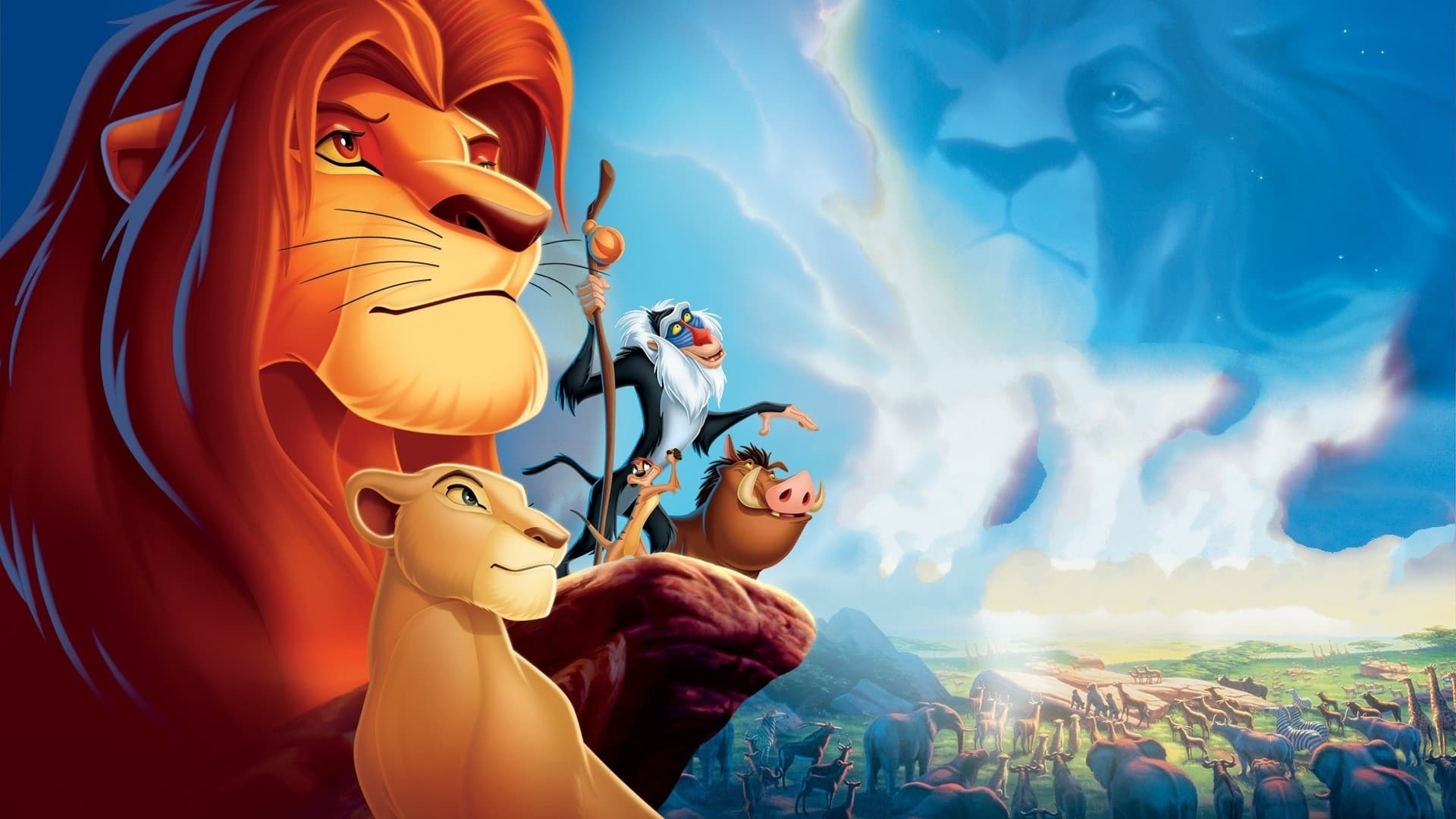
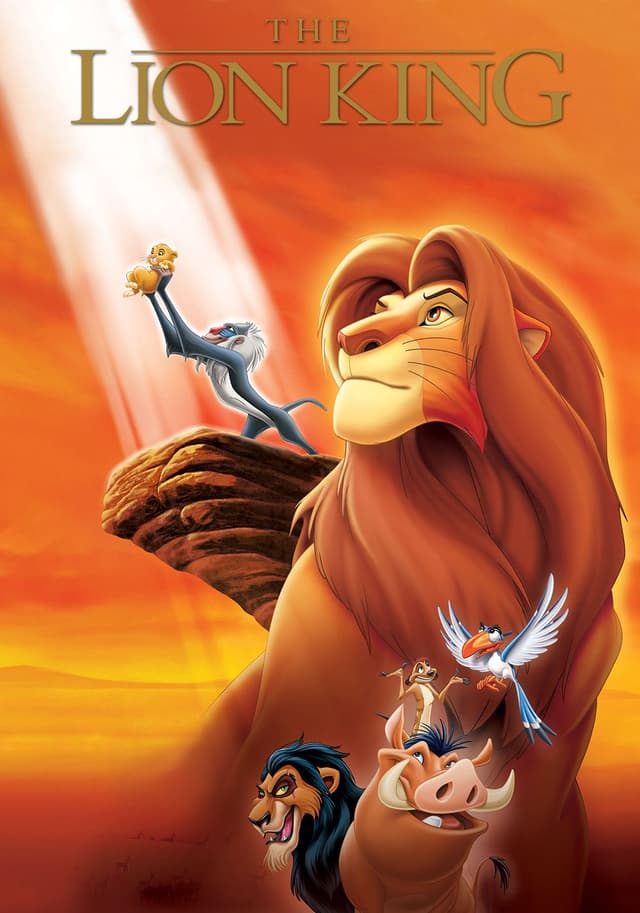
Simba idolizes his father, King Mufasa, and takes to heart his own royal destiny. But not everyone in the kingdom celebrates the new cub’s arrival. Scar, Mufasa’s brother—and former heir to the throne—has plans of his own. The battle for Pride Rock is ravaged with betrayal, tragedy and drama, ultimately resulting in Simba’s exile. With help from a curious pair of newfound friends, Simba will have to figure out how to grow up and take back what is rightfully his.
What is the budget of The Lion King?
"The Lion King," a animation released in 1994, was directed by Roger Allers, Rob Minkoff and stars Matthew Broderick, Moira Kelly. The production budget was $45,000,000, placing it in the mid-budget range for animation productions of the 1990s.
Key Budget Allocation Categories
While specific budget breakdowns are not publicly available, typical cost drivers for a animation production like this include:
- Animation Production Pipeline: The bulk of an animated film's budget funds the multi-year production pipeline: storyboarding, character modeling, rigging, animation, lighting, rendering, and compositing.
- Voice Talent: Celebrity voice casting has become standard for studio animation, with A-list actors earning $5 to 15 million for voice roles.
- Music, Songs & Sound Design: Original songs and orchestral scores are central to animated storytelling. Sound design for animated worlds must be created entirely from scratch.
- Casting: The voice actors were chosen for how they fit and could add to the characters; for instance, James Earl Jones was cast because the directors found his voice "powerful" and similar to a lion's roar.
What were the major cost factors in The Lion King?
Several factors contributed to the overall production costs of "The Lion King."
- Animation Production Pipeline: Animation Production Pipeline is one of the primary cost drivers in animation productions of this scale.
- Voice Talent: Voice Talent is one of the primary cost drivers in animation productions of this scale.
- Music: Music, Songs & Sound Design is one of the primary cost drivers in animation productions of this scale.
How Does The Lion King's Budget Compare to Similar Films?
At $45,000,000, The Lion King sits in the mid-budget range. Here is how it compares to productions with a similar budget:
- 65 (2023): Budget $45,000,000, Worldwide Gross $60,730,568
- Across the Universe (2007): Budget $45,000,000, Worldwide Gross $29,625,761
- Aliens in the Attic (2009): Budget $45,000,000, Worldwide Gross $57,881,056
- Bangkok Dangerous (2008): Budget $45,000,000, Worldwide Gross $42,487,390
- Chicken Run (2000): Budget $45,000,000, Worldwide Gross $224,834,564
The median budget for wide-release animation films in the era ranges from $30 to 80M for mid-budget to $150M+ for tentpoles.
The Lion King Box Office Performance
"The Lion King" earned $422,783,777 domestically and $763,455,561 worldwide at the box office. Against a production budget of $45,000,000, the film performed strongly at the box office.
A film typically needs to earn approximately twice its production budget to cover marketing and distribution costs. For "The Lion King," that break-even threshold was roughly $90,000,000. With worldwide earnings of $763,455,561, the film cleared that threshold comfortably.
Box Office Breakdown
The Lion King

At 1596.6%, "The Lion King" earned roughly $16.97 for every $1 invested in production.
The Lion King Production History
The voice actors were chosen for how they fit and could add to the characters; for instance, James Earl Jones was cast because the directors found his voice "powerful" and similar to a lion's roar. Nathan Lane auditioned for Zazu, and Ernie Sabella for one of the hyenas. Upon meeting at the recording studio, Lane and Sabellawho were starring together in a Broadway production of Guys and Dolls at the timewere asked to record together as hyenas.
Lyricist Tim Rice, who was working with composer Alan Menken on songs for Aladdin (1992), was invited to write songs for The Lion King, and accepted on the condition of bringing in a composing partner. As Menken was unavailable, the producers accepted Rice's suggestion of Elton John, Rice and John wrote five original songs for The Lion King ("Circle of Life", "I Just Can't Wait to Be King", "Be Prepared", "Hakuna Matata", and "Can You Feel the Love Tonight"), with John's performance of "Can You Feel the Love Tonight" playing over the end credits. The score was composed by Hans Zimmer, who was hired based on his earlier work on two films in African settings, A World Apart (1988) and The Power of One (1992), and supplemented the score with traditional native African music and choir elements arranged by Lebo M.
Awards and Recognition
Won 2 Oscars. 43 wins & 35 nominations total
- Academy Award for Best Original Score: Hans Zimmer (67th Academy Awards)
Critical Reception
The Lion King was widely praised by film critics upon release. On Rotten Tomatoes, The Lion King has an approval rating of with an average score of , based on reviews. The website's critical consensus reads, "Emotionally stirring, richly drawn, and beautifully animated, The Lion King stands tall within Disney's pantheon of classic family films." It also ranked 56th on Rotten Tomatoes' "Top 100 Animation Movies".
Frequently Asked Questions
How much did it cost to make The Lion King (1994)?
The production budget was $45,000,000, covering principal photography, visual effects, cast and crew salaries, locations, sets, post-production, and music. Marketing and distribution (P&A) costs are estimated at an additional $22,500,000 - $36,000,000, bringing the total studio investment to approximately $67,500,000 - $81,000,000.
How much did The Lion King (1994) earn at the box office?
The Lion King grossed $422,783,777 domestic, $340,671,784 international, totaling $763,455,561 worldwide.
Was The Lion King (1994) profitable?
Yes. Against a production budget of $45,000,000 and estimated total costs of ~$112,500,000, the film earned $763,455,561 theatrically - a 1597% ROI on production costs alone.
What were the biggest costs in producing The Lion King?
The primary cost drivers were above-the-line talent (Matthew Broderick, Moira Kelly, Nathan Lane); multi-year animation production, celebrity voice talent, and original musical compositions.
How does The Lion King's budget compare to similar animation films?
At $45,000,000, The Lion King is classified as a mid-budget production. The median budget for wide-release animation films in the era ranges from $30 - 80M for mid-budget to $150M+ for tentpoles. Comparable budgets: 65 (2023, $45,000,000); Across the Universe (2007, $45,000,000); Aliens in the Attic (2009, $45,000,000).
Did The Lion King (1994) go over budget?
There are no widely reported accounts of significant budget overruns for this production. However, studios rarely disclose precise budget overrun figures publicly. The reported production budget reflects the final estimated cost.
What was the return on investment (ROI) for The Lion King?
The theatrical ROI was 1596.6%, calculated as ($763,455,561 − $45,000,000) ÷ $45,000,000 × 100. This measures gross revenue against production budget only - it does not account for P&A or exhibitor shares.
What awards did The Lion King (1994) win?
Won 2 Oscars. 43 wins & 35 nominations total.
Who directed The Lion King and who were the key crew members?
Directed by Roger Allers, Rob Minkoff, written by Linda Woolverton, Jonathan Roberts, Irene Mecchi, Rick Maki, with music by Hans Zimmer, edited by Ivan Bilancio.
Where was The Lion King filmed?
The Lion King was filmed in United States of America.
Filmmakers
The Lion King

Official Trailer
Build budgets like this one in Saturation
Start from an industry-standard feature film template, import the schedule and rates you already have, and let the cost report keep itself current as you spend. Real-time collaboration, no spreadsheets.