A Bug's Life Budget
 FamilyAnimationAdventureComedy1h 35m
Updated
Synopsis
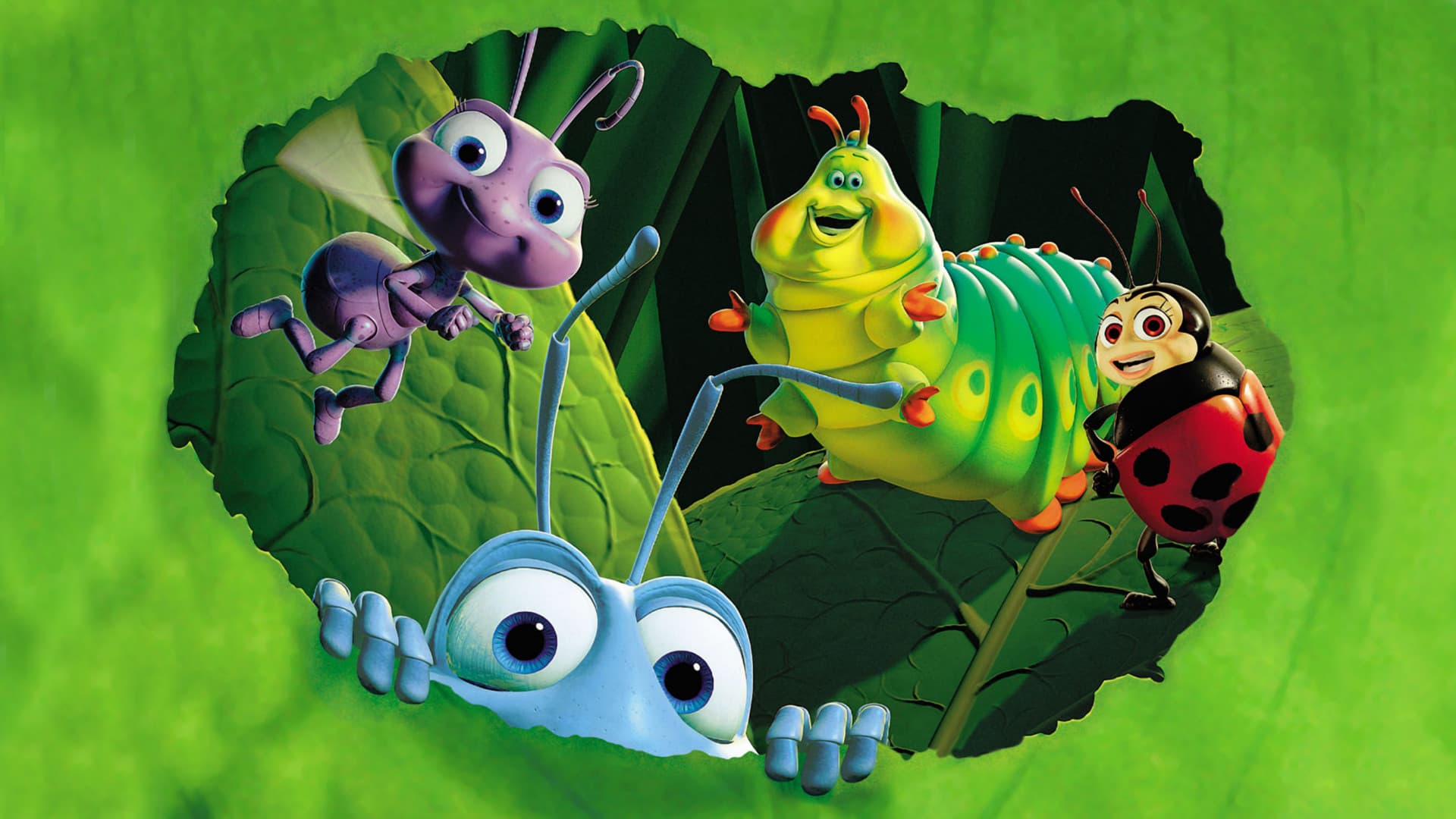
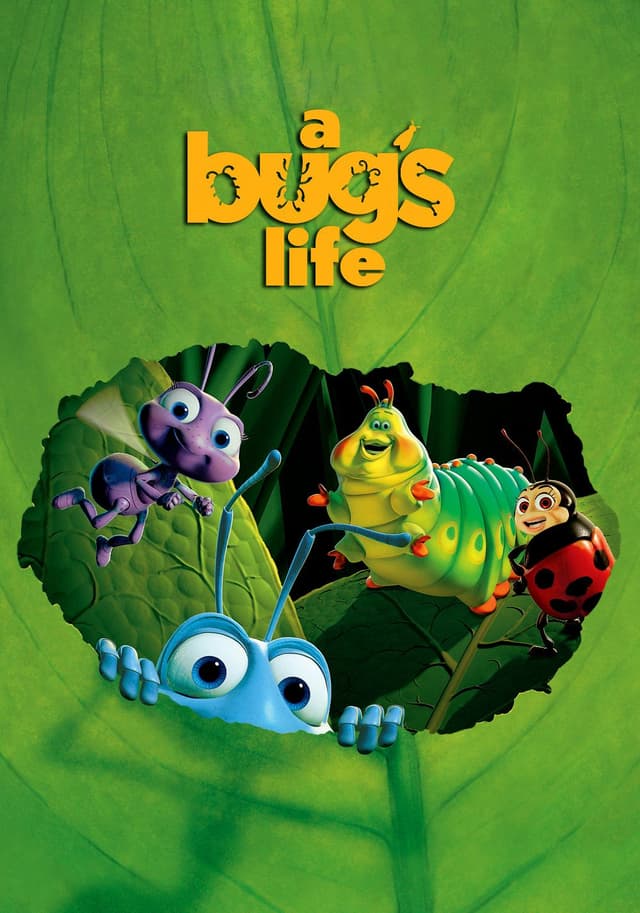
Flik, a well-meaning but accident-prone ant on Ant Island, is banished after accidentally destroying the colony's annual food offering intended for the oppressive grasshopper gang led by Hopper. Desperate to make amends, Flik travels to the city and recruits a troupe of misfit circus bugs, mistaking them for the seasoned warrior heroes the colony desperately needs. Back on Ant Island, the ruse holds long enough for Flik's genuine bravery and the unlikely courage of his new companions to inspire the colony to stand up for themselves and defeat Hopper for good.
What Is the Budget of A Bug's Life?
A Bug's Life was produced on a budget of $120,000,000, making it one of the most expensive animated films of its era. Released on November 25, 1998, it was Pixar Animation Studios' second feature film following the landmark success of Toy Story (1995), and the pressure to deliver another triumph was enormous.
Pixar and Walt Disney Pictures co-produced the film at a time when computer-generated animation was still a radical proposition for mainstream audiences. The $120 million budget reflected the scale of ambition: far more characters on screen simultaneously than Toy Story had attempted, a richly detailed outdoor environment, and a voice cast headlined by recognizable names from film and television.
The investment proved well-placed. A Bug's Life earned $363,398,565 worldwide and became one of the top-grossing films of 1998, cementing Pixar's reputation as the preeminent studio in computer animation.
Key Budget Allocation Categories
- Above-the-Line Talent: The ensemble voice cast, led by Dave Foley, Kevin Spacey, Julia Louis-Dreyfus, Denis Leary, and Phyllis Diller, commanded meaningful fees that reflected the studio strategy of anchoring an animated film with recognizable comedy and dramatic talent.
- Pixar's Rendering Pipeline: Pixar's proprietary RenderMan software had to handle unprecedented complexity. The insect colony sequences required rendering up to 800 individual ants per frame, a geometric leap over anything attempted in Toy Story. New crowd-simulation software was built specifically for this film, generating ants algorithmically with varied eye color, skin tone, height, and weight.
- Story Development: Years of story development went into the film before principal production began. The concept originated in 1994 from lunchtime conversations between John Lasseter, Andrew Stanton, Pete Docter, and Joe Ranft, and the narrative evolved substantially before the final version took shape. Story work of this depth requires sustained investment in writers, directors, and story artists.
- Original Score and Songs: Randy Newman composed the full orchestral score and contributed original songs, including the closing number performed by Newman himself. A full live orchestra recording was required, adding meaningful cost to the music budget.
- Marketing and Distribution: Disney's promotional campaign for the 1998 Thanksgiving holiday window was substantial. The studio positioned the film as the season's must-see family release, with television advertising, theatrical trailers, and tie-in merchandise all requiring significant spend.
- Production Infrastructure: By 1998, Pixar was a rapidly growing studio in Emeryville, California. The cost of computing hardware, software development, and the physical expansion of production facilities all factored into the overall budget as the studio scaled up for its second feature.
How Does A Bug's Life Compare to Similar Films?
The most direct comparison is with the film released just weeks earlier in the same genre:
- Antz (1998): Budget $105M | Worldwide $171.8M. The rival DreamWorks animated insect film arrived six weeks before A Bug's Life and was widely seen as a provocative move by Jeffrey Katzenberg, who had allegedly learned of the Pixar concept during his time at Disney. A Bug's Life far outgrossed Antz at the worldwide box office, ending the so-called battle of the bug movies decisively.
- Toy Story (1995): Budget $30M | Worldwide $373.6M. The film that started it all. Toy Story was made for roughly a quarter of the A Bug's Life budget, yet earned comparable worldwide figures, underscoring how rapidly Pixar's production ambitions and costs had scaled in just three years.
- Toy Story 2 (1999): Budget $90M | Worldwide $497.4M. Released the following year, the Toy Story sequel benefited from A Bug's Life having further proven the Pixar formula and came in with a larger worldwide gross while costing less to produce.
- Monsters, Inc. (2001): Budget $115M | Worldwide $577.4M. Pixar's fourth feature cost slightly less than A Bug's Life but earned significantly more, reflecting the compounding strength of the studio's brand by the early 2000s.
- Finding Nemo (2003): Budget $94M | Worldwide $940.3M. Finding Nemo demonstrated how dramatically Pixar's global audience had grown. A film made for less than A Bug's Life earned nearly three times the worldwide gross, driven by stronger international performance and a broader release.
A Bug's Life Box Office Performance
A Bug's Life opened during the Thanksgiving holiday window on November 25, 1998, generating a five-day opening of $45.7 million. The timing was deliberate: Disney positioned the film to dominate the family market heading into the 1998 holiday season, and it succeeded. The comparison with DreamWorks' Antz, which opened six weeks earlier on October 2 and earned $90.8 million domestically, was impossible to avoid. A Bug's Life outperformed Antz on every metric.
Box Office Breakdown
A Bug's Life

The return of roughly $2.14 for every dollar invested placed A Bug's Life firmly in the profitable column for Pixar and Disney, though not at the level of later Pixar juggernauts. The $162,798,565 domestic gross represented a strong performance, while the $200.6 million international take reflected the universal appeal of the film's visual storytelling and physical comedy.
Measured against the competitive context of late 1998, the result was unambiguous. A Bug's Life beat its direct rival, delivered a strong holiday performance, and validated Pixar's approach of investing heavily in story and technical quality rather than competing on budget alone.
A Bug's Life Production History
The seed of A Bug's Life was planted in the summer of 1994, during a working lunch at a restaurant in Point Richmond, California. John Lasseter, Andrew Stanton, Pete Docter, and Joe Ranft sat down with the explicit goal of generating story ideas for Pixar's future films. The session produced four concepts, one of which was a story about insects and social hierarchy inspired by Aesop's fable 'The Ant and the Grasshopper.' Stanton would be the principal creative architect of the insect film, while Docter's insect-colony concept would eventually evolve separately into a different project.
Disney CEO Michael Eisner formally approved the treatment in July 1995, just as Toy Story was in its final stages of completion. The approval designated A Bug's Life as Pixar's second feature and set the production timeline. Lasseter and Stanton were attached as co-directors, an unusual arrangement that gave the project both Lasseter's visual showmanship and Stanton's talent for character and structure.
The story took considerable time to find its final shape. Early versions featured a different protagonist and a more straightforward narrative. Andrew Stanton became frustrated with drafts in which the circus bugs were implausible deceivers and eventually rebuilt the story around a simpler premise: a well-meaning ant named Flik accidentally leads a troupe of misfit circus bugs into believing they are the warrior heroes he has been seeking. The Seven Samurai comparison, sometimes cited alongside John Sturges' The Magnificent Seven, was a guiding structural reference: a community threatened by a powerful oppressor recruits outsiders who turn out to be less capable than expected, yet find courage through the relationship.
The rivalry with DreamWorks and Jeffrey Katzenberg cast a shadow over the entire production. Katzenberg had left Disney in 1994 following a bitter dispute with Michael Eisner and co-founded DreamWorks SKG. In October 1995, Lasseter presented details of A Bug's Life to Katzenberg at a Universal studio facility, believing it was a collegial exchange between peers. Weeks later, trade publications announced that DreamWorks had acquired Pacific Data Images and was developing an animated insect film called Antz. Lasseter felt the move was a direct appropriation of the concept he had shared.
Katzenberg's position was that Antz originated from an independent 1991 pitch by director Tim Johnson, formally developed from October 1994, which would predate the Pixar lunchtime session. Steve Jobs called the situation a brazen attempt at market disruption when Katzenberg reportedly proposed that DreamWorks would delay Antz if Disney agreed to move A Bug's Life. Disney declined. Katzenberg instead accelerated Antz from a planned spring 1999 release to October 2, 1998, giving it a six-week head start on A Bug's Life. The Hollywood press dubbed it the 'bug wars.'
On the technical side, A Bug's Life represented a genuine leap from Toy Story. The film introduced subsurface scattering in a Pixar production for the first time, allowing the skin and carapaces of insects to absorb and scatter light in a physically accurate way. The crew invented a miniature camera they called the 'Bugcam,' mounted on a small wheeled chassis close to the ground, to capture reference footage from an insect's perspective. This low-angle viewpoint informed the cinematography and helped the art department understand how translucent grass blades and leaf canopies should look when backlit. The result was a lush outdoor environment that felt genuinely immersive in a way that the interior-heavy Toy Story had not needed to achieve.
Randy Newman, returning from Toy Story, composed the full orchestral score and contributed original songs. His work on the film earned both an Academy Award nomination for Best Original Musical or Comedy Score and a Grammy Award for Best Instrumental Composition. Sharon Calahan served as director of photography, one of the few female DPs working at the intersection of animation and cinematic craft at that scale, and her work gave the film a warmth and dynamism that matched Pixar's increasing storytelling ambition.
Awards and Recognition
A Bug's Life was recognized across multiple awards bodies and became one of the most decorated animated films of 1998.
At the Annie Awards, the preeminent honors for animation, the film won the Outstanding Achievement Award for Animated Feature Film. It also received Annie nominations for Outstanding Individual Achievement for Directing in a Feature Production (John Lasseter and Andrew Stanton), Outstanding Individual Achievement for Writing in a Feature Production (Andrew Stanton, Donald McEnery, Bob Shaw, and Joe Ranft), and Outstanding Individual Achievement for Production Design in a Feature Production (William Cone).
Randy Newman won the Grammy Award for Best Instrumental Composition Written for a Motion Picture, Television, or Other Visual Media for his work on the film's score. The Academy of Motion Picture Arts and Sciences nominated Newman for Best Original Musical or Comedy Score, and the Hollywood Foreign Press Association nominated the score for a Golden Globe. The British Academy of Film and Television Arts nominated the film for Best Achievement in Special Visual Effects.
The Broadcast Film Critics Association honored the film with the award for Best Animated Film, tied with The Prince of Egypt, and also awarded it Best Family Film. The International Press Academy presented the film with the Satellite Award for Best Animated Film.
The film did not receive an Academy Award nomination for Best Animated Feature simply because that category did not exist until the 74th Academy Awards in 2002. Had the category been active in 1999, A Bug's Life would have been among the strongest contenders of its year.
Critical Reception
A Bug's Life received strong reviews from critics upon its release. On Rotten Tomatoes, the film holds a 92% approval rating based on 87 reviews, with an average score of 7.9 out of 10. On Metacritic, it scores 78 out of 100 based on 23 critics, indicating generally favorable reviews.
Roger Ebert of the Chicago Sun-Times awarded the film 3.5 out of 4 stars. Todd McCarthy of Variety called it a film in which Pixar had surpassed Toy Story in both scope and complexity. Kenneth Turan of the Los Angeles Times, awarding 4 out of 5 stars, wrote that the most fun people to hang out with were at Pixar. Peter Stack of the San Francisco Chronicle called it one of the great movies and a triumph of storytelling and character development.
Critics consistently praised the film's visual invention, the expressiveness of the insect character designs, and the sharp physical comedy of the circus troupe. Kevin Spacey's performance as the villain Hopper drew particular notice as one of the more menacing antagonists in a family film of that era. Julia Louis-Dreyfus and Dave Foley were praised for bringing warmth and neurotic energy to their central roles.
The critical consensus that has solidified over the years acknowledges A Bug's Life as a warm, genuinely funny Pixar film that is sometimes slightly overshadowed in discussion by the Toy Story films that bracket it. Scholars and fans who revisit the film typically find it underrated: its themes of community, self-doubt, and collective courage are handled with the precision and emotional intelligence that would define Pixar at its peak.
The film holds a 7.2 out of 10 on IMDb based on substantial audience participation, and it remains a staple of Pixar retrospectives and family film recommendations.
Frequently Asked Questions
What was the production budget for A Bug's Life?
A Bug's Life was produced on a budget of $120,000,000. The film was Pixar's second feature and required substantial investment in voice talent, rendering infrastructure, and story development. Pixar and Walt Disney Pictures co-financed the production.
How much did A Bug's Life make at the box office?
A Bug's Life earned $162,798,565 domestically and $363,398,565 worldwide, making it one of the top-grossing films of 1998. Its five-day Thanksgiving opening weekend generated approximately $45.7 million in North America.
How does A Bug's Life compare to Antz?
A Bug's Life significantly outperformed Antz at the box office. Antz, released by DreamWorks on October 2, 1998, earned $171.8 million worldwide. A Bug's Life, released November 25, 1998, earned $363.4 million worldwide. The rivalry between the two films arose after Pixar's John Lasseter alleged that DreamWorks accelerated Antz into production after Jeffrey Katzenberg heard about A Bug's Life concept during a meeting in 1995.
Is A Bug's Life based on a story?
A Bug's Life draws loose inspiration from Aesop's fable 'The Ant and the Grasshopper' and shares structural similarities with Akira Kurosawa's Seven Samurai (1954) and John Sturges' The Magnificent Seven (1960), in which a community recruits outside warriors to defend it from oppression. The screenplay was written by Andrew Stanton, Donald McEnery, and Bob Shaw, based on an original story developed by Lasseter, Stanton, and Joe Ranft starting in 1994.
What awards did A Bug's Life win?
A Bug's Life won the Outstanding Achievement Award for Animated Feature Film at the Annie Awards. Randy Newman won the Grammy Award for Best Instrumental Composition for the film's score. The Broadcast Film Critics Association awarded it Best Animated Film (tied with The Prince of Egypt) and Best Family Film. The International Press Academy gave it the Satellite Award for Best Animated Film. Newman was also nominated for an Academy Award for Best Original Musical or Comedy Score and a Golden Globe for Best Original Score.
Did A Bug's Life get a sequel?
No sequel to A Bug's Life was produced. Pixar shifted its focus to Monsters, Inc. (2001), Finding Nemo (2003), and the Toy Story sequels after the original Bug's Life release. John Lasseter and others have acknowledged over the years that a sequel was occasionally discussed but never developed into a greenlit project. The characters and world have appeared in Pixar short films and Disney theme park attractions but not in a feature follow-up.
Filmmakers
A Bug's Life

Build budgets like this one in Saturation
Start from an industry-standard feature film template, import the schedule and rates you already have, and let the cost report keep itself current as you spend. Real-time collaboration, no spreadsheets.