Saturation 3.0 Rebuilds the Financial System Behind Production
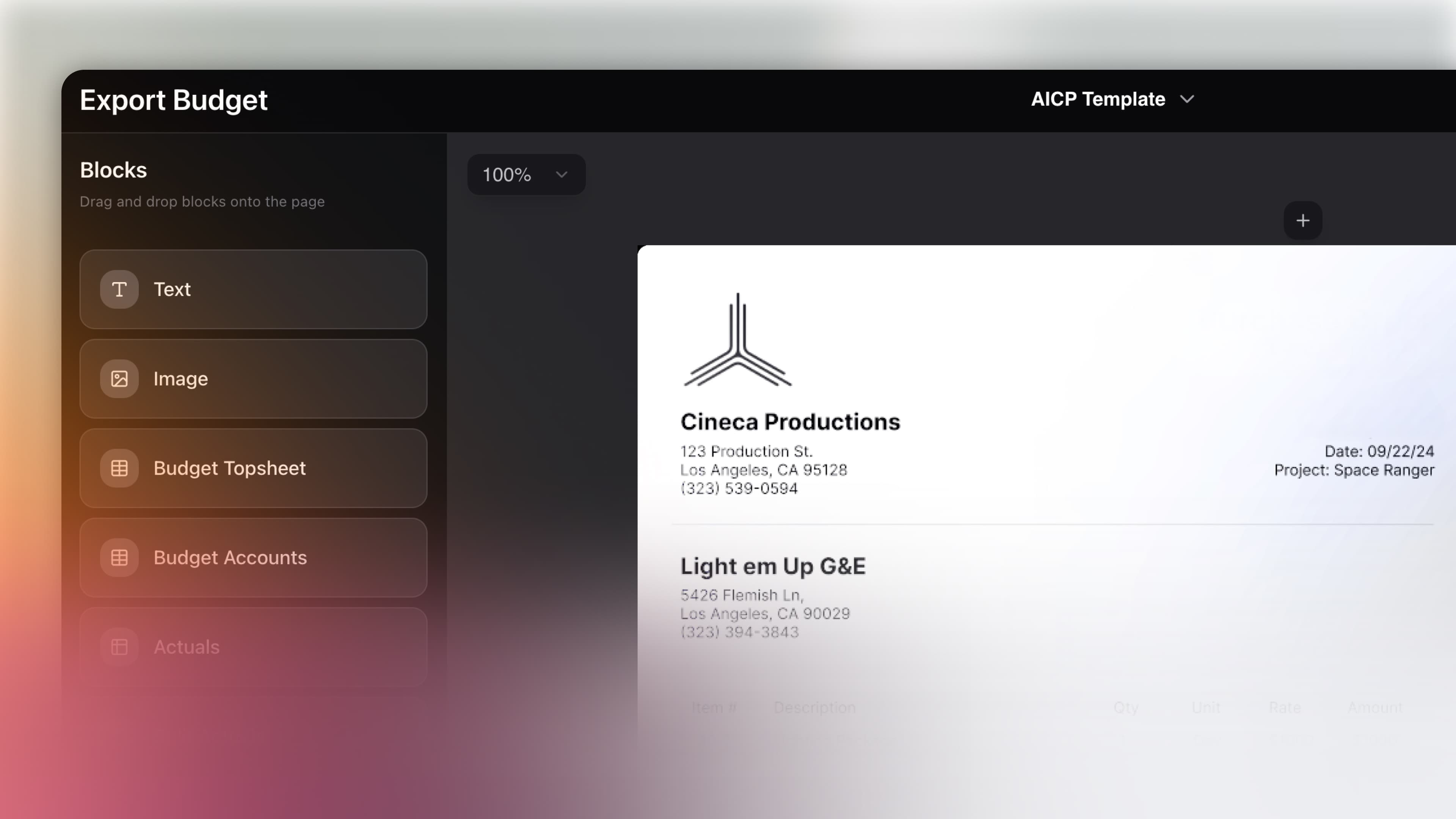
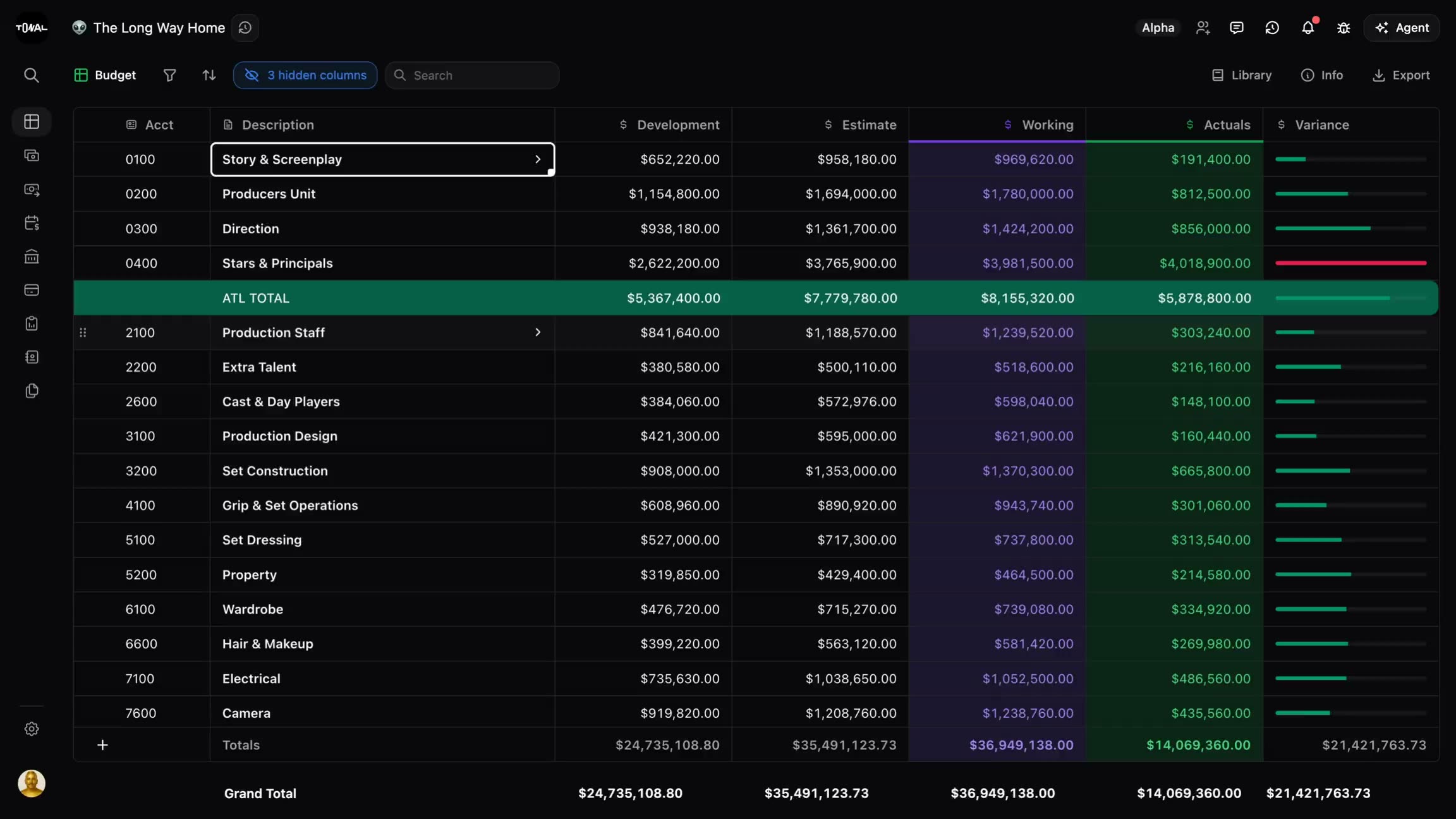
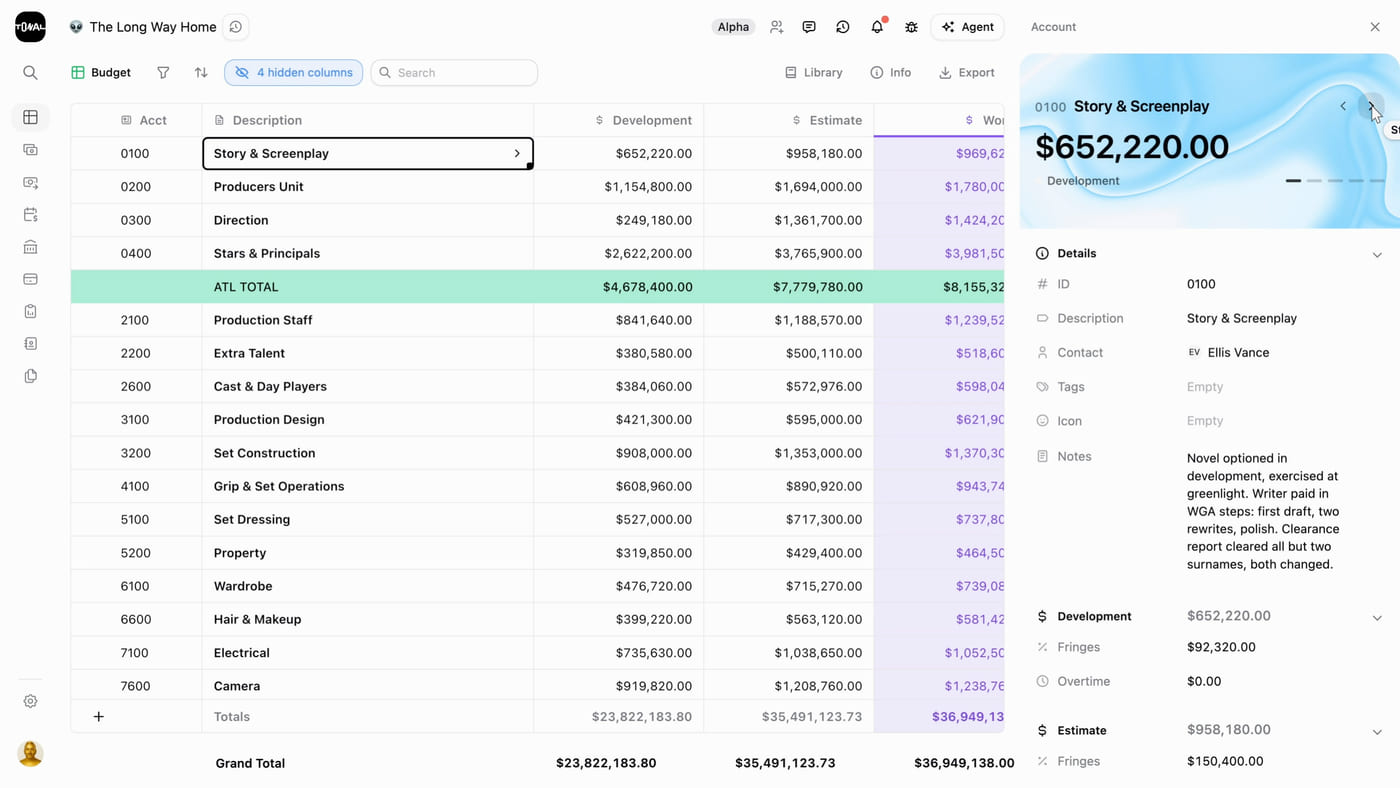
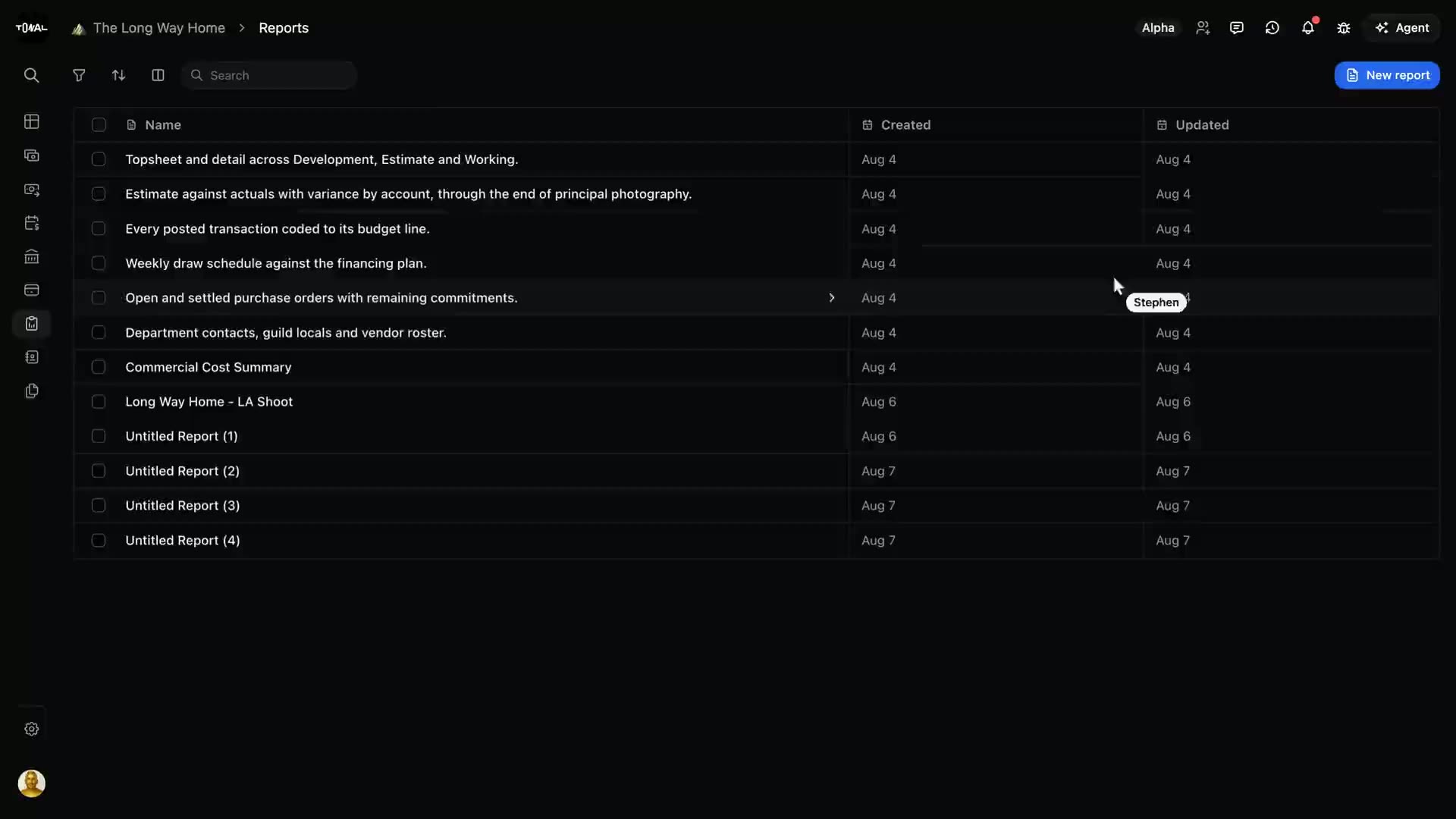
LOS ANGELES, August 19, 2026 - Saturation today announced the release of Saturation 3.0 (beta), a ground-up rebuild of its film budgeting and production finance software. It is the biggest release the company has made, and the foundation underneath it was built for intelligence. A new Budget Engine runs the budget sheet, the cost report and every export on a single calculation, closing the gap between the numbers a production works from and the numbers it sends to studios, financiers and completion bonds.
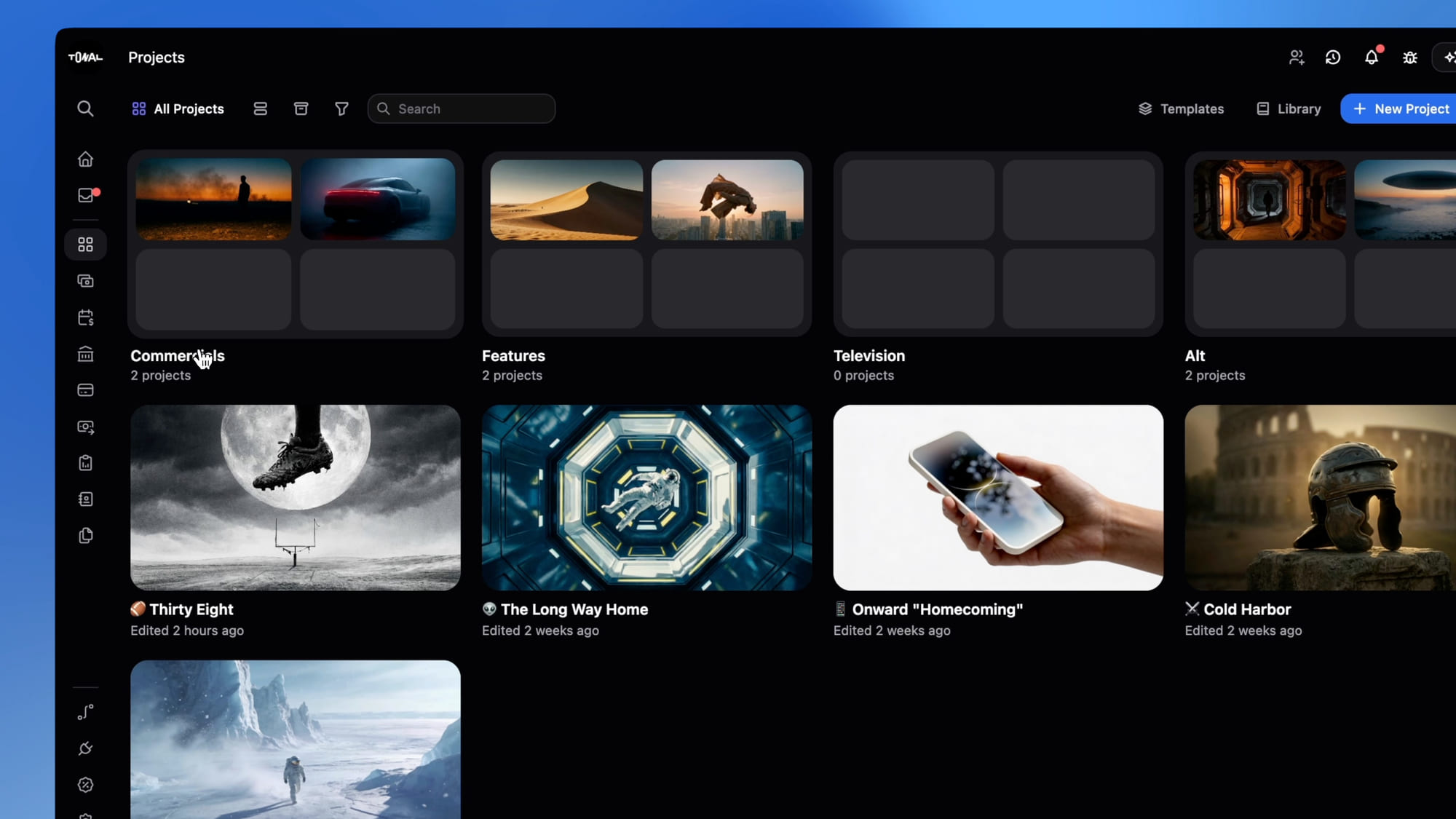
Saturation is used by more than 17,700 producers managing 2.7 billion dollars in production spend. Saturation 3.0 brings budgeting, cost reporting, expense management, purchase orders, approvals, vendor payments, production banking and purchasing cards into a single system.
Production Finance Software Has Not Left the Spreadsheet
The spreadsheet was invented in 1979, and every tool built for production finance since has been built inside its assumptions. A film budget lives in one application, actuals accumulate in another, and the weekly cost report is assembled by hand from both. The reconciliation work that follows is not an accident of any one product; it is what happens when the estimate and the actual are calculated by two systems that never speak.
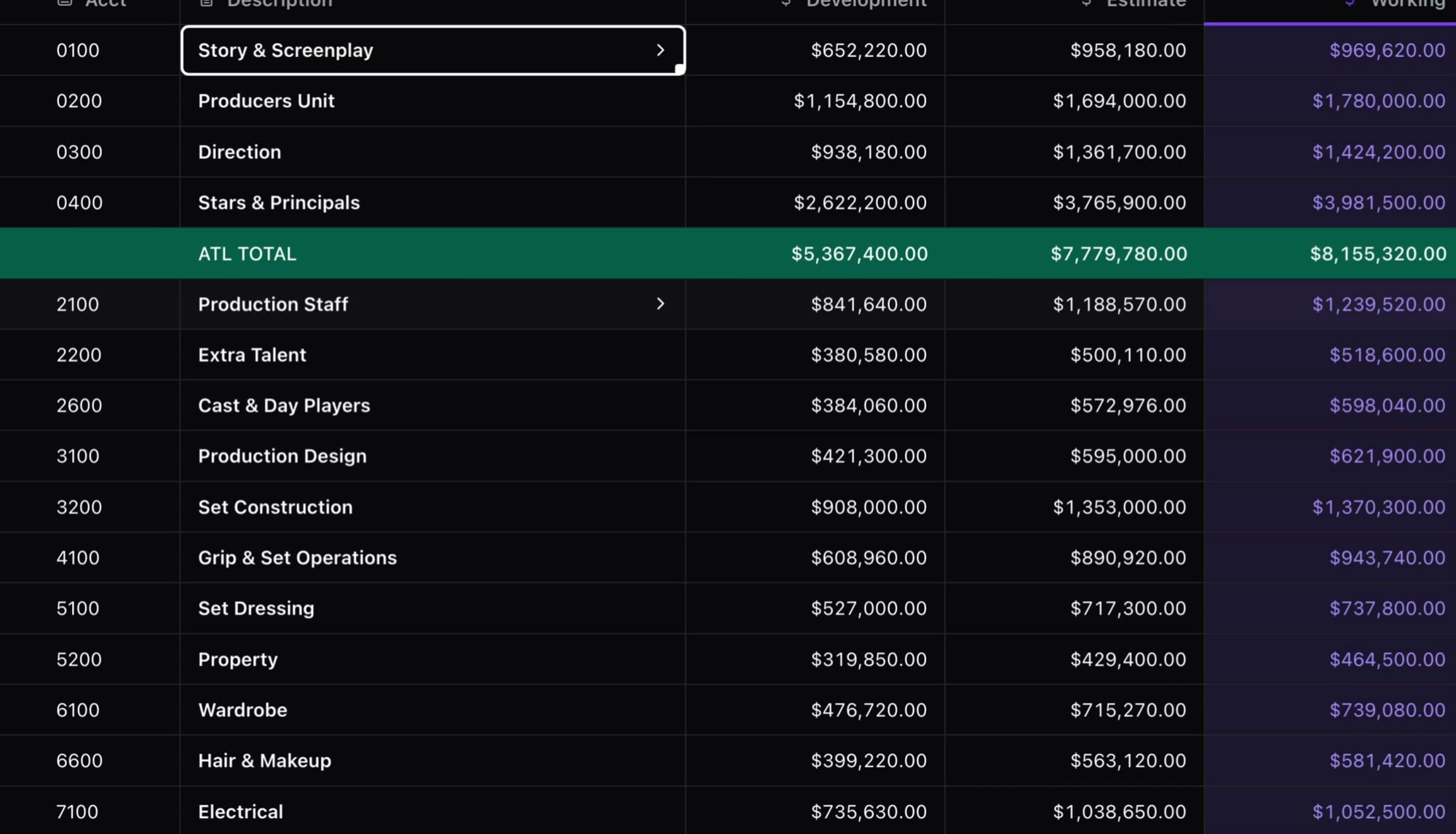
Saturation 3.0 removes that step. The Budget Engine calculates once, and the topsheet, the detail sheet, the cost report and every PDF or Excel export read from the same result. A number cannot differ between two views of the same production, because there is only one number.

"Every tool built for production finance since the spreadsheet has been built inside the spreadsheet's assumptions. We took everything that was good about Saturation and made it better, then built the things that were never possible before."
Jens Jacob
Co-Founder & CEO, Saturation
What Is New in Saturation 3.0
We took everything that was good about Saturation and made it better. Then we built things that were never possible before.
- Production AI starts with the Agent, which turns a screenplay into a production plan or a treatment into an AICP bid, drafting the first budget from your own rates. Coming this fall.
- API and MCP let ChatGPT or Claude work in your live workspace, scoped, with every write held for review.
- Budget Engine 2.0 runs every budget, cost report and export, and finishes up to 38% faster.
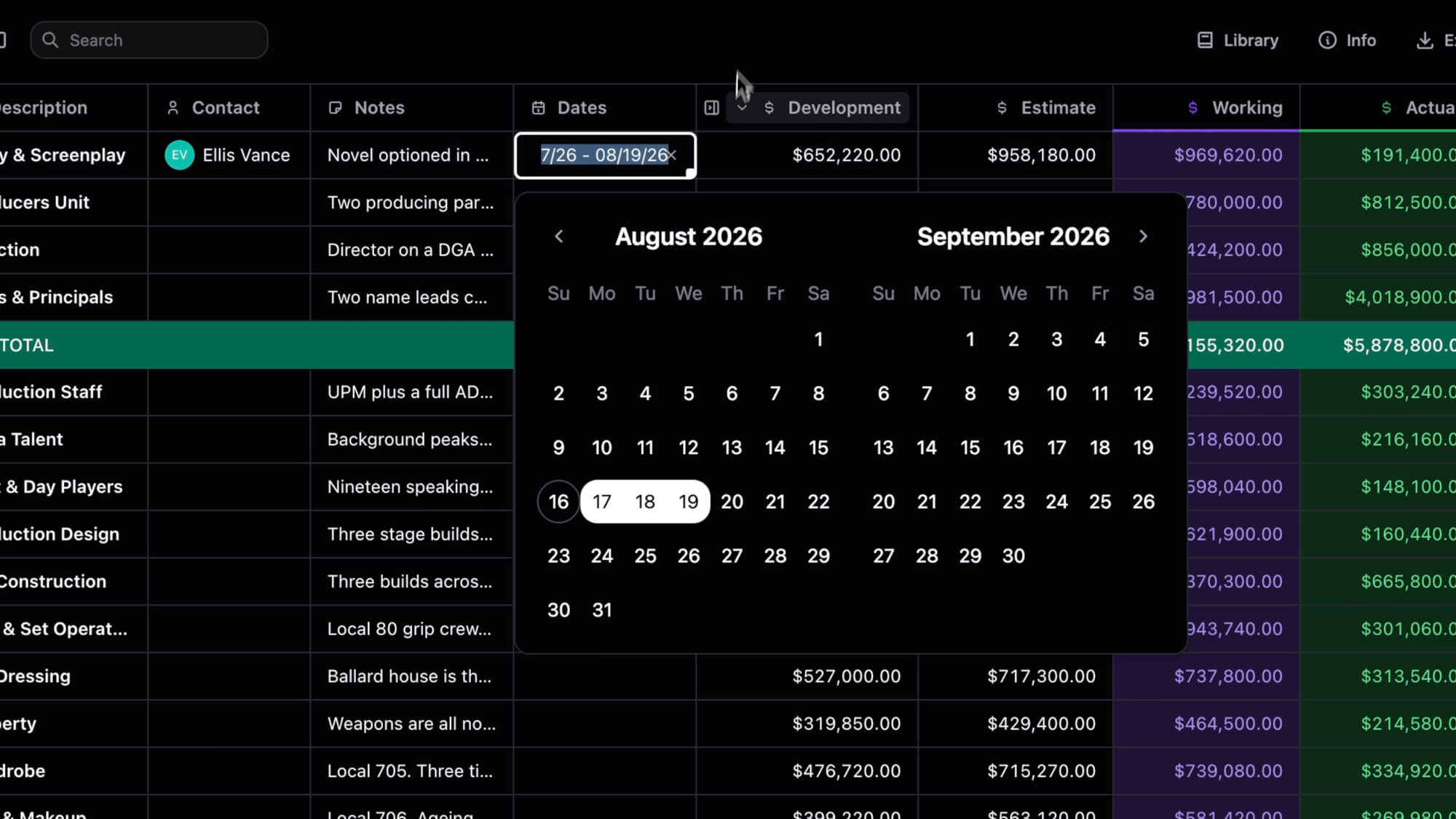
- Views cut one budget by department, client or calendar, so everyone works from the same numbers.
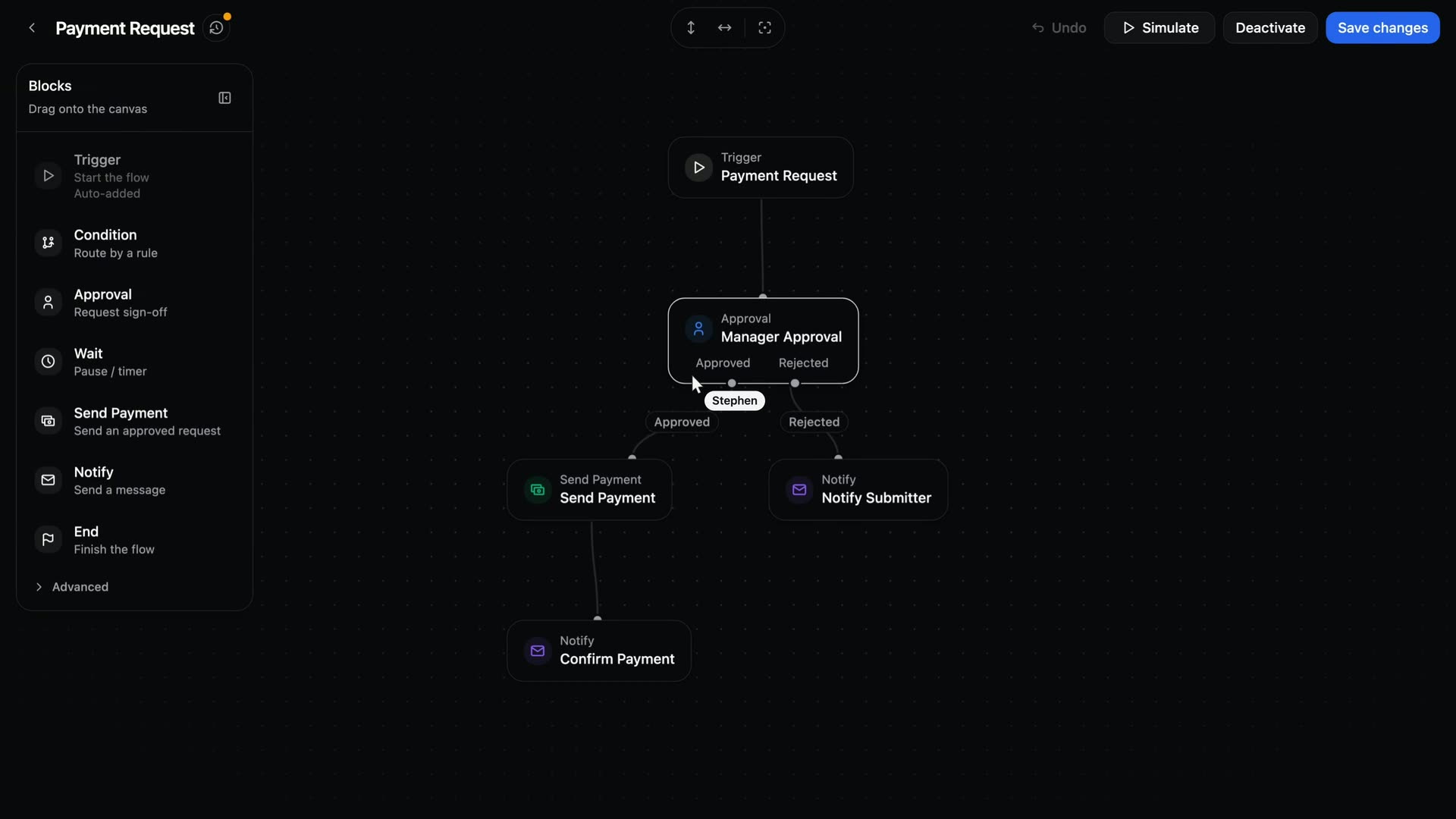
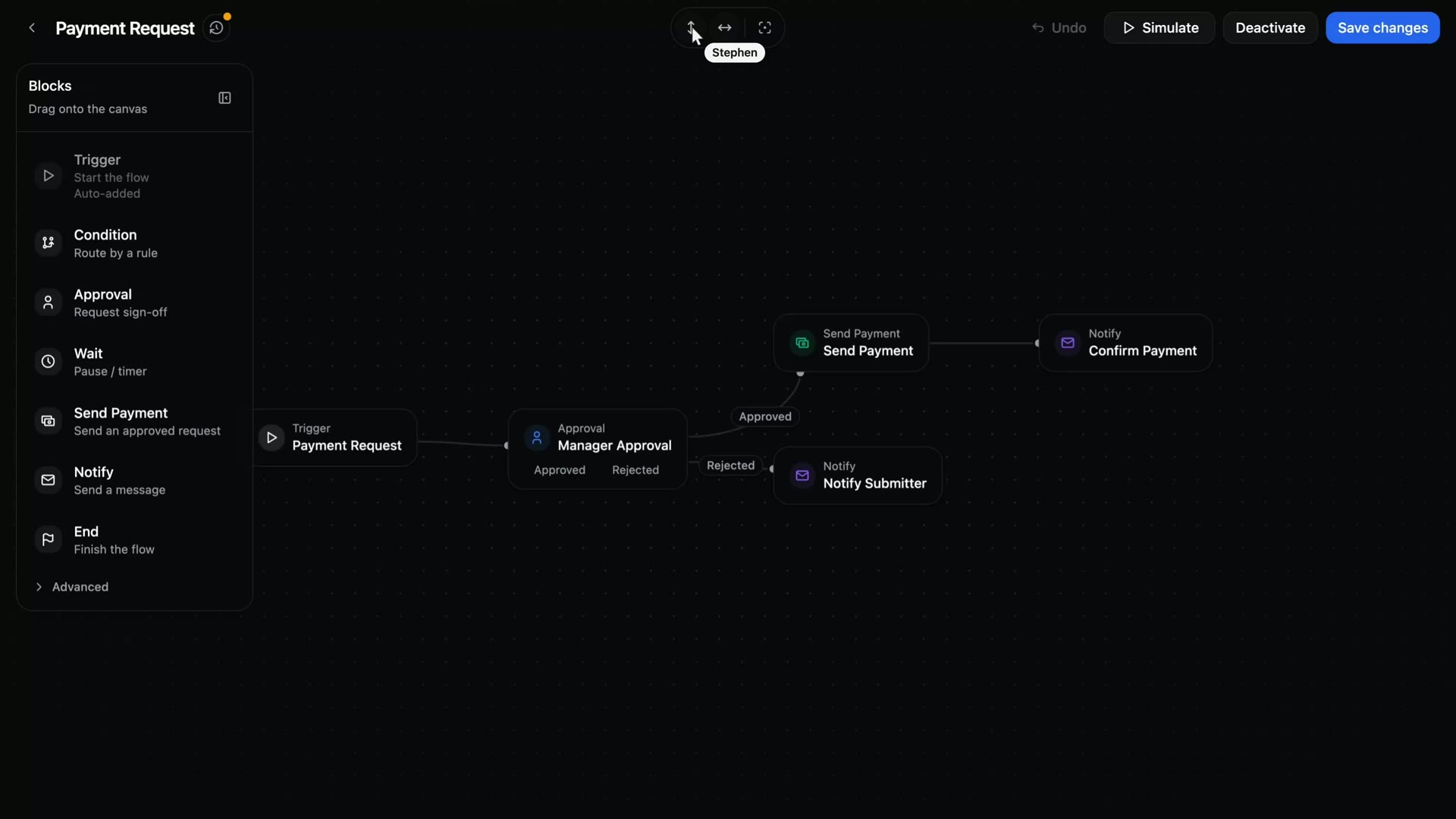
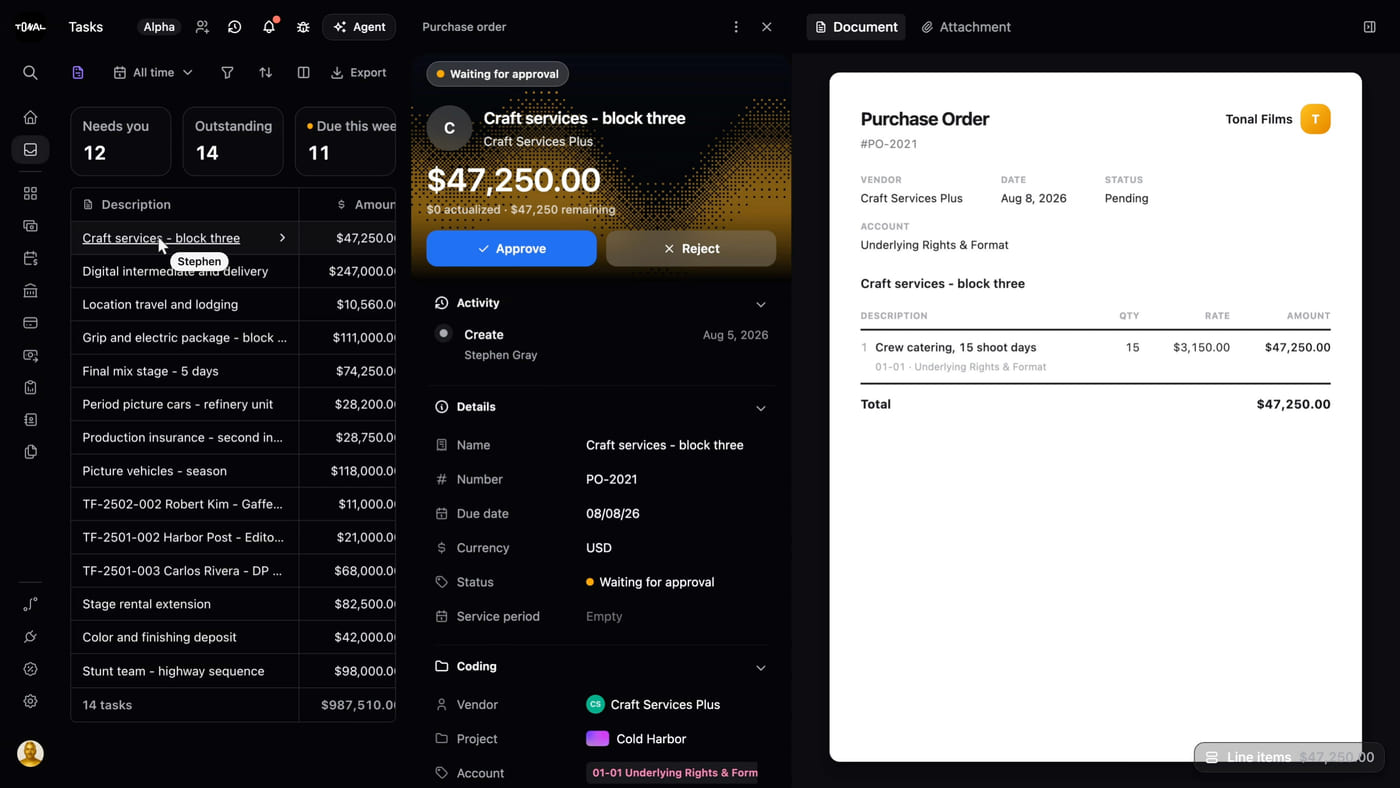
- Flows and tasks automate approval and payment, and put everything waiting on your team in one place.
- Phases, rebuilt on Estimate, Committed, Actual and Rollup, so one budget compares bids or rolls episodes into a season.
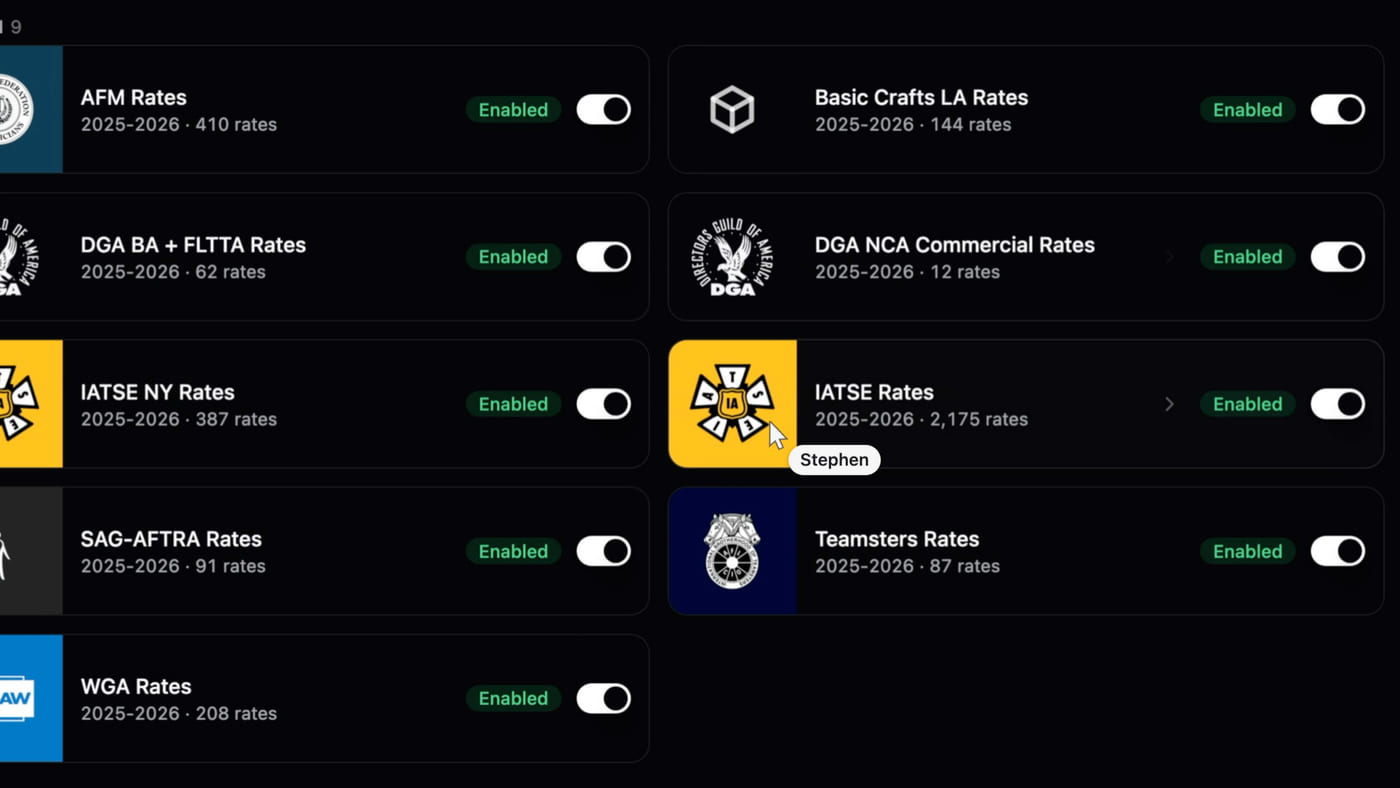
- Library holds rate packs that fill a role in as you type, and tax incentives by jurisdiction.
- Universal imports bring Movie Magic and Excel budgets in as they are.
- Smarter purchase orders start from a document you have, allocate to a line, and show the approver the impact.
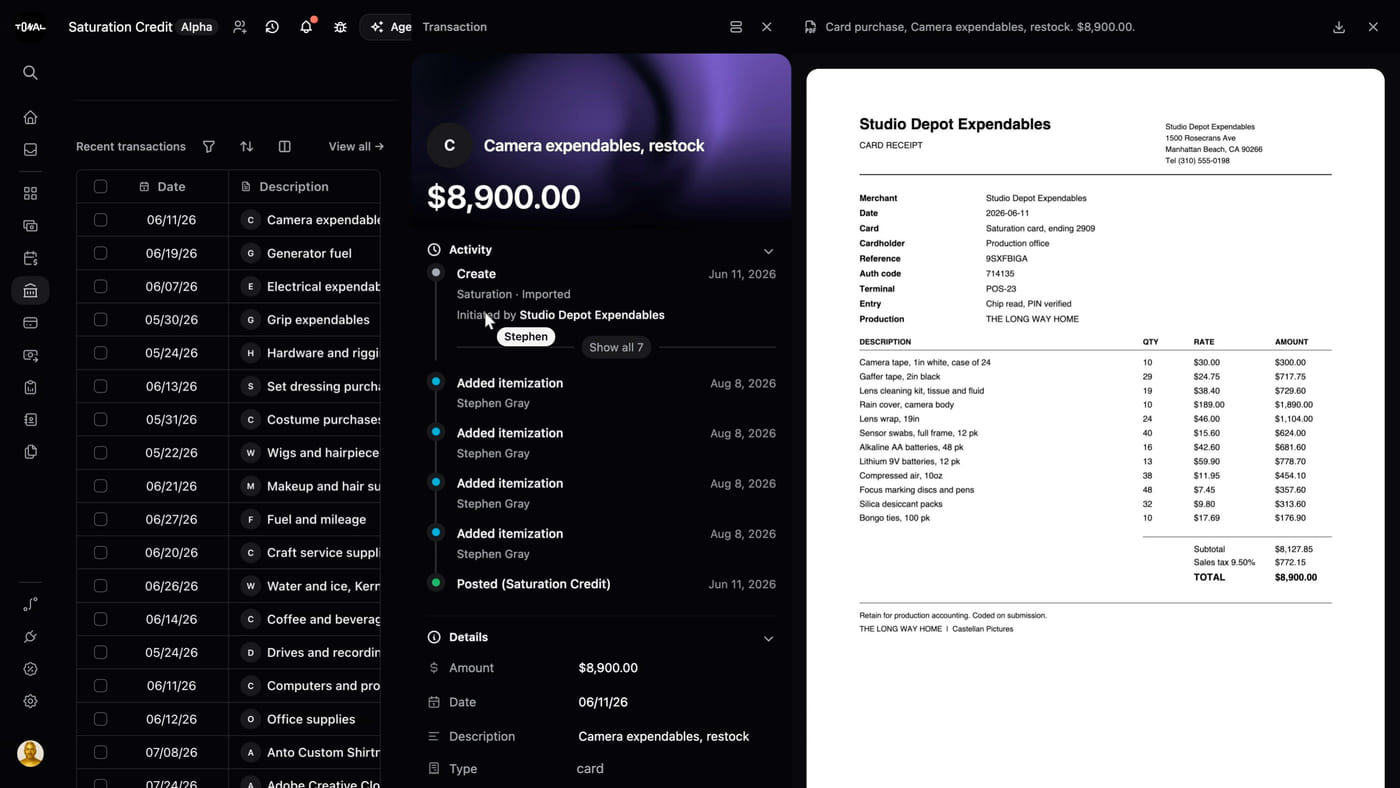
- Always actualized, so coding a transaction updates the budget and keeps the document attached.
Film Budgeting Software for Features, Television and Commercials
Saturation 3.0 is built for the range of production a company actually runs. A feature carries one budget through development, prep, principal photography and post. A television season rolls individual episode budgets into a season total without rekeying a line. A commercial closes inside six weeks and needs an AICP bid form rather than a studio topsheet. Phases hold each of those shapes in one file, and the same engine costs all of them.
The people the release is built for are line producers, production accountants, unit production managers, producers and the studio and network executives who read what they send. Saturation ships rate libraries for the major guilds and unions, so a budget starts from current rates rather than from last year's file.
Measured Performance Against the Previous Release
Saturation published a benchmark comparing Saturation 3.0 against the release it replaces, running the same workloads on the same machine and the same browser, with the running order alternated between products. Every figure is a median, and the method, sample counts and raw data are published alongside the results.
- 1.6x faster to load a workspace, weighted across 60 completed loads per product: 2.23 seconds against 3.62 seconds.
- 2.6x sooner on screen, measured as first contentful paint, 234ms against 612ms across 20 cold samples.
- 2.26x faster on return visits across twenty paired reloads, with a bootstrap interval of 2.01x to 2.42x.
- 38% faster on complex budgets, tested on a 1,310 row budget across five phases and six stacked fringes.
- 37% faster to load 100,000 transactions, 2.77 seconds against 4.38 seconds at the median, and 49% faster at the 95th percentile.
- 19% faster to find a contact, on an exact search across 20,000 contacts.
Artificial Intelligence With the Workspace Attached
Saturation 3.0 ships an MCP server so that the assistant a production team already uses can reach the workspace directly. In testing, Saturation ran identical prompts against a real 8.2 million dollar budget using the same AI model each time, changing only whether Saturation was connected. Teams can connect ChatGPT, Claude or Gemini to a workspace, set the scope of what the assistant may reach, and keep every write in a review queue for a person to approve.
Production AI arrives this fall: ask it to draft a budget, code the receipts or chase the paperwork, and it works inside your numbers instead of beside them.

Moving From Movie Magic and Other Film Budgeting Software
Existing Saturation accounts keep their projects, contacts and rate libraries, which are carried across as each workspace opens. Budget files created in other film budgeting software, including Movie Magic Budgeting, can be brought across as they are, and Saturation reports that both engines match number for number on import. Excel and CSV budgets import the same way, so a production does not have to rebuild a file it already trusts.
Pricing and Availability
Saturation 3.0 is in beta as of today, and pricing is unchanged from Saturation 2.0. Over the coming weeks, Saturation will progressively upgrade Saturation 2.0 workspaces to 3.0, and all workspace data will carry over automatically. Production companies, studios, line producers and production accountants can request early access at saturation.io/v3, or watch the full announcement above.
About Saturation
Saturation is the production financial operating system for film, television and commercial production. More than 17,700 producers use Saturation to build budgets, track actuals, issue cards, run approvals and pay vendors, managing 2.7 billion dollars in production spend. Saturation is based in Los Angeles.
Media contact
marketing [at] saturation.io
saturation.io/press