The cost report shouldn't wait.
Real-time cost reports with live actuals, hot costs on demand, and EFC tracking across every budget line. When the producer calls for a number, you have it. When something's off, you see it before they do.
Reporting
Every number, and where it came from
Build the report once, keep it current, and open any figure to the transactions underneath it.
Reports
Drag blocks onto the page and split a row in two.
Source-traced cells
Open an actual and read the transactions under it.
Budget Engine 2.0
Your budget, your cost report and every export run on one engine.
PhasesRebuilt
Every column knows its type.
Powerful filtering
Filter on dates, vendors or tags.
Views
Keep any filter, sort and column set. Shared or personal.
Auto-Actualize
Transactions count toward actuals as they land.
Bank statement PDFs
A branded PDF for any range.
Reports that look as good
as your numbers.
Generate beautiful, branded PDFs directly from your cost report in seconds. Pick from professionally designed templates or build your own from a blank canvas.
Project Reports
START FRESH
Blank Report
BUDGET
AICP Bid Form
AICP bid template with budget summary and account breakdown
Commercial Cost Summary
Budget summary and account breakdown
Film Budget
Standard film budget report
Blocks
Drag and drop onto the page
Bring your team together
Production budgeting, expense tracking, credit cards, approvals, and cost reporting in one cloud platform for video production teams.
Collaborate
Collaboratively build budgets with line items, rates, fringes, and actuals. Start from industry-standard templates: feature film, TV, commercial, and more.
Projects
Group projects into spaces, switch between workspaces, and stay on top of multiple productions without losing context.

Universal imports
Movie Magic, Excel and any table you can export. Seconds, not hours.



Project Library
Seven kinds of reference data, current everywhere.
Public API
Connect the tools you run on.



MCP server
Point your AI at your workspace.


Flows and approvals
Send anything for approval, not just payments. Branch it, delay it, test it.
Issue Cards
Virtual cards spend instantly, physical ships in a week. One at a time or twenty-five at once.


Keyboard Shortcuts
⌘KWorkspace search
Spreadsheets and disconnected tools vs. Saturation.
Production finance teams juggle disconnected spreadsheets, manual reconciliation, and last-minute PDF formatting just to get the cost report out on time. Saturation replaces that stack with a single platform built for production cost reporting.
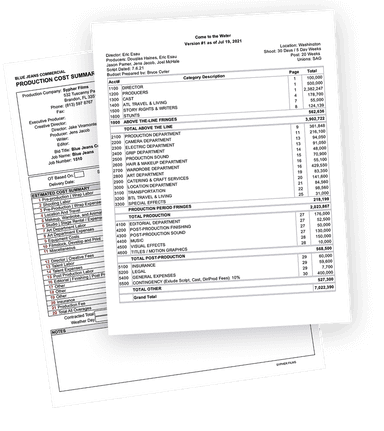
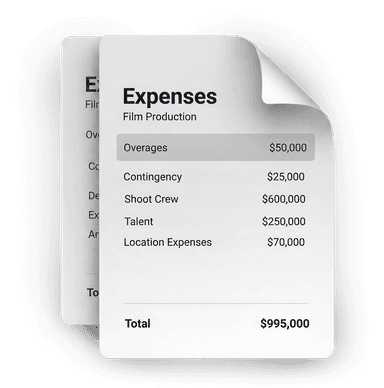
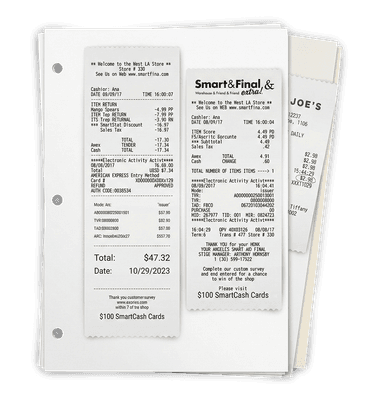









The old way.
You rebuild the cost report from scratch every week. P-card exports, payroll reports, receipts from three different email threads, all patched together in a spreadsheet. When the producer calls mid-week for a number, you stop everything. When the bond company needs their format, you start over.

Actuals flow in as they happen. Hot costs are always available. EFC tracks to every budget line.

Space Ranger
Feature Film · Horizon Pictures
EFC
$312,400What makes Saturation cost reporting production-native.
These are the workflows that matter when a production is spending money faster than spreadsheets can keep up, and the cost report is the only instrument keeping the LP out of crisis mode.
EFC and ETC tracking
Estimated Final Cost and Estimate to Complete update automatically as actuals flow in. See over/under variance by account without waiting for weekly close.
Hot costs, always ready
Pull an interim cost report any time the producer or financier needs mid-week numbers. Actuals are always current, so a hot cost is a snapshot. Never a rebuild.
Custom PDF builder
Drag-and-drop layouts with reusable presets. Include budget topsheet, actuals, split actuals, tags, and signature blocks. Save templates for the bond company, EP, and accounting.
Tag-based reporting
Tag expenses for tax credit eligibility, location, vendor category, or internal classification. Filter the cost report by tag for tax audits, credit tagging, or department breakdowns.
Share views per stakeholder
Give the EP topsheet access, accounting full detail, and the bond company their required format. Each view is a shareable link. No separate files, no reformatting.
Actuals and split actuals
Split costs across accounts, departments, or tax credit categories without duplicating entries. A transaction counts in the cost report once it is coded to a budget account and marked Actualized.
Cost reporting without the Sunday night grind.
Rebuilding the cost report from disconnected spreadsheets, chasing P-card receipts, reformatting a PDF for the bond company at midnight. Saturation removes the production tax on your accounting department so they can focus on the numbers, not the process of getting to them.
The cost report and the budget are the same document.
Actuals flow into the budget in real time. There is no separate cost report to rebuild.

Coming from one of these?
Your budget lives in one tool. Your actuals live in another. Somewhere in the export-reformat-reconcile gap between them is where overages hide until it's too late. Curious how Saturation closes that gap?
What is cost report software for film and TV production?
Cost report software produces the production cost report: the regular comparison of each budget account's estimate with what has been spent and committed, so the producer can see which departments are running over before the money is gone. In film and TV it replaces the spreadsheet a production accountant rebuilds every week from bank, card and payroll exports.
A film cost report is not the manufacturing "cost of production report" that fills search results for the term. It follows the budget's chart of accounts and typically shows, for each account, the budget, actuals to date, open commitments such as purchase orders, the estimate to complete, the estimated final cost and the variance. Production accountants prepare it; line producers, UPMs and producers act on it; studios, financiers and completion guarantors receive it on a schedule, often weekly, while daily hot cost reports during the shoot compare the day's actual labor and overtime with what was budgeted.
The hard part is not the format, it is getting every cost into it on time. In a spreadsheet each card statement, payroll log and invoice has to be exported, coded and pasted in, and a formula broken in week three can quietly carry forward.
In Saturation the cost report is the budget itself. Spend from Saturation Pay cards and bill pay, bank and card accounts connected through Plaid, and payroll files (Wrapbook, Hot-Budget and other CSV exports, or Media Services .ULT files) lands on the Transactions page, where each item is assigned to a budget account, split across accounts when needed, and actualized. Actual phases total that spend per line, a Committed phase totals approved purchase orders that are not yet paid, and Rollup phases such as @Actual + @Committed or @Estimate - @Actual show current exposure or remaining budget. Tags such as tax credit eligibility or location filter the report, saved views give each reader their own slice, and on paid plans the PDF builder exports it with topsheet, actuals, split actuals and attachment blocks.
Reporting FAQs.
The questions production accountants and line producers ask when they're evaluating whether to move their cost reporting into Saturation.
See more of Saturation
A report is the end of the work, not the start of it. The budget it measures against, the expenses it counts and the account they moved through are the same system, so the report is never rebuilt from exports.
Budget Engine 2.0
One engine. The numbers agree.
Receipt scanning
Receipts arrive already coded.
Banking
Saturation Pay: accounts, cards and bill pay in one place. Send ACH, wire or same-day.
Your next cost report should take minutes.
Connect your budget. Let actuals flow in. Export a branded PDF for the bond company. See the difference between a spreadsheet and a production cost reporting platform in the first week.
Free tier available. No credit card required. SOC 2 compliant.