 Apple Podcasts
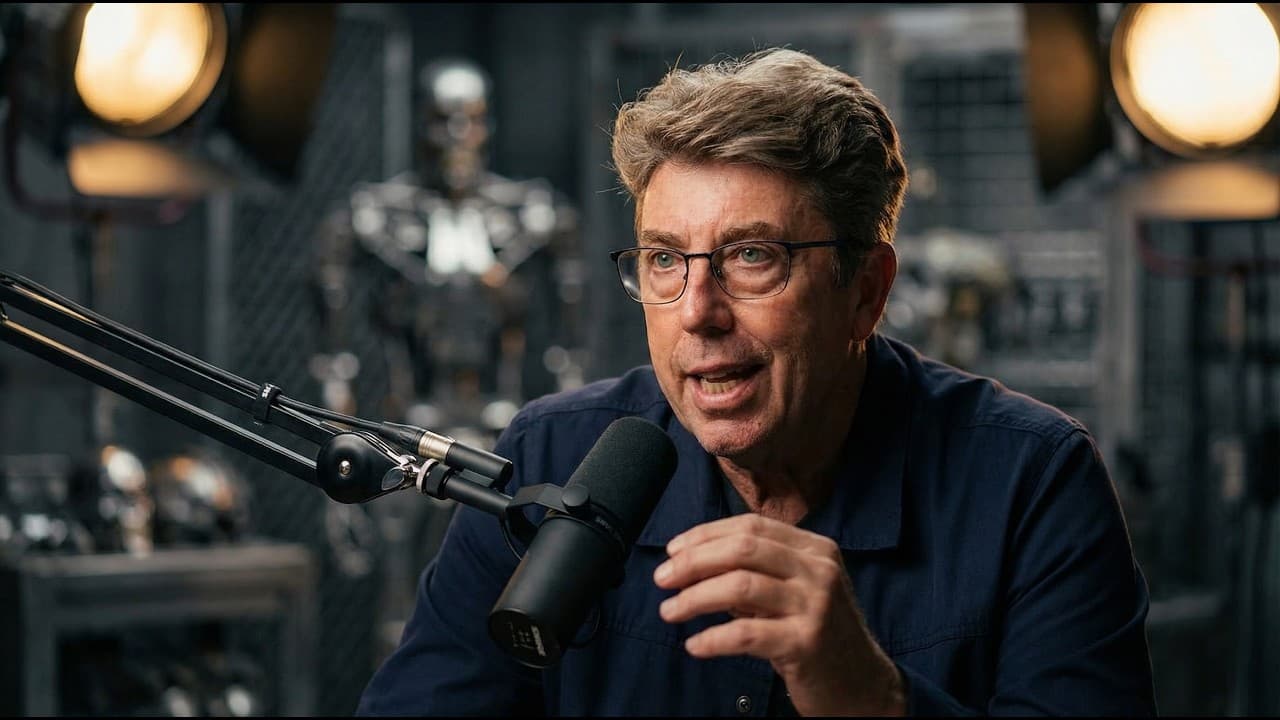
The video that changed Reese Hopper's career was a screen recording of a spreadsheet. In late November 2023, after five years of making content almost nobody watched, he posted a clip of himself talking to camera over what he called a really crappy looking Google Sheet. His videos usually got about 1,000 views. Those first ones got 6,000 or 7,000. Soon after, one of the early Run the Numbers breakdowns crossed roughly 100,000 views in a week, and he spent a weekend away in Big Bear sneaking off to refresh the count.
In 2017, Jeremiah Davis was touring with The Chainsmokers and shooting tour videos, and Hopper has produced projects with him ever since. He holds minority ownership in Us Versus Them, the production company Davis has run since 2020 and Hopper joined in 2023. His own work as a freelance producer, author and business educator covers non-union small to medium commercial, social and lifestyle production, at budgets from $10,000 social campaigns to $150,000 commercials. Film school was never part of it: he studied communication, and self-published What Gives You the Right to Freelance? in 2023.
Produced With pairs him with host Jens. A full year of daily blogging earned him roughly 2,000 website hits. About a quarter of his leads convert, by his count, and he books 15 projects a year rather than 20 shoot days a month.
How a freelance producer builds a pipeline without an agency
Hopper interned and freelanced at an ad agency in college and saw the traditional route clearly. The path there ran through a grind as a low-level accounts person, a jump to the creative side, and maybe a five-year wait before influencing creative at all. He went direct to clients instead. Early work was social media at 10 or 20 grand, with buddies pulled in to shoot, and after that it was left foot, right foot: bigger budget, better production value, repeat.
The opening he found was a client the agency model leaves behind. A brand doing a million or a couple of million in revenue still has to spend on marketing, he said, but it is not spending 250 grand on a shoot; it is spending closer to 10K a month. His pipeline is a portfolio site, past marketing managers who resurface at new companies, and inbound from social. What follows is a discovery call, then a deck carrying a creative concept, two or three budget tiers and a timeline. He puts conversion at about a quarter of all leads, and getting deep into a real pitch and losing it is rare.
He also spends less time on set. The top-level line producer role is his, and a coordinator covers the shoot day, which keeps him clear of the 14-hour set days that wrecked his content consistency.
465 blogs in 465 days before anything took off
At VidCon in Anaheim in 2018, Hopper sat in the keynote in which Instagram's founder launched IGTV, and then made one season of seven episodes on his phone. He edited them so hard that every filler word and every pause was cut. None of the seven gained traction, though people he knew began reaching out for advice.
Video felt like too heavy a lift, so he moved to writing, inspired by Seth Godin's daily blog, and the escalation from there was methodical. Thirty blogs in 30 days came first, in 2018, and then eleven months off. Sixty blogs in 60 days followed in 2019. A hundred blogs in 100 days closed out 2020. Then came 465 blogs in 465 days, running from late 2020 to the end of 2021.
A full year of daily writing earned roughly 2,000 website hits. He kept going because the process enriched his life, and those blogs became the first thought starters for his book's chapters. Marketing the book moved him to three or four posts a week from March 2023, and nothing notable happened until the end of that November.
How the Run the Numbers budget breakdowns started
Hopper paid his cousin Hudson Hopper, a director and editor, a couple of hundred bucks to help turn blogs into video, and the two of them traded ideas for five or six months. Videos about money, how to build a rate structure or pitch a client, did slightly better than the rest. The nudge came from personal finance creators breaking down what a $600,000 house really costs, and he tried the same move on a production.
He keeps the scope honest by breaking down only the budgets he has actually produced, and staying away from anything like a $50 million feature. Inside that range he takes almost anything: a $10,000 conference recap video, a $150,000 commercial, a $40,000 music video, a lifestyle photo shoot. The videos now carry a Saturation budget on screen, a long way from that original spreadsheet capture.
Tell someone the music video they admired probably cost $75,000, when that is more than they made in a year, and a limiting belief about what the work is worth breaks. That reframing is the payoff he cares about.
Why honesty outperformed production value on social
Asked why some content takes off, Hopper rejected the quality framing he had once held himself to. He spent years wondering why he was not going viral when his own work looked as good as the work that was, and good enough turned out to be the wrong bar. Honest enough, different enough, risky enough and funny enough were the bars that mattered.
The same logic covers information other producers treat as proprietary. The people watching his videos are probably pitching the same projects he is, he acknowledged, and the benefit of sharing beats the competitive advantage it costs him by a wide margin. The topics that land hardest are the pain points people avoid naming, and clients ghosting is one of them.
What is the ideal day rate for a freelancer?
Messages arrive asking what to charge for a single shoot day, and Hopper does not answer with a market rate. He turns the question around instead. What is a day rate that would get you excited, that would have you waking up early, double-checking everything, arriving 30 minutes early with a positive attitude? Whatever pulls that out of you is the number.
A constant production fee keeps every project at least somewhat profitable, including the 10K job that stretches from two weeks into six. He also pushed back on the advice that trading time for money is always a trap. A skill you are good at, that costs little mental energy and pays a good day rate, frees headspace for everything else.
He also sells a searchable producing guide as a private webpage and runs a 15 Day Creative Consistency Challenge on Circle, and by his account it feels like the early years of his service business again.
Freelancing as protection against a slower industry
Hopper would not diagnose the Los Angeles market, since his own position insulates him from it. Producing and line producing jobs book by the week rather than the day, which he credited for steadier income, and his own jobs stretch to six weeks or more once pitching and post are counted. You do not need to be working 20 days a month, he said; you need to be working on 15 projects a year.
The slowdown does reach him in smaller ways. There are fewer set days and less client outreach, and crew have told him on set that they had not worked in a month.
His answer is breadth, and behind it a wider case for freelancing. Everyone should do it in some capacity, even once, even alongside a full-time job, in an era when large companies lay off large portions of their workforce on a Thursday morning.
Key takeaways
- Pitch the brands agencies leave behind. A company doing a million or a couple of million in revenue buys marketing, but at closer to 10K a month than 250 grand a shoot, and about a quarter of all his leads convert.
- Publish before anyone is watching. Hopper's 465 blogs in 465 days earned roughly 2,000 website hits across a full year of daily writing, and became the first thought starters for his book's chapters.
- Break down only the budgets you have actually produced. The range runs from a $10,000 conference recap to a $150,000 commercial, and stops well short of anything like a $50 million feature.
- Stop aiming for good enough. Hopper's videos worked once they were honest enough, different enough, risky enough and funny enough, and the topics that land hardest are the pain points people avoid naming, clients ghosting among them.
- Set the day rate that gets you out of bed. The test is whether the number has you waking up early, double-checking everything and arriving 30 minutes early with a positive attitude.
- Count projects, not shoot days. Hopper's line is 15 projects a year rather than 20 days a month, and his own jobs run to six weeks or more once pitching and post are counted.

Share this episode
Meet Reese Hopper
Reese Hopper is a freelance producer, author, and business educator who helps creative professionals build sustainable freelance careers through transparent content creation and practical business guidance. Starting his content journey in 2018, he developed his content creator voice through five years of consistent blogging (including an ambitious 465 blogs in 465 days from late 2020) before achieving viral success with his "Run the Numbers" budget breakdown videos in 2023. These transparent looks at production costs have helped democratize industry knowledge, shattering limiting beliefs about freelance pricing and project budgets. His book "What Gives You the Right to Freelance?" emerged from years of daily writing, advocating his philosophy that "everyone should freelance in some capacity" to develop entrepreneurial skills and financial independence. As a producer, Reese has worked on a diverse range of commercial projects, social media campaigns, and lifestyle shoots, collaborating on high-profile music videos including for The Chainsmokers. His production experience spans budgets from $10K social campaigns to $150K+ commercial productions, working directly with brands doing $1-10M in annual revenue through his systematic approach to client relationships and creative development.

Producing something of your own?
Saturation is the production platform behind this show: industry budget templates, expense management, and a company card. Start 14 days free on the Team plan, no credit card.