 Apple Podcasts
The client's face went white. Lisamarie Shires sat in a people mover with the air conditioning running, next to that client and next to her own boss from the agency. It was the biggest commercial she had produced at that point: a $1.2 million shoot at a retail flagship store, during business hours. The safety plan closed the entrance and put police, flashing lights and signage on it, and it did not hold. Cars piled up, more came over a hill behind them, and the client, recently promoted, jumped out and began waving her arms at traffic.
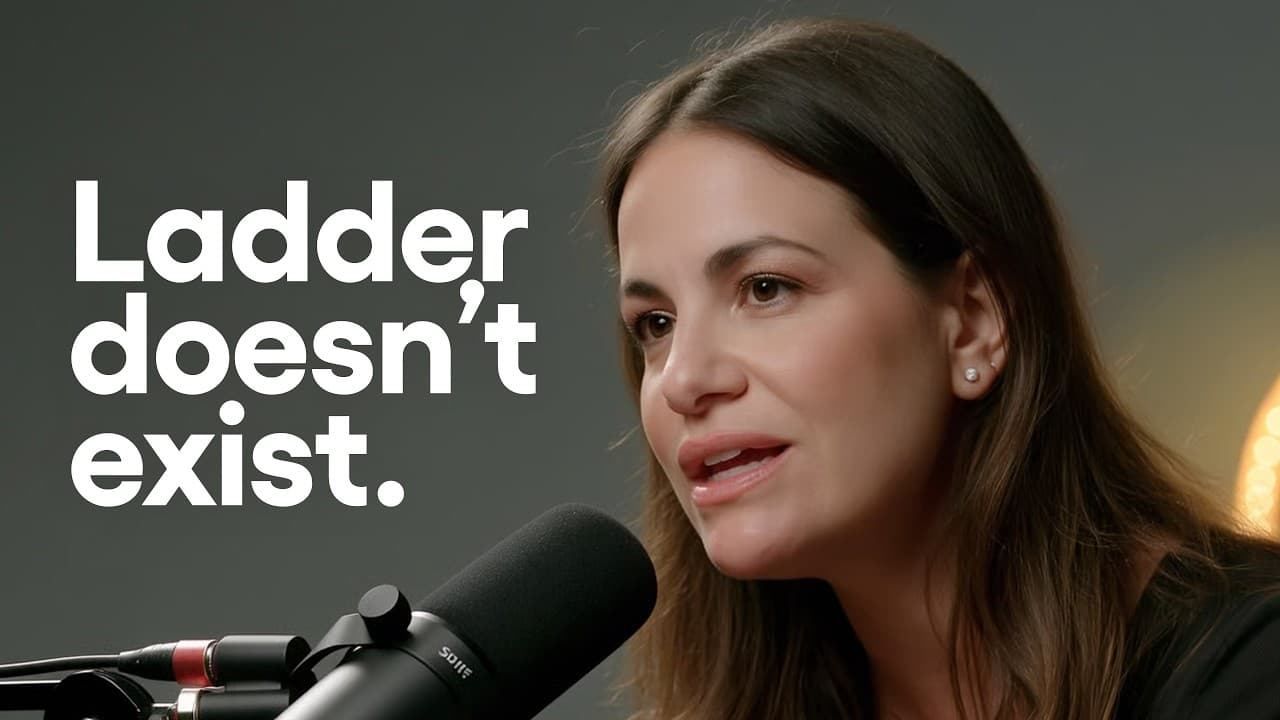
Shires was certain she was about to lose her job. Her boss gave her a look and needed one word: optics. Shires has spent over 17 years in commercial production and now works as a commercial executive producer, business coach and consultant. She has sat on every side of the table, owning a production company, freelancing as an EP, producing at an agency and working brand-side. Her campaigns run across six continents at budgets reaching seven figures, for Nike, Under Armour, Toyota, Chase and Microsoft.
She came in through an unlikely door: an economics degree, an MBA and several years of government contracting, until she decided, in her words, that this ain't it. Produced With covers the machinery nobody explains to filmmakers. Shires would not run a commercial triple bid at all below somewhere around $250,000 or $300,000.
From an economics degree to executive producing
Shires finished her MBA while working in government contracting, then went to school for photography on the side. The turning point she names is small and specific: she took her parents sailing in Annapolis, Maryland, shot pictures on a little Nikon one-shot digital camera, entered the boat's photo contest and won. Producing came later, and for practical reasons. She had started a family, she no longer wanted to carry gear, and the photographers she worked alongside all had producers.
Around 2015 she opened a production company called Rogue with a partner she had met over a single coffee, non-exclusively representing directors and DPs around the globe. It ran close to three years and closed for ordinary reasons: she had twins, and her partner moved to Amsterdam. What made the partnership work was naming their strengths early. She took the LLC and the S-corp election, the bookkeeper and the invoicing; her partner took the creative side.
What a commercial production company actually is
The label covers several different businesses, Shires said, so it is fair not to know. The traditional model signs directors exclusively, so anything that comes to a director is filtered through the company. Non-exclusive companies, which she thinks more companies are moving toward, keep a roster and sometimes a right of first refusal, but let talent take their own work. A third kind keeps no roster at all and taps a network for each job. The fourth is production services, with no directors.
The first red flag is a client asking for availability and a rate with no real detail about the project. She has done exactly that herself under time pressure, and she still will not bid blind. A four sentence creative brief pasted into an email is a signal to push for information rather than an automatic no, so the move is to ask for what is missing instead of walking away. If the deadline forces a bid before the picture is complete, caveat it heavily with detailed scope assumptions, because everything you agree to trickles down to the crew.
How the commercial triple bid works, and where it stops making sense
A brief lands. The producer casts a net for reels and portfolios, and the creative team cuts the field to three. Those three are invited to bid, and each of them submits a treatment with a budget that has to mirror it. Then the award goes out, on criteria the bidders often never see. Shires named the reason: "The main goal of the triple bid is literally just corporate responsibility."
Clients say they like the work but the budget is high against the other bidders, and ask whether you can come down; nobody calls the cheapest bidder to say the creative is off. That is the leverage the process buys. The field is widening too. One client of hers was invited into a bid against ten companies, and only found out how wide the field was after submitting.
A triple bid on a $50,000 to $100,000 job is not worth it, and the cost is not carried only by the bidders. The agency burns billable hours normalising bids that are never truly apples to apples, even against an AICP template. Shires would set a threshold nearer $250,000 or $300,000. One of her clients working in Europe is now paid for treatment time in Germany, and she hopes paid treatments spread.
Producer or executive producer: what the titles mean in commercials
The landscape is clear as mud, Shires said, because commercial work has EPs, producers, bidding producers, line producers and creative producers. Her own split puts the producer in charge of the physical production: assembling the crew, owning the logistics, and collaborating with the director, the agency and the client. The producer is, in her phrase, the wedding planner of it all. In an exclusive structure the EP does something else entirely, acting as the director's point person and safe person rather than running the floor.
A great deal of the job is filtering, she said. The producer decides what the agency needs to hear and what it does not, then what to relay to the director and what to hold, while carrying every detail of a multi-day shoot. Non-violent communication is one of the best tools a producer can develop. The best producers understand both sides of that exchange, because the client is making a large investment they only hope converts.
The lesson from a $1.2 million shoot that went sideways
A month earlier she had written a newsletter about the incident, and she shared it on purpose, because she thinks leaders should lead with vulnerability. Everyone on that job looked at her for an explanation. Rather than turn to her producer or her production manager, she took it on and worked to earn the client's trust back. The client came back the following year, for bigger commercials.
On the client's side this was never a logistics failure, because more police were brought in and the road cleared inside fifteen minutes. It was a perception failure, in front of a newly promoted client, at her own company's flagship store. The problem was who saw it, and where. That reframe from her boss is what stuck. Shires now asks one question at the pre-production meeting: what is your biggest worry going into the shoot tomorrow.
Why confidence and positioning decide who gets hired
Advertising follows consumer demand, consumer demand is reshaped daily by economic and political conditions, and production companies are left making sense of whatever is happening on the agency side. Plenty of people have looked at that and decided the work has dried up. Shires disagrees, because she can see what her clients are winning, and her diagnosis is that the business side has not evolved to match. She said it this way: "The missing link is that we need to evolve how we are approaching the business side of things."
Good work is assumed now, and so is technical aptitude. What separates people, she said, is confidence, leadership and authority: knowing how to talk to clients, how to get the information you need, and how to make them feel safe, seen and heard. The efficiencies push the same way. Remote production and LED volumes were not options a few years ago, and AI is shortening post and pre-production planning. The time it takes to produce content keeps falling, while brands lag in adjusting what it should cost.
Budgets being too small has been the conversation for her whole close to two decades in the industry. That is now her business. She hired her first coach in 2020, got certified, and built a practice for commercial filmmakers and photographers with roughly seven to fifteen years of experience.
Key takeaways
- Split the work by strength before you sign a partnership. At Rogue, Shires took the LLC, the S-corp election, the bookkeeper and the invoicing, and her partner took the creative side.
- Never quote a rate off a four sentence brief pasted into an email. If time pressure forces a bid before the picture is complete, caveat it heavily with detailed scope assumptions, because everything you agree to trickles down to the crew.
- Question any triple bid below the $250,000 or $300,000 threshold Shires would set. On a $50,000 to $100,000 job the bidders lose the hours they put into the bid, and the agency burns billable hours normalising bids that are never truly apples to apples.
- Decide what the agency hears and what the director hears. That filtering runs across every detail of a multi-day shoot, which is why Shires rates non-violent communication as one of the best tools a producer can develop.
- Ask every client what worries them most about tomorrow. The question entered the pre-production meeting after a $1.2 million shoot read as a perception failure, even though more police cleared the road inside fifteen minutes.
- Sell confidence, not just craft. Good work and technical aptitude are assumed now, and what separates people is knowing how to talk to clients, how to get the information you need, and how to make them feel safe, seen and heard.

Share this episode
Meet Lisamarie Shires
Lisamarie Shires is a commercial executive producer, business coach, and consultant with over 17 years of experience across every facet of the commercial production industry. Having worked on both sides of the table as a production company owner, freelance EP, agency producer, and brand-side executive, Lisamarie has produced campaigns across 6 continents for global agencies and brands with budgets reaching 7 figures. Her unique career trajectory began unconventionally - starting with an economics degree and MBA before transitioning into photography, then producing, and eventually executive producing. She has worked with major brands including Nike, Under Armour, Toyota, Chase, Microsoft, and many others, developing expertise in managing complex multi-million dollar productions and navigating the intricate client relationships that define commercial success. In 2020, she pivoted to combine her production expertise with formal coaching certification, now serving as a "fractional EP" and business mentor for established commercial filmmakers and photographers with 7-15 years of experience. Her coaching practice focuses on helping creatives develop the business acumen, positioning strategies, and client management skills typically not taught in film school, emphasizing the importance of confidence, leadership, and authentic relationship-building in an increasingly competitive market.

Producing something of your own?
Saturation is the production platform behind this show: industry budget templates, expense management, and a company card. Start 14 days free on the Team plan, no credit card.