 Apple Podcasts
A decade of climbing, and then the rung is gone. The conversations Producer Carolina Groppa has most often now are not about fear. They are about grief. People spent fifteen years working up through studios and production companies that have since merged or shuttered, reached the tier they trained for and found nothing there. "It's just not something you can even grab to climb." "It's a completely different jungle gym you have to find," she said of what replaced it.
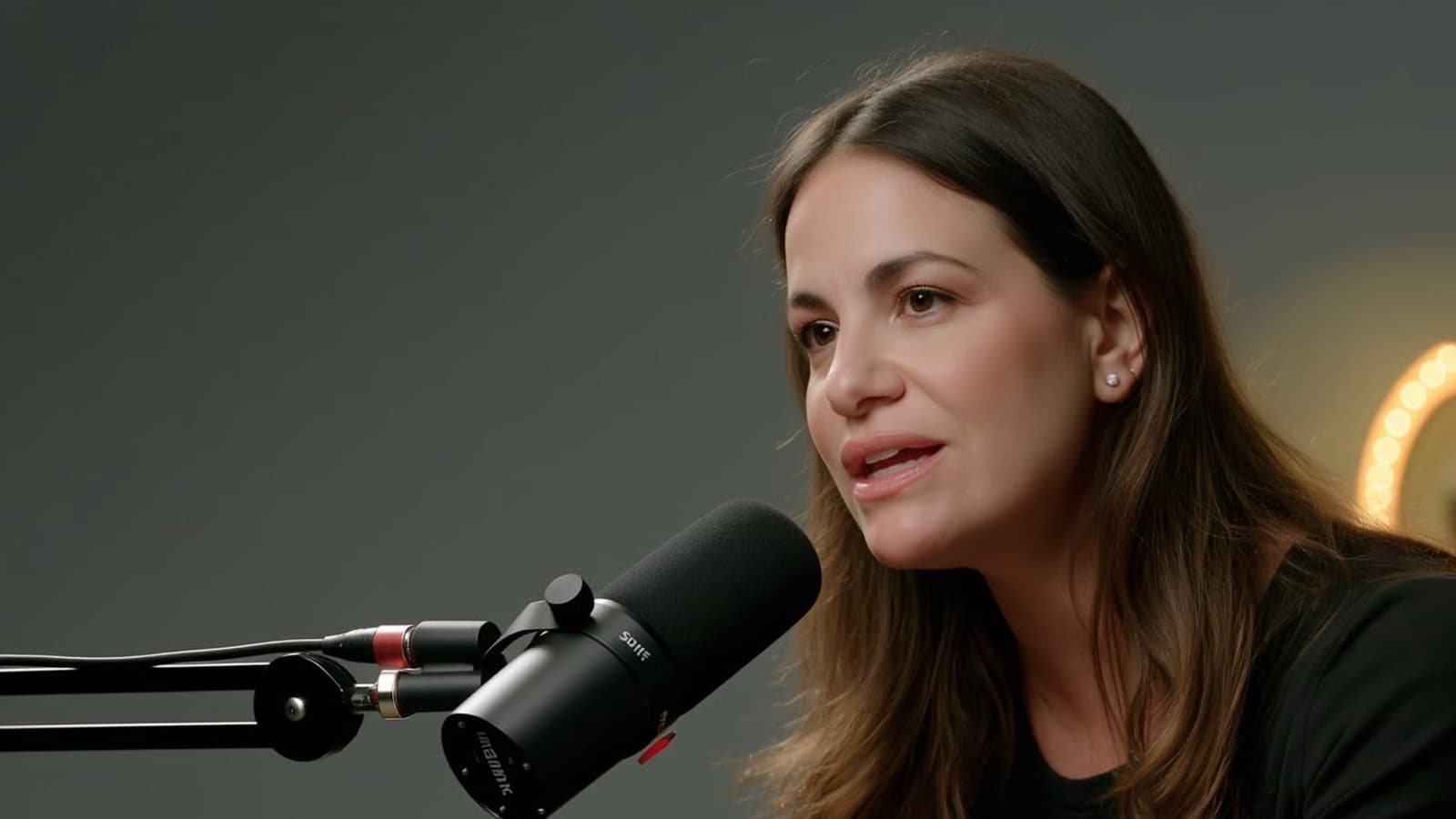
Groppa is an Emmy-nominated producer. Her documentary Autism in Love premiered at Tribeca Film Festival, aired on PBS and earned the Fifth Annual Peek Award for Disability in Film. She produced Honk for Jesus. Save Your Soul, starring Regina Hall and Sterling K. Brown, which Jordan Peele's Monkeypaw acquired, and Sylvie's Love, with Tessa Thompson, which played Sundance in 2020 and sold to Amazon. She has hosted Angle on Producers, which she runs solo, since 2019, and the show is now past 100 episodes.
She does not read it as a sudden collapse. The globalization of production goes back twenty years, working on the Los Angeles pipeline long before the contractions and mergers since 2023 broke the route through it. The money questions get the same treatment: a producing fee divided by the years a project actually runs, a 25 percent tax credit read down to which purchases qualify.
Why the Hollywood career ladder disappeared
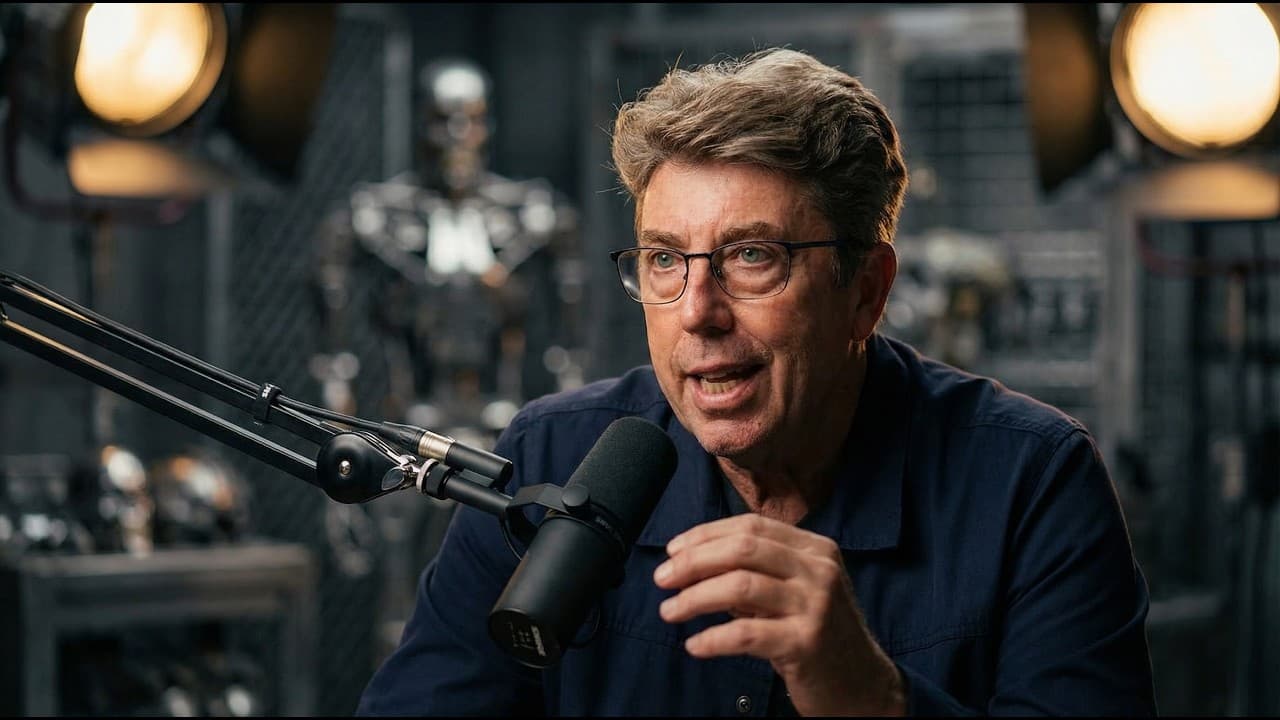
This did not start with the recent contraction. "Over the last 20 years, we've had the globalization of production," she said, country after country making a financial case for shooting outside Los Angeles. Her evidence for how old the pattern is goes back further still. Steve Papazian, a recent guest on her podcast, spent 47 and a half years as global head of physical production at Warner Brothers. He was "the guy that figured out how to make The Matrix in 1999," and that film shot in Australia because the Los Angeles economics already did not work.
Since the 2023 double strikes, that pattern has widened. Contractions and mergers have broken the route that ran from an entry-level studio job up through a mini-major, because many of the companies that made up that route no longer exist. It ran on the agencies, "the information hubs of the industry," where you started in a mailroom and heard about jobs that were never posted. "It really is a who you know situation."
How the streaming wars changed what a job is worth
Netflix moving from distribution into original content is the inflection point she named, and durability was her argument, not taste. Anyone attached to a hit before roughly 2010 could collect residuals and a share of that show's success for the rest of their life. Residuals, not day rates, were what carried people through the gaps between projects. The run is shorter now, and so is the payoff: "You're lucky if you get eight episodes," with an upfront fee and little else.
Studios each launched a competing service within about a year, a hiring boom she called unsustainable from the start. She was harder on that response than on Netflix itself. "You cannot create content in the same speed that people are going to consume it."
The silver lining is that the disruption "democratized the game in a way that the power players don't like as well," and she has benefited from it. The frustration that remains is financial. A writers room can now be genuinely diverse rather than ten white men from elite Ivy League schools, and those rooms do not carry the upside the old ones did.
What a producer actually does, and what it actually pays
The credit is where her definition starts. "If there is an Academy Award to be won for Best Picture, that's the producer that gets the award." That person is embedded from start to finish and gets it done, whether that means finding the money, choosing where to shoot or giving notes on the script. Every time you mount an independent project, she said, "you are the CEO of that company."
Done well, the job disappears. "When you're doing it really well, it's almost invisible because you don't feel it. Things are just happening. And the moment things aren't happening, the first person people will blame is the producer," she said.
A fee that looks large on a budget line has to be divided by the real life of the project, and the producer stays the first call when something breaks years later. The arithmetic she gives runs five years deep. "They've been on this for three years and they're going to be on it for another two years. So when you divide that by five years minus taxes, they're not even making a living wage for this."
Nor is the upside clearer: the waterfall, the share of the back end, and then the accounting on top of both. "Hollywood accounting is a very real term."
The hidden costs of chasing a film tax credit
Her warning about tax credits comes with a case attached. When Honk for Jesus shot in Atlanta in 2021, the state was so busy there was effectively no crew available. The production flew people in from Los Angeles and New York, including some department heads. Housing those distant hires, under union minimums, changed the arithmetic. People hear 25 percent, she said, and stop there.
Then the credit has to be read line by line. Purchases often have to be physically made in the state to qualify, so a large online order does not count if the retailer is headquartered in San Francisco. Airbnb bookings for crew do not count either. Credits and rebates are different instruments, part of the money has to be cash-flowed, and the audit can run long. Her question at the end of the list: "Is it worth that just to save like $400,000?"
The counterexample is Everything Everywhere All at Once. The Daniels have said publicly that they could have taken more money, and chose instead to keep the team they had grown up with. They made it for $10 million, a figure the film does not match on paper given its visual effects, by Groppa's reading. Their non-negotiables were Los Angeles and their own crew, because that was how they protected the investment.
Can independent film borrow the startup equity model?
Sing Sing "very famously used this model," in her account, paying people proportionate to the time they spent on the project. A day earns one slice, five years earns a bigger one. Her caveat came at once. "But that model only works if you can do it non-union because you have to contend with union minimums and residuals."
Film money does not usually behave that way. In a startup, an early seed investor writes the cheque and steps back; in independent film, taking someone's $50,000 or $100,000 tends to come with an assumed right to creative input. Importing venture capital wholesale does not work either, since a fund wants an exit on a short clock while development takes the time it takes. "You get gourmet and that takes time."
Six years of Angle on Producers, and the in-between nobody talks about
Angle on Producers launched in 2019 because the answers she heard on panels were not useful. The questions struck her as "so rudimentary and elementary," when what she wanted was how a producer had sustained themselves long enough to reach the stage in the first place. Keeping the show solo was deliberate, so she would not be "beholden to someone else's schedule or to a financier deciding to pull the plug two weeks out."
The industry judges people on the last thing they did while everyone knows anything good takes years, which attaches a shame to being between jobs. That gap is the part of a career nobody narrates, and it is the show's through line. The same logic covers the production boom, when crews were handed senior roles early but were "missing all of the suck" that historically earned them. When Marvel moved its campus back to the UK, the people who had spent five years climbing in Atlanta had nothing left to climb.
Key takeaways
- Stop planning around the studio ladder, gone long before 2023. Twenty years of production globalization moved the work, and the agency mailroom that told you about unposted jobs went with the companies above it.
- Price a job by what it pays after it ends. A hit from before roughly 2010 paid residuals and a share of its success for life, where eight episodes and an upfront fee pay once.
- Divide the producing fee by the calendar, not the picture. Five years on one project, minus taxes, can land under a living wage, and the producer is still the first call when something breaks.
- Read the credit's rules before chasing 25 percent. Distant-hire housing at union minimums, in-state purchase requirements, Airbnb bookings that do not qualify and a long audit can erase much of the headline number.
- Pay by time served only outside the union. Sing Sing's slices, one for a day and a bigger one for five years, run into union minimums and residuals, and a $50,000 cheque in film usually buys creative input too.
- Ask how someone sustained themselves between credits, not what their last one was. The Atlanta crews who spent five years climbing had nothing left to climb when Marvel moved its campus back to the UK, and that in-between is what Angle on Producers has covered since 2019.

Share this episode
Meet Carolina Groppa
Carolina Groppa is an Emmy-nominated producer and host of the podcast Angle on Producers who has built her career around making the impossible possible while championing female filmmakers. Her breakout success came with the Emmy-nominated documentary "Autism in Love," which premiered at Tribeca Film Festival and aired on PBS, earning the Fifth Annual Peek Award for Disability in Film. Carolina produced acclaimed films including "Honk for Jesus. Save Your Soul" starring Regina Hall and Sterling K. Brown (acquired by Jordan Peele’s Monkeypaw), "Sylvie’s Love" with Tessa Thompson (Sundance 2020, sold to Amazon), and the comedy documentary "Hysterical" featuring Iliza Shlesinger and Margaret Cho. Most recently serving as Executive Producer on "The Honorable: Shyne" for Hulu and Andscape, Groppa also hosts the influential "Angle on Producers" podcast with 100+ episodes featuring industry leaders like Eva Longoria and Stephanie Allain, creating a vital resource for women navigating the entertainment industry.


Producing something of your own?
Saturation is the production platform behind this show: industry budget templates, expense management, and a company card. Start 14 days free on the Team plan, no credit card.