 Apple Podcasts
In 1984, 80 percent of network television was shot on film and 99.99 percent of it was cut on film. Exactly one show was cut electronically: Fame LA, edited by Jimmy McElroy on a CMX 300. By 1989, 99.99 percent of network television was cut electronically, and the last show holding out was Murder, She Wrote.
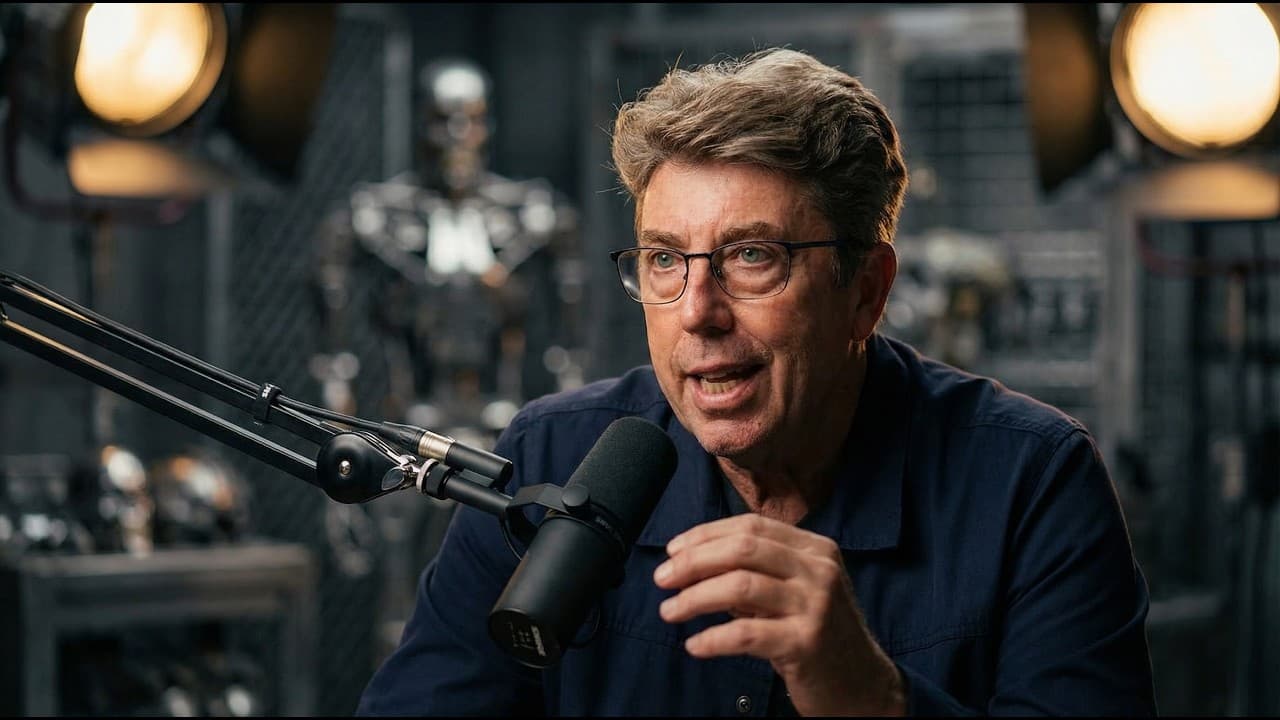
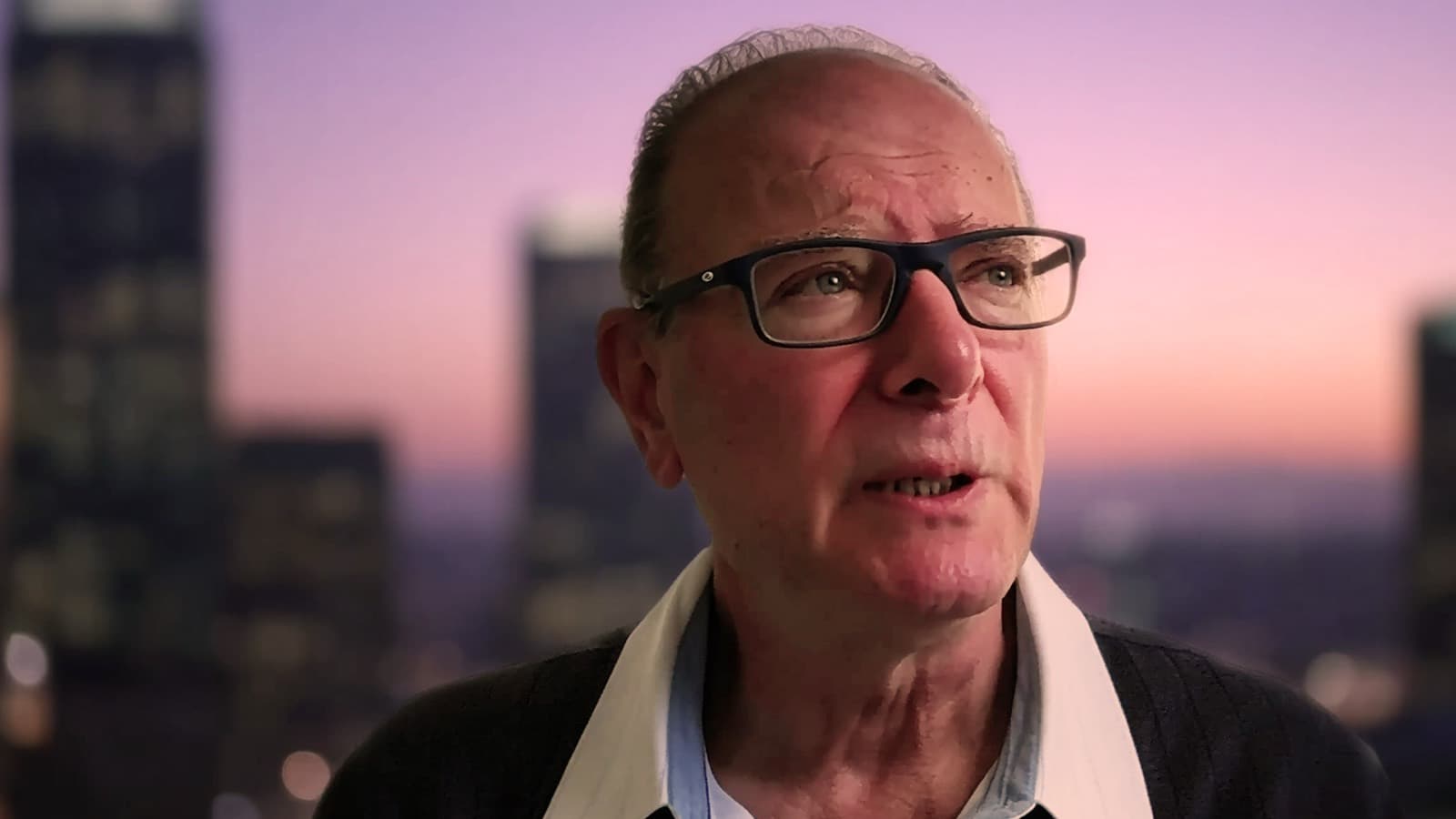
Leon Silverman watched that flip from inside the company that helped cause it. He is in his 48th year in the industry now, a run that started in shipping and receiving at Compact Video after he knocked on the door for four months. Pacific Video came next, later Laser Pacific, then Eastman Kodak, then senior technology roles at the Walt Disney Studios and Netflix. He co-founded the Hollywood Professional Association, and he is now Principal of Strategic Perspective Consulting, a Venture Partner at Hallstone Ventures, and Chair of the MovieLabs Industry Forum.
"I think of myself kind of as the Forrest Gump of the media and entertainment industry because I have been adjacent to and maybe accidentally helped begin a whole number of the technology innovations that I've seen in my life and career," Silverman said. What he does now is an attempt to clean up a mess he helped make. The mess has a name he coined, snowflake workflows. So does the cleanup: the MovieLabs 2030 Vision, published in September 2019.
How network television went from film to electronic editing in five years
The flip began with an innovation Pacific Video brought to the industry in 1984, which it called the electronic laboratory. It was not a new way of working. It was a way to let film editors use emerging tools that felt familiar. The earliest nonlinear systems were electronic rather than digital: the Montage Picture Processor ran 18 Betamax machines loaded with identical material, so an editor could play it back as though it had been cut nonlinearly.
At the 1989 NAB show a system called EMC Squared was declared the hit of the floor, while a small booth at the back held a company from Tewksbury called Avid. Between 1989 and 1992 Avid began to dominate television, and by the mid-1990s it reached features.
Kodak's Cineon, which Silverman dates to 1992, was the other pivotal event: software and hardware that scanned film into a computer and recorded back out to it. Kodak had only meant to extend film's life. The side effect, he said, was letting dinosaurs walk the earth again and giving rise to the visual effects industry.
Why snowflake workflows became Hollywood's most expensive habit
The tools were not the problem with the digital era. They replaced film workflows without replacing the pipeline underneath, and the three decades that followed went into stacking more tools on top.
He remembers the 1980s, 1990s and 2000s as Christmas morning, every new digital toy unwrapped and left on the living room floor. The era promised plug and play and never really delivered it. What it produced instead was options without connectivity. Studying show after show, he found no two workflows alike, which is where snowflake workflows came from. That leaves too many moving parts, unnecessary copies of files, and what he called bucket brigade serial workflows that are never parallelized.
What Marvel's 3,200-edit pipeline taught Disney about infrastructure
At the Walt Disney Studios his strategy carried the name Digital Studio, part business plan and part infrastructure plan. It rested on connecting file-based workflows with the vendor community and the filmmakers. The test case arrived when Marvel moved onto the lot.
A Marvel picture runs roughly 3,200 edits, of which about 3,100 are visual effects shots, with 30 to 70 versions of each, and those numbers are why infrastructure stopped being optional. Disney's answer, in his words, was to build a time machine: enough connectivity between the lot's sound facilities, localization and the outside effects vendors that filmmakers could work almost to the last minute. Films could then arrive dripping wet, not yet dry.
The same argument covers digital cinema packages, which still carry a concept of film reels. For 120 years a reel of film played anywhere on earth, and the DCP keeps that guarantee.
Does new production technology actually save money?
Studios do not resist change, he said, whatever the outside perception. What he sees is curiosity, plus a great deal of what he called muscle memory: teams that have succeeded with particular tools and particular people, and see no reason to change either.
"In my life and career, I've seen a lot of technology that may promise a lot of cost savings. I haven't really seen it happen because time is our currency in this business and most of the cost savings end up being time spent on other things," Silverman said. That leaves him more skeptical about the savings case than most technology executives.
His objection to generative AI is mechanical before it is ethical. The tools are not predictable, not controllable and not very deterministic, which makes iteration behave differently from every other creative process. He sees a nearer-term role in ideation than in final pixels, and the industry is still working through provenance, copyrightability, repeatability and trainability.
Inside the MovieLabs 2030 Vision and the Industry Forum
The 2030 Vision was written in 2019 by the CTOs of the major Hollywood studios, a group who in his telling probably could not have agreed on where to go to lunch. It was unveiled at IBC 2019 and read as aspirational to the point of distant. Six months later the pandemic hit, and networked collaborative work stopped being a future scenario.
"Fundamentally, the 2030 vision is about getting rid of all the waste that doesn't add value, that is not creative," Silverman said. Two of the ten principles carry most of the operational weight: assets go to the cloud and do not move, and applications come to the media. The delay in most workflows is one person finishing something and sending it on. A related principle holds that a creative team should be able to swap a tool out mid-workflow without breaking anything.
When MovieLabs called for case studies two years ago, 40 to 50 companies submitted, which is adoption arriving ahead of organization. The Industry Forum followed and is about a year old, with close to 50 companies worldwide, Saturation among them, working on common data models and a security model for work spread across many enterprises.
The 2030 Greenlight initiative is the part built for filmmakers rather than technologists. At the HPA Tech Retreat, MovieLabs staged a late-breaking script change with almost 20 companies participating: a new scene, a character change, a new visual effects shot. On the real production the scenario was drawn from, resolving that took a week and a half. On stage, a single piece of metadata triggered the chain from the scripting application through scheduling, budgeting and casting, and recovery took minutes.
Career advice for a generation that arrives with a body of work
Starting in shipping and receiving at a post house, as he did 48 years ago, is not the route any more, Silverman said, because many people now arrive with work already made. His example was a 15 year old who asked him for career advice and mentioned ten years of experience with visual effects tools, having started at five.
Every company is now a media company, he argued, and opportunity exists well beyond the 13-mile studio zone in Hollywood. He does not treat creator platforms as a threat. TikTok and Instagram differentiate professional storytelling rather than replace it, and creators with large followings, Mr Beast among them, are becoming studios.
Be curious, he said. Study for the test. Build knowledge of the emerging tool sets and hold a point of view about them. If you are a storyteller, start making stories.
Key takeaways
- Plan for workflow change faster than any roadmap allows: network television went from 99.99 percent film editing in 1984 to 99.99 percent electronic editing by 1989, with Murder, She Wrote the last holdout.
- Fix the pipeline before adding another tool. Three decades of digital tools stacked on a film pipeline nobody replaced, which is how no two shows shared a workflow, the habit Silverman named snowflake workflows.
- Buy connectivity, not just better tools. A Marvel picture runs about 3,100 visual effects shots at 30 to 70 versions each, which is why Disney's Digital Studio wired the lot to its outside vendors.
- Budget new technology in time, not dollars. Forty-eight years of promised cost savings have not arrived, because time is the currency and reclaimed time gets spent on something else.
- Park assets in the cloud and bring applications to them. One piece of metadata pushed a script change through scheduling, budgeting and casting in minutes at the HPA Tech Retreat, against a week and a half on the real production.
- Arrive with a body of work, not a starting job. Silverman's own route through shipping and receiving is closed, and a 15 year old who asked him for advice already had ten years with visual effects tools.


Share this episode
Meet Leon Silverman
Leon Silverman is a Hollywood technology strategist and venture partner who has spent his career at the intersection of creativity and technology, shaping how emerging tech transforms content creation workflows. As Principal of Strategic Perspective Consulting and Chair of the MovieLabs Industry Forum, he leads cross-industry alignment on the MovieLabs 2030 Vision driving collaboration between major studios including Disney, Sony, Warner Bros., and Paramount alongside tech giants like Amazon Web Services, Adobe, and Dolby. A founder of the Hollywood Professional Association with senior roles at Disney Studios, Netflix, and LaserPacific, Silverman now serves as Venture Partner at Hallstone Ventures while advising the joint venture technology laboratory of Hollywood’s major studios, helping the industry embrace emerging technologies that empower storytellers and the creative community.


Producing something of your own?
Saturation is the production platform behind this show: industry budget templates, expense management, and a company card. Start 14 days free on the Team plan, no credit card.