Youth in Revolt Budget
 Comedy
Updated
Synopsis
Disaffected teenager Nick Twisp is in love with the worldly Sheeni Saunders, who lives on the other side of California. To finally win her, he creates a confident, suave, and mustachioed bad-boy alter ego named François Dillinger, and embarks on a campaign of property destruction, arson, and forged signatures that brings him within reach of her affections while landing him at the center of a multi-county manhunt.
What Is the Budget of Youth in Revolt (2010)?
Youth in Revolt, directed by Miguel Arteta and distributed by Dimension Films (The Weinstein Company), was produced on a reported budget of $18,000,000. The adaptation of C.D. Payne's 1993 cult novel starred Michael Cera in the dual role of Nick Twisp and his suave alter ego François Dillinger, with Portia Doubleday, Jean Smart, Steve Buscemi, Zach Galifianakis, Justin Long, and Ray Liotta in supporting roles. Producer David Permut and Permut Presentations shepherded the project at Dimension, with co-financing from Shangri-La Entertainment.
The investment was modest by 2010 R-rated comedy standards and reflected Dimension Films' specialty-genre framework. The Weinstein Company had built its 2008 to 2010 slate around smaller-budget genre and comedy releases in the $10,000,000 to $20,000,000 range, with each entry combining recognizable comedic leads with specialty marketing. Youth in Revolt was conceived as the indie-leaning Cera vehicle that would follow his Juno (2007) and Superbad (2007) breakouts.
Key Budget Allocation Categories
Youth in Revolt's reported $18,000,000 budget was distributed across several core production areas:
- Above-the-Line Talent: Michael Cera commanded a fee aligned with his post-Juno and Superbad profile, including the dual-role compensation for playing both Nick Twisp and François Dillinger. Portia Doubleday in her feature debut, alongside Jean Smart, Steve Buscemi, Zach Galifianakis, Justin Long, M. Emmet Walsh, Ray Liotta, Fred Willard, and Mary Kay Place, filled out an unusually deep supporting ensemble at established character-actor rates.
- Michigan Production: Principal photography took place primarily across Ann Arbor, Saline, and the broader southeast Michigan corridor, taking advantage of Michigan's then-new 42% production incentive program. The incentive was the most generous US state film credit at the time and was an essential anchor of the financing plan.
- Dual-Role Photography: The film's central conceit of Michael Cera playing both Nick Twisp and François Dillinger required dedicated motion-control photography for the shared-frame sequences, with the two characters appearing in the same shot on multiple occasions. Visual effects supervisor Phil McNally and his post-production team handled the seam-removal compositing across approximately forty dual-character shots.
- Animation Sequences: Director Miguel Arteta incorporated three short stop-motion animation interludes, designed by Peter Sluszka and animated at the New York-based Hornet Inc. studio, that visualize Nick Twisp's inner-life fantasies and the framing of his picaresque misadventures. The animation work added meaningful post-production cost and schedule.
- Score and Soundtrack: Composer John Swihart scored the film with a deliberately throwback orchestral palette, and the soundtrack featured needle drops from Frank Sinatra, Serge Gainsbourg, Crystal Castles, and Brigitte Bardot, all clearance-heavy choices that consumed a meaningful share of music budget. The soundtrack curation was a deliberate cinephile signal that aligned with the film's literary-cult-novel pedigree.
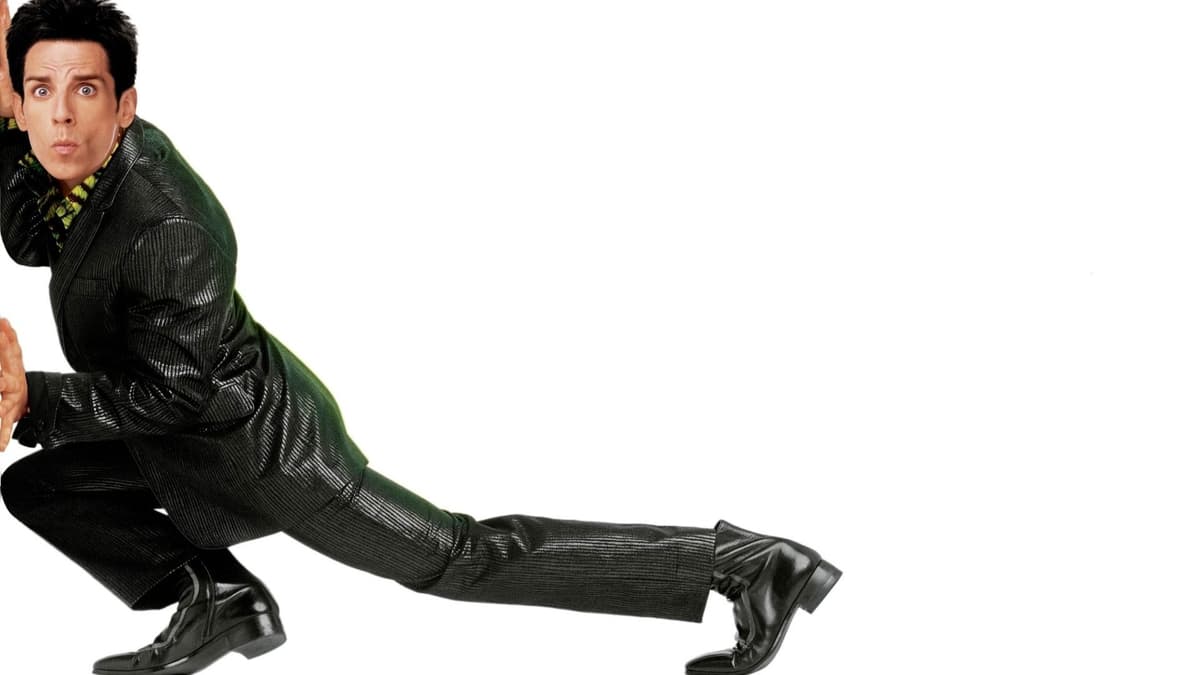
- Costumes: Costume designer Nancy Steiner built the dual-character wardrobe for Cera's Nick Twisp and François Dillinger personas, with François' deliberately retro suit-and-mustache styling functioning as a key element of the comic register. The dual-wardrobe approach drove meaningful below-the-line costuming cost.
How Does Youth in Revolt's Budget Compare to Similar Films?
At $18,000,000, Youth in Revolt sits at the low end of late-2000s and early-2010s R-rated comedies:
- Juno (2007): Budget $7,500,000 | Worldwide $231,411,584. Michael Cera's preceding Fox Searchlight breakout cost less than half Youth in Revolt and earned more than twelve times its worldwide gross, the indie-comedy template Youth in Revolt was scaled against.
- Superbad (2007): Budget $20,000,000 | Worldwide $169,929,196. Cera's preceding R-rated comedy ensemble cost roughly the same as Youth in Revolt and earned nearly nine times its worldwide gross, the closest commercial peer.
- Scott Pilgrim vs. the World (2010): Budget $60,000,000 | Worldwide $47,664,559. Cera's same-year Edgar Wright comic-book adaptation cost more than three times Youth in Revolt and earned about two and a half times its worldwide gross, illustrating both the variable budget approach for Cera vehicles and the broader 2010 underperformance of his vehicles.
- Adventureland (2009): Budget $9,000,000 | Worldwide $17,184,180. Greg Mottola's prior-year period-set comedy cost half of Youth in Revolt and earned a comparable worldwide gross, the closest indie tonal peer.
Youth in Revolt Box Office Performance
Youth in Revolt opened on January 8, 2010, on 1,873 screens to a $7,012,165 opening weekend, finishing fifth behind Avatar (in its fourth weekend), Daybreakers, It's Complicated, and Sherlock Holmes. The film never improved its weekly position and finished its US theatrical run with $15,279,180. International release added $3,977,000.
Against a reported $18,000,000 production budget, the film failed to recoup its total estimated investment worldwide. Here is the financial breakdown:
Box Office Breakdown
Youth in Revolt (2010)

Youth in Revolt returned approximately $0.55 in theatrical revenue for every $1 invested in production and marketing combined, a clear theatrical loss before home video and library performance. The 79/21 domestic-international split was unusually domestic-skewed for an R-rated comedy and reflected limited international engagement, particularly outside the United Kingdom and Australia. Strong home video performance through Anchor Bay Entertainment (which acquired the Dimension Films catalog from The Weinstein Company in 2010 to 2011) moved the title closer to break-even, but the result was sufficient for Dimension to step back from similar-scale Cera vehicles.
Youth in Revolt Production History
Youth in Revolt began development at Dimension Films in 2003 with C.D. Payne's 1993 cult novel as the source material. The screenplay was written by Gustin Nash, who had previously written Charlie Bartlett (2007). Several directors were attached over the development period, including David Gordon Green, before Miguel Arteta (The Good Girl, Chuck & Buck) attached in 2007 and Michael Cera signed in 2008 following his Superbad and Juno breakouts.
Principal photography began on November 17, 2008, primarily across Ann Arbor, Saline, and the broader southeast Michigan corridor. The forty-day shoot took advantage of Michigan's then-new 42% production incentive program, which was the most generous US state film credit at the time and made Michigan the dominant US production hub during the 2008 to 2011 window before the program was scaled back. The shoot wrapped in January 2009.
Post-production proceeded through 2009, with extensive motion-control photography and seam-removal compositing required for the dual Cera character sequences. Peter Sluszka and the Hornet Inc. team in New York animated the three stop-motion interludes through summer 2009. The Weinstein Company initially scheduled the film for spring 2009 but moved the release date to January 8, 2010 to allow for the post-production complexity and to position the film away from the Inglourious Basterds-anchored summer 2009 release calendar.
The January 8, 2010 release date placed the film in the post-holiday window typically used by genre and counterprogramming releases. The strong holds of Avatar across its fourth weekend and the awards-corridor traction of It's Complicated and Up in the Air consumed the comedy market share Dimension had projected, and Youth in Revolt's soft opening was widely interpreted as a sign that the post-Juno indie-comedy moment was wearing thin.
Awards and Recognition
Youth in Revolt received no significant awards recognition. The film was not in contention at the Academy Awards, Golden Globes, Independent Spirit Awards, or any major guild ceremony. Michael Cera's dual-role performance received occasional acknowledgment in genre-press year-end roundups but did not produce a major individual acting nomination.
The film received a Saturn Award nomination for Best Action/Adventure Film and a Phoenix Film Critics Society nomination for Best Adaptation. No major industry recognition followed for any member of the cast or crew, and the film has largely disappeared from contemporary critical discussion of Cera's career, in contrast to the higher-profile Juno, Superbad, and Scott Pilgrim entries from the same period.
Critical Reception
Youth in Revolt received generally positive reviews. The film holds a 67% approval rating on Rotten Tomatoes based on 192 critic reviews, with a critical consensus that called it "a goofy, satisfying coming-of-age comedy that benefits from Michael Cera's dual performance." On Metacritic, the film scored 63 out of 100, indicating generally favorable reviews. Audiences surveyed by CinemaScore gave the film a B-, a soft mark for an R-rated comedy with established lead.
Critics broadly praised Michael Cera's dual performance, the supporting ensemble cast, and the stop-motion animation interludes, but objected to the film's episodic structure and the limited theatrical scale relative to its literary source. Roger Ebert awarded three stars and wrote that "Cera plays both versions of himself with a comic precision that holds the film together," while A. O. Scott of The New York Times argued that the film "captures the novel's lightly anarchic spirit while feeling slighter on screen than on the page." David Edelstein of New York Magazine added that "the supporting cast is so deep that any one performance could carry a different movie."
A minority of critics, led by Owen Gleiberman of Entertainment Weekly and Manohla Dargis of The New York Times, objected to what they viewed as the film's reliance on Cera's established persona without expanding it meaningfully. The positive but not strongly enthusiastic reception, combined with the soft theatrical result, has cemented Youth in Revolt as a respectable but commercially unrepeated entry in the late-2000s indie-comedy cycle, an outcome the broader Cera trajectory subsequently confirmed as he moved into smaller-scale projects.
Frequently Asked Questions
How much did it cost to make Youth in Revolt (2010)?
The reported production budget was $18,000,000, financed by Dimension Films (The Weinstein Company) with Permut Presentations and Shangri-La Entertainment producing. The figure was modest by 2010 R-rated comedy standards and reflected Dimension Films' specialty-genre framework.
How much did Youth in Revolt earn at the box office?
The film grossed $15,279,180 domestically and $3,977,000 internationally, for a worldwide total of $19,256,180. It opened to $7,012,165 in the United States, finishing fifth on its January 8, 2010 opening weekend behind Avatar in its fourth weekend.
Was Youth in Revolt a box office success?
No. Against a $18,000,000 production budget and an estimated $15,000,000 to $20,000,000 in marketing spend, the film returned approximately $0.55 in worldwide gross for every $1 invested. Strong home video performance through Anchor Bay Entertainment subsequently moved the title closer to break-even.
Who directed Youth in Revolt?
Miguel Arteta directed the film, working from a screenplay by Gustin Nash adapting C.D. Payne's 1993 cult novel. Arteta had previously directed Chuck & Buck (2000) and The Good Girl (2002).
Where was Youth in Revolt filmed?
Principal photography took place primarily across Ann Arbor, Saline, and the broader southeast Michigan corridor from November 2008 to January 2009. The forty-day shoot took advantage of Michigan's then-new 42% production incentive program, which was the most generous US state film credit at the time.
Who plays the dual role of Nick Twisp and François Dillinger?
Michael Cera plays both Nick Twisp and his suave bad-boy alter ego François Dillinger. The dual-role photography required dedicated motion-control work for the shared-frame sequences, with approximately forty dual-character shots completed through visual effects and seam-removal compositing.
Is Youth in Revolt based on a book?
Yes. The film is based on C.D. Payne's 1993 cult novel Youth in Revolt: The Journals of Nick Twisp, which combined with its multiple subsequent volumes into a 1,000-plus-page picaresque coming-of-age narrative. The film adapts elements from the first novel and the early volumes of the series.
How does Youth in Revolt compare to other Michael Cera comedies?
Youth in Revolt cost $18,000,000 and earned $19,256,180 worldwide. Juno (2007) cost $7,500,000 and earned $231,411,584 worldwide. Superbad (2007) cost $20,000,000 and earned $169,929,196 worldwide. Scott Pilgrim vs. the World (2010) cost $60,000,000 and earned $47,664,559 worldwide. Youth in Revolt produced the second-weakest commercial outcome of Cera's 2007 to 2010 vehicle cycle, ahead only of Scott Pilgrim in absolute terms.
What did critics think of Youth in Revolt?
The film received generally positive reviews, with a 67% approval rating on Rotten Tomatoes (based on 192 critics) and a Metacritic score of 63 out of 100. Audiences gave it a B- CinemaScore. Roger Ebert awarded three stars. Critics praised Michael Cera's dual performance and the supporting ensemble but objected to the episodic structure.
Did Youth in Revolt win any awards?
No significant awards. The film was not in contention at the Academy Awards, Golden Globes, Independent Spirit Awards, or any major guild ceremony. It received a Saturn Award nomination for Best Action/Adventure Film and a Phoenix Film Critics Society nomination for Best Adaptation.
Filmmakers
Youth in Revolt (2010)

Build budgets like this one in Saturation
Start from an industry-standard feature film template, import the schedule and rates you already have, and let the cost report keep itself current as you spend. Real-time collaboration, no spreadsheets.