
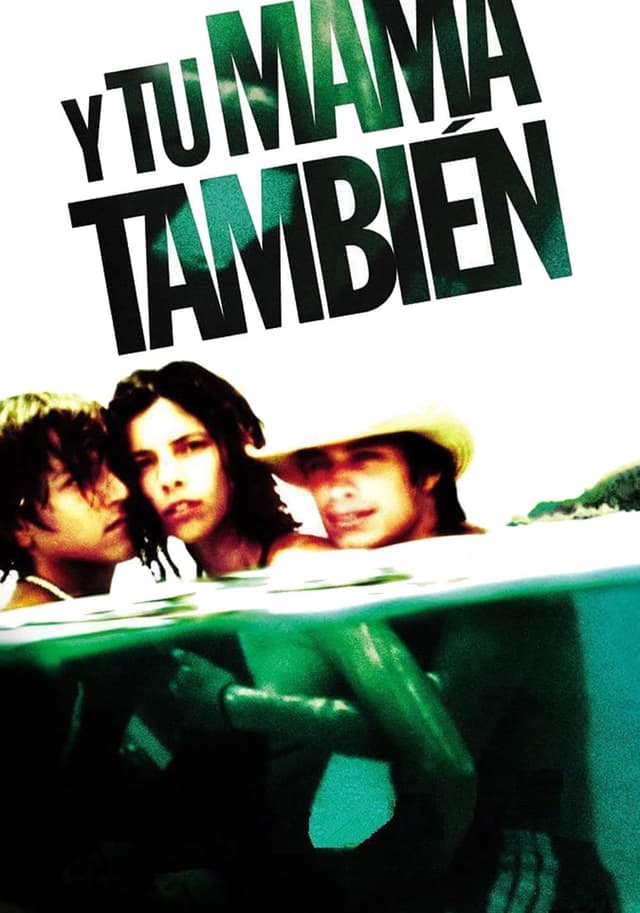
Y Tu Mamá También Budget
Updated
Synopsis
In Mexico, two teenage boys and an attractive older woman embark on a road trip and learn a thing or two about life, friendship, sex, and each other.
What Is the Budget of Y Tu Mama Tambien?
Y Tu Mama Tambien (2001), written by Carlos and Alfonso Cuaron and directed by Alfonso Cuaron, had a production budget of approximately $5,000,000. The film was produced by Besame Mucho Pictures, Cuaron's production company, in partnership with Anhelo Producciones, and shot entirely on location in Mexico. The $5 million budget reflects the economics of a Mexican production operating outside the Hollywood studio system, with a naturalistic approach that kept crew sizes small, used entirely practical locations, and cast actors who were not yet internationally established.
At $5,000,000, Y Tu Mama Tambien is a modest production by any standard, yet the film earned $33,600,000 worldwide, a return of more than six times the production cost. In North America, where it was released unrated by IFC Films after an initial NC-17 rating threatened to limit its theatrical footprint, it earned $13,839,658, making it one of the highest-grossing Spanish-language films in North American history at the time of its release.
Key Budget Allocation Categories
Y Tu Mama Tambien's $5 million budget was shaped by Cuaron's deliberately minimal production approach, which prioritized location authenticity and naturalistic performance over production infrastructure:
- Location Production Across Mexico: The film's road trip narrative required production across Mexico City and along the Pacific coast toward Oaxaca, capturing the specific textures of Mexican geography and class. Shooting in real locations rather than constructed sets is cost-efficient relative to studio production but requires extensive location scouting, transport logistics, and the coordination of a mobile crew across varied terrain. The beaches of the Oaxacan coast and the roadside communities the characters pass through were all real locations used with minimal alteration.
- Emmanuel Lubezki's Cinematography: Cinematographer Emmanuel Lubezki, who would go on to win three consecutive Academy Awards for Gravity, Birdman, and The Revenant, shot the film in long handheld takes with a naturalistic, documentary-inflected approach. Lubezki's methodology at this budget level relied on speed, natural light, and minimal lighting setups rather than large grip-and-electric crews, which kept the cinematography cost within the constraints of a $5 million production.
- Cast: Diego Luna and Gael Garcia Bernal were cast at a stage of their careers before either had achieved significant international recognition, though both had appeared in Alejandro G. Inarritu's Amores Perros the prior year. Maribel Verdu, the film's most established performer, brought Spanish film credentials to a Mexican production. The above-the-line cast costs reflect pre-breakthrough talent, a key factor in keeping the total budget at $5 million.
- Voiceover Narration and Sound Design: The film's distinctive omniscient narrator, voiced by Daniel Gimenez Cacho, periodically interrupts the action to provide factual context about the characters, the places they pass through, and Mexico's political and economic realities. This narration was written as a structural counterpoint to the characters' limited self-awareness and required post-production investment in sound design and mixing that extended the film's emotional and intellectual register beyond what the images alone convey.
How Does Y Tu Mama Tambien's Budget Compare to Similar Films?
At $5,000,000, Y Tu Mama Tambien sits within the range of Latin American and Spanish-language productions that achieved major critical recognition and meaningful international crossover in the early 2000s. The relevant comparisons:
- Amores Perros (2000): Budget approximately $2,000,000 | Worldwide approximately $20,900,000. The Alejandro G. Inarritu debut that announced Mexican cinema to international audiences one year before Y Tu Mama Tambien, also starring Gael Garcia Bernal. Amores Perros at roughly half the budget achieved roughly 62% of Y Tu Mama Tambien's worldwide gross, with both films emerging from the same generation of Mexican filmmakers and actors who would define world cinema in the decade ahead.
- City of God (2002): Budget $3,300,000 | Worldwide $30,600,000. The Fernando Meirelles Brazilian drama that achieved comparable critical acclaim and international crossover at a similar budget level, earning $30.6 million worldwide. The parallel between City of God and Y Tu Mama Tambien illustrates the commercial and critical ceiling available to Latin American cinema in the early 2000s when distribution aligned with critical consensus.
- The Motorcycle Diaries (2004): Budget $10,000,000 | Worldwide $57,400,000. The Walter Salles road narrative also starring Gael Garcia Bernal, produced at twice Y Tu Mama Tambien's budget and achieving nearly twice the gross. The comparison confirms Garcia Bernal's commercial value in Latin American art cinema and the commercial potential of Spanish-language road narratives when paired with major festival recognition.
- Talk to Her / Hable Con Ella (2002): Budget approximately $6,500,000 | Worldwide approximately $24,500,000. Pedro Almodovar's Academy Award-winning Spanish drama released the following year at a comparable budget, achieving strong critical recognition but a lower worldwide gross. The comparison illustrates the commercial advantage that Y Tu Mama Tambien's more accessible road trip premise provided over Almodovar's more formally challenging approach.
- Pan's Labyrinth (2006): Budget $19,000,000 | Worldwide $83,300,000. Guillermo del Toro's Spanish-language fantasy at nearly four times Y Tu Mama Tambien's budget and more than twice the worldwide gross demonstrates the trajectory of Spanish-language international cinema as the decade progressed and studio investment in the format increased. Y Tu Mama Tambien's $5 million result in 2001 helped establish the commercial viability that later productions benefited from.
Y Tu Mama Tambien Box Office Performance
Y Tu Mama Tambien earned $13,839,658 domestically and $33,600,000 worldwide. In the United States, it was distributed by IFC Films as an unrated release after an initial NC-17 rating would have significantly limited its theatrical availability. The decision to release unrated rather than accept the NC-17 or pursue cuts proved commercially effective: the film became one of the highest-grossing Spanish-language films in North American theatrical history at the time, and one of the most successful unrated releases distributed through specialty cinema channels.
A film typically needs to earn approximately twice its production budget to cover marketing and distribution costs. For Y Tu Mama Tambien, the break-even threshold was roughly $10,000,000. Based on its IFC Films specialty release, Prints and Advertising costs are estimated at approximately $4,000,000 to $5,000,000, bringing the total estimated investment to approximately $9,000,000 to $10,000,000. With worldwide earnings of $33,600,000, the film cleared that threshold by more than three times.
Box Office Breakdown
Y Tu Mamá También

At approximately +236%, Y Tu Mama Tambien returned roughly $3.36 for every $1 invested during its theatrical run. For a Spanish-language Mexican film released unrated in the United States, the $13.8 million North American gross represented an exceptional result, opening the door for the generation of Latin American filmmakers that followed and establishing IFC Films as a viable distributor for foreign-language cinema with mainstream commercial potential.
Y Tu Mama Tambien Production History
Y Tu Mama Tambien was Alfonso Cuaron's return to Mexico after two Hollywood productions, A Little Princess (1995) and Great Expectations (1998). Cuaron co-wrote the screenplay with his brother Carlos Cuaron, developing a road movie structure that would allow them to document contemporary Mexico's class divides, political transitions, and landscape through the lens of two young men whose friendship is tested by desire, jealousy, and the revelation of secrets. The film was produced by Cuaron's company Besame Mucho Pictures in partnership with Anhelo Producciones, operating outside the Hollywood studio system with a Mexican budget.
Cuaron cast Diego Luna and Gael Garcia Bernal, who had appeared together the previous year in Alejandro G. Inarritu's Amores Perros, as the two teenage leads. Maribel Verdu, an established Spanish actress, was cast as Luisa. Emmanuel Lubezki served as cinematographer, shooting in long naturalistic handheld takes on real locations across Mexico, from Mexico City to the Pacific coast. The production approach was deliberately documentary-like, designed to capture authentic environments and performance rather than constructed cinematic spectacle. Daniel Gimenez Cacho voiced the film's omniscient narrator, a structural element Cuaron used to place the characters' personal drama inside the larger political and economic reality of Mexico at the end of the PRI era.
Y Tu Mama Tambien premiered at the Venice Film Festival in September 2001, where Cuaron won the Silver Lion for Best Director and the screenplay won the FIPRESCI Prize. The film opened in Mexico on June 8, 2001, and was a major commercial success domestically despite controversy over its explicit sexual content. In the United States, IFC Films acquired the distribution rights and released the film unrated, declining to pursue an R rating that would have required cuts, after the MPAA assigned it an NC-17. The unrated release was positioned toward specialty cinema markets and achieved significant word-of-mouth expansion beyond its initial platform. The film received an Academy Award nomination for Best Original Screenplay for Alfonso and Carlos Cuaron, marking the first major Oscar recognition for either filmmaker. The film is widely regarded as one of the greatest Mexican films ever made and one of the defining works of the early 2000s in international cinema.
Awards and Recognition
Y Tu Mama Tambien received 39 wins and 48 nominations across awards circuits, including an Academy Award nomination for Best Original Screenplay for Alfonso and Carlos Cuaron. At the Venice Film Festival, Cuaron won the Silver Lion for Best Director and the film won the FIPRESCI Prize. Additional recognition came from the British Academy Film Awards, the Independent Spirit Awards, and numerous critics' circles in the United States and Europe. The film's 89 Metacritic score reflects critical recognition as one of the most accomplished films of 2001. Its awards season performance established Alfonso Cuaron as a major filmmaker ahead of Harry Potter and the Prisoner of Azkaban (2004) and Children of Men (2006).
Critical Reception
Critical reception for Y Tu Mama Tambien was exceptional. With an 89 out of 100 on Metacritic and sustained critical attention across major publications, the film was recognized immediately as a landmark of contemporary Mexican cinema and of world cinema more broadly. Critics praised Lubezki's cinematography, the performances of Luna, Garcia Bernal, and Verdu, the screenplay's integration of the personal and political, and Cuaron's formal control of a film that manages to be simultaneously explicit, funny, tender, and devastating.
The film's critical reputation has grown consistently since its release. It is routinely included in lists of the greatest films of the 2000s and of the greatest Mexican films in history. The careers of nearly everyone centrally involved, from Cuaron and Lubezki to Luna and Garcia Bernal, were shaped by the film's reception and the doors it opened. For Cuaron, Y Tu Mama Tambien was the foundation on which Gravity (2013), Roma (2018), and his position as one of the most important filmmakers of his generation were built.
Frequently Asked Questions
How much did it cost to make Y Tu Mamá También (2001)?
The production budget was $5,000,000, covering principal photography, cast and crew salaries, locations, sets, post-production, and music. Marketing and distribution (P&A) costs are estimated at an additional $2,500,000 - $4,000,000, bringing the total studio investment to approximately $7,500,000 - $9,000,000.
How much did Y Tu Mamá También (2001) earn at the box office?
Y Tu Mamá También grossed $13,839,658 domestic, $19,760,342 international, totaling $33,600,000 worldwide.
Was Y Tu Mamá También (2001) profitable?
Yes. Against a production budget of $5,000,000 and estimated total costs of ~$12,500,000, the film earned $33,600,000 theatrically - a 572% ROI on production costs alone.
What were the biggest costs in producing Y Tu Mamá También?
The primary cost drivers were above-the-line talent (Diego Luna, Gael García Bernal, Maribel Verdú); talent compensation, authentic period production design, and meticulous post-production.
How does Y Tu Mamá También's budget compare to similar drama films?
At $5,000,000, Y Tu Mamá También is classified as a micro-budget production. The median budget for wide-release drama films in the 2000s ranges from $30 - 80M for mid-budget to $150M+ for tentpoles. Comparable budgets: Come and See (1985, $5,000,000); Cinema Paradiso (1988, $5,000,000); Mishima: A Life in Four Chapters (1985, $5,000,000).
Did Y Tu Mamá También (2001) go over budget?
There are no widely reported accounts of significant budget overruns for this production. However, studios rarely disclose precise budget overrun figures publicly. The reported production budget reflects the final estimated cost.
What was the return on investment (ROI) for Y Tu Mamá También?
The theatrical ROI was 572.0%, calculated as ($33,600,000 − $5,000,000) ÷ $5,000,000 × 100. This measures gross revenue against production budget only - it does not account for P&A or exhibitor shares.
What awards did Y Tu Mamá También (2001) win?
Nominated for 1 Oscar. 39 wins & 48 nominations total.
Who directed Y Tu Mamá También and who were the key crew members?
Directed by Alfonso Cuarón, written by Alfonso Cuarón, Carlos Cuarón, shot by Emmanuel Lubezki, edited by Alfonso Cuarón, Alex Rodríguez.
Where was Y Tu Mamá También filmed?
Y Tu Mamá También was filmed in Mexico.
Filmmakers
Y Tu Mamá También

Official Trailer
Build budgets like this one in Saturation
Start from an industry-standard feature film template, import the schedule and rates you already have, and let the cost report keep itself current as you spend. Real-time collaboration, no spreadsheets.