Whisper of the Heart Budget
 AnimationDramaFamily1h 51m
Updated
Synopsis
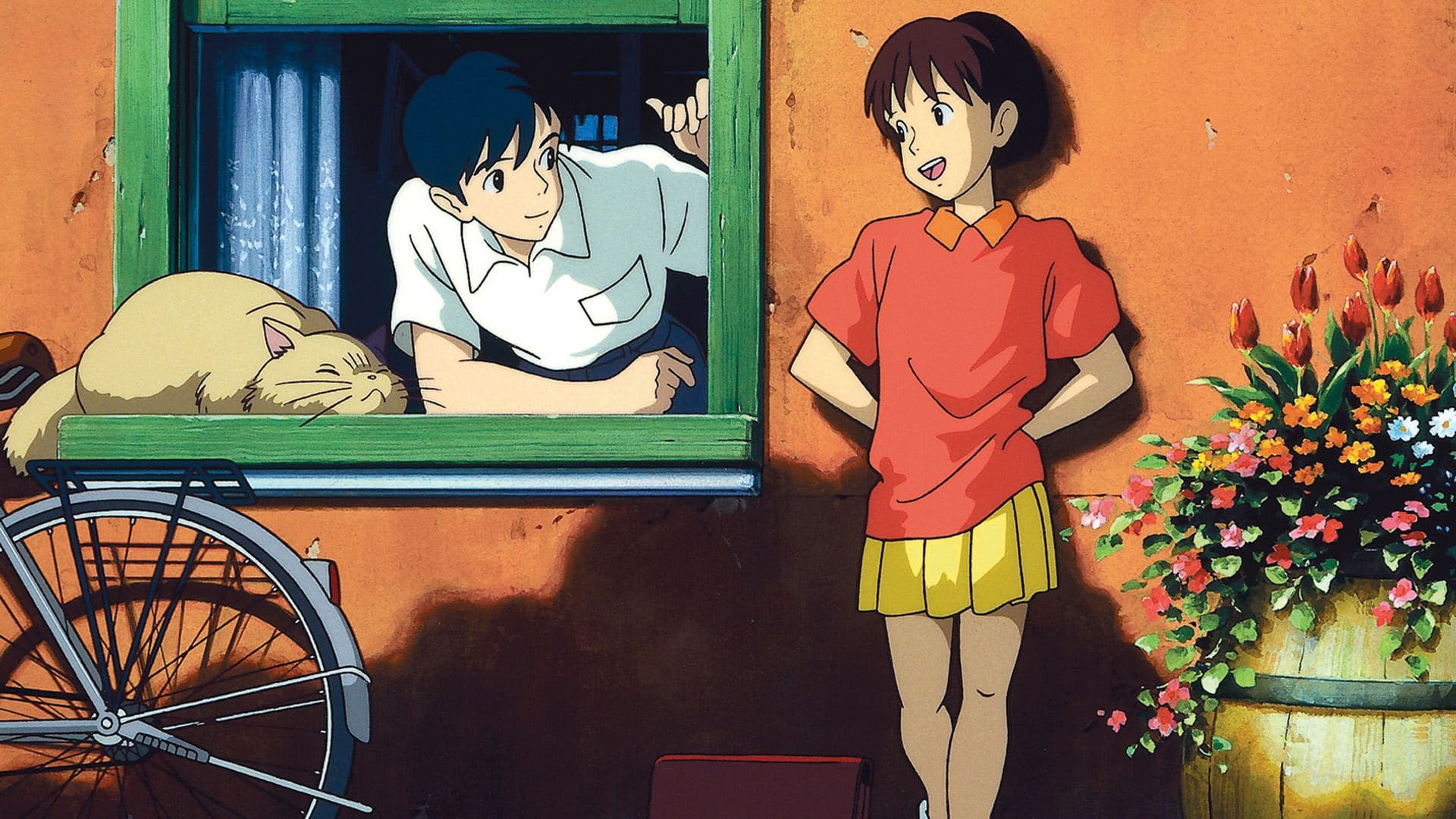
Shizuku Tsukishima, a fourteen-year-old Tokyo middle-school student who loves reading and translates John Denver's Country Roads, Take Me Home for her school chorus, notices that the same name keeps appearing on the library check-out cards of every book she reads. When she finally meets the boy behind the name, a violin-making apprentice named Seiji Amasawa, his commitment to his craft inspires her to find her own creative calling and write her first novel during a summer of mutual creative awakening.
What Is the Budget of Whisper of the Heart (1995)?
Whisper of the Heart (1995), directed by Yoshifumi Kondō from a screenplay by Hayao Miyazaki, was produced on an estimated budget of approximately $4,500,000 USD, consistent with Studio Ghibli's mid-1990s feature-animation per-title spend. The figure has not been formally disclosed by Studio Ghibli, but the established hand-drawn-animation production-cycle costs and the studio's documented per-title spending across the 1989 to 1995 period all support a figure in this range.
The film was produced by Studio Ghibli with Toshio Suzuki producing and Hayao Miyazaki writing and storyboarding the screen adaptation of Aoi Hiiragi's 1989 manga of the same name. Whisper of the Heart was the feature directorial debut of Yoshifumi Kondō, the senior Studio Ghibli animation director whose long career across the Toei Animation and Nippon Animation studios had made him one of the most respected animators in Japan. Toho Co. Ltd. distributed the film theatrically in Japan beginning July 15, 1995.
Key Budget Allocation Categories
The estimated $4,500,000 USD budget covered a contained hand-drawn-animation coming-of-age feature built around a Tokyo-set teenage romance and creative-awakening narrative:
- Above-the-Line Talent: Voice cast assembled Yoko Honna as the protagonist Shizuku Tsukishima, Issei Takahashi as her romantic interest Seiji Amasawa, and Keiju Kobayashi as the antique dealer Shiro Nishi. The voice-cast compensation packages, the seiyū-industry practices of mid-1990s Studio Ghibli production, and the supporting cast represented an above-the-line line item appropriate to the contained production scale.
- Director and Screenplay Package: Yoshifumi Kondō took the feature directorial debut chair after Hayao Miyazaki personally selected him for the role and then wrote, storyboarded, and produced the screen adaptation of Aoi Hiiragi's manga. The Miyazaki creative-anchor role at the screenplay and storyboard stage anchored the project's prestige within the Studio Ghibli output rotation.
- Hand-Drawn Animation Production: Studio Ghibli's in-house animation pipeline executed the entirety of the production across an approximately two-year cycle. The animation supervisor was Kitaro Kosaka, and the production design and key animation work supported the contemporary Tokyo suburb setting with the detailed observational naturalism that the Studio Ghibli house style demanded.
- Production Design and Backgrounds: Art director Satoshi Kuroda and the Studio Ghibli background-art team executed the contemporary Tokyo setting with the detailed observational architecture that the screenplay required. The Tama-area suburban Tokyo location work informed the production design, with Hayao Miyazaki personally scouting locations in the Tama-Center area for the screenplay's visual register.
- Music: Yuji Nomi composed the score, integrating an original adaptation of John Denver's Country Roads, Take Me Home into the narrative as the screenplay's signature musical anchor. The score and music-rights package, including the Country Roads Japanese-translation arrangement and the original orchestral score, represented a meaningful line item.
- Marketing and Distribution: Toho's distribution package for the July 15, 1995 theatrical release across Japan, the post-release home-video distribution by Buena Vista International, and the eventual Disney international acquisition and Walt Disney Pictures English-language dub release in 2006 completed the long-tail distribution pipeline.
How Does Whisper of the Heart's Budget Compare to Similar Films?
Whisper of the Heart sits in the Studio Ghibli mid-1990s feature-animation rotation alongside contemporary peers:
- Porco Rosso (1992): Budget approximately $3,500,000 USD | Worldwide approximately $44,000,000. Hayao Miyazaki's previous Studio Ghibli feature at lower budget represents the immediate studio-output peer.
- Pom Poko (1994): Budget approximately $4,000,000 USD | Worldwide approximately $26,000,000. Isao Takahata's Studio Ghibli feature at comparable budget represents the contemporary studio-output peer.
- Princess Mononoke (1997): Budget approximately $23,500,000 USD | Worldwide approximately $159,000,000. Hayao Miyazaki's later Studio Ghibli feature at significantly higher budget represents the studio's later epic-scale production model.
- My Neighbors the Yamadas (1999): Budget approximately $9,000,000 USD | Worldwide approximately $17,000,000. Isao Takahata's later Studio Ghibli feature at higher budget represents the contemporary studio-output peer.
Whisper of the Heart Box Office Performance
Whisper of the Heart was released theatrically in Japan on July 15, 1995. The film became the highest-grossing Japanese film of 1995, earning approximately 1,850,000,000 Japanese yen (approximately $18,500,000 USD at the 1995 exchange rate) in distribution income, with theatrical gross substantially higher. The English-language dub was released by Walt Disney Studios Home Entertainment in 2006 and the film accumulated significant long-tail home-entertainment and streaming-rights performance across the international Studio Ghibli catalogue distribution.
Against the estimated $4,500,000 USD production budget, the financial breakdown:
Box Office Breakdown
Whisper of the Heart

Whisper of the Heart returned approximately $3.30 to $4.30 in worldwide theatrical revenue for every $1 invested when measured against total estimated production and marketing spend, an outcome consistent with the mid-1990s Studio Ghibli prestige-feature theatrical model that supported the studio's continued production rotation. The film's standing as the highest-grossing Japanese film of 1995 anchored the studio's commercial peak across the pre-Princess Mononoke (1997) and pre-Spirited Away (2001) production cycle.
Whisper of the Heart Production History
Whisper of the Heart originated from Hayao Miyazaki's interest in Aoi Hiiragi's 1989 manga of the same name, originally serialized in the Ribon shōjo manga magazine. Miyazaki personally selected senior Studio Ghibli animation director Yoshifumi Kondō to make his feature directorial debut on the project, and then wrote, storyboarded, and produced the screen adaptation. The selection of Kondō was widely understood inside Studio Ghibli as part of a long-term studio-leadership succession plan in which Kondō was being prepared to eventually take over as the studio's principal director.
Production ran across an approximately two-year cycle through 1994 and 1995. The screenplay relocated the manga's contemporary Tokyo setting to the specific Tama-Center suburb of western Tokyo, with Hayao Miyazaki personally scouting locations in the Tama area for the screenplay's visual register. The animation pipeline executed the entirety of the production through the Studio Ghibli in-house team, with animation supervisor Kitaro Kosaka leading the key animation.
Composer Yuji Nomi delivered the score and adapted John Denver's Country Roads, Take Me Home into the narrative as the screenplay's signature musical anchor, with the song appearing both as a Japanese-translation arrangement that the protagonist Shizuku translates for her school chorus and as an original lyrical composition the protagonist writes for Seiji as the climactic emotional set piece. The film premiered theatrically in Japan on July 15, 1995 and became the highest-grossing Japanese film of 1995. Yoshifumi Kondō's career was tragically cut short when he died of a sudden aortic dissection in January 1998 at age 47, before he could direct his planned second feature.
Awards and Recognition
Whisper of the Heart received notable Japanese awards recognition. The film won the Mainichi Film Award for Best Animated Film 1995 and was nominated for the Animation Kobe 1995 Theatrical Animation Award. The film has been routinely cited in critical retrospectives as one of the most acclaimed Studio Ghibli features of the 1990s and a foundational entry in the slice-of-life and creative-awakening shōjo-anime register. The film's spin-off film The Cat Returns (2002), directed by Hiroyuki Morita and based on the in-film Baron-and-cat-kingdom story that the protagonist Shizuku writes, continued the Studio Ghibli catalogue across the early 2000s.
Critical Reception
Whisper of the Heart received broadly strong reviews on its 1995 Japanese release and has maintained classic-cinema standing across the subsequent international Studio Ghibli catalogue reception. The film holds a 95% approval rating on Rotten Tomatoes based on more than 50 critic reviews from the 2006 English-language dub release and subsequent critical re-evaluations, with a critical consensus that praised Yoshifumi Kondō's tight direction, the Hayao Miyazaki screenplay's coming-of-age architecture, and the screenplay's commitment to the contemporary Tokyo suburb observational naturalism.
Critics broadly praised the contained two-hander dynamic between Shizuku and Seiji, the in-film story-within-a-story sequence in which the Baron and the cat kingdom appear, and the Country Roads, Take Me Home musical anchor that operates across the entirety of the screenplay. The Guardian's Peter Bradshaw called the film "a quiet masterpiece of the Studio Ghibli output," and The New York Times' A.O. Scott praised the film as "the warmest coming-of-age film in the Ghibli catalogue." The strong reception has positioned Whisper of the Heart as one of the most beloved Studio Ghibli features alongside the Hayao Miyazaki and Isao Takahata feature canon, with the film's standing among contemporary anime audiences sustaining a continued international fanbase across three decades.
Frequently Asked Questions
How much did it cost to make Whisper of the Heart (1995)?
The production budget has not been formally disclosed by Studio Ghibli but is estimated at approximately $4,500,000 USD, consistent with the studio's mid-1990s feature-animation per-title spend across the 1989 to 1995 period.
Who directed Whisper of the Heart?
Yoshifumi Kondō directed the film as his feature directorial debut. Hayao Miyazaki personally selected Kondō for the role as part of a long-term Studio Ghibli leadership succession plan. Kondō was a senior animation director with a long career across the Toei Animation and Nippon Animation studios. Tragically, he died of a sudden aortic dissection in January 1998 at age 47, before he could direct his planned second feature.
Did Hayao Miyazaki write Whisper of the Heart?
Yes. Hayao Miyazaki wrote, storyboarded, and produced the screen adaptation of Aoi Hiiragi's manga. While Miyazaki did not direct the film, his creative-anchor role at the screenplay and storyboard stage was central to the film's production.
Is Whisper of the Heart based on a manga?
Yes. The film adapts Aoi Hiiragi's 1989 manga of the same name, originally serialized in the Ribon shōjo manga magazine. Hayao Miyazaki wrote the screen adaptation and significantly expanded the source material's contained coming-of-age register.
How much did Whisper of the Heart earn at the box office?
The film became the highest-grossing Japanese film of 1995, earning approximately 1,850,000,000 Japanese yen (approximately $18,500,000 USD at the 1995 exchange rate) in distribution income, with theatrical gross substantially higher. Worldwide gross including international long-tail home-entertainment is estimated at approximately $32,000,000.
Where is Whisper of the Heart set?
The film is set in the contemporary Tama-Center suburb of western Tokyo. Hayao Miyazaki personally scouted locations in the Tama area for the screenplay's visual register, and the production design committed to the detailed observational naturalism that the Studio Ghibli house style demanded.
Why is Country Roads in Whisper of the Heart?
John Denver's Country Roads, Take Me Home appears throughout the screenplay as the signature musical anchor. The protagonist Shizuku Tsukishima translates the song into Japanese for her school chorus and later writes an original lyrical composition for Seiji as the climactic emotional set piece. Composer Yuji Nomi arranged the song into the score.
Is The Cat Returns connected to Whisper of the Heart?
Yes. The Cat Returns (2002), directed by Hiroyuki Morita, is a spin-off film based on the in-film Baron-and-cat-kingdom story that the protagonist Shizuku writes during the events of Whisper of the Heart. The Baron character appears in both films, voiced by Yoshihiko Hakamada in The Cat Returns.
Did Whisper of the Heart win any awards?
Yes. The film won the Mainichi Film Award for Best Animated Film 1995 and was nominated for the Animation Kobe 1995 Theatrical Animation Award. The film has been routinely cited in critical retrospectives as one of the most acclaimed Studio Ghibli features of the 1990s.
What did critics think of Whisper of the Heart?
Reviews were broadly strong on the original 1995 Japanese release and have maintained classic-cinema standing across the subsequent international Studio Ghibli catalogue reception. The film holds a 95% Rotten Tomatoes approval rating across more than 50 critic reviews. Critics praised Yoshifumi Kondō's tight direction, the Hayao Miyazaki screenplay's coming-of-age architecture, and the contemporary Tokyo suburb observational naturalism.
Filmmakers
Whisper of the Heart

Official Trailer
Build budgets like this one in Saturation
Start from an industry-standard feature film template, import the schedule and rates you already have, and let the cost report keep itself current as you spend. Real-time collaboration, no spreadsheets.