Saturation
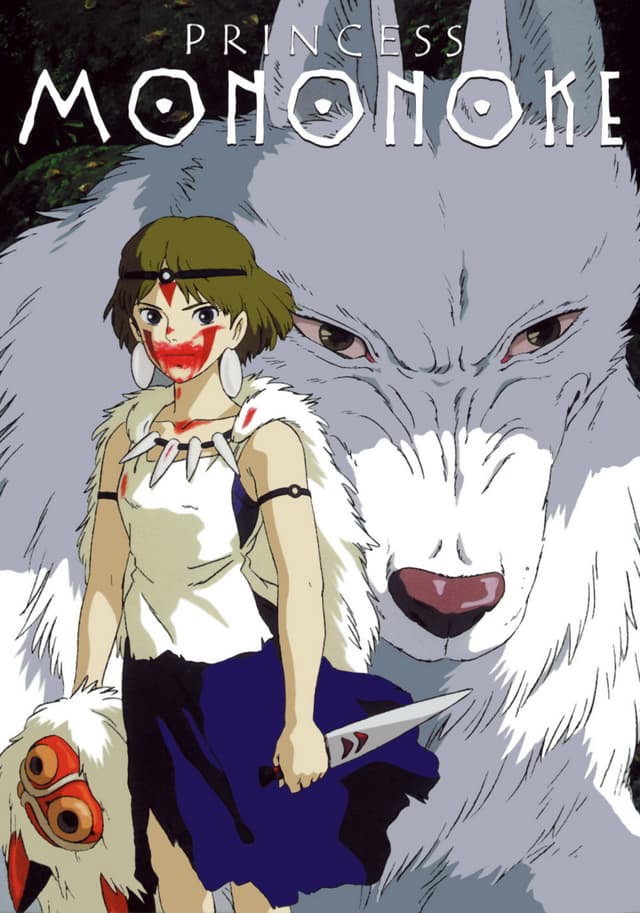
Princess Mononoke movie poster

Princess Mononoke

PG-13Adventure, Fantasy, Animation
Budget$23.5M
Domestic Box Office$4.8M
Worldwide Box Office$176.5M

Synopsis

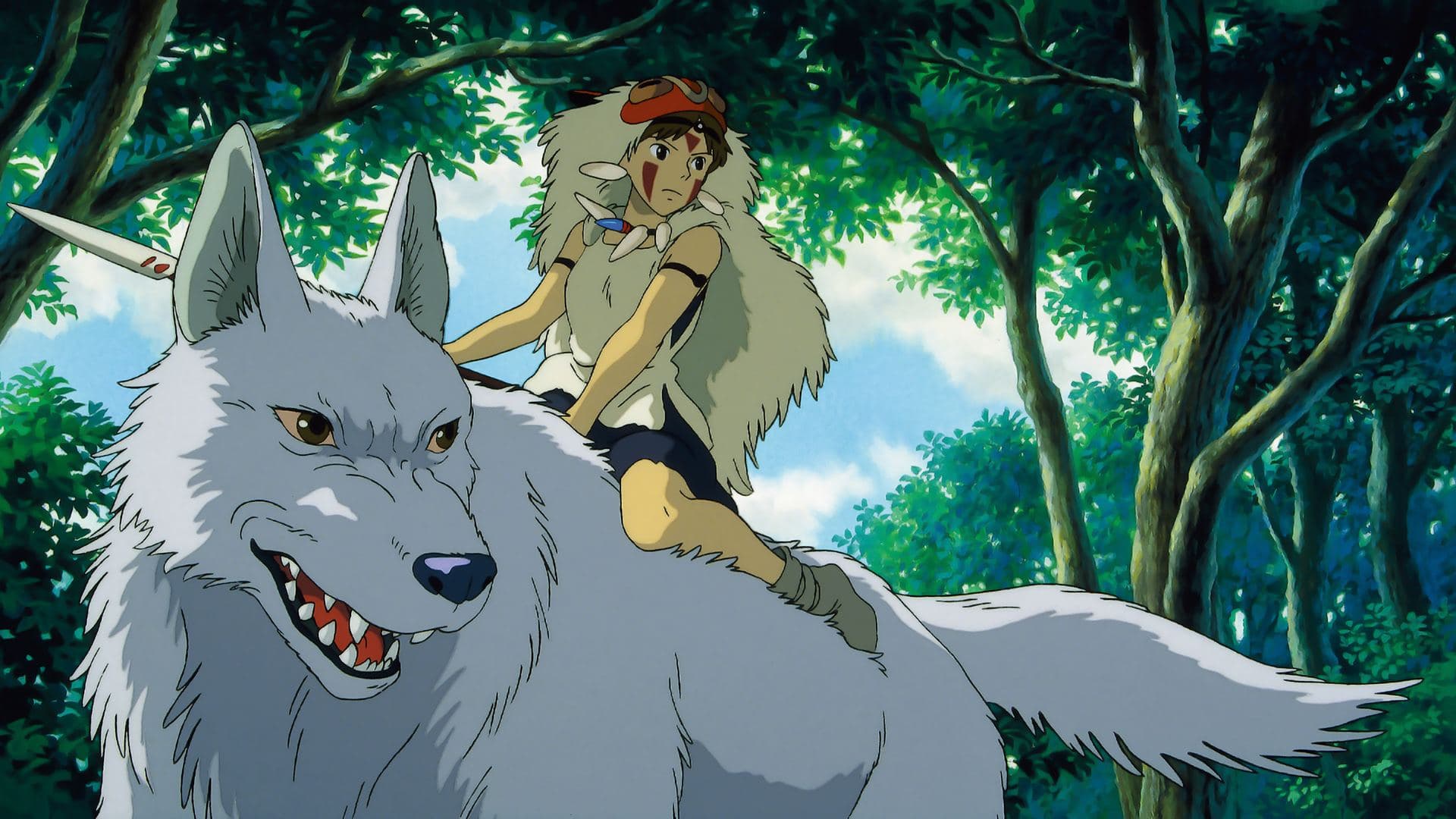
While protecting his village from rampaging boar-god/demon, a confident young warrior, Ashitaka, is stricken by a deadly curse. To save his life, he must journey to the forests of the west. Once there, he's embroiled in a fierce campaign that humans were waging on the forest. The ambitious Lady Eboshi and her loyal clan use their guns against the gods of the forest and a brave young woman, Princess Mononoke, who was raised by a wolf-god. Ashitaka sees the good in both sides and tries to stem the flood of blood. This is met by animosity by both sides as they each see him as supporting the enemy.

Production Budget Analysis

What was the production budget for Princess Mononoke?

Directed by Hayao Miyazaki, with Yoji Matsuda, Yuriko Ishida, Yuko Tanaka leading the cast, Princess Mononoke was produced by Studio Ghibli with a confirmed budget of $23,500,000, placing it in the low-budget category for adventure films.

At $23,500,000, Princess Mononoke was produced on a modest budget. Lower-budget films benefit from reduced break-even thresholds, with profitability achievable at approximately $58,750,000.

Budget Comparison — Similar Productions

• The Visitors II: The Corridors of Time (1998): Budget $23,030,000 | Gross $66,000,000 → ROI: 187% • The Secret World of Arrietty (2010): Budget $23,000,000 | Gross $149,660,003 → ROI: 551% • Bad Santa (2003): Budget $23,000,000 | Gross $76,500,000 → ROI: 233% • Chasing Liberty (2004): Budget $23,000,000 | Gross $12,195,626 → ROI: -47% • Chéri (2009): Budget $23,000,000 | Gross $9,400,000 → ROI: -59%

Key Budget Allocation Categories

▸ Stunts, Action Sequences & Visual Effects Action films allocate a substantial portion of their budget to choreographing and executing practical stunts, pyrotechnics, and CGI-heavy sequences. For large-scale productions, VFX alone can account for 20–30% of the total budget, with additional costs for stunt coordinators, rigging, and safety crews.

▸ Above-the-Line Talent (Cast & Director) A-list talent commands significant upfront fees plus backend participation. Lead actors in major action franchises typically earn $10–25 million per film, with directors often receiving comparable compensation packages tied to box office performance.

▸ Production Design, Sets & Locations Action films frequently require multiple international shooting locations, large-scale set construction, vehicle acquisitions and modifications, and specialized equipment — all of which drive production costs well above those of dialogue-driven genres.

Key Production Personnel

CAST: Yoji Matsuda, Yuriko Ishida, Yuko Tanaka, Kaoru Kobayashi, Masahiko Nishimura Key roles: Yoji Matsuda as Ashitaka (voice); Yuriko Ishida as San / Kaya (voice); Yuko Tanaka as Eboshi Gozen (voice); Kaoru Kobayashi as Jikobo (voice)

DIRECTOR: Hayao Miyazaki CINEMATOGRAPHY: Atsushi Okui MUSIC: Joe Hisaishi EDITING: Takeshi Seyama PRODUCTION: Studio Ghibli, dentsu, Tokuma Shoten, Nippon Television Network Corporation, Nibariki, TNDG FILMED IN: Japan

Box Office Performance

Princess Mononoke earned $4,845,631 domestically and $171,660,555 internationally, for a worldwide total of $176,506,186. International markets drove the majority of revenue (97%), indicating strong global appeal.

Break-Even Analysis

Using the industry-standard 2.5x multiplier (P&A + exhibitor shares of 40–50% + distribution fees), Princess Mononoke needed approximately $58,750,000 to break even. The film surpassed this threshold by $117,756,186.

Return on Investment (ROI)

Revenue: $176,506,186 Budget: $23,500,000 Net: $153,006,186 ROI: 651.1%

Profitability Assessment

VERDICT: Highly Profitable

Princess Mononoke was a clear financial success, generating $176,506,186 worldwide against a $23,500,000 production budget — a 651% ROI. After estimated marketing costs, the film still delivered substantial profit to Studio Ghibli.

INDUSTRY IMPACT

The outsized success of Princess Mononoke likely influenced studio greenlight decisions for similar adventure projects.

According to Napier, the film is commonly considered to be Miyazaki's most significant feature film. She wrote that it marked a "new chapter" in his filmography on account of its nuanced and intermingled themes and the unprecedented scope of its production. The film was longer and more expensive to produce than any Studio Ghibli film up to that point, which Napier reported induced a high level of stress and demanded "almost superhuman efforts" from the entire staff, including Miyazaki. Some senior employees, worn out from the film's production, left Studio Ghibli in its aftermath, with Miyazaki himself increasingly withdrawing from public relations. Suzuki recounted that Miyazaki was overtaxed from supervising the storyboards, music, and vocal recordings and had "given his body and soul" to the production. In an interview before the film's release, Miyazaki said that, "Physically, I just can't go on." He resigned in 1998 but returned shortly after to direct Spirited Away(2001) following the death of Yoshifumi Kondō, who was intended to be Miyazaki's successor at Studio Ghibli.

Princess Mononoke was the first film in which Miyazaki directly referenced scholarly writing, which strongly contributed to his status in Japanese society as a and marked his works out for further academic inquiry. Alongside Neon Genesis Evangelion(1995–1996), the film laid the foundation for anime to become the subject of study by academics and critics.

PRODUCTION NOTES

▸ Pre-Production

Hayao Miyazaki composed the preliminary ideas for what would become Princess Mononoke in 1980 after releasing his first film, The Castle of Cagliostro(1979), drawing sketches of a princess living in the woods with a beast. The story was roughly based on the "Beauty and the Beast"(1740) fairy tale, set in historical Japan. The Beast was realized as an animalistic spirit () whom the protagonist, the daughter of a nobleman, is forced to marry. After unsuccessfully proposing the film project to several production companies, Miyazaki published his concepts in a book in 1983, republished in 2014 as Princess Mononoke: The First Story. He reused various ideas from this project in works such as My Neighbor Totoro(1988) and Porco Rosso(1992). Shuna's Journey(1983) in particular bears the closest resemblance to the eventual film, featuring a protagonist who rides an elk to the land of gods. A few fundamental ideas from the 1980 concept appear in the final film, but the character designs and plot are entirely different. The film scholar Raz Greenberg wrote that the original concept also the end of tyranny vividly", in contrast with the film, showing the antagonist's fortress destroyed and its slaves emancipated. According to the film scholar Rayna Denison, the stark difference between the original idea and the final film demonstrates the radical change of Miyazaki's filmmaking philosophies during that time. He took cues from Japanese folklore, especially the tale of a princess with a birthmark, which evolved over time into Ashitaka's curse.

Inspired by the writings of Yoshie Hotta, Miyazaki also considered creating a film adaptation of the (1212), a Japanese literary classic on the ephemerality of life. It was written by the poet Kamo no Chōmei during a period of political turmoil and natural disasters, which the animation scholar Susan J. Napier felt resonated with the "increasing sense of vulnerability" in Japanese culture during the time of the film's production.

▸ Production

Princess Mononoke was the most expensive animated film ever produced in Japan at the time. It was originally allocated a budget of , which was expanded to later in the production, more than double that of any previous Studio Ghibli film. Miyazaki stated, "I don't care if the studio goes bankrupt." The animation production commenced in July 1995. Miyazaki created the storyboards using the approach he took toward serialized manga, writing the film's plot as he drew the scenes. His declining sight initially caused him to use oversized paper, but he switched back to the normal size to increase the pace of the storyboarding. This process was done in parallel with the animation, and the final boards outlining the end of the film were not finished until January 1997.

An unusually high level of detail was afforded illustrating backgrounds and animating background characters due to the large budget available. The decision to assign five art directors to the film was also unprecedented. Each tackled a different aspect; for example, one handled daylight shots while another covered the nighttime. The film used approximately 144,000 cels, 80,000 of them being key animation frames, more than any other Studio Ghibli film. Miyazaki is estimated to have drawn or retouched nearly 80,000 cels himself. The final shots were completed in June 1997, less than a month from the release date.

▸ Music & Score

As with most of Miyazaki's previous films, Princess Mononoke score was composed by Joe Hisaishi. According to McCarthy, the score's development involved a much closer collaboration between the two than on previous works. Hisaishi first composed an image album– a collection of demos and musical sketches that serve as a precursor to the finished score– which he shared with Miyazaki and Suzuki. The unused title The Legend of Ashitaka appears here as the title of the opening theme. With their input, the demos were then worked into the final score, performed by the Tokyo City Philharmonic Orchestra. Tokuma Shoten released the image album in July 1996 and the soundtrack album in July 1997. The vocal theme song performed by the countertenor singer Yoshikazu Mera was released as a single before the film's release and became popular with Japanese audiences. A third version of the soundtrack, arranged for symphony orchestra and performed by the Czech Philharmonic, was released in 1998. All three albums were issued on vinyl records in 2020.

The vocal theme was re-recorded for the English dub by the American vocalist Sasha Lazard. Denison argued that this was a part of Miramax's efforts to remove the film's Japanese elements, but she also acknowledged that the score deviates substantially from a typical Hollywood-style compositional approach. For example, leitmotifs, which are commonly used to represent characters or settings, are instead used in transitional moments between more significant narrative events. McCarthy wrote that the film complements the scenes featuring music and dialog with a liberal use of silence and ambient sounds to augment the tension of certain moments, a significant departure from American scoring approaches. The musicology scholar Stacey Jocoy highlighted the emphatic use of brass instruments to accompany the film's epic story.

▸ Marketing & Release

The promotional strategy was spearheaded by Suzuki, who by 1997 had already developed relationships within the media industry while promoting previous Studio Ghibli releases. Napier noted that the marketing put the film under the Studio Ghibli brand for the first time– as opposed to previous works that were labeled primarily as Miyazaki films– which she felt reflected Suzuki's rising position as the studio's main producer. According to Suzuki, three important elements of the campaign were the repeated use of a recognizable title logo, key imagery from the film, and a tagline. The tagline underwent several iterations before, with Suzuki's input, the final phrase was chosen: "Live." Suzuki also changed the title from the original intention of The Legend of Ashitaka without Miyazaki's initial approval, as he found it less interesting. The budget allotted for the film's promotion was at least , even higher than the production budget, making it the largest film advertisement campaign in Japan at the time. Yoshioka argued that it was essential for Princess Mononoke to be a commercial success to make up for the large production budget, and the scale of its campaign was significantly expanded from previous films' as a result. Several types of merchandise, such as stuffed and copies of San's mask, were sold. A number of preview screenings were organized before the release to advertise the film by word of mouth; 130 of them were originally scheduled, and 70 were ultimately held, a number that the film scholar Seiji Kanō still found "astonishing". Miyazaki's previous film, Porco Rosso, had had only 23 screenings by comparison.

After Walt Disney Studios and Studio Ghibli's then–parent company, Tokuma Shoten, secured their distribution deal in 1997, the film would be the first among Miyazaki's works to receive a worldwide release. While the arrangement did extend the studio's reach to new regions, the announcement was made primarily to attract local audiences.

AWARDS & RECOGNITION

Summary: 14 wins & 6 nominations total

Awards Won: ★ Animation Kobe Theatrical Film Award ★ Japan Academy Prize for Picture of the Year

Nominations: ○ International Submission to the Academy Awards

Additional Recognition: Japan submitted Princess Mononoke for Best Foreign Language Film at the 70th Academy Awards, but it was not nominated.

! scope="col" | Award / Publication ! scope="col" | Year ! scope="col" | Category ! scope="col" | Recipient ! scope="col" | Result ! scope="col" class="unsortable" |

! scope="rowgroup" rowspan="3" | Kinema Junpo

! scope="rowgroup" rowspan="3" | 52nd Mainichi Film Awards

! scope="rowgroup" rowspan="2" | 10th Nikkan Sports Film Awards

! scope="row" | 1st Japan Media Arts Festival

! scope="row" | 7th Tokyo Sports Film Award

! scope="row" | Osaka Film Festival

! scope="row" | 21st

! scope="row" | 15th

! scope="rowgroup" rowspan="2" | 39th Japan Record Awards

! scope="rowgroup" rowspan="2" | 21st Japan Academy Film Prize

! scope="row" | 40th Blue Ribbon Awards

! scope="row" | 22nd Hochi Film Awards

! scope="row" | 12th

! scope="row" | Elan d'or Awards

! scope="row" | 28th Annie Awards

! scope="row" | 4th Golden Satellite Awards

! scope="row" | 27th Saturn Awards

! scope="row" | 36th Nebula Awards

CRITICAL RECEPTION

The film was generally well received by critics in Japan, and Kanō described a "flurry of praise" in the Japanese media following its box office success. The Asahi Shimbun Noboru Akiyama felt that the work displayed a "strong artistic quality" and a number of reviews in animation magazines highlighted its visual fidelity. Several publications featured articles from critics and academics covering several aspects of the film's production as well as interviews with key staff. According to Yoshioka, a variety of academics were attracted to write about the film due to themes such as Japanese cultural history being relatively "easy topics" to cover, as well as in response to Miyazaki's growing status as a public intellectual () within Japanese society. Some scholars speculated on the contributing factors to the film's success; a number commented on the reactions of younger audience members, who found the themes relatable to their personal struggles and empathized with its motifs of hope. Napier also wrote that the themes of conflict and coexistence with nature and the spirit world resonated strongly with Japanese viewers. Very few reviews directed criticism at the film, and among them Kanō found many of the comments to be "highly questionable". Kenichiro Horii of the Shūkan Bunshun found the text difficult to parse, and others were disappointed by the fantasy that Miyazaki had constructed. A few critics also faulted the female characters' lack of sex appeal.

Despite its poor performance in the American box office, the film received widespread praise from critics in the United States. On the review aggregator website Metacritic, the film was assigned a weighted average score of 76 out of 100 based on 29 critics, indicating "generally favorable" reviews. On Rotten Tomatoes, of the critics' reviews are positive, with an average rating of 8 out of 10.

SAG Feature Film template
AFI template
Amazon template
Podcast template
Digital Content template
BET template
Commercial Bid template
Disney Films template
New Jersey Tax Credit template
Short Film template
Malta Film Incentive template
BBC Television template
New York Tax Credit template
Marvel Studios template
Feature Film template
Photography template
Netflix Productions template
hotdocs template
Paramount template
HBO Series template
UK Channel 4 template
Georgia Film Tax Credit template
Unscripted template
California Tax Credit template
Documentary template
CBS Television template
Music Video template
Events template
Post Production template
Canada Productions Telefilm template
Screen Australia template
Dreamworks template
Discovery Networks template
SAG Feature Film template
AFI template
Amazon template
Podcast template
Digital Content template
BET template
Commercial Bid template
Disney Films template
New Jersey Tax Credit template
Short Film template
Malta Film Incentive template
BBC Television template
New York Tax Credit template
Marvel Studios template
Feature Film template
Photography template
Netflix Productions template
hotdocs template
Paramount template
HBO Series template
UK Channel 4 template
Georgia Film Tax Credit template
Unscripted template
California Tax Credit template
Documentary template
CBS Television template
Music Video template
Events template
Post Production template
Canada Productions Telefilm template
Screen Australia template
Dreamworks template
Discovery Networks template
SAG Feature Film template
AFI template
Amazon template
Podcast template
Digital Content template
BET template
Commercial Bid template
Disney Films template
New Jersey Tax Credit template
Short Film template
Malta Film Incentive template
BBC Television template
New York Tax Credit template
Marvel Studios template
Feature Film template
Photography template
Netflix Productions template
hotdocs template
Paramount template
HBO Series template
UK Channel 4 template
Georgia Film Tax Credit template
Unscripted template
California Tax Credit template
Documentary template
CBS Television template
Music Video template
Events template
Post Production template
Canada Productions Telefilm template
Screen Australia template
Dreamworks template
Discovery Networks template
UK Channel 4 template
Amazon template
BET template
Canada Productions Telefilm template
BBC Television template
California Tax Credit template
Documentary template
Dreamworks template
Commercial Bid template
HBO Series template
Photography template
Short Film template
Discovery Networks template
Netflix Productions template
Disney Films template
Georgia Film Tax Credit template
Screen Australia template
Digital Content template
New York Tax Credit template
New Jersey Tax Credit template
Feature Film template
hotdocs template
Podcast template
SAG Feature Film template
Music Video template
AFI template
Malta Film Incentive template
Paramount template
Unscripted template
CBS Television template
Marvel Studios template
Post Production template
Events template
UK Channel 4 template
Amazon template
BET template
Canada Productions Telefilm template
BBC Television template
California Tax Credit template
Documentary template
Dreamworks template
Commercial Bid template
HBO Series template
Photography template
Short Film template
Discovery Networks template
Netflix Productions template
Disney Films template
Georgia Film Tax Credit template
Screen Australia template
Digital Content template
New York Tax Credit template
New Jersey Tax Credit template
Feature Film template
hotdocs template
Podcast template
SAG Feature Film template
Music Video template
AFI template
Malta Film Incentive template
Paramount template
Unscripted template
CBS Television template
Marvel Studios template
Post Production template
Events template
UK Channel 4 template
Amazon template
BET template
Canada Productions Telefilm template
BBC Television template
California Tax Credit template
Documentary template
Dreamworks template
Commercial Bid template
HBO Series template
Photography template
Short Film template
Discovery Networks template
Netflix Productions template
Disney Films template
Georgia Film Tax Credit template
Screen Australia template
Digital Content template
New York Tax Credit template
New Jersey Tax Credit template
Feature Film template
hotdocs template
Podcast template
SAG Feature Film template
Music Video template
AFI template
Malta Film Incentive template
Paramount template
Unscripted template
CBS Television template
Marvel Studios template
Post Production template
Events template
Discovery Networks template
AFI template
Events template
BBC Television template
Unscripted template
Paramount template
BET template
Music Video template
Digital Content template
Short Film template
California Tax Credit template
Screen Australia template
Feature Film template
CBS Television template
Canada Productions Telefilm template
Podcast template
Commercial Bid template
Marvel Studios template
Amazon template
Malta Film Incentive template
Georgia Film Tax Credit template
Netflix Productions template
hotdocs template
Photography template
UK Channel 4 template
Post Production template
Disney Films template
New Jersey Tax Credit template
HBO Series template
Dreamworks template
New York Tax Credit template
SAG Feature Film template
Documentary template
Discovery Networks template
AFI template
Events template
BBC Television template
Unscripted template
Paramount template
BET template
Music Video template
Digital Content template
Short Film template
California Tax Credit template
Screen Australia template
Feature Film template
CBS Television template
Canada Productions Telefilm template
Podcast template
Commercial Bid template
Marvel Studios template
Amazon template
Malta Film Incentive template
Georgia Film Tax Credit template
Netflix Productions template
hotdocs template
Photography template
UK Channel 4 template
Post Production template
Disney Films template
New Jersey Tax Credit template
HBO Series template
Dreamworks template
New York Tax Credit template
SAG Feature Film template
Documentary template
Discovery Networks template
AFI template
Events template
BBC Television template
Unscripted template
Paramount template
BET template
Music Video template
Digital Content template
Short Film template
California Tax Credit template
Screen Australia template
Feature Film template
CBS Television template
Canada Productions Telefilm template
Podcast template
Commercial Bid template
Marvel Studios template
Amazon template
Malta Film Incentive template
Georgia Film Tax Credit template
Netflix Productions template
hotdocs template
Photography template
UK Channel 4 template
Post Production template
Disney Films template
New Jersey Tax Credit template
HBO Series template
Dreamworks template
New York Tax Credit template
SAG Feature Film template
Documentary template

Budget Templates

Build your own production budget

Create professional budgets with industry-standard feature film templates. Real-time collaboration, no spreadsheets.

Start Budgeting Free