The Flash Budget
 ActionAdventureSci-Fi144 min
Updated
Synopsis
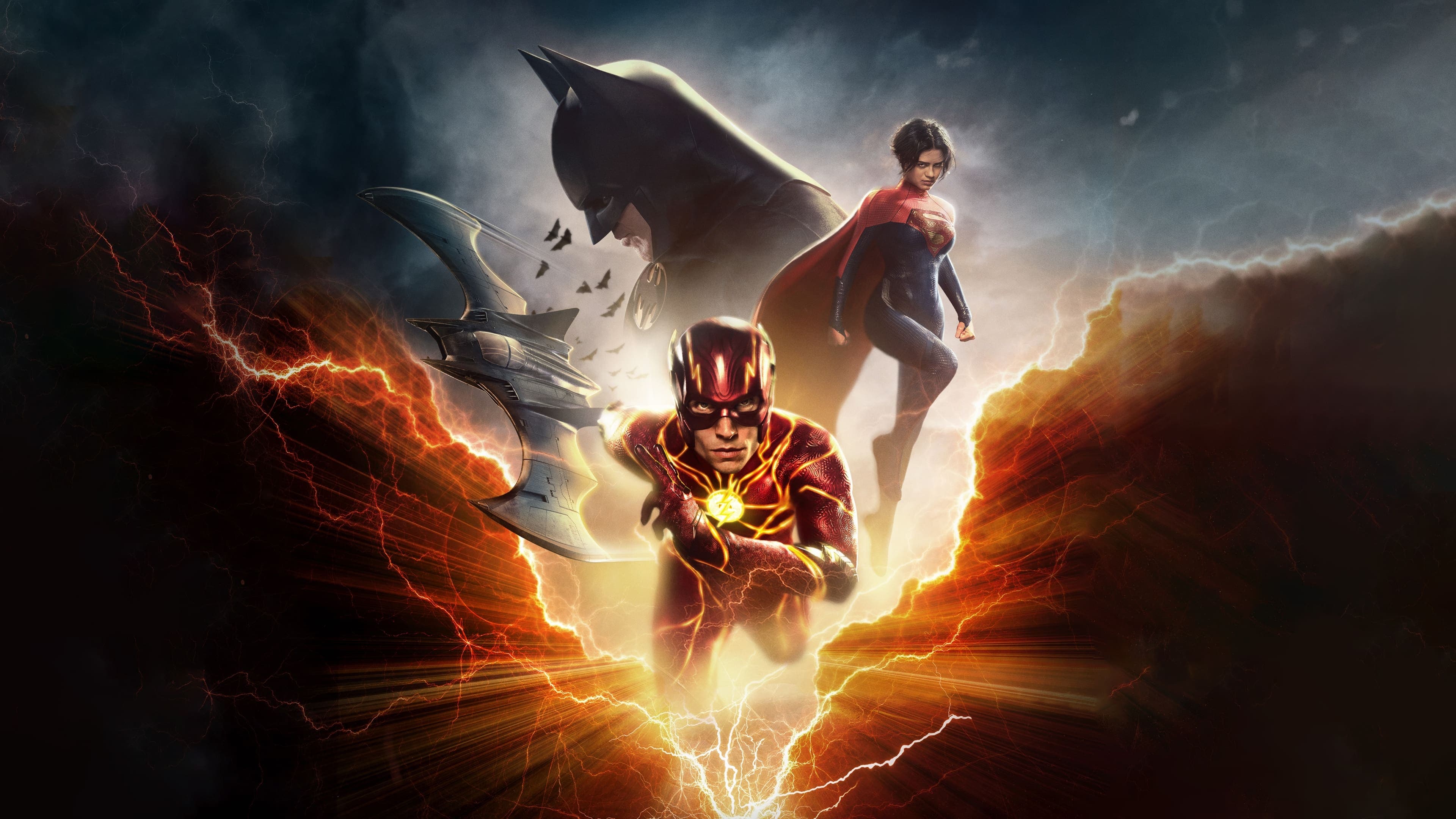
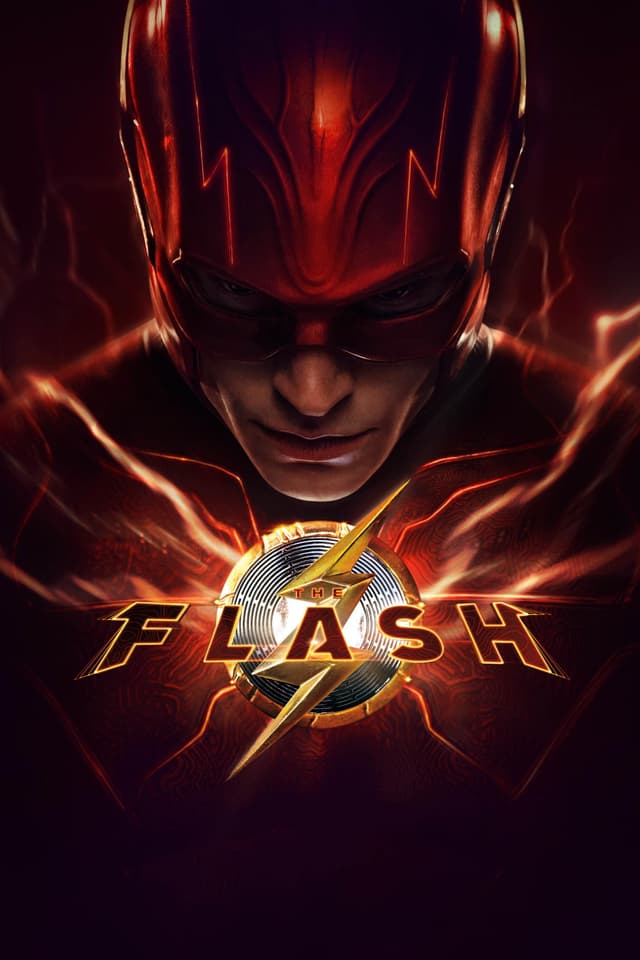
Barry Allen, AKA The Flash pushes the limits of his superpowers in the DC Super Hero’s first-ever standalone feature film.
What Is the Budget of The Flash (2023)?
The Flash (2023) was produced with an estimated budget of $200,000,000, making it one of the most expensive DC Extended Universe films ever made. Directed by Andy Muschietti and produced by Barbara Muschietti and Michael Disco, the film was developed by Warner Bros. Pictures, DC Films, Double Dream, and The Disco Factory. Christina Hodson wrote the screenplay based on a story by John Francis Daley, Jonathan Goldstein, and Joby Harold, adapting elements from the 2011 "Flashpoint" comic book storyline.
The substantial budget reflected both the ambitious scope of the project and the lengthy development process that preceded production. The Flash required over 2,500 visual effects shots to bring the multiverse concept to life, and principal photography stretched across 138 days at multiple locations in the United Kingdom. Despite its massive investment, the film ultimately struggled at the box office and became one of Warner Bros.' most notable financial disappointments of 2023.
Key Budget Allocation Categories
The Flash's $200,000,000 production budget was distributed across several major categories, with visual effects and talent costs consuming the largest shares.
- Visual Effects and CGI: With over 2,500 VFX shots handled by DNEG, Scanline VFX, and Weta FX under supervisor John "DJ" Desjardin, digital effects represented one of the film's largest expenditures. The multiverse sequences, de-aging technology, and extensive CGI environments required cutting-edge techniques across multiple studios.
- Cast Salaries: Lead actor Ezra Miller's compensation along with appearances from Michael Keaton as Batman, Sasha Calle as Supergirl, and Ben Affleck's brief return as a separate version of Batman drove significant above-the-line costs. Keaton's return to the Batman role after 31 years was a major draw that commanded premium compensation.
- Production Design and Practical Sets: Production designer Paul Austerberry created elaborate sets at Warner Bros. Studios Leavesden in Watford, England, including recreations of Central City and the Batcave. Costume designer Alexandra Byrne developed multiple versions of the Flash suit and Batman's iconic attire.
- Location Filming: Principal photography took place across the United Kingdom, including Burghley House in Stamford (Lincolnshire), St Paul's Cathedral in London, and locations in Edinburgh and Glasgow, Scotland. The 138-day shoot from April through October 2021 involved complex logistics across these historic venues.
- Music and Post-Production: Composer Benjamin Wallfisch created the original score, while editors Jason Ballantine and Paul Machliss trimmed director Muschietti's initial four-hour assembly cut down to the final 144-minute theatrical version. The extensive post-production process spanned more than a year.
- Marketing and Distribution: Warner Bros. reportedly spent an estimated $150,000,000 on prints and advertising, bringing the total investment to approximately $350,000,000. The marketing campaign included partnerships, trailer releases, and a premiere at Grauman's Chinese Theatre on June 12, 2023.
How Does The Flash (2023)'s Budget Compare to Similar Films?
The Flash's $200,000,000 budget placed it among the most expensive DC films, though its financial outcome diverged sharply from some of its peers.
- Aquaman (2018): Budget $160,000,000 | Worldwide $1,148,461,807. Aquaman earned nearly $900,000,000 more worldwide than The Flash on a smaller budget, demonstrating how audience reception and release timing can dramatically affect returns for DC properties.
- Batman v Superman: Dawn of Justice (2016) : Budget $250,000,000 | Worldwide $873,637,528. Batman v Superman cost $50,000,000 more than The Flash and earned considerably more at the box office, though it too was considered underperforming relative to Warner Bros.' expectations.
- Black Adam (2022) : Budget $195,000,000 | Worldwide $393,320,952. Black Adam had a nearly identical budget to The Flash and similarly failed to meet commercial expectations, contributing to Warner Bros.' decision to restructure its DC film strategy under James Gunn and Peter Safran.
- Shazam! Fury of the Gods (2023) : Budget $125,000,000 | Worldwide $133,908,616. Shazam! Fury of the Gods cost significantly less than The Flash but performed even worse relative to expectations, losing an estimated $150,000,000. Together with The Flash, these back-to-back disappointments sealed the fate of the original DCEU.
The Flash (2023) Box Office Performance
The Flash opened on June 16, 2023, in the United States to a domestic opening weekend of approximately $55,000,000, falling below the $70,000,000 to $80,000,000 range that Warner Bros. had projected. The film faced significant headwinds from Ezra Miller's off-screen legal troubles, franchise fatigue among audiences, and competition from other summer blockbusters. Despite positive early screenings and endorsements from filmmakers including James Gunn, the controversies surrounding its lead actor suppressed audience turnout.
The financial picture worsened when accounting for the industry standard that studios typically recoup only about 50% of theatrical revenue after exhibitor splits and distribution costs. With a total estimated investment of $350,000,000, The Flash needed to gross approximately $700,000,000 worldwide just to break even theatrically.
Box Office Breakdown
The Flash

The Flash's worldwide gross of $266,550,332 fell well short of its $200,000,000 production budget alone, before factoring in marketing and distribution costs. Using the standard ROI formula (Worldwide Gross minus Budget, divided by Budget, multiplied by 100), the film recorded an ROI of approximately 33%. However, this figure is misleading because it does not account for the estimated $150,000,000 in P&A spending or the exhibitor share of ticket revenue. Industry analysts estimated that Warner Bros. lost between $200,000,000 and $250,000,000 on the film, making it one of the largest box office losses of 2023.
The Flash became one of several high-profile Warner Bros. DC releases to underperform in 2022 and 2023, joining Black Adam and Shazam! Fury of the Gods as films that collectively signaled the end of the original DCEU continuity. Warner Bros. Discovery subsequently shifted its focus to the new DC Universe under the leadership of James Gunn and Peter Safran.
The Flash (2023) Production History
The Flash endured one of the longest and most turbulent development cycles in modern superhero filmmaking, spanning over three decades from initial concept to theatrical release. The project first emerged in the late 1980s when screenwriter Jeph Loeb was hired to write a Flash screenplay. Throughout the 2000s, the film cycled through multiple writers and directors, including David S. Goyer in 2004, Shawn Levy and Chris Brancato in 2007, and David Dobkin with Craig Wright later that same year. None of these iterations gained enough traction to enter production.
The project gained momentum when Ezra Miller was cast as Barry Allen in October 2014, with an initial release date set for March 2018. However, the director's chair proved remarkably difficult to fill. Seth Grahame-Smith signed on to write and direct in October 2015 but departed over creative differences in April 2016. Rick Famuyiwa replaced him in June 2016 and left just four months later, also citing creative differences with the studio. Joby Harold then performed a page-one rewrite of the script in January 2017.
John Francis Daley and Jonathan Goldstein were confirmed as directors in March 2018, but they too departed in June 2019 over creative disagreements. Andy Muschietti, fresh off the commercial success of It (2017) and It Chapter Two (2019), was finally hired in July 2019 alongside screenwriter Christina Hodson. Even then, the COVID-19 pandemic pushed the start of production to April 2021. Principal photography took place at Warner Bros. Studios Leavesden in the United Kingdom, with additional filming at Burghley House, St Paul's Cathedral, and locations across Scotland, wrapping in October 2021 after 138 days of shooting.
The film's release was further complicated by Ezra Miller's series of legal incidents in 2022, including arrests in Hawaii and allegations of erratic behavior. Warner Bros. reportedly considered three options: proceeding with limited press appearances while Miller sought treatment, excluding Miller from promotion and recasting the role for future films, or canceling the project entirely as a last resort. The studio ultimately chose to release the film theatrically while minimizing Miller's public appearances. Miller issued a public apology acknowledging "complex mental health issues" and stated they had begun professional treatment. Despite these controversies, the film tested well in early audience screenings.
Awards and Recognition
The Flash (2023) received limited awards recognition following its theatrical run. The film's ambitious visual effects work, particularly the multiverse sequences and digital recreations of past DC film incarnations, drew some technical attention but did not translate into major nominations from industry guilds or academies.
The film received nominations at the 44th Golden Raspberry Awards (Razzies) in categories reflecting its troubled production and reception. At the Saturn Awards, which recognize genre filmmaking, The Flash received consideration in superhero-related categories. The film's most notable achievement was its use of legacy DC characters and the return of Michael Keaton as Batman after 31 years, which was widely praised even by critics who found fault with other aspects of the production.
Critical Reception
The Flash received mixed reviews from critics upon its June 2023 release. On Rotten Tomatoes, the film holds a 62% approval rating based on 389 reviews, with critics praising its humor, fast pacing, and emotional core while criticizing its visual effects quality and third-act execution. The audience score on the platform is notably higher at 81%, suggesting general moviegoers responded more favorably than professional critics.
Critics were particularly divided on the film's CGI quality. While the multiverse concept and story structure drew comparisons to Spider-Man: No Way Home's successful nostalgia-driven approach, many reviewers noted that the digital effects, particularly in scenes featuring de-aged or digitally recreated characters, appeared unfinished or uncanny. The visual effects became a prominent talking point in pre-release discourse after early footage drew criticism online.
Michael Keaton's return as Batman was widely cited as the film's strongest element, with critics highlighting his screen presence and the emotional weight he brought to an alternate-universe version of the character. Ezra Miller's dual performance as two versions of Barry Allen received more polarized reactions, with some critics finding the comedic interplay entertaining and others viewing it as excessive. Sasha Calle's debut as Supergirl was generally well received despite limited screen time. Director Andy Muschietti was credited with delivering an emotionally resonant story about grief and acceptance, even as the film's technical execution and cluttered final act drew criticism.
Frequently Asked Questions
How much did it cost to make The Flash?
The Flash (2023) was produced on a budget of $200,000,000. The production involved over 2,500 visual effects shots handled by DNEG, Scanline VFX, and Weta FX, with filming taking place at Warner Bros. Studios Leavesden in the UK over 138 days. Including estimated prints and advertising costs of approximately $150,000,000, the total investment was approximately $350,000,000.
How much did The Flash earn at the box office?
The Flash earned $108,167,507 domestically and $158,382,825 internationally for a worldwide total of $266,550,332. The film opened to $55 million domestically, below the $70 million projections.
Was The Flash profitable?
No. The Flash earned $266,550,332 worldwide against a total estimated investment of approximately $350,000,000, falling well short of profitability from theatrical revenue alone. Warner Bros. reportedly faced estimated losses of $200,000,000 to $250,000,000 on the film.
What were the biggest costs in producing The Flash?
The largest cost categories were visual effects (over 2,500 shots creating the multiverse sequences and dual Barry Allen performances), cast salaries for Ezra Miller, Michael Keaton, Sasha Calle, and Ben Affleck, physical production at Leavesden Studios including extensive set construction, and 138 days of principal photography in the UK. The marketing campaign added an estimated $150,000,000.
How does The Flash's budget compare to similar films?
At $200,000,000, The Flash's budget was comparable to other DC Extended Universe films: Aquaman cost $160,000,000 and earned $1,152,000,000, Batman v Superman cost $250,000,000 and earned $873,600,000, and Black Adam cost $195,000,000 and earned $393,500,000. The Flash's worldwide gross of $266,550,332 made it one of the lowest-grossing DCEU entries relative to its budget.
Did The Flash go over budget?
The Flash's production was notoriously troubled, cycling through multiple directors and screenwriters over nearly a decade of development. While specific overrun figures have not been publicly reported, the extended production timeline, multiple restarts, and lead actor Ezra Miller's legal issues in 2022 all contributed to costs that likely exceeded original projections.
What was the ROI of The Flash?
Using the production budget of $200,000,000, The Flash had an ROI of approximately -33%, calculated as (Worldwide Gross $266,550,332 minus Budget $200,000,000) divided by Budget times 100. The film did not recoup its production budget through theatrical revenue when accounting for the studio's share of box office receipts and marketing costs.
Who directed The Flash?
The Flash was directed by Andy Muschietti, known for the It films. The screenplay was written by Christina Hodson. The film was produced by Barbara Muschietti and Michael Disco, with Walter Hamada serving as executive producer.
What awards did The Flash win?
The Flash received limited awards recognition. It was nominated for several Razzie Awards and received consideration at the Saturn Awards. Michael Keaton's return as Batman was widely praised by both critics and audiences as the highlight of the film.
Where was The Flash filmed?
The Flash was filmed primarily at Warner Bros. Studios Leavesden in Hertfordshire, England, with additional location filming in the United Kingdom. Principal photography took place over 138 days, beginning in April 2021 and wrapping in October 2021.
Filmmakers
The Flash

Official Trailer
Build budgets like this one in Saturation
Start from an industry-standard feature film template, import the schedule and rates you already have, and let the cost report keep itself current as you spend. Real-time collaboration, no spreadsheets.