Pacific Rim Budget
 ActionScience FictionAdventure2h 11m
Updated
Synopsis
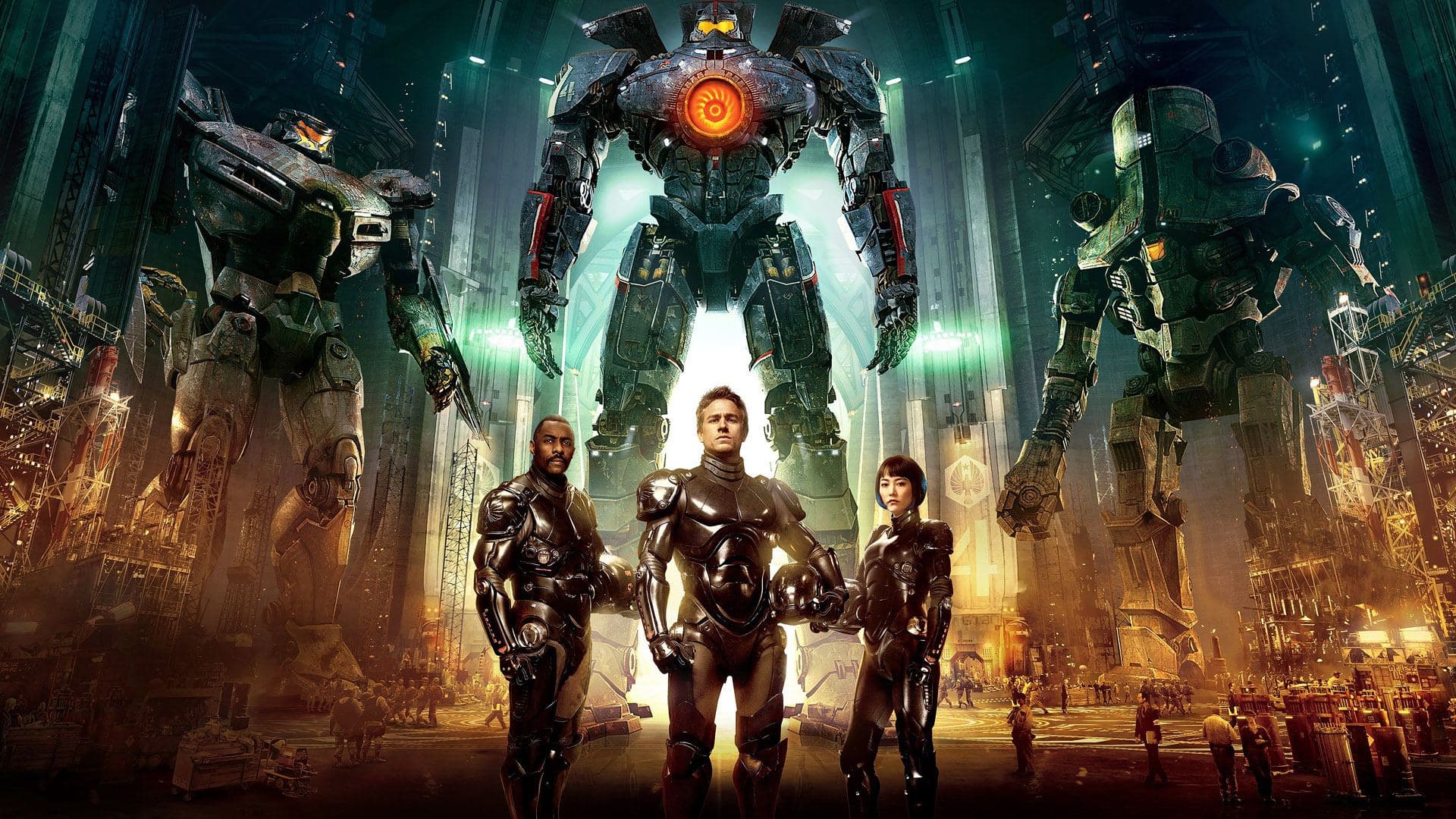
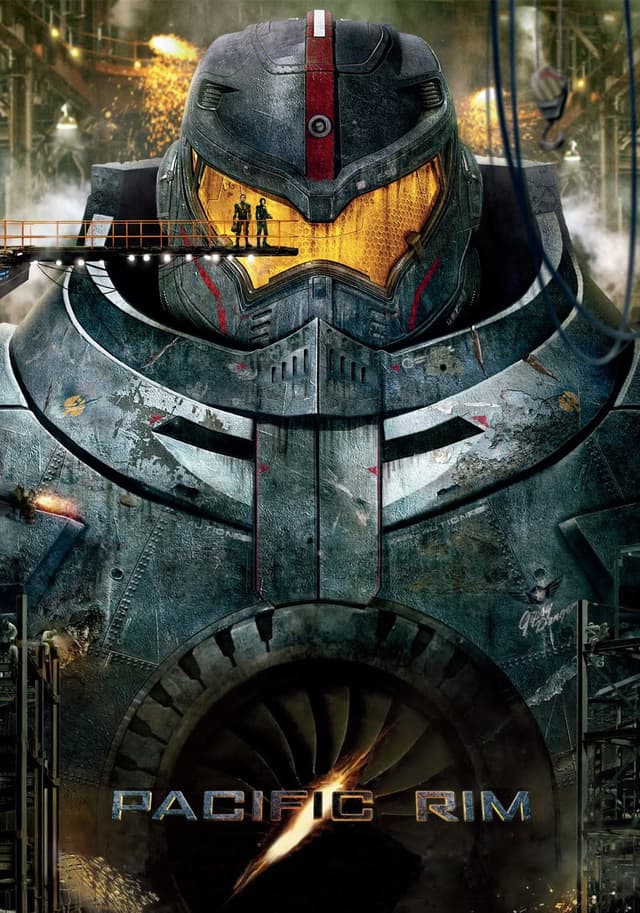
When legions of monstrous creatures, known as Kaiju, started rising from the sea, a war began that would take millions of lives and consume humanity's resources for years on end. To combat the giant Kaiju, a special type of weapon was devised: massive robots, called Jaegers, which are controlled simultaneously by two pilots whose minds are locked in a neural bridge. But even the Jaegers are proving nearly defenseless in the face of the relentless Kaiju. On the verge of defeat, the forces defending mankind have no choice but to turn to two unlikely heroes-a washed up former pilot and an untested trainee -who are teamed to drive a legendary but seemingly obsolete Jaeger from the past. Together, they stand as mankind's last hope against the mounting apocalypse.
What Is the Budget of Pacific Rim (2013)?
Pacific Rim (2013), directed by Guillermo del Toro and distributed by Warner Bros. Pictures, was produced on a budget of $190,000,000. The original science fiction film, developed by Legendary Pictures, pits humanity's giant mecha warriors (Jaegers) against colossal monsters (Kaiju) emerging from a dimensional rift in the Pacific Ocean. Del Toro co-wrote the screenplay with Travis Beacham, who originated the concept.
The budget reflected the film's massive visual effects requirements, with virtually every major action sequence built around digitally created combatants rendered at enormous scale. Legendary Pictures financed the majority of the production, with Warner Bros. handling distribution. The film represented a significant gamble on an original IP in an era increasingly dominated by sequels and franchise extensions, making its commercial performance a closely watched test case for the viability of new tentpole properties.
Key Budget Allocation Categories
The $190,000,000 budget was distributed across several major production areas:
- Visual Effects and Digital Creature Work: Industrial Light & Magic served as the primary VFX vendor, creating the film's Jaeger mechs and Kaiju monsters through a combination of digital animation and motion capture reference. The scale of the creatures, often fighting in rain-drenched cityscapes and underwater environments, required extensive fluid simulation, destruction effects, and lighting work across hundreds of shots.
- Physical Production and Set Construction: The Shatterdome command center, Jaeger cockpit interiors (with their dual-pilot motion rigs), and Hong Kong street sets were built as practical environments at Pinewood Toronto Studios. Del Toro insisted on physical sets wherever possible to give actors tangible environments to perform against.
- Cast and Above-the-Line Talent: The ensemble cast included Charlie Hunnam, Idris Elba, Rinko Kikuchi, Charlie Day, Ron Perlman, and Burn Gorman. While none commanded a blockbuster-level salary at the time, the combined cast costs plus del Toro's writer-director fee represented a significant above-the-line spend.
- 3D Conversion and Post-Production: The film was shot natively in 2D on Red Epic cameras and converted to 3D in post-production. Stereo D handled the conversion, which added both time and cost to the post-production pipeline. Ramin Djawadi composed the score, with the soundtrack recording adding further post-production expense.
- Toronto Production Infrastructure: Principal photography took place entirely in Toronto over a compressed 103-day schedule from November 14, 2011 through April 2012. The Canadian production benefited from Ontario's tax incentives and Toronto's established crew base, though the tight schedule required efficient staging of the film's numerous large-scale set pieces.
How Does Pacific Rim (2013)'s Budget Compare to Similar Films?
At $190,000,000, Pacific Rim sat in the upper tier of original science fiction properties. Comparing it with genre peers and franchise competitors:
- Transformers: Dark of the Moon (2011): Budget $195,000,000 | Worldwide $1,124,000,000. The closest franchise competitor demonstrated the commercial ceiling for giant-robot spectacle, though Pacific Rim's original IP lacked Transformers' built-in brand awareness.
- Battleship (2012): Budget $209,000,000 | Worldwide $303,000,000. Universal's effects-heavy original flopped domestically ($65 million) but was partially rescued by international markets, a pattern Pacific Rim would follow more successfully.
- Godzilla (2014): Budget $160,000,000 | Worldwide $529,000,000. Legendary's own kaiju franchise launcher cost less and earned more, benefiting from a recognizable brand name that Pacific Rim lacked.
- Edge of Tomorrow (2014): Budget $178,000,000 | Worldwide $370,000,000. Another original sci-fi action film with a similar budget that underperformed domestically but found a strong international audience, mirroring Pacific Rim's commercial trajectory.
Pacific Rim Box Office Performance
Warner Bros. released Pacific Rim on July 12, 2013. The film opened to $37.3 million domestically, placing third behind Grown Ups 2 ($42 million) and Despicable Me 2 ($44 million in its second weekend), a disappointing result for a film of this scale. However, the international rollout told a different story, with strong openings across Asia and Europe.
Box Office Breakdown
Pacific Rim

At approximately +116%, Pacific Rim returned roughly $2.16 for every $1 of production budget invested during its theatrical run.
The film's salvation came from international markets, which contributed $309 million (75% of worldwide). China was the standout territory at $111.9 million, making it Pacific Rim's largest single market and a larger contributor than the entire North American run of $101.8 million. The Chinese performance was particularly significant for Legendary Pictures, which would later partner with China's Dalian Wanda Group in 2016. The strong Asian reception prompted a sequel, Pacific Rim Uprising (2018), which was co-produced with Chinese partners but performed worse both critically and commercially.
Pacific Rim Production History
The concept for Pacific Rim originated with screenwriter Travis Beacham, who wrote a 25-page treatment in 2007 inspired by watching the San Francisco Bay from the Golden Gate Bridge and imagining a giant monster emerging from the water. Legendary Pictures acquired the project and attached Guillermo del Toro to direct in 2010, after the filmmaker departed his long-gestating adaptation of The Hobbit (which ultimately went to Peter Jackson). Del Toro extensively rewrote Beacham's screenplay, reshaping the world-building and character dynamics while retaining the core concept of humanity piloting giant robots against interdimensional monsters.
Principal photography began on November 14, 2011 at Pinewood Toronto Studios and wrapped in April 2012 after a compressed 103-day shoot. Del Toro built extensive practical sets, including the multi-level Shatterdome interior and full-scale Jaeger cockpit rigs that physically moved actors during piloting sequences. The director shot on Red Epic cameras, choosing to film in 2D and convert to 3D in post-production rather than use native 3D cameras, citing greater flexibility in lighting and camera movement.
The casting process prioritized actors who could convey physicality and emotional conviction over marquee names. Charlie Hunnam, then best known for the television series Sons of Anarchy, was cast as the lead over more established action stars. Idris Elba, Rinko Kikuchi, and Ron Perlman (a frequent del Toro collaborator) rounded out the ensemble. Del Toro has stated he deliberately avoided A-list casting to keep the focus on the spectacle and world-building rather than star power.
Post-production extended through early 2013, with Industrial Light & Magic handling the VFX-intensive creature and mech animation. Ramin Djawadi, who had previously scored Iron Man and would later compose the Game of Thrones theme, created the film's guitar-driven score. The 3D conversion by Stereo D was supervised closely by del Toro, who had initially been skeptical of post-conversion but ultimately approved the results.
Awards and Recognition
Pacific Rim received recognition primarily in technical categories. The film won the Annie Award for Outstanding Achievement in Animated Effects in a Live Action Production, acknowledging ILM's creature and mech animation work. It was nominated for the BAFTA Award for Best Special Visual Effects, losing to Gravity.
The Saturn Awards nominated Pacific Rim for Best Science Fiction Film, Best Director (del Toro), and Best Special Effects. The Visual Effects Society recognized the film with multiple nominations. While Pacific Rim did not enter the mainstream awards conversation, its technical achievements were widely acknowledged within the industry, and the film has since developed a significant cult following.
Critical Reception
Pacific Rim earned a 72% approval rating on Rotten Tomatoes based on 294 reviews, with an average score of 6.60/10. Metacritic reported a score of 64 out of 100 based on 48 critics, indicating "generally favorable reviews." Audiences gave the film a CinemaScore of A-.
Supporters praised del Toro's commitment to spectacle and world-building. Critics highlighted the film's inventive creature designs, the visceral impact of the Jaeger-versus-Kaiju battles, and del Toro's genuine enthusiasm for the giant monster genre. The Hong Kong battle sequence, in particular, was widely cited as one of the most thrilling action set pieces of the year. Idris Elba's rallying speech ("Today, we are canceling the apocalypse!") became an instantly quotable pop culture moment.
Detractors argued that the human characters were thinly drawn and the dialogue occasionally wooden, with Charlie Hunnam's lead performance receiving the most criticism. Several reviewers noted that the film's emotional beats were predictable and that the script prioritized spectacle over character development. However, most critics who acknowledged these limitations still recommended the film as an unusually ambitious and visually distinctive blockbuster, one that stood apart from the more formulaic tentpoles of its era.
Frequently Asked Questions
How much did it cost to make Pacific Rim?
Pacific Rim was produced on a budget of $190,000,000. The film was a co-production between Legendary Pictures and Warner Bros., with Guillermo del Toro directing and co-writing with Travis Beacham. Including estimated marketing costs of approximately $150,000,000, the total investment was approximately $340,000,000.
How much did Pacific Rim earn at the box office?
Pacific Rim earned $101,802,906 domestically and approximately $309,200,000 internationally for a worldwide total of $411,000,000. The film opened to $37.2 million domestically, placing third behind Grown Ups 2 and Despicable Me 2.
Was Pacific Rim profitable?
Yes, though primarily thanks to international markets. Pacific Rim earned $411,000,000 worldwide against a total estimated investment of approximately $340,000,000. China was the film's largest single market at $111.9 million, and the strong overseas performance prompted Legendary Pictures to greenlight a sequel, Pacific Rim Uprising (2018).
What were the biggest costs in producing Pacific Rim?
The largest cost category was visual effects, with Industrial Light & Magic handling the massive Jaeger (giant robot) and Kaiju (monster) sequences that dominate the film. Physical production was also significant, with filming taking place in Toronto over a compressed 103-day schedule from November 2011 through April 2012. The ensemble cast, production design for the Shatterdome sets, and Ramin Djawadi's score added further costs.
How does Pacific Rim's budget compare to similar films?
At $190,000,000, Pacific Rim was in line with other large-scale sci-fi action films of its era. Transformers: Dark of the Moon (2011) cost $195,000,000 and earned $1,124,000,000. Battleship (2012) cost $209,000,000 and earned just $303,000,000. Godzilla (2014) cost $160,000,000 and earned $529,000,000. Pacific Rim's international-heavy performance most closely resembled the Godzilla franchise's trajectory.
Did Pacific Rim go over budget?
There are no confirmed public reports of Pacific Rim exceeding its planned budget. Del Toro completed principal photography in Toronto within the planned 103-day schedule, though the extensive post-production VFX work continued through early 2013.
What was the ROI of Pacific Rim?
Using the production budget of $190,000,000, Pacific Rim achieved an ROI of approximately +116%, calculated as (Worldwide Gross $411,000,000 minus Budget $190,000,000) divided by Budget times 100. The film returned roughly $2.16 for every $1 of production budget invested during its theatrical run.
What awards did Pacific Rim win?
Pacific Rim won the Annie Award for Outstanding Achievement in Animated Effects in a Live Action Production. The film received nominations from the Visual Effects Society, the Saturn Awards (where it was nominated for Best Science Fiction Film), and BAFTA for Best Special Visual Effects.
Who directed Pacific Rim?
Pacific Rim was directed by Guillermo del Toro, who also co-wrote the screenplay with Travis Beacham. Del Toro is known for Pan's Labyrinth (2006), Hellboy (2004), and The Shape of Water (2017), which won the Academy Award for Best Picture and Best Director.
Where was Pacific Rim filmed?
Pacific Rim was filmed primarily in Toronto, Canada, with principal photography running from November 14, 2011 through April 2012 over a 103-day schedule. The film was shot on Red Epic cameras and later converted to 3D in post-production. Pinewood Toronto Studios served as the primary production facility.
Filmmakers
Pacific Rim

Official Trailer
Build budgets like this one in Saturation
Start from an industry-standard feature film template, import the schedule and rates you already have, and let the cost report keep itself current as you spend. Real-time collaboration, no spreadsheets.