47 Ronin Budget
 DramaActionFantasy1h 59m
Updated
Synopsis
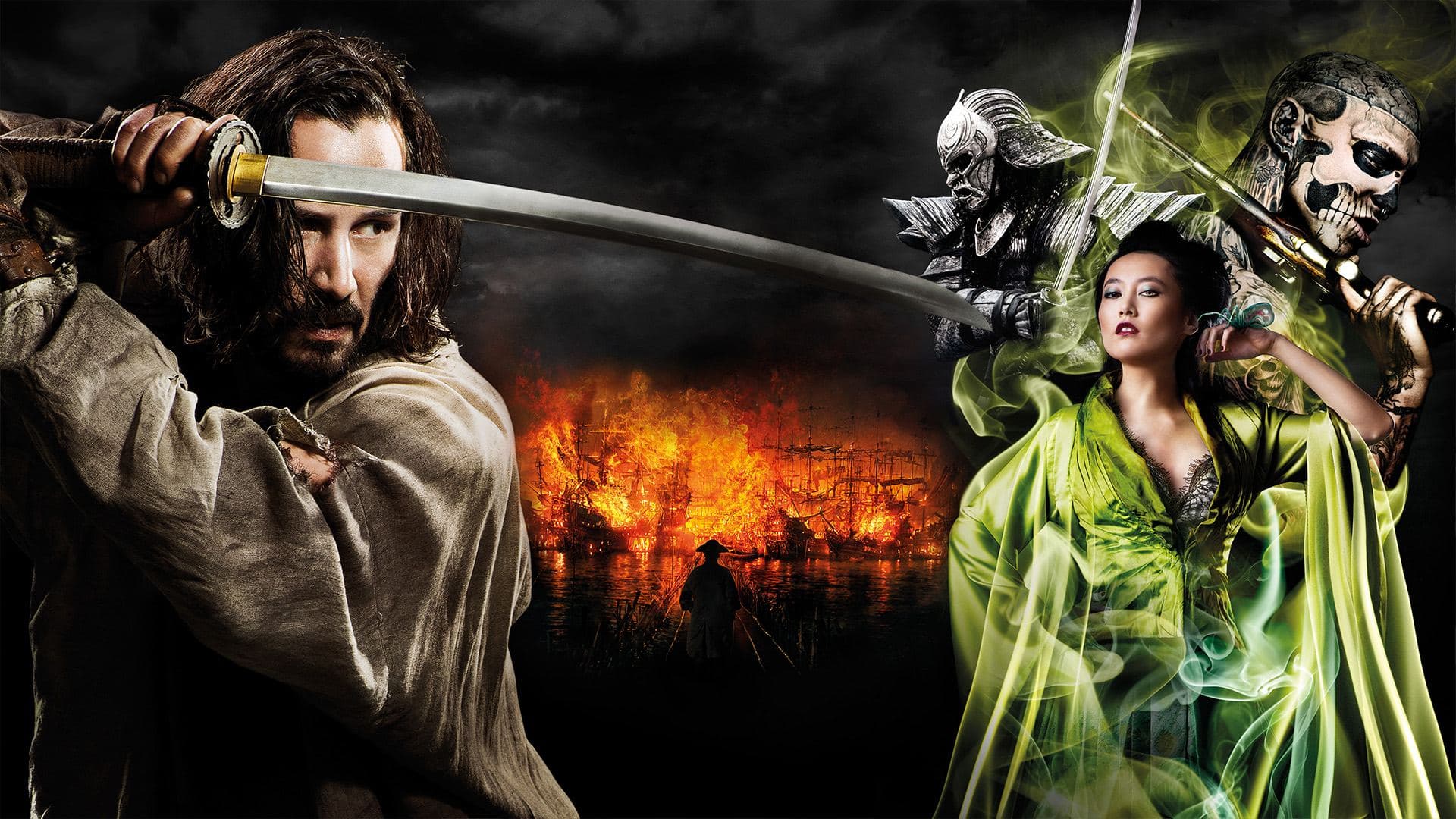
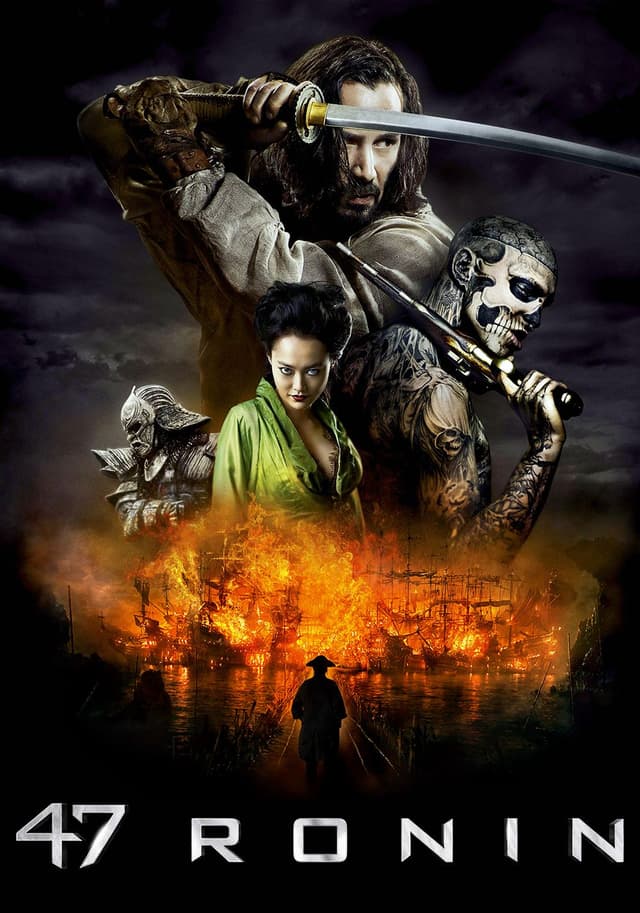
After a treacherous warlord kills their master and banishes their kind, 47 leaderless samurai vow to seek vengeance and restore honor to their people. Driven from their homes and dispersed across the land, this band of Ronin must seek the help of Kai—a half-breed they once rejected—as they fight their way across a savage world of mythic beasts, shape-shifting witchcraft and wondrous terrors. As this exiled, enslaved outcast becomes their most deadly weapon, he will transform into the hero who inspires this band of outnumbered rebels to seize eternity
What Is the Budget of 47 Ronin (2013)?
47 Ronin (2013), directed by Carl Rinsch and distributed by Universal Pictures, was produced on a reported budget of $175,000,000 to $225,000,000. The fantasy action film, loosely based on the historical account of the forty-seven ronin, starred Keanu Reeves alongside a predominantly Japanese cast including Hiroyuki Sanada, Tadanobu Asano, and Rinko Kikuchi. The production was a co-venture between Universal, Relativity Media, and several smaller production companies.
The budget escalated significantly from its original projection due to extensive reshoots, release date delays, and the studio's decision to expand Keanu Reeves' role after initial test screenings. Director Carl Rinsch was eventually removed from the editing process, with Universal's studio executives taking over post-production. The troubled production history made 47 Ronin one of the most expensive original (non-franchise) fantasy films ever produced.
Key Budget Allocation Categories
The estimated $175,000,000 to $225,000,000 budget was distributed across several major production areas:
- Visual Effects and Fantasy Sequences: The film featured extensive CGI creatures, mystical environments, and large-scale battle sequences requiring thousands of VFX shots. Moving Picture Company (MPC) and other vendors handled the effects-heavy production.
- Multi-Country Physical Production: Principal photography spanned three countries. Budapest, Hungary served as the primary filming location with extensive period set construction, Shepperton Studios in the UK provided additional stage work, and locations in Japan were used for exterior authenticity.
- Above-the-Line Talent: Keanu Reeves commanded a significant salary as the marquee star expected to drive international box office. The supporting cast of established Japanese actors, including Hiroyuki Sanada and Rinko Kikuchi, added further costs.
- Costume Design and Production Design: The film's feudal Japanese setting required elaborate period costumes, armor, and weaponry for hundreds of extras across multiple battle sequences. Practical sets recreating Edo-period architecture were built across the Budapest and Shepperton locations.
- Reshoots and Post-Production Overhaul: Studio-mandated reshoots in London in August 2012 added new love scenes and dialogue to expand Reeves' screen time. The extended post-production period, during which the director was replaced by studio executives for the editing process, added months of additional costs.
How Does 47 Ronin (2013)'s Budget Compare to Similar Films?
At $175,000,000 to $225,000,000, 47 Ronin sat among the most expensive original fantasy films ever produced. Its financial outcome placed it alongside several other high-profile box office disappointments:
- The Lone Ranger (2013): Budget $225,000,000 | Worldwide $260,000,000. Disney's other 2013 mega-budget original, also starring a major star (Johnny Depp), suffered a similarly catastrophic loss, with Disney writing down $160,000,000 to $190,000,000.
- John Carter (2012): Budget $263,700,000 | Worldwide $284,100,000. Disney's Mars adaptation became a benchmark for Hollywood box office disasters, losing an estimated $200,000,000 and contributing to the resignation of studio chairman Rich Ross.
- Battleship (2012): Budget $209,000,000 | Worldwide $303,000,000. Universal's own board-game adaptation lost an estimated $150,000,000, presaging the risk the studio would take again with 47 Ronin just one year later.
- The Last Samurai (2003): Budget $140,000,000 | Worldwide $456,000,000. The most relevant comparison in terms of genre (Western star in feudal Japan), The Last Samurai succeeded where 47 Ronin failed, earning solid returns with Tom Cruise and strong critical reception.
47 Ronin Box Office Performance
Universal released 47 Ronin on December 25, 2013, after three release date delays from its original November 2012 slot. The film opened to $20.6 million over its first five days domestically, placing ninth at the Christmas box office. In Japan, despite the story's deep cultural significance, the film opened to just $1.3 million.
Box Office Breakdown
47 Ronin

At approximately -13% to -31% depending on the budget estimate used, 47 Ronin did not recoup its production budget through theatrical release alone.
47 Ronin was one of the most prominent box office bombs of 2013, with Universal reportedly absorbing losses that left the studio in the red for the year. The film earned just $38.4 million domestically (25% of worldwide) and $113.4 million internationally. The weak Japanese performance was particularly damaging, as Universal had counted on the story's cultural resonance to drive strong results in that market.
47 Ronin Production History
Development on 47 Ronin began in 2008 when Universal acquired a spec script by Chris Morgan and Hossein Amini that reimagined the classic Japanese tale of loyalty and revenge as a fantasy action film. The studio envisioned the project as the launch of a potential franchise, with Keanu Reeves attached as a half-Japanese, half-British outcast character invented for the film, a significant departure from the historical source material.
Carl Rinsch, a commercial director with no prior feature film experience, was hired to direct based on the strength of his short films. Principal photography began in Budapest in March 2011 and also took place at Shepperton Studios in the UK and on location in Japan. The shoot was technically ambitious, requiring extensive period set construction, elaborate costume work for hundreds of extras, and complex VFX-heavy action sequences.
Problems emerged during post-production. After early test screenings showed audiences wanted more of Reeves' character, Universal ordered reshoots in London in August 2012 to add new love scenes and dialogue, significantly increasing the budget. More critically, the studio lost confidence in Rinsch's edit and removed him from the post-production process, with executives taking over the final cut. The release date was pushed three times, from November 2012 to February 2013, then to December 2013.
The troubled production drew unfavorable comparisons to other costly Universal misfires. Coming just one year after Battleship's $150,000,000 loss, 47 Ronin's failure prompted the studio to reassess its approach to high-budget original properties, contributing to the industry-wide shift toward franchise-based tentpole filmmaking.
Awards and Recognition
47 Ronin received minimal awards recognition, consistent with its poor critical and commercial reception. The film was not nominated for any major industry awards. Its visual effects work and costume design, despite representing significant production investment, were overlooked by the Academy, BAFTA, and the Visual Effects Society.
Critical Reception
47 Ronin was overwhelmingly panned by critics, earning a 16% approval rating on Rotten Tomatoes based on 88 reviews and a 28 out of 100 on Metacritic from 21 critics. The critical consensus described the film as a "surprisingly dull fantasy adventure, one that leaves its talented international cast stranded within one-dimensional roles." Audiences were somewhat more forgiving, giving it a CinemaScore of B+.
Critics consistently noted the disconnect between the film's lavish production values and its generic execution. The fantasy elements added to Orwell's historical story were seen as undermining rather than enhancing the source material's dramatic weight. Keanu Reeves' performance was described as subdued to the point of inertness, with several reviewers noting that the more compelling Japanese cast members were sidelined in favor of the American star.
The few positive notices acknowledged John Mathieson's cinematography and the visual ambition of certain action sequences. However, the consensus held that the studio's interference, including the expanded role for Reeves and the director's removal from post-production, had produced a film that satisfied neither Western action audiences nor viewers seeking an authentic retelling of one of Japan's most famous historical narratives.
Frequently Asked Questions
How much did it cost to make 47 Ronin?
47 Ronin was produced on a reported budget of $175,000,000 to $225,000,000, with costs escalating due to studio-mandated reshoots in London, additional scenes to expand Keanu Reeves' role, and multiple release date delays. Including estimated marketing costs of approximately $150,000,000, the total investment was approximately $325,000,000 to $375,000,000.
How much did 47 Ronin earn at the box office?
47 Ronin earned $38,362,475 domestically and approximately $113,421,364 internationally for a worldwide total of $151,783,839. The film opened in ninth place domestically with $20.6 million over its first five days (Christmas week release). In Japan, it opened to just $1.3 million despite the story's deep cultural roots.
Was 47 Ronin profitable?
No. 47 Ronin was one of the most prominent box office bombs of 2013. The film earned $151,783,839 worldwide against a total estimated investment of $325,000,000 to $375,000,000, resulting in significant losses for Universal Pictures. The studio reportedly absorbed losses that contributed to Universal finishing 2013 in the red.
What were the biggest costs in producing 47 Ronin?
The primary cost drivers were visual effects for the film's fantasy action sequences, extensive physical production across three countries (Budapest, Shepperton Studios in the UK, and locations in Japan), above-the-line talent costs including Keanu Reeves' salary, and costly studio-mandated reshoots in London in August 2012 that added new love scenes and dialogue to boost Reeves' screen presence.
How does 47 Ronin's budget compare to similar films?
At $175,000,000 to $225,000,000, 47 Ronin was one of the most expensive original fantasy films ever produced. The Lone Ranger (2013) cost $225,000,000 and earned $260,000,000. John Carter (2012) cost $263,700,000 and earned $284,100,000. Both were similarly considered major box office disappointments, illustrating the risk of spending over $175 million on non-franchise fantasy properties.
Did 47 Ronin go over budget?
Yes, significantly. The production budget reportedly ballooned from an initial $175,000,000 to as much as $225,000,000. Director Carl Rinsch was removed from the editing process, with Universal's studio head taking over post-production. The studio ordered reshoots in London in August 2012 to add scenes expanding Reeves' role, and the release was delayed three times from November 2012 to December 2013.
What was the ROI of 47 Ronin?
Using the lower-end production budget of $175,000,000, 47 Ronin had an ROI of approximately -13%, calculated as (Worldwide Gross $151,783,839 minus Budget $175,000,000) divided by Budget times 100. The film did not come close to recouping its production costs through theatrical revenue, and losses were far worse when accounting for the higher reported budget and marketing spend.
What awards did 47 Ronin win?
47 Ronin did not receive significant awards recognition. The film's poor critical reception (16% on Rotten Tomatoes, 28/100 Metacritic) and commercial failure precluded it from awards consideration, despite the production's high technical ambitions and extensive VFX work.
Who directed 47 Ronin?
47 Ronin was directed by Carl Rinsch in his only theatrical feature. Rinsch was removed from the editing process by Universal, with the studio taking over post-production. The screenplay was written by Hossein Amini and Chris Morgan, with story contributions from Walter Hamada.
Where was 47 Ronin filmed?
47 Ronin was filmed across three countries: Hungary (with extensive set construction in Budapest), the United Kingdom (at Shepperton Studios), and Japan (for location authenticity). Reshoots took place in London in August 2012. The multi-country production added logistical costs to an already expensive film.
Filmmakers
47 Ronin

Official Trailer
Build budgets like this one in Saturation
Start from an industry-standard feature film template, import the schedule and rates you already have, and let the cost report keep itself current as you spend. Real-time collaboration, no spreadsheets.