The Face of Another Budget
Updated
Synopsis
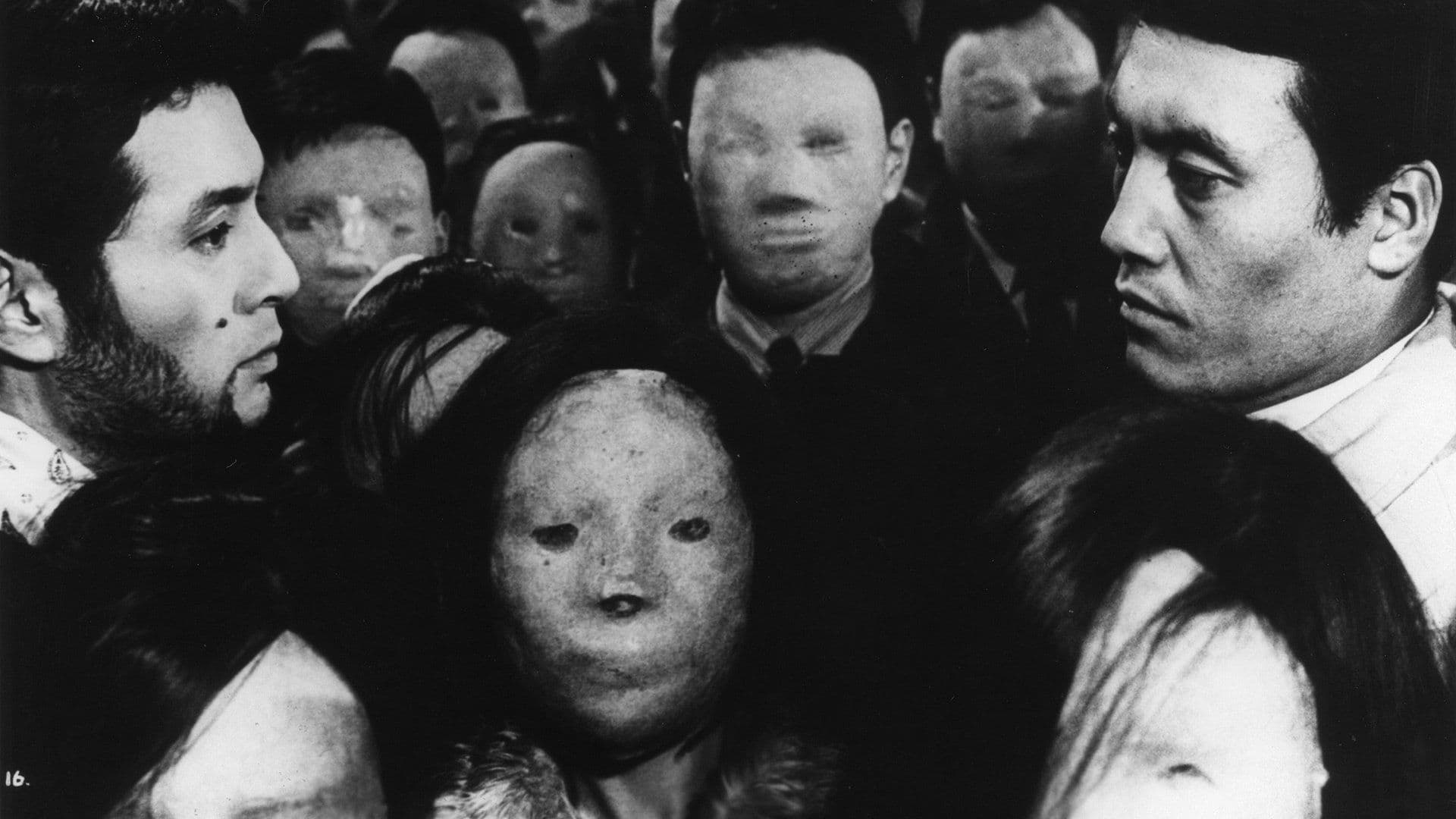
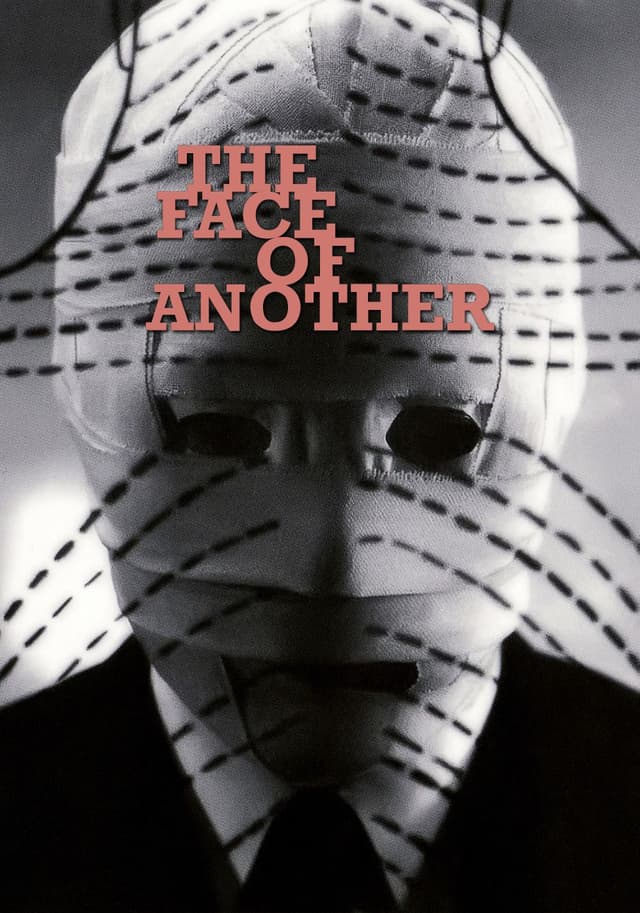
An industrial engineer is disfigured in a laboratory accident and obtains a lifelike prosthetic mask that allows him to walk through Tokyo as another man. Wearing this borrowed face, he sets out to seduce his own wife as a test of whether his identity is bound to his appearance, while a parallel story explores a young woman whose face was scarred by Hiroshima radiation. Hiroshi Teshigahara directs the surreal psychological drama adapted from the Kōbō Abe novel.
What Is the Budget of The Face of Another (1966)?
The Face of Another (1966), directed by Hiroshi Teshigahara and produced by Tokyo Eiga (Toho Studios) with the Teshigahara Productions and Tokyo Eiga banner, was made on an estimated budget of approximately ¥80,000,000 to ¥100,000,000 (approximately $220,000 to $280,000 USD in 1966 exchange rates). The figure is consistent with mid-tier Toho-affiliated art-house productions of the mid-1960s and the third Teshigahara-Abe collaboration following Pitfall (1962) and Woman in the Dunes (1964).
Funding came through Tokyo Eiga's prestige-feature programming, augmented by international art-house pre-sales that the success of Woman in the Dunes had unlocked for Hiroshi Teshigahara. The Kōbō Abe novel (published 1964) provided the source adaptation, with Abe writing the screenplay himself.
Key Budget Allocation Categories
The Face of Another's estimated budget covered the following production areas:
- Above-the-Line Cast: Tatsuya Nakadai (Harakiri, Yojimbo, Kagemusha) led as the disfigured engineer Mr. Okuyama, with Machiko Kyō (Rashomon, Ugetsu) as his wife. Mikijiro Hira played the psychiatrist who creates the mask, with Eiji Okada (Hiroshima Mon Amour, Woman in the Dunes) and Miki Irie in supporting roles.
- Director and Writer Fees: Hiroshi Teshigahara, fresh from the international success of Woman in the Dunes, directed at senior-director rates. Kōbō Abe adapted his own novel.
- Prosthetic and Makeup Design: The film centers on a hyper-realistic prosthetic face mask that the engineer wears. The mask design and the disfigured-face appliances required specialty prosthetic work that was advanced for 1966 Japanese cinema.
- Production Design: Arata Isozaki, the architect later renowned for the Museum of Contemporary Art in Los Angeles, designed the psychiatrist's modernist consultation rooms with floating glass partitions and translucent panels that anchor the film's most surreal sequences.
- Cinematography: Hiroshi Segawa, Teshigahara's regular cinematographer (Pitfall, Woman in the Dunes), shot in stark high-contrast black and white. The film's signature X-ray and double-exposure imagery required custom photography and optical work.
- Score and Music: Tōru Takemitsu, the most prominent Japanese film composer of the era, composed his third score for Hiroshi Teshigahara, drawing on Kurt Weill-influenced cabaret motifs alongside avant-garde orchestration.
- Editorial: Yoshi Sugihara edited at Toho's facilities.
- Distribution and Marketing: Tokyo Eiga handled Japanese release, with international distribution arrangements made through Toho's overseas division ahead of the film's invitations to European festivals.
How Does The Face of Another's Budget Compare to Similar Films?
The Face of Another's estimated budget aligns with mid-1960s Japanese art-house productions:
- Woman in the Dunes (1964): Budget approximately ¥60,000,000 | Worldwide unknown. Hiroshi Teshigahara's prior Kōbō Abe collaboration at roughly two-thirds the scale.
- Onibaba (1964): Budget approximately ¥50,000,000 | Worldwide unknown. A comparable Japanese psychological-horror art-house benchmark.
- Tokyo Story (1953): Budget approximately ¥50,000,000 | Worldwide unknown. Ozu's Shochiku family drama at a comparable scale a decade earlier.
- Persona (1966): Budget approximately $250,000 USD | Worldwide unknown. The Ingmar Bergman Swedish psychological-identity film from the same year at a comparable scale.
The Face of Another Box Office Performance
The Face of Another opened in Japan in July 1966 through Tokyo Eiga's distribution. International release rolled out gradually through 1966 and 1967, including French and Italian theatrical engagements and a 1967 US release.
Box Office Breakdown
The Face of Another

Domestic Japanese performance trailed the commercial success of Woman in the Dunes, which had been the larger international art-house breakthrough. International theatrical engagements, however, established The Face of Another in the European cinephile canon, with Cannes and Berlin festival circuit screenings extending its reach.
The 2007 Criterion Collection Hiroshi Teshigahara boxed set (which paired The Face of Another with Pitfall and Woman in the Dunes) returned the film to international visibility, with subsequent streaming licensing through the Criterion Channel sustaining commercial life.
The Face of Another Production History
Hiroshi Teshigahara, Kōbō Abe, and Tōru Takemitsu had collaborated on Pitfall (1962) and Woman in the Dunes (1964), with the latter winning the Cannes Special Jury Prize and earning an Oscar nomination for Best Foreign Language Film. The trio reunited in 1965 for an adaptation of Abe's 1964 novel The Face of Another, written immediately after the success of his previous novel Woman in the Dunes.
Pre-production at Tokyo Eiga ran through fall 1965 and into spring 1966. Arata Isozaki, then a young architect emerging from Kenzō Tange's studio, was commissioned to design the psychiatrist's consultation rooms as a series of architectural set-pieces that articulate the film's themes of identity and dissolution. Isozaki's modernist glass-and-translucent-panel sets remain the film's most striking visual signature.
Tatsuya Nakadai signed on to play the dual-faced engineer Mr. Okuyama, a role that required him to perform both with a prosthetic facial-burn appliance and with a hyper-realistic mask. Machiko Kyō, then in the late stages of her career-defining run through Daiei studio films, joined as the wife.
Principal photography ran through spring and summer 1966 in Tokyo, with Hiroshi Segawa's high-contrast black-and-white cinematography emphasizing the Isozaki sets and the prosthetic effects. Tōru Takemitsu composed his Kurt Weill-influenced score during post-production.
Tokyo Eiga released the film in Japan in July 1966. International festival screenings followed at Cannes (1966 sidebar) and Berlin International Film Festival (1967), with Continental Distributing handling US theatrical release in 1967.
Awards and Recognition
The Face of Another competed at the 1966 Berlin International Film Festival, where it was nominated for the Golden Bear. Hiroshi Teshigahara was nominated for the Mainichi Film Concours Best Director prize in Japan. The film won the Japanese Film Director's Award and earned Kinema Junpo Top Ten Films of 1966 inclusion. International recognition has built through retrospective canonization rather than contemporary awards, with the Criterion Collection 2007 boxed-set release and subsequent Sight and Sound critics' poll inclusion cementing its status. The Cannes Classics 4K restoration program screened the film in 2017.
Critical Reception
The Face of Another holds an 89 percent Rotten Tomatoes score from twenty-seven critics with an average rating of 8.1 out of 10 and an audience score of 84 percent. Metacritic does not track films of this vintage with a Metascore. The film is widely considered a Hiroshi Teshigahara masterpiece, ranking alongside Woman in the Dunes in international canon-defining surveys.
Jonathan Rosenbaum, the dean of American art-house criticism, called The Face of Another 'one of the most visually accomplished films of the 1960s.' J. Hoberman in The Village Voice praised the Arata Isozaki set design and the Tōru Takemitsu score as 'a synthesis of postwar Japanese avant-garde at its apex.' Contemporary 1966 Japanese critics were more divided, with some finding the film's pace slower than Woman in the Dunes. Time Out London cites the film as 'a profound meditation on identity that anticipates the philosophical horror of David Cronenberg by two decades.' The film's continued canonical status rests on its formal sophistication, the trio of Hiroshi Teshigahara, Kōbō Abe, and Tōru Takemitsu, and the prescience of its identity-and-prosthetics themes.
Frequently Asked Questions
What is the budget of The Face of Another (1966)?
The Face of Another's production budget is estimated between ¥80,000,000 and ¥100,000,000 (approximately $220,000 to $280,000 USD in 1966 exchange rates), consistent with mid-tier Tokyo Eiga art-house productions of the mid-1960s.
Who directed The Face of Another?
Hiroshi Teshigahara directed the film, his third collaboration with novelist Kōbō Abe and composer Tōru Takemitsu following Pitfall (1962) and Woman in the Dunes (1964).
Who stars in The Face of Another?
Tatsuya Nakadai stars as the disfigured engineer Mr. Okuyama, with Machiko Kyō as his wife. The ensemble includes Mikijiro Hira as the psychiatrist who creates the mask, plus Kyōko Kishida, Eiji Okada, and Miki Irie.
Is The Face of Another based on a novel?
Yes. Kōbō Abe adapted his own 1964 novel of the same name. Abe wrote the novel immediately following the international success of Woman in the Dunes (1962 novel, 1964 film).
Who designed the sets for The Face of Another?
Arata Isozaki, the architect later renowned for the Museum of Contemporary Art in Los Angeles, designed the psychiatrist's consultation rooms. His modernist glass-and-translucent-panel sets are the film's most striking visual signature.
Who composed the music for The Face of Another?
Tōru Takemitsu composed his third score for Hiroshi Teshigahara, drawing on Kurt Weill-influenced cabaret motifs alongside avant-garde orchestration.
When was The Face of Another released?
The Face of Another opened in Japan in July 1966 through Tokyo Eiga. International theatrical release followed at the 1966 Berlin Film Festival and the 1967 US theatrical run through Continental Distributing.
Is The Face of Another available on streaming?
The Face of Another streams on The Criterion Channel and Max in the United States as part of the Hiroshi Teshigahara boxed set. The Criterion Collection released a definitive Blu-ray edition in 2007.
What is The Face of Another about?
The Face of Another follows an industrial engineer who is disfigured in a laboratory accident and obtains a hyper-realistic prosthetic mask. Wearing this borrowed face, he sets out to seduce his own wife as a test of whether identity is bound to appearance.
How well-reviewed is The Face of Another?
The Face of Another holds an 89 percent Rotten Tomatoes score from twenty-seven critics with an average rating of 8.1 out of 10. The film is widely considered a Hiroshi Teshigahara masterpiece.
Filmmakers
The Face of Another

Official Trailer
Build budgets like this one in Saturation
Start from an industry-standard feature film template, import the schedule and rates you already have, and let the cost report keep itself current as you spend. Real-time collaboration, no spreadsheets.