Woman in the Dunes Budget
Updated
Synopsis
An amateur entomologist studying coastal beetles is lured by villagers into spending the night in a stilted pit-dwelling with a widow at the bottom of a sand dune. By morning, the rope ladder is gone, and his captivity becomes both prison and erotic ritual.
What Is the Budget of Woman in the Dunes (1964)?
Woman in the Dunes (1964), directed by Hiroshi Teshigahara, was produced on an estimated budget of approximately 100,000,000 to 130,000,000 Japanese yen, or approximately $280,000 to $360,000 in mid-1960s US dollars. The figure has not been formally disclosed by Teshigahara Productions, but the contained two-character desert-shoot scale, the on-location dune-set construction, the black-and-white cinematography, and the independent-production financing model all support a figure in that range typical of mid-1960s Japanese art-house features.
The film was produced by Kiichi Ichikawa and Tadashi Ohno for Teshigahara Productions, the independent production company founded by director Hiroshi Teshigahara and his father, ikebana master Sofu Teshigahara. The film adapted Kobo Abe's 1962 novel of the same name with Abe writing the screenplay, and Toho handled Japanese theatrical distribution while Pathe Contemporary released the film in the United States.
Key Budget Allocation Categories
The estimated 100,000,000 to 130,000,000 yen budget supported a contained two-character desert location production:
- Above-the-Line Talent: Eiji Okada starred as the entomologist Niki Junpei alongside Kyoko Kishida as the widow, with a contained two-character lead structure plus the village ensemble. Both lead actors brought significant prior credits, with Eiji Okada known from Hiroshima Mon Amour and Kyoko Kishida from her stage and screen career.
- Desert Location Production: Principal photography took place in the sand dunes near Tottori on the Sea of Japan coast, with a constructed sand-pit set housing the woman's stilted home. The on-location dune environment and the constructed pit-dwelling set represented the largest single production line.
- Production Design: Totetsu Hirakawa designed the stilted wooden pit-dwelling set, the rope-and-pulley apparatus, and the village-edge environments, in dialogue with the actual dune topography.
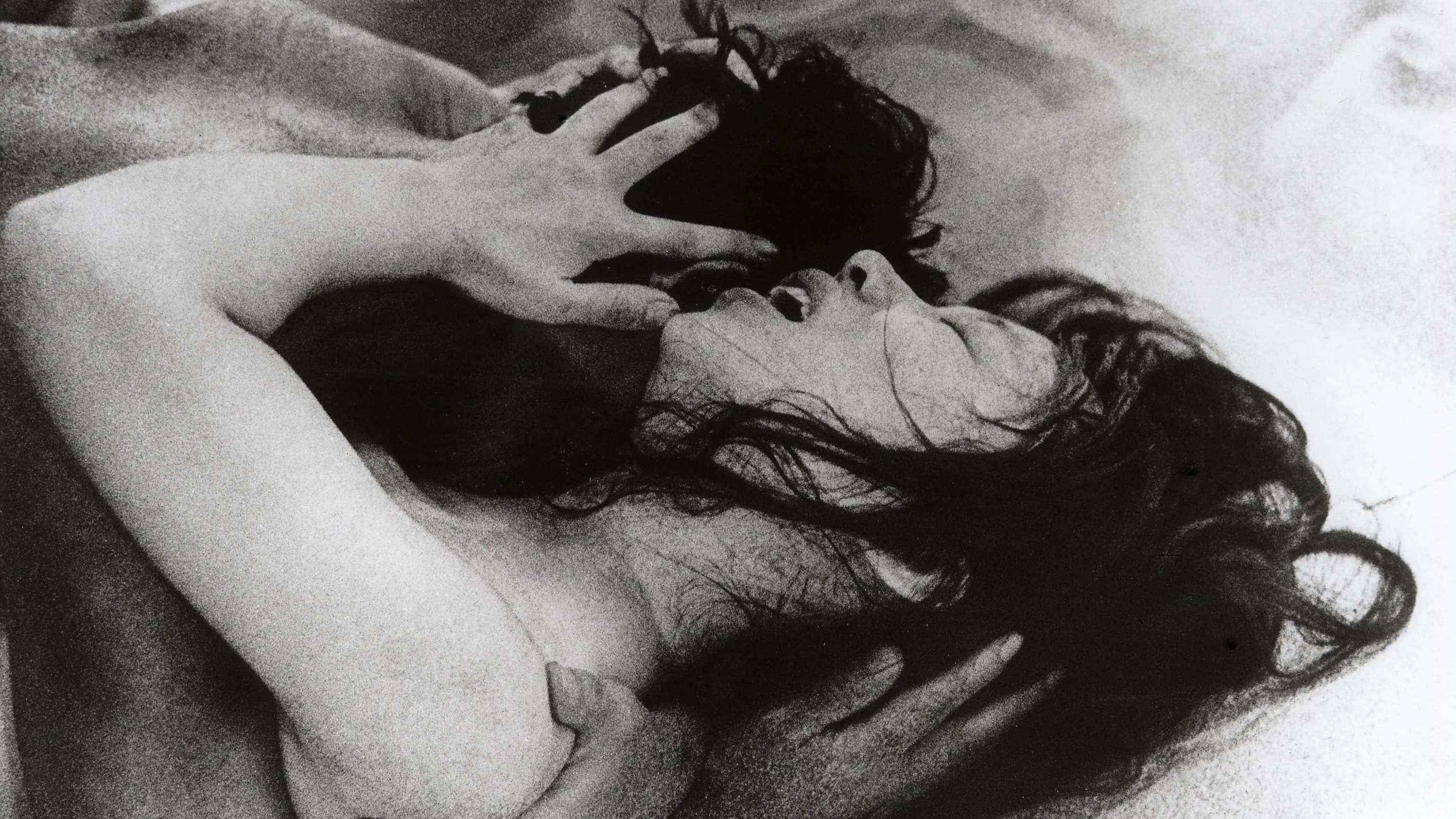
- Cinematography: Hiroshi Segawa shot the film in black and white on 35mm with the avant-garde close-photography of sand grains and skin textures that became one of the film's defining visual signatures.
- Music: Toru Takemitsu composed the avant-garde score, which became one of the most celebrated scores in 1960s Japanese cinema and supported the film's international art-house reception.
- Post-Production: Editorial by Fusako Shuzui, sound mix, and Cannes Film Festival print delivery completed the finishing pipeline ahead of the May 1964 Cannes premiere.
How Does Woman in the Dunes's Budget Compare to Similar Films?
Woman in the Dunes sits in the 1960s Japanese art-house and international new-wave landscape:
- Onibaba (1964): Budget approximately 80,000,000 yen | Worldwide art-house distribution. Kaneto Shindo's contained Japanese horror-allegory at lower budget represents the closest contemporary contained-cast Japanese art-house peer.
- Kwaidan (1964): Budget approximately 350,000,000 yen | Worldwide art-house distribution. Masaki Kobayashi's anthology supernatural feature at higher budget represents the prestige-tier 1964 Japanese art-house peer.
- High and Low (1963): Budget approximately 200,000,000 yen | Worldwide art-house distribution. Akira Kurosawa's contemporary Toho thriller at higher budget represents the studio-tier 1963 Japanese peer.
- Last Year at Marienbad (1961): Budget approximately $400,000 | Worldwide $300,000. Alain Resnais' French formalist art-house peer at comparable budget represents the closest contemporary international new-wave peer.
Woman in the Dunes Box Office Performance
Woman in the Dunes premiered in competition at the 17th Cannes Film Festival in May 1964, winning the Special Jury Prize. The film opened theatrically in Japan in February 1964 through Toho and then in the United States in September 1964 through Pathe Contemporary, with a steady art-house theatrical run across major US markets that continued into 1965. Granular 1960s box-office figures are limited, but the film generated strong art-house theatrical performance against its contained budget.
Against the estimated 100,000,000 to 130,000,000 yen production budget, the financial breakdown:
Box Office Breakdown
Woman in the Dunes

The film operated on the festival-launched international art-house distribution model that the global cinema landscape was actively building out in the early to mid-1960s. The Cannes Special Jury Prize, the subsequent Academy Award Best Foreign Language Film nomination, and the Academy Award Best Director nomination supported decades of revival theatrical and home-video sales.
Woman in the Dunes Production History
Woman in the Dunes originated from Kobo Abe's 1962 novel of the same name, a work of existential-allegorical fiction that became one of the foundational texts of post-war Japanese literature. Director Hiroshi Teshigahara and novelist Kobo Abe began their collaboration on the 1962 short feature Pitfall, and Woman in the Dunes represented their second major film collaboration with Abe writing the screenplay adaptation himself.
Principal photography took place in 1963 in the sand dunes near Tottori on the Sea of Japan coast. The production constructed a stilted wooden pit-dwelling set in dialogue with the natural dune topography, allowing the camera to capture the daily-life rhythm of the trapped entomologist and the widow. Cinematographer Hiroshi Segawa developed an avant-garde register of close-up photography that treated sand grains, skin textures, and rope as graphic and erotic registers in equal measure.
The film premiered in competition at the Cannes Film Festival in May 1964, winning the Special Jury Prize. The film received Academy Award nominations for Best Foreign Language Film for Japan in the 1964 cycle and Best Director for Hiroshi Teshigahara in the 1965 cycle, a rare double recognition for a Japanese art-house feature.
Awards and Recognition
Woman in the Dunes received major international awards recognition. The film won the Special Jury Prize at the 1964 Cannes Film Festival, the festival's second-tier competition prize. The film received Academy Award nominations for Best Foreign Language Film for Japan at the 37th Academy Awards in 1965 and Best Director for Hiroshi Teshigahara at the 38th Academy Awards in 1966, the rare back-to-back Oscar recognition for a single non-English-language film. The film won the Mainichi Film Concours Best Film and Best Director awards in Japan and the Kinema Junpo Best Film honor. The film's lasting reception positioned it as one of the canonical Japanese New Wave features and one of the most influential international art-house releases of the 1960s.
Critical Reception
Woman in the Dunes received strong critical reception. The film holds a 96% Rotten Tomatoes approval rating based on 56 reviews, reflecting the sustained critical reputation across decades of revival and home-video reassessment. The film holds a Metacritic score of 90 out of 100 across 13 critics, indicating universal acclaim.
Reviewers and historians from Bosley Crowther in The New York Times at the original 1964 release through the Criterion Collection reissue critical apparatus have singled out the avant-garde Hiroshi Segawa cinematography, the Toru Takemitsu score, the Kobo Abe screenplay's existential-allegorical register, and the Hiroshi Teshigahara direction as the film's principal strengths. Roger Ebert later wrote that the film operates as an existential parable that turns sand into a substance equal parts beautiful and terrifying. The reception positioned the film as one of the canonical international art-house features of the 1960s and one of the foundational works of the Japanese New Wave.
Frequently Asked Questions
How much did it cost to make Woman in the Dunes (1964)?
The production budget has not been formally disclosed but is estimated at approximately 100,000,000 to 130,000,000 Japanese yen, or roughly $280,000 to $360,000 in mid-1960s US dollars, consistent with contained mid-1960s Japanese art-house features.
Who directed Woman in the Dunes?
Hiroshi Teshigahara directed the film. Teshigahara was the son of ikebana master Sofu Teshigahara and a major figure in the Japanese New Wave, with Woman in the Dunes representing his second major collaboration with novelist Kobo Abe.
Is Woman in the Dunes based on a novel?
Yes. The film adapts Kobo Abe's 1962 novel of the same name, a foundational work of post-war Japanese existential-allegorical fiction. Abe wrote the screenplay adaptation himself.
Where was Woman in the Dunes filmed?
Principal photography took place in 1963 in the sand dunes near Tottori on the Sea of Japan coast, with a constructed stilted wooden pit-dwelling set built in dialogue with the natural dune topography to allow the camera to capture the daily-life rhythm.
Who stars in Woman in the Dunes?
Eiji Okada stars as the entomologist Niki Junpei alongside Kyoko Kishida as the widow. Eiji Okada was known from Hiroshima Mon Amour, and Kyoko Kishida brought significant stage and screen credits to the role.
Did Woman in the Dunes win the Palme d'Or?
No. The film won the Special Jury Prize at the 1964 Cannes Film Festival, the festival's second-tier competition prize. The Palme d'Or that year went to Jacques Demy's The Umbrellas of Cherbourg.
Did Woman in the Dunes receive Oscar nominations?
Yes. The film received Academy Award nominations for Best Foreign Language Film for Japan at the 37th Academy Awards in 1965 and Best Director for Hiroshi Teshigahara at the 38th Academy Awards in 1966, a rare back-to-back Oscar recognition for a single non-English-language film.
Who composed the music for Woman in the Dunes?
Toru Takemitsu composed the score. The avant-garde music became one of the most celebrated scores in 1960s Japanese cinema and supported the film's international art-house reception.
When did Woman in the Dunes release?
The film opened theatrically in Japan in February 1964 through Toho. It premiered internationally at the Cannes Film Festival in May 1964 and opened in the United States in September 1964 through Pathe Contemporary.
What did critics think of Woman in the Dunes?
Reviews were universally strong, with a 96% Rotten Tomatoes approval rating across 56 reviews and a Metacritic score of 90. Critics across decades have praised the Hiroshi Segawa cinematography, the Toru Takemitsu score, the Kobo Abe screenplay, and the Hiroshi Teshigahara direction.
Filmmakers
Woman in the Dunes

Official Trailer
Build budgets like this one in Saturation
Start from an industry-standard feature film template, import the schedule and rates you already have, and let the cost report keep itself current as you spend. Real-time collaboration, no spreadsheets.