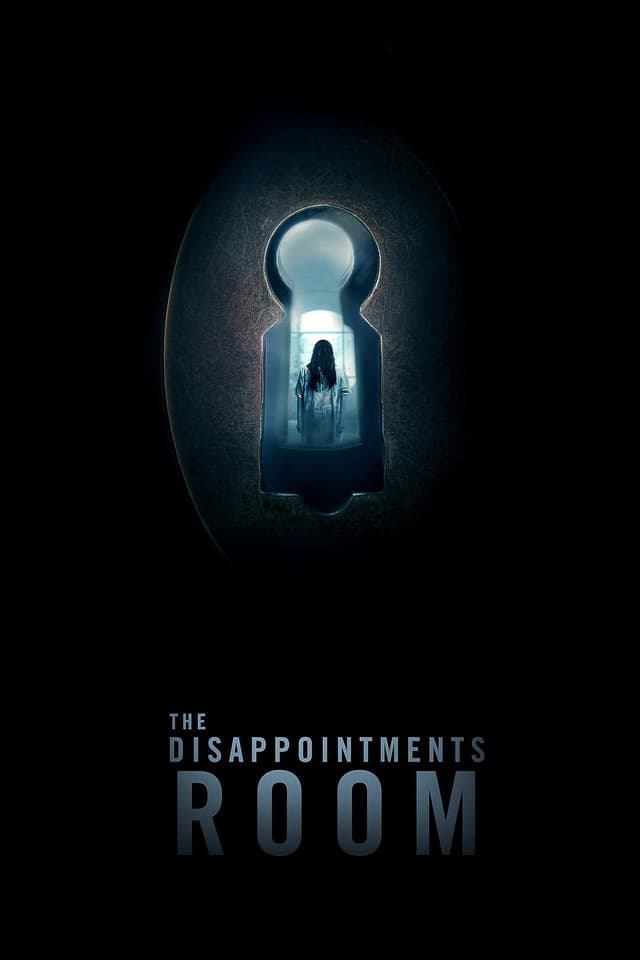
The Disappointments Room Budget
 HorrorThriller1h 32m
Updated
Synopsis
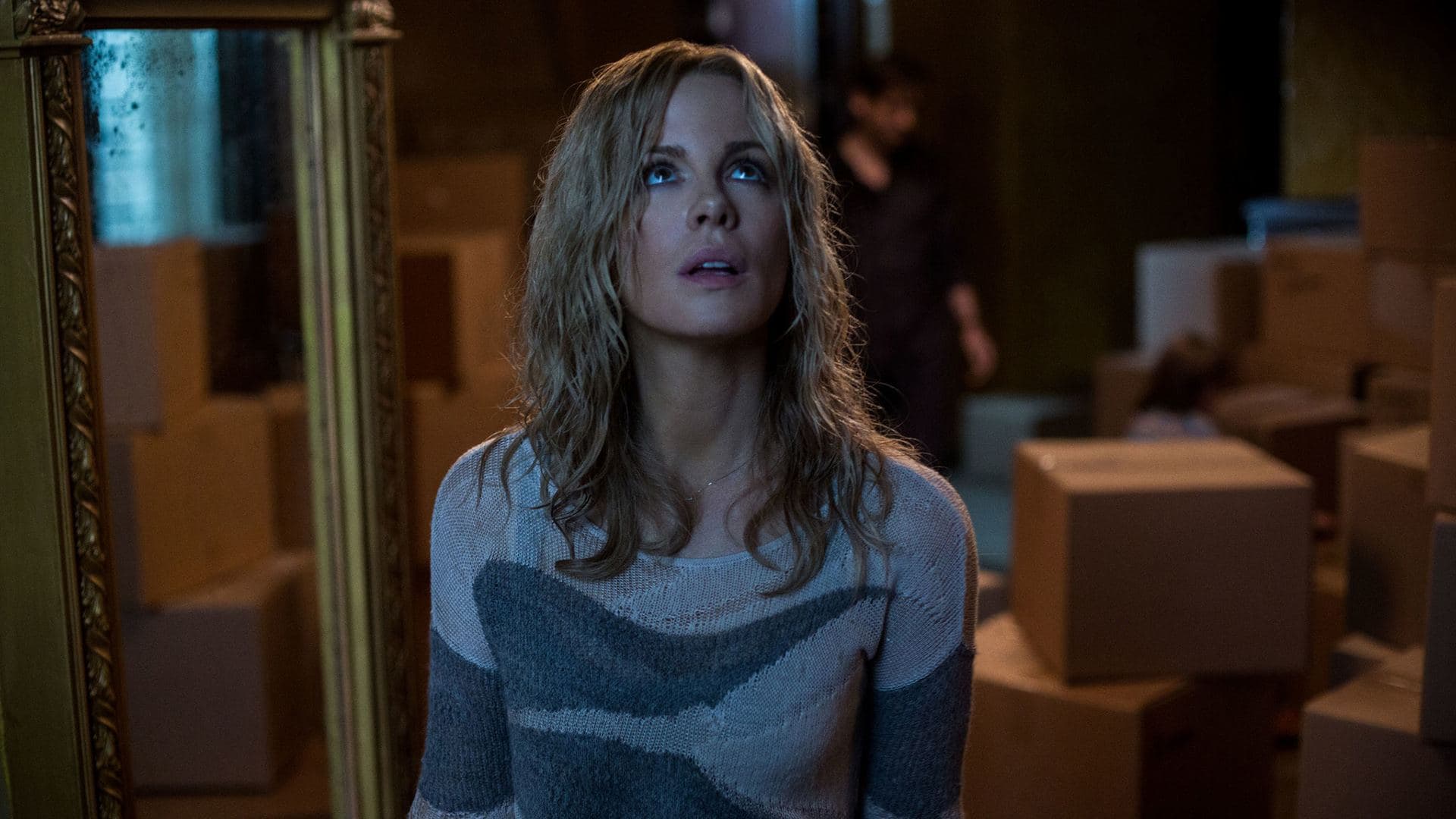
After the accidental death of their infant daughter, architect Dana Barrow (Kate Beckinsale), her husband David, and their young son Lucas move from Brooklyn to a decaying mansion in rural North Carolina for a fresh start. Dana discovers a hidden attic room not shown on the blueprints, a "disappointments room" where the original family's patriarch concealed a disabled child in the 19th century, and the spirits of the house begin to draw her toward repeating the tragedy.
What Is the Budget of The Disappointments Room (2016)?
The Disappointments Room (2016), directed by D.J. Caruso from a script he co-wrote with Wentworth Miller, was produced on a reported budget of $15,000,000. The psychological horror feature was financed and produced by Relativity Media in partnership with Demarest Films, Media Talent Group, and Los Angeles Media Fund, with Voltage Pictures handling international sales when the project was first packaged at Cannes in 2013. Principal photography wrapped in 2014, but the picture sat on the shelf for nearly two years as Relativity Media spiraled into a high-profile Chapter 11 bankruptcy, leaving the film without a clear release path until Rogue Pictures, the revived Relativity label, finally dumped it into 1,554 theaters on September 9, 2016.
At $15,000,000, the budget was modest by studio horror standards but ambitious for an indie psychological thriller built around a single haunted-house location and a small ensemble led by Kate Beckinsale. The financing reflected expectations that Beckinsale's post-Underworld star power, combined with the high-concept Victorian-era "disappointments room" hook drawn from an HGTV episode, could deliver a wide-release horror hit. The math required roughly $35,000,000 to $45,000,000 worldwide to break even after marketing, a threshold the film missed by more than $30,000,000 and a margin that made it one of the most decisive horror flops of the 2010s.
Key Budget Allocation Categories
The reported $15,000,000 budget for The Disappointments Room was spread across the typical line items for a mid-budget indie horror feature:
- Above-the-Line Talent: Kate Beckinsale, coming off the Underworld franchise and the indie comedy Love & Friendship, anchored the production with a star-level fee that consumed a significant share of the budget. Director D.J. Caruso (Disturbia, Eagle Eye, I Am Number Four) commanded a studio-feature director rate, and co-writer Wentworth Miller (Prison Break, Stoker) collected a screenwriting fee on top of an executive producer credit.
- North Carolina Location Shoot: The production filmed in and around Fayetteville and the surrounding North Carolina countryside in 2014, building practical interiors of the fictional Blacker Estate on existing mansion locations and on stages. The state's 25% Film & Entertainment Grant program (then capped at $20,000,000 per project) helped anchor the location decision and underwrote a portion of qualified spend.
- Period Production Design: Production designer Tom Meyer and his department dressed the central haunted-mansion location with 19th-century furniture, antique fixtures, and a fully built attic "disappointments room" set piece that operated as the film's primary horror engine. Period costume work for the flashback sequences involving the Blacker family added another department line.
- Visual Effects and Practical Horror: Visual effects supervisor Eric Robinson and his teams handled apparition gags, ghostly compositing, and the digital extensions used to make the Blacker Estate feel architecturally vast. Practical creature effects covered the disabled-child apparition and several attic-room appearances, with prosthetics and makeup work credited to a small team operating on a tight schedule.
- Cinematography and Camera: Cinematographer Rogier Stoffers (Disturbia, Quills, John Q) shot the film on digital cinema cameras with anamorphic lensing to give the period mansion a widescreen, Gothic feel. The camera package, lighting rental, and grip equipment for an extended interior shoot in a practical period location absorbed a meaningful share of the below-the-line spend.
- Score and Music: Composer Brian Tyler (Iron Man 3, Furious 7, Avengers: Age of Ultron) scored the film with an orchestral, dread-driven cue package. Tyler's involvement at the franchise-composer tier was a notable spend for a mid-budget horror picture.
- Post-Production and Shelving Costs: Editor Vince Filippone cut the film through 2014 and 2015, but the post pipeline stretched as Relativity Media's financial collapse forced multiple rounds of test screenings, recuts, and release-date holds. Carrying costs over the roughly two-year shelving period, including interest on completion-bond debt and rights-holder maintenance fees, added incremental drain on the original negative cost.
- Marketing and P&A: Rogue Pictures, the rebranded Relativity distribution label that emerged from bankruptcy, opened the film in 1,554 theaters with minimal television, digital, or out-of-home spend. Industry trades estimated total P&A at well under $10,000,000, far below the typical horror wide-release spend and a deliberate choice by a distributor with limited working capital.
How Does The Disappointments Room's Budget Compare to Similar Films?
At $15,000,000, The Disappointments Room was a mid-budget entry in the haunted-house and discovery-horror subgenre. The comparison set illustrates how decisively it underperformed against both lower-budget and higher-budget peers:
- The Conjuring (2013): Budget $20,000,000 | Worldwide $320,392,818. James Wan's genre-defining haunted-house hit cost only one third more than The Disappointments Room and earned more than fifty-five times its worldwide total, the gold standard for budget-to-gross horror efficiency in the period.
- The Awakening (2011): Budget approximately $7,500,000 | Worldwide $7,400,000. The Rebecca Hall and Dominic West Edwardian ghost story is a near-identical thematic match (institutional setting, hidden child trauma, period production design) and underperformed at half the budget, illustrating how thin the commercial ceiling is for serious-minded gothic horror.
- The Haunting in Connecticut (2009): Budget $14,000,000 | Worldwide $77,539,837. Lionsgate's comparable wide-release haunted-house picture earned over five times its budget worldwide, the benchmark The Disappointments Room was financed to chase but never came close to matching.
- Winter's Tale (2014): Budget $46,000,000 | Worldwide $30,920,021. Another high-profile commercial misfire featuring a star-led, supernaturally tinged drama, although on a budget triple the size of The Disappointments Room. Both pictures shared a thematic interest in grief, lost children, and period mythology that failed to translate into ticket sales.
- The Boy (2016): Budget $10,000,000 | Worldwide $74,553,037. STX Entertainment's contemporaneous January 2016 horror release, also built around a creepy old house and a wealthy family hiding a secret, earned more than seven times its budget on roughly two thirds of The Disappointments Room's production cost, a direct same-year, same-subgenre rebuke.
The Disappointments Room Box Office Performance
The Disappointments Room opened on September 9, 2016, in 1,554 theaters, finishing 17th at the domestic box office with an opening weekend gross of $1,402,823, a per-theater average of just $902. The film collapsed in its second weekend with a 73% drop and then, in its third weekend, was pulled from all but 36 theaters, a 97.4% theater reduction that broke the previous record set by Gigli (97.2%) for the steepest week-over-week theatrical contraction. The picture limped to a domestic total of $2,423,468 before exiting theaters.
Against a reported $15,000,000 production budget, the film needed roughly $35,000,000 to $45,000,000 in worldwide gross to reach break-even after marketing and distribution costs. The financial breakdown:
Box Office Breakdown
The Disappointments Room

The Disappointments Room returned approximately $0.23 to $0.26 in theatrical revenue for every $1 invested when measured against total estimated production and marketing spend, placing it among the most clear-cut box office bombs of 2016 and one of the worst-performing wide-release horror films of the decade.
The domestic share of the worldwide gross was $2,423,468 against an international share of $3,321,572, a 42/58 split that was unusual for an American haunted-house picture and a signal that even Beckinsale's reliable international audience appeal could not overcome the property's commercial deficiencies. The film moved to home video on December 13, 2016 through Fox Home Entertainment, with subsequent streaming windows on platforms including Netflix and HBO, where it found a modest second life as a curiosity rather than a discovery hit.
The Disappointments Room Production History
Development began in 2012 when Wentworth Miller, the Prison Break actor turned screenwriter whose Stoker script had recently been produced by Park Chan-wook, delivered a draft inspired by an HGTV This Old House episode about real-world Victorian and Georgian "disappointments rooms," attic spaces where wealthy families hid disabled or disfigured children from society. Relativity Media and Tucker Tooley Entertainment optioned the project in 2013, with Vincent Newman, J. Geyer Kosinski (Media Talent Group), and Tooley producing. Voltage Pictures handled international pre-sales at the 2013 Cannes Film Festival, financing the production against foreign-territory commitments.
D.J. Caruso, who had directed Disturbia and Eagle Eye for DreamWorks and I Am Number Four for Touchstone, came aboard in late 2013 and rewrote Miller's script with Miller as a co-writer credit. Caruso shifted the tone toward grief-driven psychological drama, leaning on Kate Beckinsale's established horror-thriller persona from the Underworld franchise rather than the broader Gothic-horror register Miller had originally drafted. Beckinsale signed on in early 2014, with Mel Raido cast as her husband, Lucas Till as a handyman, and supporting roles for Gerald McRaney (as the spectral Judge Blacker), Michaela Conlin, Michael Landes, Celia Weston, and Marcia DeRousse.
Principal photography took place in 2014 in and around Fayetteville, North Carolina, using a practical period mansion as the Blacker Estate exterior and a combination of practical interiors and built sets for the attic disappointments-room sequences. The state's film incentive program at the time offered a 25% rebate on qualified spend (with a per-project cap of $20,000,000), one of the most generous in the United States, and was a primary reason the production landed in North Carolina rather than Louisiana or Georgia. The shoot wrapped in mid-2014 and post-production proceeded through the back half of that year.
The release path then collapsed. Relativity Media filed for Chapter 11 bankruptcy on July 30, 2015, with $1.18 billion in debts and a slate of completed films, including The Disappointments Room, frozen pending court approval. The bankruptcy dragged through 2015 and into early 2016, with the company emerging in March 2016 under new ownership led by Ryan Kavanaugh and a restructured Rogue Pictures distribution label. The Disappointments Room was scheduled, unscheduled, and rescheduled multiple times during the proceedings, and the picture finally opened on September 9, 2016, more than two years after wrapping. The extended shelving, combined with the bankruptcy proceedings, meant that the film effectively received no theatrical marketing campaign and was treated by the trades as a contractual obligation release rather than a genuine commercial push.
Awards and Recognition
The Disappointments Room received no awards recognition of any kind. The film was not nominated at the Saturn Awards for genre filmmaking, the Fangoria Chainsaw Awards, the Critics' Choice Super Awards, or any festival jury competition. It also avoided Razzie nominations at the 2017 ceremony, despite its 0% Rotten Tomatoes score and historic box office collapse, with the Razzies that year focused on more publicly maligned tentpoles including Batman v Superman: Dawn of Justice and Zoolander 2.
The film's only notable industry distinction is a negative one: the 97.4% week-three theater count contraction (from 1,554 theaters to 36) set a record for the steepest wide-release decline in modern box office history, breaking the 97.2% record previously held by Gigli (2003). The statistic remains a frequently cited industry benchmark for late-stage commercial collapse and is regularly invoked by trade journalists analyzing box office bombs.
Critical Reception
The Disappointments Room received some of the worst reviews of any major studio release in 2016. The film holds a 0% approval rating on Rotten Tomatoes based on 27 critic reviews, with not a single critic in the sample writing a positive notice. On Metacritic, the film scored 31 out of 100, indicating generally unfavorable reviews. Audiences surveyed by CinemaScore on opening night gave it a D, an unusually low audience grade for a horror film, where C is the typical floor.
Critics objected to almost every element of the production. The New York Times called it "a haunted-house movie that doesn't even bother to be haunted," while Variety's Joe Leydon described it as "a lethargic, lugubrious affair" that "squanders a fascinating historical premise on warmed-over scare tactics." The Hollywood Reporter's Frank Scheck wrote that the film "manages to be both predictable and incoherent, a rare and undesirable combination." RogerEbert.com's Glenn Kenny gave it half a star, calling it "a movie so dispiriting it could revive interest in actual disappointments rooms as a coping mechanism."
Beckinsale's performance attracted particular focus, with most critics noting that the actress had been left adrift by a script that asked her to carry a one-location, internal-grief narrative without giving her the dialogue or set pieces to do so. The Wrap's Inkoo Kang singled out the underdeveloped supporting roles for Gerald McRaney and Lucas Till as wasted opportunities, and Bloody Disgusting, a horror-friendly trade outlet that typically extends genre filmmakers significant goodwill, declined to offer the film even that, calling it "a missed opportunity in every conceivable dimension." The film's combination of a 0% RT score, a D CinemaScore, and a historic third-weekend theater collapse has cemented its reputation as one of the canonical horror bombs of the 2010s.
Frequently Asked Questions
How much did it cost to make The Disappointments Room (2016)?
The reported production budget was $15,000,000. The film was financed by Relativity Media in partnership with Demarest Films, Media Talent Group, Los Angeles Media Fund, and Tucker Tooley Entertainment, with Voltage Pictures handling international sales out of the 2013 Cannes Film Festival.
How much did The Disappointments Room earn at the box office?
The film grossed $2,423,468 domestically and $3,321,572 internationally, for a worldwide total of $5,745,040. It opened to $1,402,823 on September 9, 2016 across 1,554 theaters, a per-theater average of just $902, finishing 17th on its debut weekend.
Was The Disappointments Room a box office bomb?
Yes. Against a $15,000,000 production budget and an estimated $7,000,000 to $10,000,000 in marketing spend, the film returned approximately $0.23 to $0.26 in worldwide gross for every $1 invested. It is one of the most clear-cut horror flops of the 2010s and lost an estimated $16,000,000 to $19,000,000 in theatrical release.
Who directed The Disappointments Room?
D.J. Caruso directed the film, working from a screenplay he co-wrote with Wentworth Miller. Caruso had previously directed Disturbia (2007), Eagle Eye (2008), and I Am Number Four (2011). Miller, best known as the lead actor on Prison Break, had also written the Park Chan-wook film Stoker (2013).
Where was The Disappointments Room filmed?
Principal photography took place in 2014 in and around Fayetteville, North Carolina, using a practical period mansion as the Blacker Estate exterior and a mix of practical interiors and built sets for the attic disappointments-room sequences. North Carolina's 25% Film & Entertainment Grant (then capped at $20,000,000 per project) was a primary reason the production landed in the state.
Why was The Disappointments Room delayed for two years?
Principal photography wrapped in 2014, but the picture sat on the shelf as Relativity Media filed for Chapter 11 bankruptcy on July 30, 2015, with $1.18 billion in debts. The company emerged from bankruptcy in March 2016 under new ownership, with the film finally opening on September 9, 2016 through the revived Rogue Pictures label, more than two years after wrapping.
What was the historic record set by The Disappointments Room at the box office?
In its third weekend of release, the film was pulled from all but 36 theaters, a 97.4% week-over-week theater reduction that broke the previous record (97.2%) set by Gigli (2003). The drop remains a frequently cited industry benchmark for the steepest wide-release theatrical collapse on record.
How does The Disappointments Room compare to other haunted-house films?
The Disappointments Room cost roughly the same as The Conjuring (2013), which had a $20,000,000 budget but earned $320,392,818 worldwide, more than fifty-five times The Disappointments Room's $5,745,040. The Haunting in Connecticut (2009) earned $77,539,837 against a $14,000,000 budget. The Boy (2016), a same-year, same-subgenre release with a creepy-old-house premise, cost $10,000,000 and grossed $74,553,037 worldwide.
Who stars in The Disappointments Room?
Kate Beckinsale stars as architect Dana Barrow, with Mel Raido as her husband David, Lucas Till as a local handyman, Duncan Joiner as the couple's young son Lucas, and Gerald McRaney as the spectral Judge Blacker. Supporting roles include Michaela Conlin, Michael Landes, Celia Weston, and Marcia DeRousse.
What did critics think of The Disappointments Room?
The film received some of the worst reviews of any major studio release in 2016. It holds a 0% approval rating on Rotten Tomatoes based on 27 critic reviews (not a single positive notice in the sample) and a 31 out of 100 score on Metacritic. Audiences gave it a D CinemaScore, an unusually low grade for a horror release where C is the typical floor.
Filmmakers
The Disappointments Room

Official Trailer
Build budgets like this one in Saturation
Start from an industry-standard feature film template, import the schedule and rates you already have, and let the cost report keep itself current as you spend. Real-time collaboration, no spreadsheets.