Snakes on a Plane Budget
 ActionThrillerAdventureCrimeHorror1h 45m
Updated
Synopsis
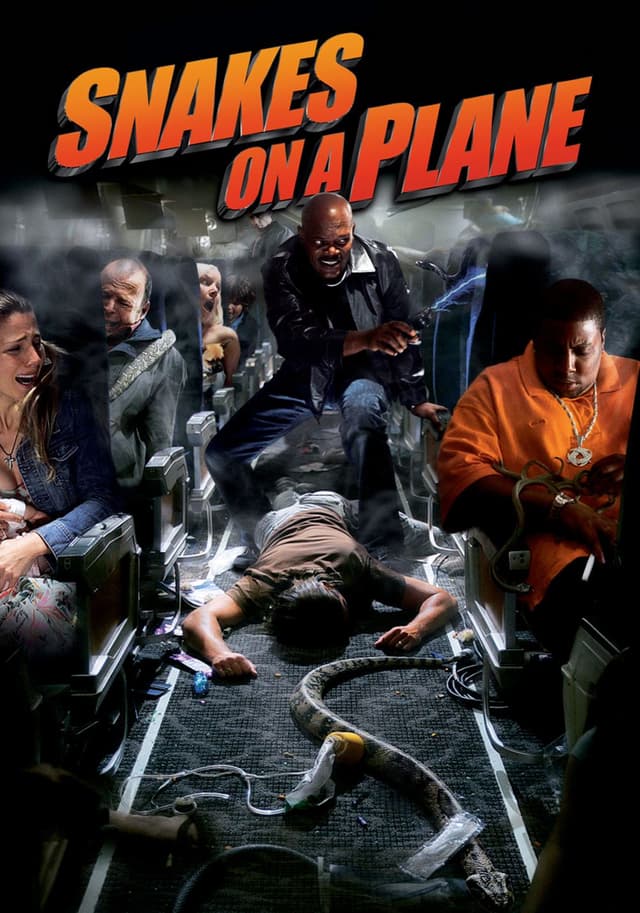
"Snakes on a Plane" is a thrilling action-adventure film that takes viewers on a wild ride through the skies. The story follows FBI agent Neville Flynn, portrayed by Samuel L. Jackson, who is tasked with escorting a witness to a high-profile trial. As the plane takes off, a sinister plot unfolds when a crate filled with venomous snakes is released on board, intended to eliminate the witness. Chaos ensues as the passengers and crew must band together to survive the deadly onslaught of snakes. With tension mounting and time running out, Flynn must find a way to regain control of the situation and ensure the safety of everyone on the flight. This film combines elements of horror, comedy, and action, making it a unique and unforgettable cinematic experience.
What Is the Budget of Snakes on a Plane?
Snakes on a Plane was produced on a budget of $33 million, a mid-range figure for a studio action thriller in 2006. New Line Cinema greenlit the project as a contained-location creature feature, banking on Samuel L. Jackson's star power and a high-concept premise that practically marketed itself.
What makes the budget story unusual is that production did not end with principal photography. After internet culture erupted around the film in late 2005 and early 2006, New Line commissioned approximately $2 million in additional reshoots to push the rating from PG-13 to R. Fans had lobbied loudly for a harder edge, and the studio listened, adding new scenes and the now-iconic line Jackson delivers before the film's climax.
The title itself has its own story. The film was briefly renamed "Pacific Air Flight 121" during production, but Jackson personally insisted the original title be restored. He had signed on specifically because of the title, telling the studio he would not promote a film called anything else. The title "Snakes on a Plane" returned, and it became one of the most discussed film titles in history before the movie even released.
Key Budget Allocation Categories
- Above-the-Line Talent: Samuel L. Jackson's fee anchored the budget, with his participation considered essential to the film's commercial viability. Julianna Margulies, returning to a high-profile role after ER, and a supporting cast including Kenan Thompson rounded out the above-the-line spend.
- Live Snake Wrangling and Animatronics: Approximately 450 real snakes were brought to set, requiring professional snake wranglers, veterinary supervision, and extensive safety protocols for cast and crew. The production also invested in CGI snakes and animatronic puppets for close-up attack sequences where live animals could not be safely used.
- Aircraft Set Construction: Rather than shooting on an actual decommissioned 747, the production built full-scale Boeing 747 cabin sets at Vancouver Film Studios in British Columbia. These sets needed to accommodate camera rigs, stunt work, and controlled snake release, making practical location shooting impractical.
- Reshoot Budget: The approximately $2 million reshoot campaign in March 2006 was unusual for being publicly acknowledged and driven entirely by audience demand before release. New Line added new scenes including the famous mid-film Jackson monologue in response to a fan petition and an internet campaign that had turned the film into a cultural phenomenon months before its premiere.
- Score and Music: Composer Trevor Rabin delivered an action-genre score, while the production commissioned "Snakes on a Plane (Bring It)" from Cobra Starship, a track that became part of the film's promotional machine and charted independently. The decision to build original music around the internet phenomenon was a deliberate marketing extension.
- Marketing: New Line found itself in the unusual position of having organic internet marketing do much of its work before a dollar was spent. Fan-created trailers, songs, blog posts, and novelty items flooded the web throughout 2005 and 2006. The studio supplemented this with traditional print and advertising expenditure while leaning into the grassroots energy rather than fighting it.
How Does Snakes on a Plane's Budget Compare to Similar Films?
Snakes on a Plane sits in the middle tier of studio creature features and contained-space thrillers from its era. These comparisons show how New Line's spend stacked up against similar productions:
- Anaconda (1997): Budget $45M | Worldwide $136M. The decade-earlier creature feature cost more and returned significantly more, partly because it faced no comparable internet-hype problem to live up to.
- Final Destination (2000): Budget $23M | Worldwide $112M. A leaner budget and a simpler kill-mechanics premise that spawned a franchise. Snakes on a Plane cost more for a comparable concept without matching the returns.
- Panic Room (2002): Budget $48M | Worldwide $197M. David Fincher's contained-space thriller cost nearly 50% more but grossed three times as much, demonstrating the ceiling for well-executed single-location thrillers with A-list talent.
- Deep Blue Sea (1999): Budget $60M | Worldwide $165M. A bigger-budget, bigger-scope aquatic creature feature that ultimately showed the genre's ceiling without franchise infrastructure behind it.
- The Grey (2012): Budget $25M | Worldwide $77M. A later survival-thriller with Liam Neeson built on similar animal-threat dynamics at a tighter budget and outgrossed Snakes on a Plane without the marketing tailwind.
Snakes on a Plane Box Office Performance
Snakes on a Plane opened on August 18, 2006 in 3,555 theaters, earning $15.25 million in its opening weekend. Industry analysts had projected anywhere from $20 million to $30 million based on the enormous internet attention the film had accumulated. The opening weekend was immediately characterized as a disappointment, with the gap between online enthusiasm and actual ticket sales becoming the story of the release.
Box Office Breakdown
Snakes on a Plane

Against a total investment of roughly $68 million, the worldwide theatrical gross of $62 million left the film short of theatrical break-even, returning approximately $0.91 for every dollar invested at the box office. Home video and television rights subsequently improved the financial picture considerably, and the film is generally considered to have reached profitability in ancillary markets.
New Line Cinema founder Robert Shaye called the result a "dud" at the time. The film became a widely cited case study in what analysts began calling the "hype gap": the phenomenon where internet enthusiasm, measured in pageviews, blog posts, and fan creations, does not convert to ticket sales at a predictable rate. Snakes on a Plane was not the first film to be hyped online, but it was the first where the internet campaign was so large and so visible that its failure to translate became a teachable moment for the entire industry.
Snakes on a Plane Production History
The concept originated with David Dalessandro, who developed the "Venom" script in 1992 after reading about the invasive brown tree snake populations in Indonesia. The premise was straightforward: snakes, deliberately released, on a commercial aircraft. Over the following decade, the project was submitted to more than thirty studios without success before New Line Cinema acquired it in 1999.
The film spent several years in development. Ronny Yu was originally attached to direct before David R. Ellis, who had helmed Final Destination 2, came aboard. Samuel L. Jackson signed on in 2004. His participation was considered crucial, and Jackson later told interviewers he agreed to do the film before reading a script, based on the title alone.
The story of how the film escaped Hollywood development and became a cultural event begins with a blog post. In August 2005, screenwriter Josh Friedman published a short, profane, and extremely funny reaction to the script he had been asked to do a quick rewrite on. The post spread rapidly across the early blogging world. By late 2005, "Snakes on a Plane" had become a shorthand phrase for absurdist inevitability, the idea of committing fully to a ridiculous premise without apology.
Fan-created content multiplied through 2005 and into 2006. Independent musicians recorded songs about the film. Bloggers created fake reviews. Fan trailers circulated. A petition gathered thousands of signatures demanding the film keep its title after it was temporarily retitled "Pacific Air Flight 121" for marketing research purposes. Jackson publicly refused the rename, and the original title was restored.
In March 2006, roughly five months before release, New Line took the extraordinary step of commissioning reshoots to upgrade the rating from PG-13 to R. The decision was made in direct response to the online campaign. Additional scenes were shot, including the line Jackson delivers in the film's third act, which had already been widely quoted online in its hypothetical form before it existed in any actual footage. Cobra Starship was commissioned to record "Snakes on a Plane (Bring It)" as a tie-in single. Production used approximately 450 live snakes on set at Vancouver Film Studios, with professional handlers on set throughout. The full-scale 747 cabin sets were built to allow controlled snake releases for filming.
The film released August 18, 2006, carrying expectations the internet had created and the box office could not meet.
Awards and Recognition
Snakes on a Plane earned 4 wins and 8 nominations across various award bodies, with recognition concentrated in genre and audience-voted categories.
At the 2007 MTV Movie Awards, the film received a nomination for Best Fight, acknowledging the climactic sequence in which Jackson confronts the snakes. The Teen Choice Awards nominated Samuel L. Jackson for Choice Movie Actor in a comedy category, reflecting the film's reception as partly comedic by mainstream audiences. The film also received nominations at the Saturn Awards, the genre-focused body that tracks science fiction, fantasy, and horror.
The Razzie Awards nominated Samuel L. Jackson for Worst Actor, though Jackson himself would likely have worn the nomination as a badge of honor given his stated enthusiasm for the project.
The formal awards tally understates the film's actual legacy. Snakes on a Plane is now studied in media and marketing programs as the first major example of social media driving a film campaign at scale. It predated Twitter and was built almost entirely on blogs, early YouTube, and message boards. The studio's decision to respond to fan demands with reshoots remains one of the most unusual production decisions of the 2000s. In that context, the film's cultural significance considerably exceeds its trophy count.
Critical Reception
Snakes on a Plane holds a 69% approval rating on Rotten Tomatoes based on 178 reviews, with an average score of 6.20 out of 10. The Metacritic score is 58 out of 100 based on 31 critics, indicating mixed to average reviews. CinemaScore audiences rated the film B-.
The Rotten Tomatoes critical consensus reads: "Snakes on a Plane lives up to its title, featuring snakes on a plane. It isn't perfect, but then again, it doesn't need to be."
Randy Cordova of the Arizona Republic called the film exactly what it advertised and praised Jackson's willingness to commit entirely to the premise without irony. Mick LaSalle of the San Francisco Chronicle noted that the film succeeded by understanding what audiences wanted from it and delivering without apology. Ty Burr of the Boston Globe wrote that Jackson was the only actor working who could make a line like the film's famous monologue feel like a legitimate dramatic moment. Peter Travers of Rolling Stone gave the film 1.5 out of 4 stars, arguing that the gap between the internet hype and the actual film made the viewing experience feel deflating by comparison.
The theatrical experience added a layer critics writing in advance of opening weekend could not fully account for. Audiences at midnight screenings and opening weekend shows treated the film as participatory entertainment, cheering, chanting, and delivering call-and-response to Jackson's key lines. The phenomenon was compared in some contemporary reviews to the Rocky Horror Picture Show tradition, a rare instance of a mainstream studio release generating genuine audience participation culture rather than passive consumption. This context shaped the film's lasting reputation more than any formal critical verdict.
Frequently Asked Questions
How much did Snakes on a Plane cost to make?
The production budget was $33,000,000. New Line Cinema produced the film, leveraging a viral internet marketing phenomenon that emerged organically months before release after the title and Samuel L. Jackson casting leaked.
How much did Snakes on a Plane earn at the box office?
The film grossed $34,020,814 domestically and $28,000,000 internationally, for a worldwide total of approximately $62,000,000. It opened to a soft $13,805,000 on August 18, 2006, well below pre-release tracking that had suggested a $20,000,000 to $30,000,000 opening.
What is the famous Samuel L. Jackson line from the film?
The line "I have had it with these motherfucking snakes on this motherfucking plane" was added during reshoots after fans demanded it during the viral marketing phase. The original cut had been rated PG-13 with milder dialogue, but New Line reshot scenes to add profanity and graphic content for the R rating fans expected.
Did internet hype affect the marketing?
Significantly. The film's viral popularity in 2005 and 2006 led to fan-made trailers, merchandise, and bloggers convincing the studio to add reshoots. New Line allocated unusually little official marketing spend, betting that internet word-of-mouth would carry the release. The strategy generated press but produced a softer-than-expected opening weekend.
Who directed Snakes on a Plane?
David R. Ellis directed the film. Ellis had previously directed Final Destination 2 (2003, $26,000,000 budget, $90,800,000 worldwide) and later directed The Final Destination (2009, $40,000,000 budget, $186,200,000 worldwide). He was a longtime stunt coordinator and second-unit director.
Where was Snakes on a Plane filmed?
Principal photography took place in Vancouver, British Columbia, taking advantage of Canadian federal and British Columbia provincial film tax credits. The interior aircraft sequences were shot on a custom Boeing 747 set constructed at a Vancouver soundstage.
How many real snakes were used in the film?
Approximately 450 real snakes were used in addition to animatronic and CGI versions for closer-up shots. Trainer Jules Sylvester managed the live snakes on set, with multiple species deployed for visual variety. Several scenes used both real and rubber snakes intercut to maximize density without overworking the live animals.
What did critics think of Snakes on a Plane?
Reviews were mixed, with a 68% approval rating on Rotten Tomatoes and a 58 out of 100 score on Metacritic. Critics embraced the film as deliberate camp entertainment, with several praising the film for delivering exactly what the title promised. Audiences gave it a B- CinemaScore.
Was Snakes on a Plane profitable?
Modestly. Against the $33,000,000 production budget and an estimated $25,000,000 in marketing spend, the worldwide gross of $62,000,000 produced a slim theatrical return. Home video sales were strong, particularly through the holiday 2006 window, bringing the film into clearer profitability.
Has Snakes on a Plane become a cult classic?
Yes. The film is widely cited in academic and industry discussions of viral marketing, fan participation in studio production decisions, and the limits of internet hype as a predictor of box office. It continues to enjoy strong streaming visibility and regular cable broadcast.
Filmmakers
Snakes on a Plane

Official Trailer
Build budgets like this one in Saturation
Start from an industry-standard feature film template, import the schedule and rates you already have, and let the cost report keep itself current as you spend. Real-time collaboration, no spreadsheets.