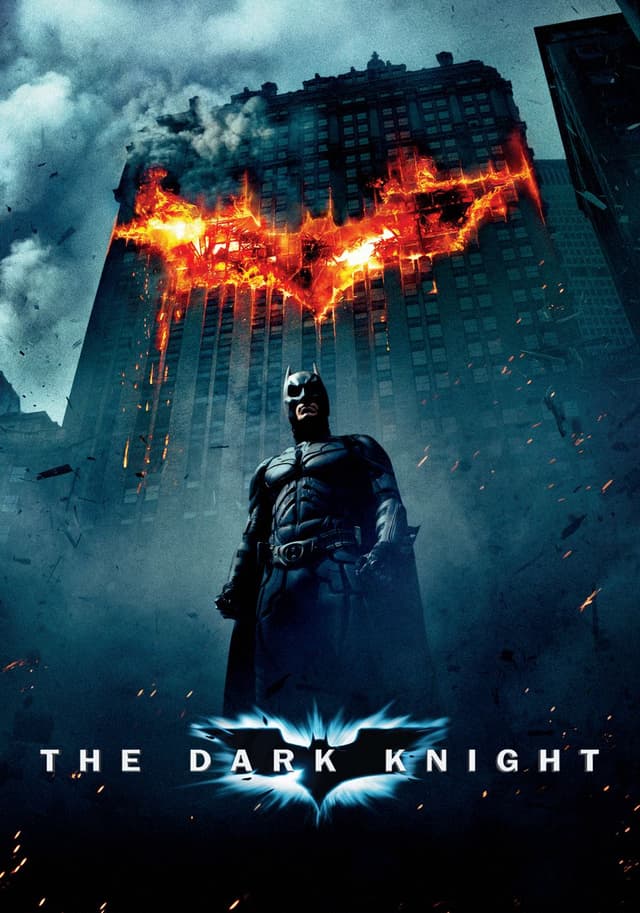
The Dark Knight Budget
 ActionCrimeThriller2h 32m
Updated
Synopsis
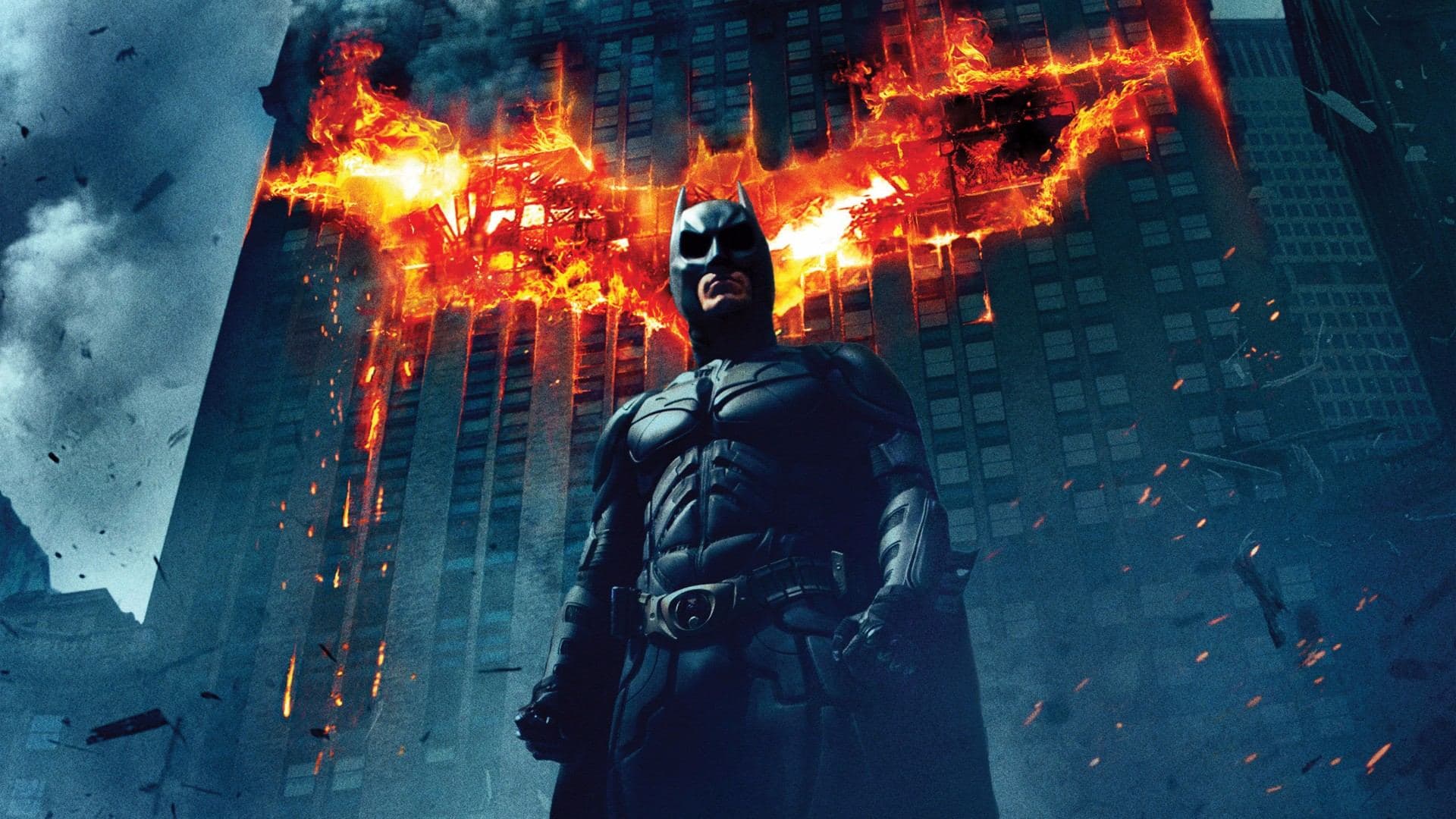
With Lieutenant Jim Gordon and new district attorney Harvey Dent, Batman sets out to dismantle Gotham City's organized crime, until the mob turns to the Joker, a criminal who wants only chaos. The Joker kills officials, causes the death of Rachel Dawes and drives a disfigured Dent to murder, and after Batman stops the Joker's final scheme, he takes the blame for Dent's crimes so the city can keep Dent as its hero.
What Is the Budget of The Dark Knight?
The Dark Knight (2008), directed by Christopher Nolan and co-financed by Warner Bros. Pictures and Legendary Pictures, had a production budget of $185,000,000. That is the figure Box Office Mojo and The Numbers both list, and the one given in The Art and Making of the Dark Knight Trilogy, the 2012 companion book to the films. It was $35,000,000 more than Nolan spent on his first Batman film three years earlier.
The cost was split down the middle. Legendary Pictures was a 50/50 partner with Warner Bros. on The Dark Knight, the Los Angeles Times reported, sharing half the film's profits, while Syncopy, the company run by Nolan and producer Emma Thomas, is credited as the production company. The money paid for a 127-day shoot across Chicago, England and Hong Kong that, according to the companion book, finished on November 15, 2007, on time and under budget. Warner Bros. has never published a final cost, so $185,000,000 is the figure used here.
Key Budget Allocation Categories
Warner Bros. has never released a line-item budget for The Dark Knight, but the production record shows where the money went.
- IMAX Photography: Nolan shot about 28 minutes of the film with IMAX cameras, the first major feature film to use them. Warner Bros. was initially reluctant, because the cameras were large and unwieldy and buying and processing IMAX film stock cost up to four times as much as standard 35mm.
- Practical Stunts and Effects: Special effects supervisor Chris Corbould's team flipped a full-size 18-wheel truck on LaSalle Street, built the Batpod from a design by production designer Nathan Crowley, and blew up a former Brach's candy factory on Cicero Avenue for the Gotham General Hospital explosion. Double Negative and Framestore produced about 700 visual effects shots, a low count for the genre because Nolan used computer-generated imagery only where a practical effect would not work.
- Chicago Location Shooting: Thirteen weeks in Chicago included three weeks of overnight closures on Wacker Drive for the truck chase, ferry facades built on barges at Navy Pier, and 800 extras moved through makeup and wardrobe in shifts to shoot the ferry sequence in a single day. The shoot was estimated to have generated $45,000,000 for the city's economy.
- Sets in England: Interiors were built at Pinewood Studios and in an airship hangar at Cardington Airfield in Bedfordshire, where the Bat Bunker set took six weeks to build. At Battersea Power Station in London, a listed building, the crew put up a false wall lined with explosives rather than risk damaging the structure.
- Costumes and Makeup: Costume designer Lindy Hemming and her team rebuilt the Batsuit from a stretch base covered in more than 100 urethane armor pieces so Christian Bale could move more freely. Prosthetics supervisor Conor O'Sullivan made the Joker's scars and John Caglione Jr. designed his makeup, work that earned the pair an Academy Award nomination for Best Makeup.
- Hong Kong Unit: The last nine days of the shoot were spent in Hong Kong, including aerial footage from the top of the International Finance Centre. A planned stunt of Batman leaping between skyscrapers was dropped after local authorities refused permission to use helicopters.
How Does The Dark Knight's Budget Compare to Similar Films?
At $185,000,000, The Dark Knight was one of the most expensive films of 2008, and it out-grossed every other release that year. Figures below are Box Office Mojo's, across all releases.
- Batman Begins (2005): Budget $150,000,000 | Worldwide $375,591,291. Nolan's first Batman film cost $35,000,000 less. The sequel grossed about 2.7 times as much worldwide and opened to more than three times the $48,745,440 that Batman Begins took in its first weekend.
- The Dark Knight Rises (2012): Budget $250,000,000 | Worldwide $1,085,429,692. The final film in the trilogy cost $65,000,000 more and grossed $77,131,913 more worldwide, but it earned less at home: $448,149,584 in the United States and Canada against The Dark Knight's $534,987,076.
- Indiana Jones and the Kingdom of the Crystal Skull (2008): Budget $185,000,000 | Worldwide $786,636,033. The same budget in the same year. Before the summer, Crystal Skull was the only 2008 release analysts expected to pass $300,000,000 easily; The Dark Knight finished $221,661,746 ahead of it worldwide.
- Iron Man (2008): Budget $140,000,000 | Worldwide $585,796,247. Marvel's first self-financed film opened eleven weeks earlier to $98,618,668. The Dark Knight cost $45,000,000 more and grossed $422,501,532 more.
- Spider-Man 3 (2007): Budget $258,000,000 | Worldwide $887,415,130. The Dark Knight broke its $151,116,516 opening weekend record while costing $73,000,000 less, and went on to gross $120,882,649 more worldwide.
The Dark Knight Box Office Performance
The Dark Knight opened in Australia and Taiwan on July 16, 2008, and in the United States and Canada on July 18, where it took $158,411,483 from a record 4,366 theaters. That was the biggest opening weekend on record at the time, ahead of Spider-Man 3, and the film also set records for the biggest single day and the biggest midnight opening. It reached $400,000,000 domestically in 18 days and $500,000,000 in 45, both the fastest on record. After a 300-theater relaunch in late January 2009, timed to the Academy Award nominations, it closed on March 5, 2009, after 33 weeks with $533,345,358, second only to Titanic (1997) among domestic grosses at the time.
Its original run earned $1,003,845,358 worldwide, making The Dark Knight the highest-grossing film of 2008, the first superhero film to pass $1,000,000,000 and the fourth film of any kind to do so. Warner Bros. chose not to release it in China. Re-releases between 2012 and 2026 have added $4,452,421, for an all-releases total of $534,987,076 in the United States and Canada, $473,310,703 internationally and $1,008,297,779 worldwide, according to Box Office Mojo. That total leaves out $182,750 that Box Office Mojo lists under a 2026 re-release in Turkey, because the entry appears to repeat the market's cumulative gross from the original run rather than record new ticket sales; Box Office Mojo's unadjusted figure is $1,008,480,529.
Warner Bros. has never disclosed what it spent on prints and advertising. The campaign itself is well documented: the "Why So Serious?" alternate reality game built by 42 Entertainment began in May 2007, more than a year before release.
Box Office Breakdown
The Dark Knight

The Dark Knight earned 53% of its total in the United States and Canada, a higher home share than Indiana Jones and the Kingdom of the Crystal Skull (40%) or Spider-Man 3 (38%); outside North America its biggest market was the United Kingdom, followed by Australia, Germany and France. Its worldwide gross was more than five times its production budget. The film kept earning on disc: it sold 3 million DVD and Blu-ray copies on its launch day in the United States, Canada and the United Kingdom, had sold 16 million DVDs by 2011 according to the Los Angeles Times, and The Numbers estimates its domestic DVD and Blu-ray sales at $301,042,168.
Without a disclosed marketing figure, no total investment, net return, ROI or per-dollar return can be calculated for The Dark Knight.
The Dark Knight Production History
Warner Bros. made a sequel a priority after Batman Begins (2005), although Nolan had not planned one and was unsure the first film would do well enough to justify it. Development began after he finished The Prestige (2006). Nolan and David S. Goyer spent three months on the core plot, built around escalation: Batman's war on ordinary crime provokes a criminal like the Joker, who uses terror as a weapon. Jonathan Nolan spent six months turning the story into a draft, and the brothers wrote the final script over another six months of pre-production, drawing on Heat (1995) and the comic series The Long Halloween and making Harvey Dent the story's central figure.
Heath Ledger's casting as the Joker in 2006 was criticized by some in the industry and by fans; Charles Roven said Ledger was the only actor seriously considered. Ledger spent about a month secluded in a hotel room reading comic books, built the Joker's voice by mixing high and low pitches, and kept a "Joker diary" of images and ideas. Josh Lucas, Ryan Phillippe, Mark Ruffalo and Matt Damon were considered for Dent before Nolan cast Aaron Eckhart, and Maggie Gyllenhaal replaced Katie Holmes as Rachel Dawes after Holmes chose to make Mad Money (2008) instead.
Scouts looked at Liverpool, Glasgow, London, Yorkshire and several American cities before Nolan settled on Chicago, Illinois, which he had used for Batman Begins. Principal photography began there on April 18, 2007, under the cover title "Rory's First Kiss", with the bank heist prologue shot over five days in the Old Chicago Main Post Office; it was scheduled first to test the IMAX process, and each batch of footage took four days to process. The production moved to England in May, returned to Chicago from June to September 1 for the truck chase and the hospital explosion, went back to England from mid-September to the end of October, and finished with nine days in Hong Kong.
Ledger died of an accidental prescription drug overdose in January 2008, aged 28, while the film was being edited. His work was complete, because Nolan preferred to record dialogue on set rather than replace it in post-production, and Nolan did not change the Joker's story. He dedicated the film to Ledger and to stuntman Conway Wickliffe, who was killed during rehearsals for a Tumbler stunt. Nolan and editor Lee Smith cut the film to 152 minutes, and Hans Zimmer and James Newton Howard recorded the score partly at AIR Lyndhurst in London. The Dark Knight premiered in IMAX in New York on July 14, 2008, and the trilogy concluded with The Dark Knight Rises in 2012.
Awards and Recognition
The Dark Knight won two Academy Awards from eight nominations, and its absence from the Best Picture race changed how the Oscars are run.
- Academy Awards: Won Best Supporting Actor for Heath Ledger, awarded posthumously, and Best Sound Editing for Richard King at the 81st Academy Awards. It was also nominated for Art Direction, Cinematography, Film Editing, Makeup, Sound Mixing and Visual Effects.
- Golden Globe Awards: Ledger won Best Supporting Actor.
- British Academy Film Awards: Nine nominations, with Ledger winning Best Actor in a Supporting Role.
- Screen Actors Guild Awards: Won both of its nominations, Outstanding Supporting Actor for Ledger and Outstanding Stunt Ensemble.
- Grammy Awards: Hans Zimmer and James Newton Howard won Best Score Soundtrack Album.
- Saturn Awards: Won five of eleven nominations, including Best Action, Adventure or Thriller Film, Best Writing for Jonathan and Christopher Nolan, and Best Special Effects.
- Guild Nominations: Nominated by the Directors Guild, Producers Guild and Writers Guild of America.
Ledger was only the second performer to win an acting Oscar posthumously, after Peter Finch, and The Dark Knight became the first comic book adaptation to win an acting Oscar. When The Dark Knight was left out of Best Picture, the Academy expanded the category from five nominees to ten the following year, a change known as "The Dark Knight rule." The American Film Institute named it one of the ten best films of 2008, and in 2020 the Library of Congress selected it for the National Film Registry.
Critical Reception
The Dark Knight received critical acclaim. It holds 94% on Rotten Tomatoes from 339 critics, with an average rating of 8.9/10, and a Metacritic score of 85 out of 100 from 41 critics, indicating universal acclaim. Audiences polled by CinemaScore gave it an A. The Rotten Tomatoes consensus reads: "Dark, complex, and unforgettable, The Dark Knight succeeds not just as an entertaining comic book film, but as a richly thrilling crime saga."
Roger Ebert gave the film four out of four stars, opening his review: "'Batman' isn't a comic book anymore. Christopher Nolan's 'The Dark Knight' is a haunted film that leaps beyond its origins and becomes an engrossing tragedy." He added that "this film, and to a lesser degree 'Iron Man,' redefine the possibilities of the 'comic-book movie.'" Manohla Dargis of The New York Times made it a Critic's Pick, writing that it "goes darker and deeper than any Hollywood movie of its comic-book kind" and that it showed American movies had "entered a new era of ambivalence when it comes to their heroes."
The main dissent came from David Denby of The New Yorker, who wrote that the film "has been made in a time of terror, but it's not fighting terror; it's embracing and unleashing it," though even he singled out "the sinister and frightening performance of the late Heath Ledger." That performance was the one point nearly every review agreed on, while Christian Bale's Batman drew more mixed notices. The film has since been ranked among the best of the century, placing 28th on The New York Times list of the 100 best movies of the 21st century in 2025.
Frequently Asked Questions
How much did it cost to make The Dark Knight (2008)?
The Dark Knight had a production budget of $185,000,000, the figure listed by Box Office Mojo and The Numbers. Warner Bros. and Legendary Pictures co-financed it as 50/50 partners, and neither has published a final cost or its marketing spend.
How much did The Dark Knight (2008) make at the box office?
The Dark Knight has grossed $1,008,297,779 worldwide across all releases, including $534,987,076 in the United States and Canada and $473,310,703 internationally, according to Box Office Mojo. Its original 2008 and 2009 run earned $1,003,845,358, and re-releases added the rest. Saturation leaves out a $182,750 Turkish entry that repeats the original run, so Box Office Mojo's own all-releases figure reads $1,008,480,529.
Was The Dark Knight (2008) profitable?
Yes, although the exact profit has never been published. It grossed $1,008,297,779 worldwide, more than five times its $185,000,000 production budget, and by 2011 had sold 16 million DVDs, according to the Los Angeles Times. Warner Bros. never disclosed its marketing spend, so a net return or ROI cannot be calculated from public figures.
How much did The Dark Knight make on its opening weekend?
The Dark Knight opened to $158,411,483 from a record 4,366 theaters in the United States and Canada on the weekend of July 18, 2008. That broke the opening record of $151,116,516 set by Spider-Man 3, and the film went on to reach $400,000,000 domestically in 18 days.
Who paid for The Dark Knight?
Warner Bros. Pictures and Legendary Pictures co-financed The Dark Knight as 50/50 partners, according to the Los Angeles Times, so each took half the profits. Syncopy, the company run by Christopher Nolan and Emma Thomas, is credited as the production company, and Warner Bros. distributed the film.
How much of The Dark Knight was filmed in IMAX?
About 28 minutes, roughly 15 to 20 percent of the film, making The Dark Knight the first major feature shot partly with IMAX cameras. IMAX film stock and processing cost up to four times as much as standard 35mm, and the bank heist prologue was shot first to test the process.
Where was The Dark Knight (2008) filmed?
Mostly in Chicago, which stood in for Gotham City for thirteen weeks, with sets at Pinewood Studios and Cardington Airfield in England, London locations including Battersea Power Station, and a final nine days in Hong Kong. Filming ran from April 18 to November 15, 2007.
How does The Dark Knight's budget compare to Batman Begins and The Dark Knight Rises?
Batman Begins (2005) cost $150,000,000 and grossed $375,591,291 worldwide. The Dark Knight cost $185,000,000 and grossed $1,008,297,779. The Dark Knight Rises (2012) cost $250,000,000 and grossed $1,085,429,692, the most of the three, but The Dark Knight had the biggest domestic run at $534,987,076. All figures are Box Office Mojo's.
What awards did The Dark Knight win?
The Dark Knight won two Academy Awards from eight nominations: Best Supporting Actor for Heath Ledger, awarded posthumously, and Best Sound Editing for Richard King. Ledger also won the Golden Globe, BAFTA and Screen Actors Guild awards, and Hans Zimmer and James Newton Howard won a Grammy for the score.
Who directed The Dark Knight and who were the key crew members?
Christopher Nolan directed and wrote the screenplay with Jonathan Nolan, from a story by Christopher Nolan and David S. Goyer. Emma Thomas, Charles Roven and Christopher Nolan produced, Wally Pfister was cinematographer, Lee Smith edited, and Hans Zimmer and James Newton Howard composed the score.
Filmmakers
The Dark Knight

Official Trailer
Build budgets like this one in Saturation
Start from an industry-standard feature film template, import the schedule and rates you already have, and let the cost report keep itself current as you spend. Real-time collaboration, no spreadsheets.