Solo: A Star Wars Story Budget
 Science FictionAdventureAction2h 15m
Updated
Synopsis
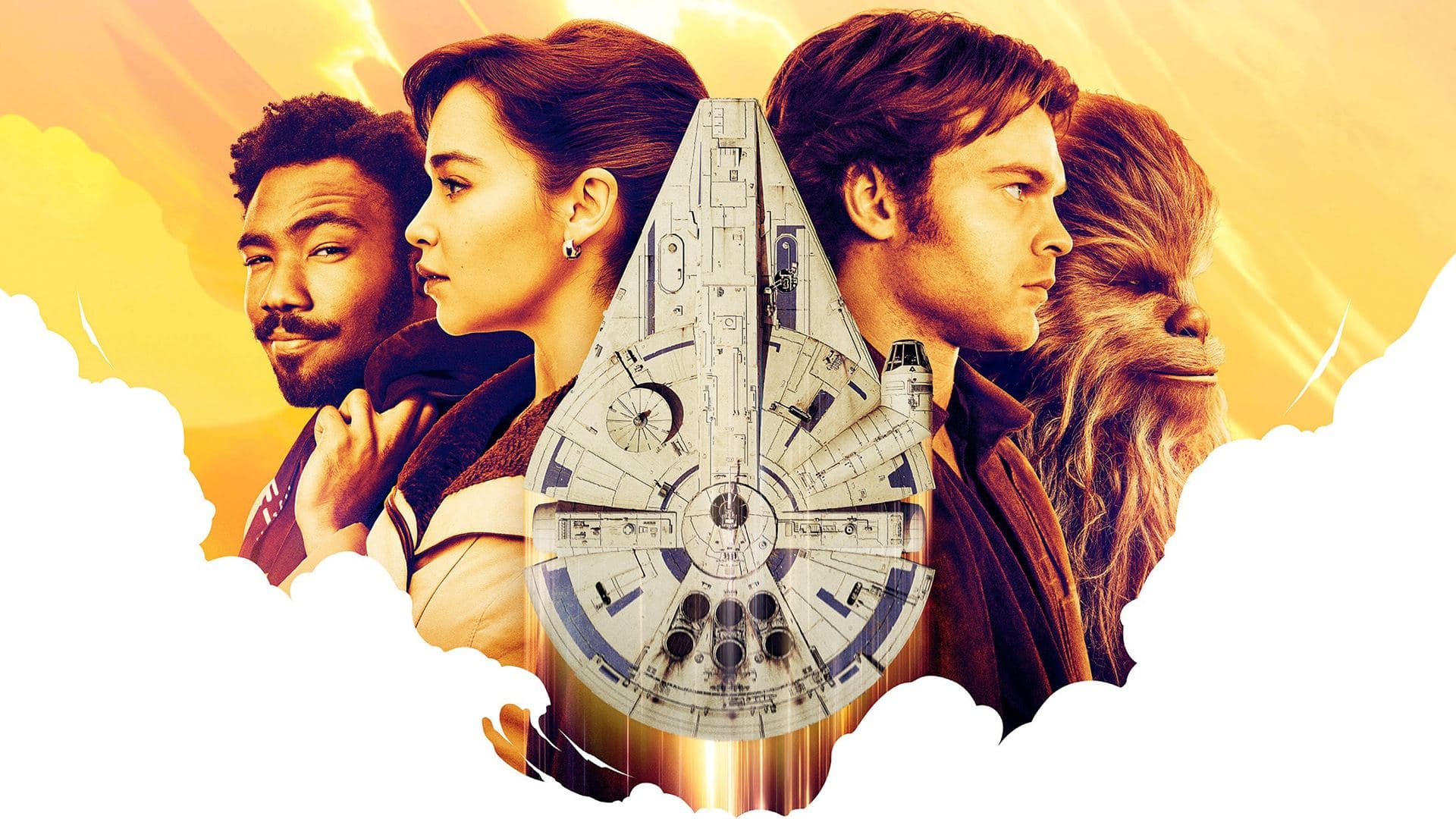
Young Han Solo escapes the shipyards of Corellia and joins a crew of smugglers led by the experienced outlaw Tobias Beckett. After a heist goes wrong, Han finds himself indebted to crime lord Dryden Vos and must pull off a dangerous mission to steal unprocessed coaxium fuel from the mines of Kessel. Along the way, he reunites with childhood love Qi'ra, befriends the Wookiee Chewbacca, and wins the Millennium Falcon from the charming gambler Lando Calrissian in a game of Sabacc.
What Is the Budget of Solo: A Star Wars Story?
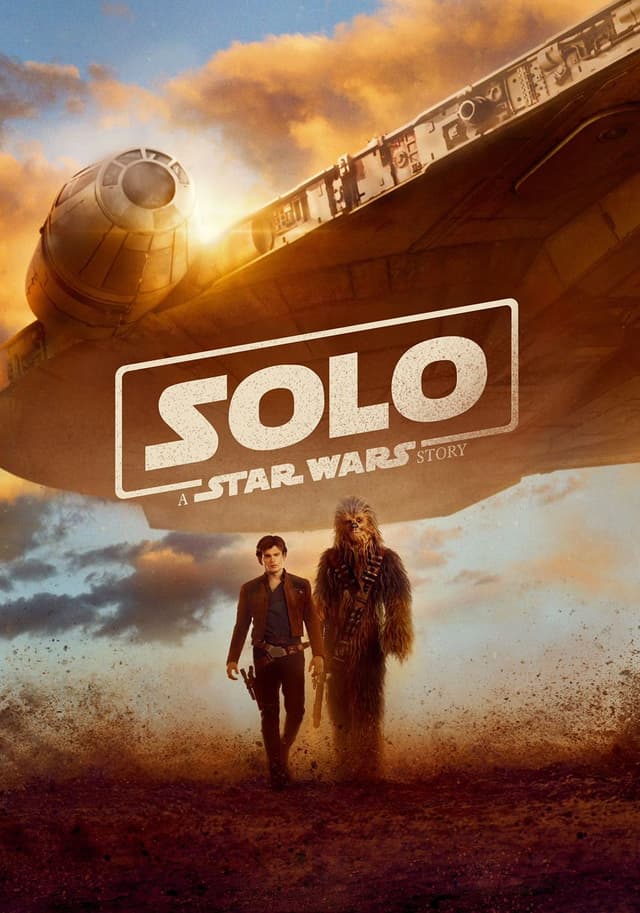
Solo: A Star Wars Story (2018), directed by Ron Howard and distributed by Walt Disney Studios Motion Pictures, was produced on a budget of $275,000,000. The film explored the origin story of Han Solo, one of cinema's most beloved characters, depicting his early adventures as a young smuggler on the planet Corellia, his first meeting with Chewbacca, his acquisition of the Millennium Falcon from Lando Calrissian, and the infamous Kessel Run. Alden Ehrenreich starred as the young Han Solo, with Donald Glover as Lando Calrissian, Woody Harrelson as mentor figure Tobias Beckett, and Emilia Clarke as childhood friend Qi'ra.
The $275 million budget made Solo one of the most expensive Star Wars films ever produced, a figure inflated dramatically by a troubled production that saw original directors Phil Lord and Christopher Miller fired midway through principal photography and replaced by Ron Howard. Howard reshot approximately 70% of the film over several months, effectively restarting the production while retaining sets, cast, and some completed footage. The reshoot costs pushed the budget well beyond the original $150 million to $175 million estimate.
Key Budget Allocation Categories
Solo: A Star Wars Story allocated its $275 million budget across several major production areas:
- Directorial Transition and Reshoots: The firing of Phil Lord and Christopher Miller in June 2017, roughly four and a half months into principal photography, and the subsequent hiring of Ron Howard to reshoot approximately 70% of the film represents the single largest factor in the budget escalation. Lord and Miller's improvisational directing style clashed with Lucasfilm president Kathleen Kennedy's vision for the film, and Lawrence Kasdan, who co-wrote the screenplay with his son Jonathan Kasdan, reportedly expressed concerns that the directors were deviating too far from his script. Howard brought a more traditional approach, reshooting the majority of scenes between July and October 2017.
- Visual Effects and Creature Design: Industrial Light & Magic provided the visual effects, creating environments including the Kessel Run maelstrom, the mining planet Kessel, the Mimban battlefield, and the train heist on Vandor-1. The Kessel Run sequence required complex space environment simulation, while the L3-37 droid character blended practical on-set performance by Phoebe Waller-Bridge with digital augmentation. The Sabacc game scenes, the coaxium heist, and the Conveyex train robbery each demanded extensive VFX work.
- Production Design and Practical Sets: Production designer Neil Lamont built extensive practical sets at Pinewood Studios in England, including Han's Corellian shipyard environment, the interior of the Millennium Falcon (rebuilt from scratch for the film), the Lodge cantina, and the Kessel mine interiors. The practical approach, which emphasized tangible environments over green-screen stages, increased costs but produced the textured, lived-in aesthetic that Star Wars fans expect.
- Cast and Above-the-Line Talent: The ensemble included Alden Ehrenreich, who was cast after an extensive search for someone to embody young Han Solo, Donald Glover as Lando Calrissian, Woody Harrelson, Emilia Clarke, Thandiwe Newton, Paul Bettany (who replaced Michael K. Williams when reshoots required recasting due to scheduling conflicts), and Joonas Suotamo as Chewbacca. Ron Howard's directing fee was layered on top of Lord and Miller's existing contracts, and Lawrence Kasdan's screenplay deal reflected his legacy status as the writer of The Empire Strikes Back and Return of the Jedi.
- Location Photography: While the majority of filming took place at Pinewood Studios, the production also shot on location in the Canary Islands (doubling for the Savareen beach planet), Italy (for Corellia exteriors), and the Scottish Highlands. The location work added logistical complexity and transportation costs to an already expensive production.
- Score and Sound Design: John Powell composed the original score, incorporating John Williams' newly composed "Han Solo theme" that Williams wrote specifically for the film. Powell's score blended Williams' classic Star Wars musical language with Powell's own action-oriented style, requiring extensive orchestral recording sessions.
How Does Solo's Budget Compare to Similar Films?
At $275,000,000, Solo stands as one of the most expensive Star Wars films and one of the costliest franchise prequels/spinoffs in cinema history:
- Rogue One: A Star Wars Story (2016): Budget $200,000,000 | Worldwide $1,056,100,000. The first Star Wars spinoff cost 27% less and earned nearly triple Solo's worldwide gross, demonstrating that Star Wars spinoffs could achieve tentpole-level returns when execution and audience interest aligned.
- Star Wars: The Last Jedi (2017): Budget $200,000,000 | Worldwide $1,332,500,000. Released just five months before Solo, The Last Jedi's divisive reception among fans is widely cited as a contributing factor to Solo's underperformance, as franchise fatigue and audience discontent suppressed enthusiasm for another Star Wars film so soon.
- Star Wars: The Rise of Skywalker (2019): Budget $275,000,000 | Worldwide $1,074,100,000. The same budget as Solo but delivered nearly triple the worldwide gross, illustrating that main saga entries retained commercial pull even after The Last Jedi controversy.
- Indiana Jones and the Dial of Destiny (2023): Budget $295,000,000 | Worldwide $384,200,000. Another Lucasfilm legacy character origin/sequel that overspent and underperformed, suggesting a pattern of budget discipline challenges on properties rooted in Harrison Ford-era nostalgia.
- Bumblebee (2018): Budget $102,000,000 | Worldwide $468,000,000. Paramount's Transformers spinoff cost 63% less than Solo and earned 19% more worldwide, showing that franchise spinoffs can succeed at disciplined budget levels.
Solo: A Star Wars Story Box Office Performance
Solo: A Star Wars Story opened in the United States on May 25, 2018, debuting to $84.4 million domestically over the three-day Memorial Day weekend ($103 million over the four-day holiday). While respectable in absolute terms, the opening was the lowest for any Disney-era Star Wars film and fell well below industry tracking estimates of $130 million to $150 million. The film was released just five months after The Last Jedi, the shortest gap between Star Wars theatrical releases in the franchise's history.
Box Office Breakdown
Solo: A Star Wars Story

At approximately +43%, Solo: A Star Wars Story returned roughly $1.43 for every $1 of production budget invested during its theatrical run.
Solo became the first Star Wars film widely considered a box office disappointment, with its $393.2 million worldwide falling well short of the estimated $500 million to $550 million needed to break even after marketing costs. The international gross of $179.4 million (46% of worldwide) was particularly weak for a Star Wars release, reflecting franchise fatigue just five months after The Last Jedi and audience indifference to a Han Solo origin story. Lucasfilm subsequently shelved plans for additional standalone Star Wars films.
Solo: A Star Wars Story Production History
The project originated with screenwriter Lawrence Kasdan, who had co-written The Empire Strikes Back (1980) and Return of the Jedi (1983). Kasdan agreed to write The Force Awakens (2015) for Lucasfilm on the condition that the studio greenlight a Han Solo origin film, a story he had wanted to tell for decades. Kasdan co-wrote the Solo screenplay with his son Jonathan Kasdan, crafting a story set approximately ten years before the events of A New Hope.
Phil Lord and Christopher Miller, known for The Lego Movie (2014) and 21 Jump Street (2012), were hired to direct in 2015. Their improvisational comedy style, which encouraged actors to ad-lib and deviate from the script, increasingly clashed with Lucasfilm's production oversight and with Lawrence Kasdan's attachment to his screenplay. After months of escalating tensions, Lucasfilm fired Lord and Miller on June 20, 2017, roughly four and a half months into what had been planned as a five-month shoot.
Ron Howard was announced as replacement director on June 22, 2017, just two days later. Howard reshot approximately 70% of the film over the following months, bringing a more conventional filmmaking approach that aligned with Kasdan's script and Lucasfilm's expectations. The reshoot scope was extraordinary by any standard, essentially constituting a second production layered on top of the first, and drove the budget from the original estimate of $150 million to $175 million up to the final $275 million.
Alden Ehrenreich's casting as Han Solo followed a search that reportedly saw over 3,000 actors audition. Ehrenreich also received an acting coach on set, a detail reported by multiple outlets that suggested Lucasfilm had concerns about his embodiment of the iconic character. Donald Glover's casting as young Lando Calrissian was met with enthusiastic audience reception and remains one of the film's most praised elements.
Awards and Recognition
Solo: A Star Wars Story received an Academy Award nomination for Best Visual Effects at the 91st Oscars, losing to First Man. The nomination recognized ILM's work on the Kessel Run maelstrom, the Mimban battlefield, and the overall environmental design of the Star Wars underworld.
The film earned a Saturn Award nomination for Best Science Fiction Film. Bradford Young's cinematography, which employed a distinctively dark and desaturated palette unusual for Star Wars, drew attention from cinematography professionals, though some audiences and critics felt the visual approach was too murky for theatrical viewing, particularly in 3D and poorly calibrated auditoriums.
Critical Reception
Solo: A Star Wars Story earned a 69% approval rating on Rotten Tomatoes based on 412 reviews, with a consensus describing it as "a visually appealing, well-acted adventure that serves as a fun summer diversion but lacks the gravitas of the saga entries." On Metacritic, the film scored 62 out of 100, indicating "generally favorable reviews." Audiences gave it an A- on CinemaScore, suggesting that those who did see the film largely enjoyed it.
Positive reviews praised Donald Glover's charismatic take on Lando Calrissian, the chemistry between Ehrenreich and Suotamo's Chewbacca, and Ron Howard's steady direction of the action sequences, particularly the Kessel Run and Conveyex train heist. The film's world-building, which depicted the criminal underworld of the Star Wars galaxy with texture and personality, was cited as one of its strongest elements.
Negative reviews focused on the inherent challenge of recasting one of cinema's most iconic characters, arguing that Ehrenreich, while competent, could not escape Harrison Ford's shadow. Critics also noted that the film's fan-service approach, explaining the origins of Han's name, his blaster, his dice, and the Kessel Run boast, reduced the character's mystery without adding proportionate depth. The broader conversation around Solo centered less on the film's quality and more on the strategic questions it raised about Star Wars oversaturation, release timing, and the limits of franchise expansion.
Frequently Asked Questions
How much did it cost to make Solo: A Star Wars Story?
The production budget was $275,000,000. The cost escalated dramatically from an original estimate of $150 million to $175 million after directors Phil Lord and Christopher Miller were fired midway through shooting and Ron Howard was hired to reshoot approximately 70% of the film.
How much did Solo: A Star Wars Story earn at the box office?
The film grossed $213,800,000 domestically and $179,400,000 internationally, totaling $393,200,000 worldwide. It opened with $84.4 million domestically over three days, the lowest opening for any Disney-era Star Wars film.
Was Solo: A Star Wars Story a box office flop?
Yes. With a $275 million production budget and estimated $150 million in marketing, Solo needed approximately $550 million to $650 million to break even. Its $393.2 million worldwide gross fell far short, and Disney reportedly absorbed a loss of $50 million to $80 million.
Why were the original directors of Solo fired?
Phil Lord and Christopher Miller were fired in June 2017 after roughly four and a half months of filming. Their improvisational comedy style clashed with Lucasfilm's production expectations and with screenwriter Lawrence Kasdan's attachment to his script. Ron Howard was hired two days later and reshot approximately 70% of the film.
Where was Solo: A Star Wars Story filmed?
Principal photography took place at Pinewood Studios in England, with location work in the Canary Islands (doubling for the Savareen planet), Italy (Corellia exteriors), and the Scottish Highlands. The production ran from January 2017 through October 2017, encompassing both the Lord/Miller and Howard shoots.
Who plays Han Solo in Solo: A Star Wars Story?
Alden Ehrenreich plays young Han Solo after a search that reportedly saw over 3,000 actors audition. While Ehrenreich received generally positive reviews for his performance, many critics noted the inherent challenge of stepping into a role so closely associated with Harrison Ford.
How does Solo compare to Rogue One at the box office?
Solo earned $393.2 million worldwide on a $275 million budget, while Rogue One earned $1,056,100,000 on a $200 million budget. Rogue One cost 27% less and earned nearly triple Solo's worldwide gross, suggesting that Star Wars spinoffs can succeed when the concept resonates more strongly with audiences.
Did Solo's failure affect future Star Wars plans?
Yes. After Solo's underperformance, Lucasfilm shelved multiple planned spinoff films and pivoted toward Disney+ series like The Mandalorian and Andor as the primary vehicle for Star Wars stories outside the main saga.
What is Solo's Rotten Tomatoes score?
Solo earned a 69% approval rating on Rotten Tomatoes and a 62 on Metacritic. Audiences gave it an A- CinemaScore, suggesting that those who saw the film generally enjoyed it despite the broader commercial disappointment.
Who composed the music for Solo: A Star Wars Story?
John Powell composed the original score, incorporating a new "Han Solo theme" written by John Williams specifically for the film. Powell blended Williams' classic Star Wars musical language with his own action-oriented style.
Filmmakers
Solo: A Star Wars Story

Official Trailer
Build budgets like this one in Saturation
Start from an industry-standard feature film template, import the schedule and rates you already have, and let the cost report keep itself current as you spend. Real-time collaboration, no spreadsheets.