WALL-E Budget
 AnimationFamilyScience Fiction1h 38m
Updated
Synopsis
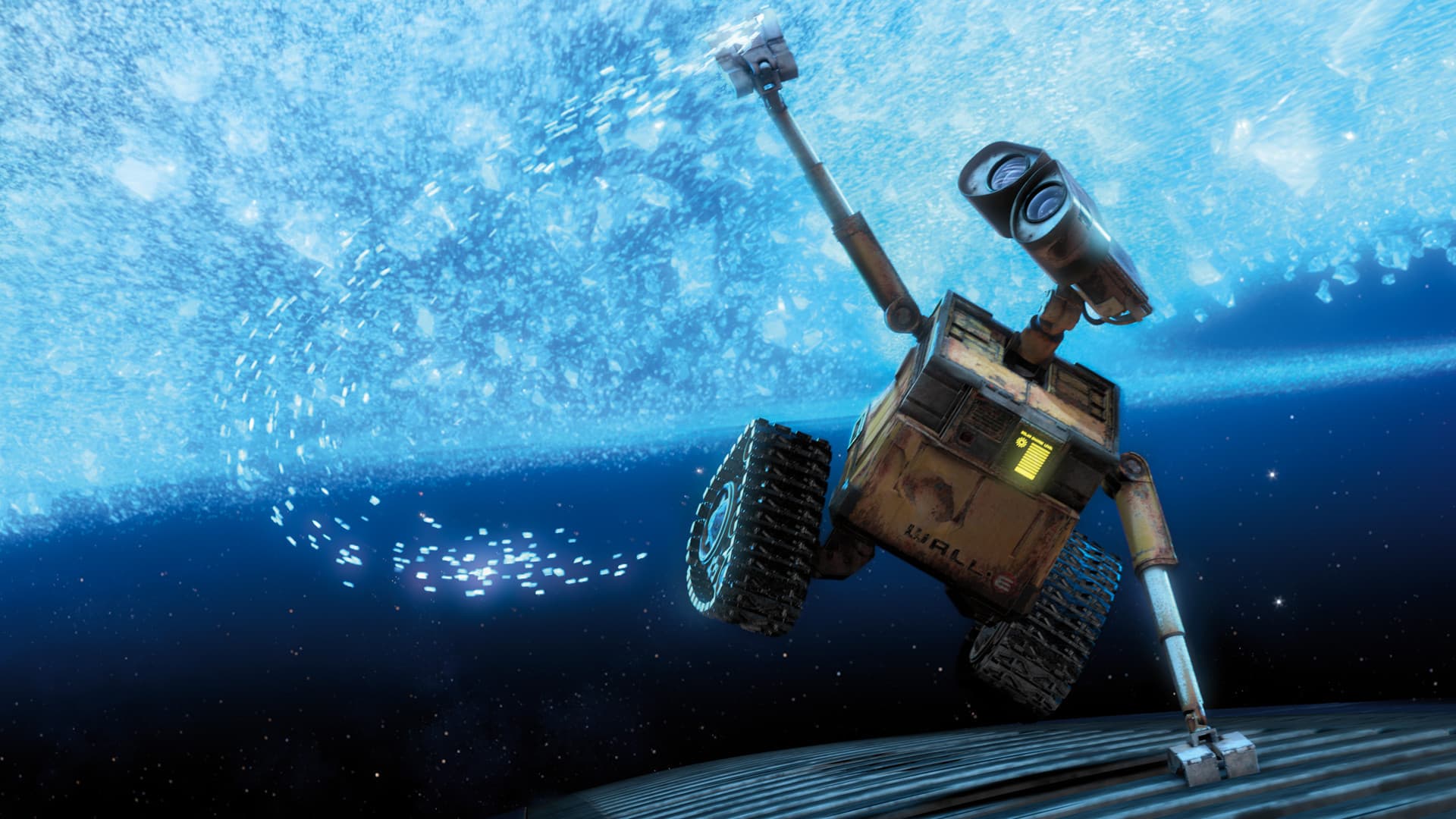
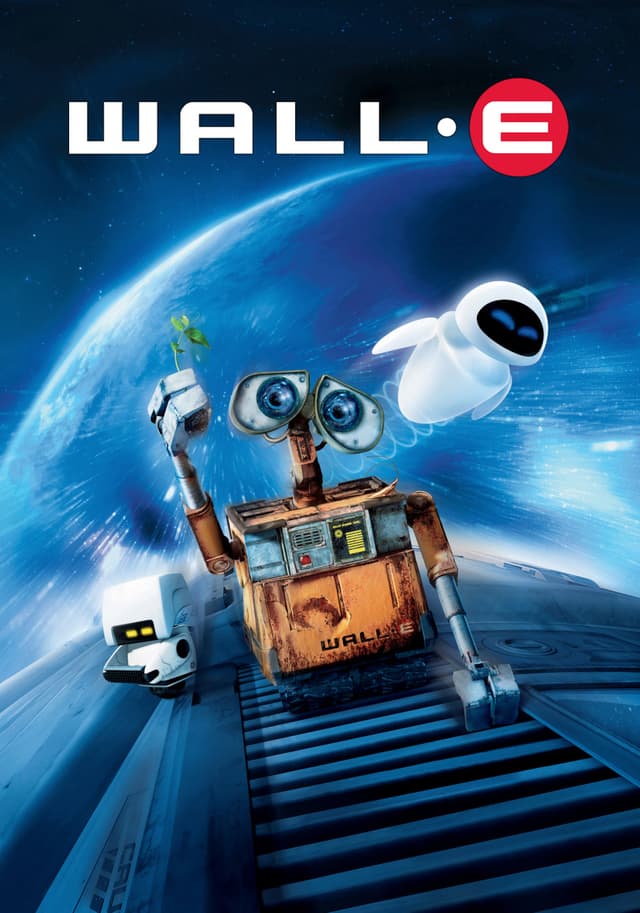
In the 29th century, Earth has been abandoned after centuries of unchecked consumerism left the planet buried in garbage. A single trash-compacting robot, WALL-E (Waste Allocation Load Lifter Earth-class), continues his directive alone, having developed a personality and a collection of human artifacts over 700 years of solitude. When a sleek probe robot named EVE arrives searching for signs of sustainable plant life, WALL-E falls in love and follows her back to the Axiom, a massive starship where the remnants of humanity have devolved into obese, screen-addicted passengers dependent on automation. WALL-E's discovery of a living plant triggers a chain of events that pits the ship's AI autopilot against the human captain, ultimately leading humanity to return to Earth and begin the slow work of restoration.
What Is the Budget of WALL-E?
WALL-E (2008), directed by Andrew Stanton and distributed by Walt Disney Studios Motion Pictures, was produced by Pixar Animation Studios on a budget of $180,000,000. Jim Morris produced the film, which was Pixar's ninth feature and a radical departure in both narrative approach and visual design. The budget reflects the scale of a production that required 125,000 storyboards (compared to Pixar's typical 75,000), new rendering technology for photorealistic lighting, and a sound design pipeline that produced over 2,500 original sounds.
At $180 million, WALL-E was one of the most expensive animated films of its era, reflecting both the technical ambition of the project and Pixar's position as the premium animation studio in the industry. The film's distinctive visual approach, combining near-photorealistic environments with stylized character animation, required consulting with cinematographer Roger Deakins and visual effects pioneer Dennis Muren on lighting and camera techniques that had never been applied to animation at this scale.
Key Budget Allocation Categories
WALL-E's $180 million budget was distributed across the technical and creative demands of a uniquely ambitious animated production:
- Sound Design and Voice Performance: Sound designer Ben Burtt, famous for creating the voices of R2-D2 and E.T., recorded over 2,500 original sounds for the film. Every mechanical movement, environmental ambience, and character vocalization was custom-built. Burtt also performed the vocal elements for both WALL-E and M-O, using a combination of his own voice processed through electronic manipulation and recordings of vintage machinery, including a hand-cranked 1950s electrical generator purchased on eBay.
- Environmental Design and Visual Research: The production team visited recycling stations and NASA's Jet Propulsion Laboratory to study real-world parallels for the film's two primary environments: the trash-covered Earth and the sterile Axiom starship. Production designer Ralph Eggleston studied the abandoned city of Chernobyl and the urban landscape of Sofia, Bulgaria, to create the decayed Earth aesthetic. Building these two visually distinct worlds at photorealistic quality represented a major portion of the budget.
- Cinematography and Lighting Pipeline: Pixar brought in Roger Deakins as a visual consultant and Dennis Muren to advise on realistic lighting techniques. The team used vintage 1970s Panavision camera profiles to replicate the subtle imperfections of handheld live-action photography, including lens distortion and rack focus. Cinematographers Jeremy Lasky and lighting lead Danielle Feinberg developed a pipeline that simulated natural light behavior at a level of fidelity beyond any previous Pixar production.
- Character Animation and Rigging: WALL-E's binocular-inspired eyes required custom rigging to convey emotion through subtle zoom lens adjustments, a system that demanded extensive R&D. EVE's sleek iPod-inspired design, approved by Apple designer Jonathan Ive, required a different animation approach based on smooth gestures rather than facial expressions. The film's human characters were modeled on sea lions and babies to convey the blubbery, atrophied appearance of a species dependent on automation for 700 years.
- Score and Music: Composer Thomas Newman, who began work in 2005, created an orchestral score that contrasts with the mechanical sound design. The soundtrack also integrates songs from the 1969 film Hello, Dolly!, which serves as WALL-E's emotional touchstone. Newman's score was recorded with a full orchestra and received an Academy Award nomination for Best Original Score.
How Does WALL-E's Budget Compare to Similar Films?
At $180,000,000, WALL-E occupied the premium end of animated film budgets in 2008. Here is how it compares to other animated features of the era:
- Kung Fu Panda (2008): Budget $130,000,000 | Worldwide $631,700,000. DreamWorks' action-comedy achieved higher worldwide gross at a lower budget, though WALL-E's critical reception and awards haul far exceeded it.
- Ratatouille (2007): Budget $150,000,000 | Worldwide $623,700,000. Pixar's previous release was produced for $30 million less and earned more worldwide, though both films shared the studio's premium production values and strong critical reception.
- Up (2009): Budget $175,000,000 | Worldwide $735,100,000. Pixar's next release carried a similar budget and achieved significantly higher worldwide gross, partly driven by the emerging 3D premium ticket pricing.
- Bolt (2008): Budget $150,000,000 | Worldwide $309,900,000. Disney Animation Studios' release the same year shows how a comparable budget without Pixar's brand equity and critical reputation produced a much smaller commercial return.
- Toy Story 3 (2010): Budget $200,000,000 | Worldwide $1,067,000,000. Pixar's sequel two years later shows how franchise IP drove the budget higher while delivering outsized returns that single-IP originals like WALL-E could not match.
WALL-E Box Office Performance
WALL-E opened on June 27, 2008, earning $63,087,526 in its domestic opening weekend across 3,992 theaters. The film was the ninth-highest-grossing release of 2008 and extended Pixar's unbroken streak of commercial successes. Despite concerns that a near-silent protagonist and environmental themes might limit mainstream appeal, WALL-E performed strongly through the summer season with consistently high audience scores.
Against a production budget of $180,000,000, the film needed approximately $425,000,000 to $475,000,000 in worldwide gross to reach break-even when factoring in marketing and distribution costs. Here is the financial breakdown:
Box Office Breakdown
WALL-E

At 190% ROI on production costs, WALL-E was a clear commercial success, though its worldwide gross ranked below several other Pixar originals of the era. The film's strongest international markets were Japan ($44 million), the United Kingdom ($41.2 million), and France ($28 million). Home video sales were robust, and the film's cultural footprint, including its enduring presence in environmental education and film school curricula, has generated long-tail value well beyond theatrical revenue. In 2021, WALL-E was selected for preservation in the National Film Registry by the Library of Congress.
WALL-E Production History
Andrew Stanton first conceived the idea for WALL-E in 1994 during a now-legendary lunch at a burger restaurant with fellow Pixar writers John Lasseter, Pete Docter, and Joe Ranft. The group was brainstorming the studio's future projects (the same session that produced concepts for A Bug's Life, Finding Nemo, and Monsters, Inc.) when Stanton posed the question: "What if mankind had to leave Earth and somebody forgot to turn off the last robot?" The idea stuck, but Stanton and Docter spent only two months developing it under the working title "Trash Planet" before shelving the concept due to unresolved story problems.
Stanton returned to the project in 2002 while completing work on Finding Nemo. By late 2003, the story team had assembled a 20-minute story reel of the film's opening act, showing WALL-E alone on Earth. The reel impressed both John Lasseter and Apple co-founder Steve Jobs (then Pixar's majority shareholder), who officially greenlit the project, though Jobs reportedly disliked the original title "W.A.L.-E." with its additional periods.
The production required extensive research beyond typical animation projects. The team visited recycling stations to understand waste processing, toured NASA's Jet Propulsion Laboratory to study real space robots, and borrowed a bomb-detecting robot from the San Francisco Police Department to observe how machines move in unstructured environments. The story and animation crews watched films by Buster Keaton, Charlie Chaplin, and Harold Lloyd nearly every day for a year to internalize the vocabulary of silent-film storytelling.
The film's original story featured aliens called "Gels," gelatinous creatures aboard the Axiom, and a Spartacus-style robot rebellion. These elements were eventually replaced with the more thematically coherent decision to show humans as atrophied "big babies," physically transformed by 700 years of zero-gravity dependence on automation. The shift made the film's message about passivity and environmental stewardship more personal and less conventionally antagonistic.
WALL-E premiered on June 23, 2008, at the Greek Theatre in Los Angeles. It was paired with the Pixar short film Presto in theatrical screenings. The film was later released on DVD and Blu-ray on November 18, 2008, and received a 4K Ultra HD release in March 2020. In November 2022, WALL-E became the first Pixar title (and first Disney Pictures release) to receive a Criterion Collection edition.
Awards and Recognition
WALL-E won the Academy Award for Best Animated Feature at the 81st Academy Awards in 2009. The film received five additional Oscar nominations: Best Original Screenplay (Andrew Stanton and Jim Reardon), Best Original Score (Thomas Newman), Best Original Song ("Down to Earth" by Peter Gabriel and Thomas Newman), Best Sound Editing, and Best Sound Mixing. Pixar had lobbied for a Best Picture nomination, and its absence was a point of controversy that contributed to the Academy's decision to expand the Best Picture category to ten nominees the following year.
Beyond the Oscars, WALL-E won the Los Angeles Film Critics Association Award for Best Film, making it the first animated feature to win that distinction. The Boston Society of Film Critics named it the best film of 2008, tied with Slumdog Millionaire. The film also won top honors from the Chicago Film Critics Association and the Online Film Critics Society, competing against live-action releases across the board. The American Film Institute named WALL-E among the best films of 2008, and the National Board of Review included it in its Top 10.
In 2021, the Library of Congress selected WALL-E for preservation in the National Film Registry, recognizing it as "culturally, historically, or aesthetically significant."
Critical Reception
WALL-E holds a 95% approval rating on Rotten Tomatoes based on 258 reviews, with an average score of 8.9 out of 10. On Metacritic, the film scored 95 out of 100 from 39 reviews, indicating "universal acclaim." Audiences gave it an A CinemaScore.
Roger Ebert called WALL-E "an enthralling animated film, a visual wonderment, and a decent science-fiction story." Richard Corliss of Time magazine named it his favorite film of 2008, praising how the film "connected with a huge audience" despite relying heavily on visual storytelling rather than dialogue. Kirk Honeycutt of The Hollywood Reporter declared that the film had the "heart, soul, spirit and romance" of classic silent films. The nearly wordless first act, depicting WALL-E's solitary routine on the abandoned Earth, was widely cited as one of the most accomplished sequences in the history of animated filmmaking.
The film generated political discussion unusual for an animated feature. Some conservative commentators, including Glenn Beck, labeled WALL-E "leftist propaganda" for its environmental themes. Patrick J. Ford, writing in The American Conservative, countered that the film's deeper themes of personal responsibility, self-reliance, and resistance to institutional control were fundamentally conservative. The debate underscored the film's thematic complexity and its refusal to deliver a simple message, a quality that has contributed to its lasting critical reputation.
Frequently Asked Questions
How much did it cost to make WALL-E (2008)?
The production budget for WALL-E was $180,000,000, covering Pixar's multi-year animation pipeline including character animation, photorealistic environmental rendering, over 2,500 custom sounds by Ben Burtt, and consultations with cinematographer Roger Deakins. Marketing and distribution costs through Disney are estimated at an additional $150,000,000.
How much did WALL-E earn at the box office?
WALL-E grossed $223,808,164 domestically and approximately $297,500,000 internationally, totaling $521,311,860 worldwide. It opened with $63,087,526 across 3,992 theaters in its domestic opening weekend.
Was WALL-E (2008) profitable?
Yes. Against a production budget of $180,000,000 and estimated total costs of approximately $330,000,000, the film earned $521,311,860 theatrically, representing approximately 190% ROI on production costs. Home video, merchandise, and long-tail cultural value added substantially to the total return.
What awards did WALL-E win?
WALL-E won the Academy Award for Best Animated Feature and received five additional Oscar nominations including Best Original Screenplay and Best Original Score. It also won the Los Angeles Film Critics Association Award for Best Film (the first animated feature to do so) and top honors from the Boston Society of Film Critics, Chicago Film Critics Association, and Online Film Critics Society.
Who directed WALL-E?
Andrew Stanton directed WALL-E. He also co-wrote the screenplay with Jim Reardon, with story credit shared with Pete Docter. Stanton had previously directed Finding Nemo (2003) for Pixar and first conceived the WALL-E concept in 1994.
What were the biggest production costs for WALL-E?
The primary cost drivers were Ben Burtt's 2,500-sound custom sound design pipeline, photorealistic environmental rendering (requiring consultations with Roger Deakins and Dennis Muren), character animation R&D for WALL-E's expressive binocular eyes and EVE's gestural movement system, and Thomas Newman's orchestral score. The film required 125,000 storyboards, nearly double Pixar's typical count.
How does WALL-E's budget compare to other Pixar films?
At $180,000,000, WALL-E was among the most expensive animated films of its era. Comparable Pixar budgets include Ratatouille (2007, $150,000,000), Up (2009, $175,000,000), and Toy Story 3 (2010, $200,000,000). The budget was justified by the film's technical demands, including building two photorealistic worlds and developing new camera simulation technology.
What is WALL-E's Rotten Tomatoes score?
WALL-E holds a 95% approval rating on Rotten Tomatoes based on 258 reviews, with an average score of 8.9 out of 10. On Metacritic, the film scored 95 out of 100, indicating universal acclaim. Audiences gave it an A CinemaScore.
How was the sound design for WALL-E created?
Sound designer Ben Burtt recorded over 2,500 original sounds. He used a hand-cranked 1950s electrical generator (purchased on eBay) for movement sounds, demolition derby recordings for trash compression, a slinky struck with a timpani stick for EVE's plasma cannon, and 1987 Niagara Falls recordings for wind sounds. Burtt also voiced WALL-E and M-O using electronically processed versions of his own voice.
Is WALL-E in the National Film Registry?
Yes. In 2021, the Library of Congress selected WALL-E for preservation in the National Film Registry, recognizing it as culturally, historically, or aesthetically significant. The film was also the first Pixar title to receive a Criterion Collection edition in November 2022.
Filmmakers
WALL-E

Official Trailer
Build budgets like this one in Saturation
Start from an industry-standard feature film template, import the schedule and rates you already have, and let the cost report keep itself current as you spend. Real-time collaboration, no spreadsheets.