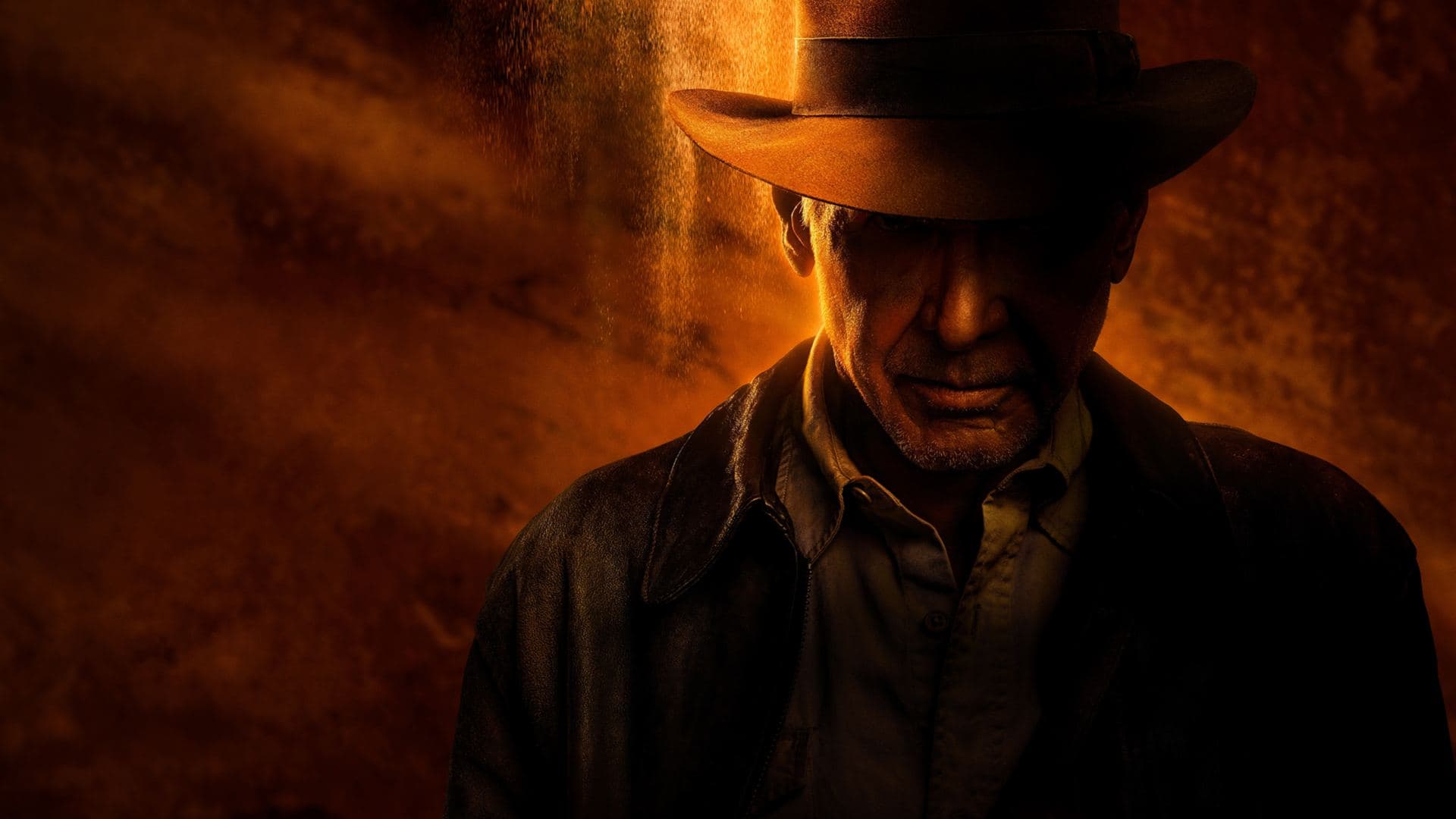
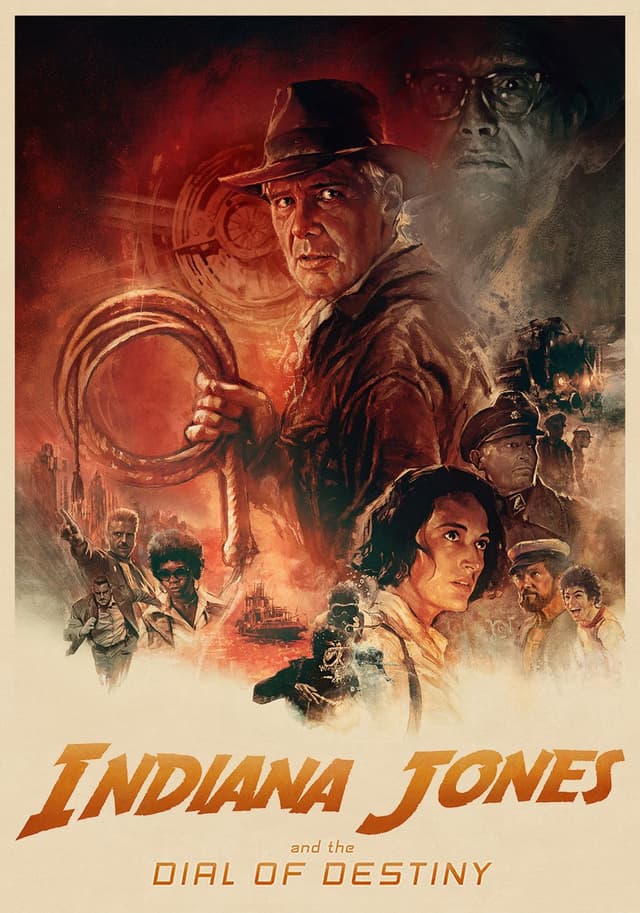
Indiana Jones and the Dial of Destiny Budget
 AdventureAction2h 35m
Updated
Synopsis
In 1969, an aging Indiana Jones is drawn into a final adventure when his goddaughter Helena Shaw seeks the Antikythera, an ancient device created by Archimedes that has the power to locate fissures in time. Pursued by Voller, a former Nazi scientist now working for NASA who wants the device for his own purposes, Jones and Helena race across the globe from New York to Morocco to Sicily and the Mediterranean Sea. The quest forces Jones to confront his own legacy, his regrets, and the passage of time as he chases one last impossible discovery.
What Is the Budget of Indiana Jones and the Dial of Destiny?
Indiana Jones and the Dial of Destiny (2023), directed by James Mangold and released by Lucasfilm/Walt Disney Studios, was produced on a budget estimated between $295 million and $300 million. The fifth and final Indiana Jones film arrived 15 years after Kingdom of the Crystal Skull and marked the first entry not directed by Steven Spielberg, who served as producer instead. The production became one of the most expensive non-sequel franchise entries ever made, with costs driven by Harrison Ford's compensation as the 80-year-old returning star, extensive digital de-aging technology, pandemic-era filming complications, and location work across Morocco, Sicily, and the United Kingdom.
The staggering budget made Dial of Destiny a high-stakes proposition for Disney, which had acquired the Indiana Jones franchise through its 2012 purchase of Lucasfilm. James Mangold (Logan, Ford v Ferrari) took the directorial reins with a script he co-wrote with Jez Butterworth, John-Henry Butterworth, and David Koepp, crafting a story that positioned the film as a definitive farewell to the character Harrison Ford had first played in 1981.
Key Budget Allocation Categories
The $295-300 million budget was distributed across several major production areas:
- Lead Actor and Digital De-Aging: Harrison Ford, at 78-80 years old during filming, commanded substantial compensation as both the franchise's irreplaceable star and an executive producer. The film's prologue sequence, set during World War II, required extensive de-aging of Ford to depict a younger Indiana Jones. Industrial Light & Magic developed proprietary technology using archival footage of Ford from previous films to create the de-aged version, a process that consumed significant R&D and rendering resources.
- International Location Filming: The production filmed extensively in Morocco (standing in for North Africa and various ancient world locations), Sicily (for Mediterranean sequences), and the United Kingdom (primarily at Pinewood Studios and various English locations for period European settings). Each location required full production infrastructure deployment, local permits, and extended crew mobilization.
- Pandemic-Era Production Complications: Principal photography began in June 2021, during a period when COVID-19 protocols significantly inflated production costs across the industry. Testing, quarantine periods, reduced crew density, and the logistical overhead of maintaining health safety across multiple international locations added an estimated tens of millions to the baseline budget.
- Period Production Design: The film spans multiple time periods and locations, requiring extensive period-accurate set construction, vehicle acquisition, costume design, and prop fabrication. The 1969 setting demanded period-authentic New York City streets, parade sequences, and era-appropriate technology, while the World War II prologue required its own complete production design ecosystem.
- Visual Effects and Post-Production: Beyond the de-aging technology, ILM handled a massive VFX workload including period environment extensions, action sequence enhancement, and the film's fantastical climactic sequence. The post-production timeline extended well into 2023, with Mangold and editor Andrew Buckland refining the 154-minute cut.
How Does Indiana Jones and the Dial of Destiny's Budget Compare to Similar Films?
At $295-300 million, Dial of Destiny ranks among the most expensive legacy franchise films ever produced. Comparing it with adventure genre peers:
- Indiana Jones and the Kingdom of the Crystal Skull (2008): Budget $185,000,000 | Worldwide $790,700,000. The previous entry cost 38% less and earned more than double at the worldwide box office, benefiting from the novelty of Ford's return after a 19-year absence and Steven Spielberg's direction.
- Mission: Impossible - Dead Reckoning Part One (2023): Budget $291,000,000 | Worldwide $571,810,492. Released the same summer, this fellow legacy franchise film faced similar budget escalation challenges and similarly underperformed, reflecting a broader industry reckoning with $300M+ budgets for aging franchise properties.
- Top Gun: Maverick (2022): Budget $170,000,000 | Worldwide $1,495,696,292. The gold standard for legacy franchise revivals, Maverick cost 43% less than Dial of Destiny and earned nearly four times as much, driven by overwhelming audience enthusiasm and repeat viewings.
- Jurassic World Dominion (2022): Budget $185,000,000 | Worldwide $1,001,978,080. Another legacy franchise conclusion cost 38% less and earned over 2.5 times more, though it too faced diminishing critical reception.
- Star Wars: The Rise of Skywalker (2019): Budget $275,000,000 | Worldwide $1,074,144,248. The Star Wars saga conclusion, produced by the same Lucasfilm/Disney pipeline, cost slightly less than Dial of Destiny while earning nearly three times the worldwide gross.
Indiana Jones and the Dial of Destiny Box Office Performance
Dial of Destiny opened in the United States on June 30, 2023, earning $60 million in its domestic opening weekend. The opening fell below industry tracking estimates and signaled that audiences were not turning out with the enthusiasm Disney had hoped for.
Box Office Breakdown
Indiana Jones and the Dial of Destiny

At approximately +30%, Indiana Jones and the Dial of Destiny returned roughly $1.30 for every $1 of production budget invested during its theatrical run.
Indiana Jones and the Dial of Destiny was one of the biggest box office bombs of 2023. With a worldwide gross of $384 million against a production budget of $295-300 million, the 28% ROI against production costs alone was catastrophic once marketing and distribution costs were factored in. Industry estimates placed Disney's theatrical loss at $100-150 million or more, making it one of the most expensive commercial failures in the studio's history.
The domestic performance of $174.5 million was particularly concerning, representing a 78% decline from Crystal Skull's domestic total. The international gross of $209.5 million was equally disappointing, suggesting global audience indifference to the franchise's continuation. The film's 2.6x multiplier from opening weekend to final domestic gross indicated poor word-of-mouth and limited repeat viewings, in stark contrast to Top Gun: Maverick's 11x multiplier the previous year.
Indiana Jones and the Dial of Destiny Production History
A fifth Indiana Jones film had been in various stages of development since Kingdom of the Crystal Skull's release in 2008. Steven Spielberg and Harrison Ford expressed interest in returning, but script development proved difficult. Multiple writers, including David Koepp (who wrote Crystal Skull), took passes at the screenplay without finding an approach that satisfied all parties.
The project gained momentum in 2020 when James Mangold was hired to direct, replacing Spielberg, who remained as producer. Mangold, whose Logan (2017) had demonstrated his ability to craft a valedictory story for an aging action hero, seemed an ideal choice for what would be Ford's final outing as Indiana Jones. Mangold co-wrote the screenplay with Jez Butterworth, John-Henry Butterworth, and David Koepp, developing a story centered on the Antikythera mechanism and a time-travel concept that would allow the film to explore both young and old versions of the character.
Principal photography began in June 2021 in the United Kingdom, eventually expanding to Morocco and Sicily. The production navigated COVID-19 protocols that had become standard but still costly, with testing and quarantine requirements adding to the already substantial budget. Harrison Ford sustained a shoulder injury during filming that required a production hiatus, further extending the timeline and costs.
The de-aging technology used for the World War II prologue represented one of the most ambitious applications of the technique in film history. Rather than relying solely on real-time facial manipulation, ILM's team used machine learning algorithms trained on footage of young Harrison Ford from Raiders of the Lost Ark, The Empire Strikes Back, and other 1980s-era films. The result was a 25-minute opening sequence featuring a convincingly youthful Ford that drew significant attention upon the film's premiere at the Cannes Film Festival on May 18, 2023.
Awards and Recognition
Indiana Jones and the Dial of Destiny premiered out of competition at the Cannes Film Festival on May 18, 2023, where Harrison Ford received an honorary Palme d'Or recognizing his contributions to cinema. The Cannes ceremony, which included a standing ovation, served as a tribute to Ford's career and the Indiana Jones franchise's cultural impact, separate from the film's critical reception.
The film received nominations at the Visual Effects Society Awards for its de-aging technology, which was recognized as a significant advancement in digital face replacement even by critics who found the film itself disappointing. The prologue sequence's de-aging work was singled out as technically impressive, though debates about the "uncanny valley" quality of extended de-aging sequences continued within the industry.
Critical Reception
Indiana Jones and the Dial of Destiny received moderately positive reviews, earning a 69% approval rating on Rotten Tomatoes and a 58 out of 100 on Metacritic. Critics were more favorable toward the film than audiences, with the CinemaScore of B reflecting audience ambivalence.
The de-aged prologue drew the most discussion, with critics split on whether the technology achieved a convincing young Indiana Jones or fell into uncanny valley territory. James Mangold's direction was generally praised as competent and respectful of the franchise's adventure serial roots, with the Sicilian chase sequence cited as the film's strongest action set piece. Harrison Ford's performance as an aging, regretful Indiana Jones in 1969 received warm reviews, with critics noting the poignancy of the character's confrontation with mortality.
Phoebe Waller-Bridge's Helena Shaw divided opinion: some critics found her a refreshing, morally ambiguous counterpart to Jones, while others viewed the character as an unwelcome distraction from the franchise's core appeal. Mads Mikkelsen's villain, Dr. Voller, was praised for Mikkelsen's cold precision but criticized for being underwritten. The film's time-travel climax proved the most divisive element, with some critics embracing its audacity and others viewing it as a tonal misstep that betrayed the franchise's adventure serial grounding.
Frequently Asked Questions
How much did it cost to make Indiana Jones and the Dial of Destiny (2023)?
The film had a production budget estimated between $295 million and $300 million. The costs were driven by Harrison Ford's compensation, extensive de-aging technology for the WWII prologue, pandemic-era filming protocols, location work across Morocco, Sicily, and the UK, and a prolonged production timeline after Ford sustained a shoulder injury.
How much did Dial of Destiny earn at the box office?
The film grossed $174,480,468 domestically and $209.5 million internationally for a worldwide total of $383,980,468. It opened at $60.4 million domestically, below expectations.
Was Indiana Jones and the Dial of Destiny a box office bomb?
Yes. Against a production budget of $295-300 million plus an estimated $150-175 million in marketing, the total investment was approximately $450-475 million. The $384 million worldwide gross resulted in an estimated theatrical loss of $100-150 million for Disney.
Who directed Indiana Jones and the Dial of Destiny?
James Mangold directed the film, making it the first Indiana Jones entry not directed by Steven Spielberg. Mangold, known for Logan and Ford v Ferrari, was chosen for his ability to craft valedictory stories for aging action heroes. Spielberg served as producer.
How was Harrison Ford de-aged in Dial of Destiny?
ILM used machine learning algorithms trained on footage of young Harrison Ford from Raiders of the Lost Ark and other 1980s films to create a convincingly youthful version for the 25-minute WWII prologue. The technology represented one of the most ambitious applications of de-aging in film history.
Where was Dial of Destiny filmed?
The film was shot primarily in the United Kingdom (Pinewood Studios and various English locations), Morocco (standing in for North African settings), and Sicily, Italy (for Mediterranean sequences). The production navigated COVID-19 protocols across all locations.
What did critics think of Dial of Destiny?
The film received moderately positive reviews: 69% on Rotten Tomatoes and 58 on Metacritic. Critics praised Harrison Ford's poignant performance and the Sicilian chase sequence but were divided on the de-aging technology, Phoebe Waller-Bridge's character, and the time-travel climax.
Did Dial of Destiny premiere at Cannes?
Yes. The film premiered out of competition at the Cannes Film Festival on May 18, 2023. Harrison Ford received an honorary Palme d'Or at the premiere, recognizing his contributions to cinema.
How does Dial of Destiny compare to other Indiana Jones films at the box office?
It is by far the lowest-grossing entry in the franchise. Kingdom of the Crystal Skull earned $790.7 million on a $185 million budget, while the original Raiders of the Lost Ark earned $389 million on a $20 million budget. Dial of Destiny's $384 million on a $300 million budget represents the worst return in the series.
Is Dial of Destiny the last Indiana Jones film?
Yes. The film was designed as Harrison Ford's definitive farewell to the character. Ford was 80 years old during filming, and both the actor and the filmmakers have confirmed there will be no further Indiana Jones films with Ford in the role.
Filmmakers
Indiana Jones and the Dial of Destiny

Official Trailer
Build budgets like this one in Saturation
Start from an industry-standard feature film template, import the schedule and rates you already have, and let the cost report keep itself current as you spend. Real-time collaboration, no spreadsheets.