The Hurt Locker Budget
 DramaThrillerWar2h 11m
Updated
Synopsis
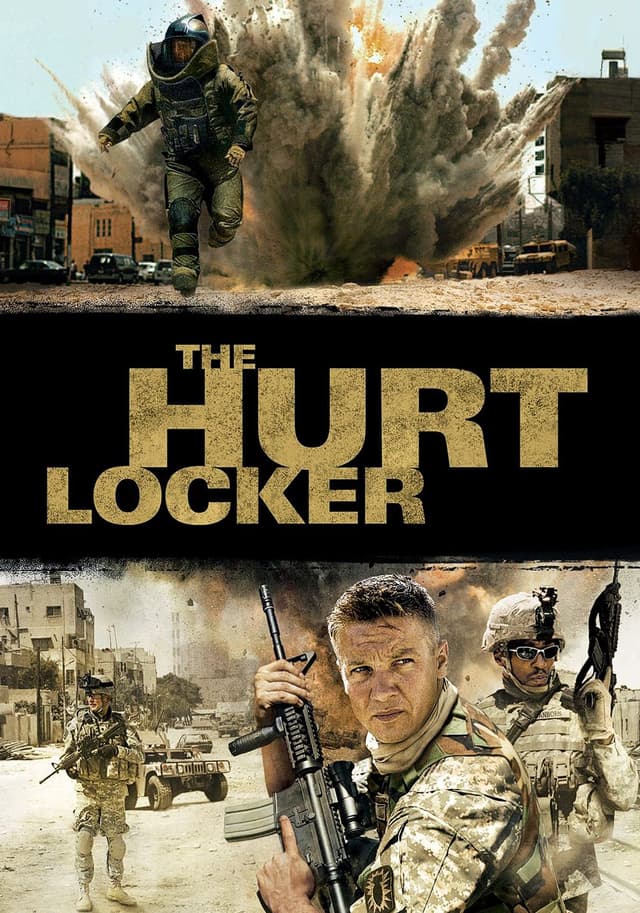
During the Iraq War, a Sergeant recently assigned to an army bomb squad is put at odds with his squad mates due to his maverick way of handling his work.
What Is the Budget of The Hurt Locker?
The Hurt Locker was produced for an estimated $15 million, a fraction of what Hollywood typically spends on war films. Director Kathryn Bigelow and writer Mark Boal deliberately pursued a lean production model, choosing authenticity over spectacle. The budget covered principal photography in Amman, Jordan, where the city stood in for Baghdad, along with a small crew optimized for handheld, documentary-style shooting.
Rather than building expensive sets or relying on CGI, the production used practical locations and real military vehicles sourced locally. Cinematographer Barry Ackroyd shot primarily on Super 16mm film, which kept equipment costs down while giving the footage a raw, immersive texture that matched the story. The relatively modest budget forced creative discipline that ultimately became one of the film's greatest strengths.
Key Budget Allocation Categories
- Above-the-Line Talent: Jeremy Renner, Anthony Mackie, and Brian Geraghty were cast as relatively unknown leads, keeping salary costs well below what established stars would command. Supporting roles for Guy Pearce, Ralph Fiennes, David Morse, and Evangeline Lilly were limited to brief appearances.
- Location and Production Services: Filming in Amman, Jordan provided a convincing Middle Eastern setting at a fraction of what shooting in an active conflict zone or building replica sets would have cost. Local production infrastructure kept day-to-day expenses manageable.
- Cinematography and Equipment: Barry Ackroyd's handheld Super 16mm approach required lighter, more mobile equipment than standard 35mm or digital rigs. Multiple camera setups captured chaotic action sequences from several angles simultaneously, maximizing usable footage per shooting day.
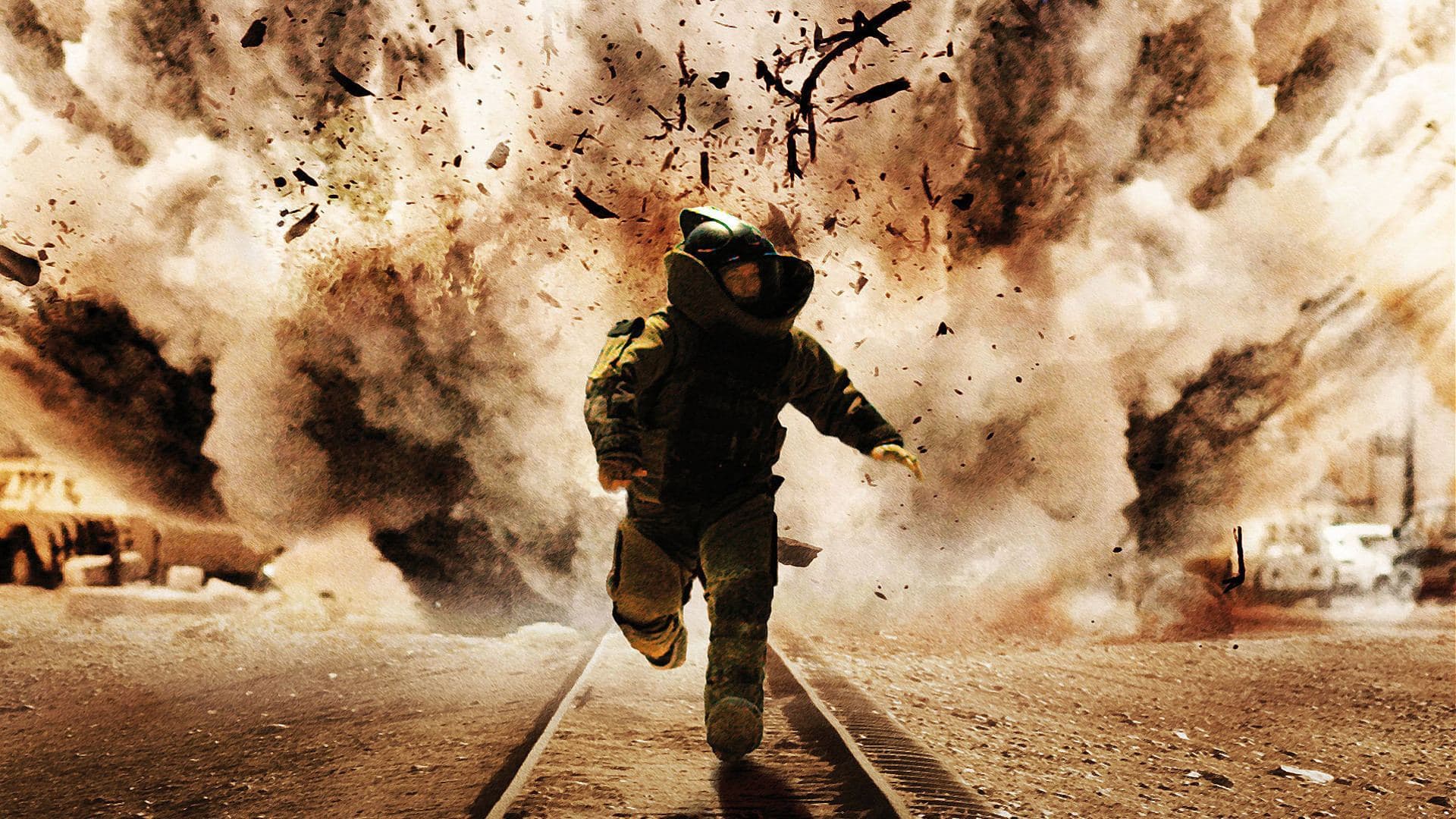
- Practical Effects and Explosions: The film's bomb disposal sequences required carefully controlled practical explosions rather than post-production CGI. Special effects coordinator Richard Stutsman coordinated real detonations that were both safe and visually convincing on screen.
- Post-Production: Editor Chris Innis and Bob Murawski assembled the film from extensive multi-camera footage, shaping raw documentary-style material into a tightly paced thriller. Sound design was critical, with Marco Beltrami and Buck Sanders creating a sparse, tension-driven score.
- Insurance and Safety: Operating in Jordan with practical explosives required comprehensive insurance coverage and on-set safety personnel, a necessary cost given the production's commitment to realism over digital substitutes.
How Does The Hurt Locker's Budget Compare to Similar Films?
The Hurt Locker's $15 million budget stands out as remarkably lean among post-9/11 war films. Most comparable productions spent five to ten times as much to achieve similar scale, making Bigelow's film an outlier in both cost and critical reception.
- Black Hawk Down (2001): Budget $92M | Worldwide $173M. Ridley Scott's Mogadishu battle epic cost more than six times The Hurt Locker's budget, relying on large-scale set construction and extensive military coordination.
- American Sniper (2014): Budget $58M | Worldwide $547M. Clint Eastwood's Chris Kyle biopic benefited from Bradley Cooper's star power and a major Warner Bros. marketing push, spending nearly four times what The Hurt Locker cost.
- Zero Dark Thirty (2012): Budget $40M | Worldwide $133M. Bigelow and Boal's follow-up collaboration had a budget nearly three times larger, reflecting their post-Oscar leverage and the film's wider scope across multiple countries.
- Lone Survivor (2013): Budget $40M | Worldwide $155M. Peter Berg's Afghanistan combat film matched Zero Dark Thirty's budget while relying heavily on Mark Wahlberg's star power to drive commercial returns.
- Jarhead (2005): Budget $72M | Worldwide $97M. Sam Mendes' Gulf War film spent nearly five times The Hurt Locker's budget but earned a fraction of its critical acclaim, demonstrating that bigger spending does not guarantee stronger results.
The Hurt Locker Box Office Performance
The Hurt Locker earned $17,017,811 domestically and $49,259,766 worldwide against its $15 million production budget. Summit Entertainment initially gave the film a limited release in June 2009, expanding it gradually through the summer. The theatrical rollout was modest, never reaching more than 535 screens at its widest point.
The film's commercial trajectory was shaped by its awards season momentum. Box office receipts climbed steadily as the film accumulated critics' awards and Oscar nominations through late 2009 and early 2010. Summit re-expanded the release after the Best Picture nomination, adding screens in January and February 2010. The Best Picture and Best Director wins at the 82nd Academy Awards gave the film a final theatrical bump.
Piracy presented a significant challenge. A workprint of the film leaked online before its theatrical release, and the producers filed a lawsuit against thousands of individuals who downloaded it. Voltage Pictures, the production company, estimated that illegal downloads substantially reduced potential theatrical revenue, particularly in markets where the film opened after the leak circulated widely.
Box Office Breakdown
The Hurt Locker

The Hurt Locker Production History
The Hurt Locker originated from journalist Mark Boal's firsthand experience embedded with a U.S. Army bomb disposal unit in Iraq during 2004. Boal spent weeks accompanying Explosive Ordnance Disposal teams on missions in Baghdad, observing the daily routine of soldiers whose job required them to approach and disarm improvised explosive devices. The screenplay drew directly from the people, situations, and psychological pressures he witnessed.
Boal brought the script to Kathryn Bigelow, who had directed action films including Point Break and Strange Days but had not released a feature since 2002's K-19: The Widowmaker. Bigelow committed to an approach that prioritized documentary realism over Hollywood convention. She and Boal agreed that the film should feel like a war correspondent's footage rather than a traditional narrative.
Casting focused on actors who would disappear into their roles rather than distract with star recognition. Jeremy Renner, then known primarily for supporting roles in films like Dahmer and 28 Weeks Later, was cast as Sergeant First Class William James. Anthony Mackie and Brian Geraghty completed the three-man EOD team. Brief appearances by Guy Pearce, Ralph Fiennes, David Morse, and Evangeline Lilly were designed to subvert audience expectations about which characters would survive.
Principal photography took place over 44 days in the summer of 2007 in Amman, Jordan, with some sequences filmed in nearby desert locations and in Kuwait. Temperatures regularly exceeded 120 degrees Fahrenheit. Bigelow stationed up to four handheld cameras on every scene, often without telling the actors which camera was the primary unit, creating genuine tension and spontaneous reactions. Ackroyd's Super 16mm cinematography gave the footage a grainy, immediate quality that reinforced the sensation of being embedded alongside the characters.
The production faced logistical challenges common to filming in the Middle East, including coordinating with Jordanian military authorities and managing crowd control in densely populated areas. Local residents occasionally wandered into active shooting locations, which Bigelow sometimes incorporated into scenes to heighten authenticity. The film wrapped on time and within its $15 million budget.
Awards and Recognition
The Hurt Locker dominated the 82nd Academy Awards, winning six Oscars from nine nominations. Kathryn Bigelow became the first woman to win the Academy Award for Best Director, a milestone that drew worldwide attention. The film also won Best Picture, defeating James Cameron's Avatar in a contest that the media framed as a competition between former spouses. Additional Oscar wins included Best Original Screenplay for Mark Boal, Best Film Editing for Chris Innis and Bob Murawski, Best Sound Editing, and Best Sound Mixing.
Jeremy Renner received a Best Actor nomination that transformed his career trajectory, leading directly to roles in The Town and his casting as Hawkeye in the Marvel Cinematic Universe. Anthony Mackie's performance also raised his profile considerably, though he did not receive an individual nomination.
Beyond the Oscars, the film collected prizes from the Directors Guild of America (Best Director), the Writers Guild of America (Best Original Screenplay), BAFTA (Best Director, Best Cinematography, Best Editing, Best Sound), and numerous critics' circles including the National Board of Review, the New York Film Critics Circle, and the Los Angeles Film Critics Association. It appeared on virtually every major year-end best-of list for 2009.
Critical Reception
The Hurt Locker holds a 97% approval rating on Rotten Tomatoes based on 298 reviews, with a weighted average of 8.6 out of 10. The critical consensus praised the film's visceral intensity, with reviewers highlighting Bigelow's ability to sustain unbearable tension across individual set pieces while building a cumulative portrait of addiction to danger.
Roger Ebert awarded the film four stars and called it "a great film, an intelligent film, a film shot with skill and played with terrific conviction." A.O. Scott of The New York Times described it as "ferociously well made" and praised its refusal to editorialize about the Iraq War, instead focusing on the immediate physical and psychological reality of its characters. Manohla Dargis, also writing for the Times, called Bigelow "an artist" and praised the film's "cool, cool head."
Some Iraq War veterans offered mixed reactions. While many praised the film's depiction of the psychological toll of combat, others criticized specific tactical details, noting that a lone soldier wandering Baghdad streets or a three-man team operating independently did not reflect actual EOD procedures. Bigelow and Boal acknowledged taking dramatic liberties while maintaining that the emotional truth of the characters was grounded in Boal's reporting.
The film's legacy has grown in the years since its release. It is frequently cited in discussions of the best war films of the 21st century and is credited with revitalizing Bigelow's career, establishing Boal as a major screenwriter, and launching Renner and Mackie into leading roles. Its influence can be seen in subsequent conflict films that adopted a similar handheld, embedded aesthetic.
Frequently Asked Questions
How much did it cost to make The Hurt Locker (2008)?
The production budget was $15,000,000, covering principal photography, cast and crew salaries, locations, sets, post-production, and music. Marketing and distribution (P&A) costs are estimated at an additional $7,500,000 - $12,000,000, bringing the total studio investment to approximately $22,500,000 - $27,000,000.
How much did The Hurt Locker (2008) earn at the box office?
The Hurt Locker grossed $49,259,766 worldwide.
Was The Hurt Locker (2008) profitable?
Yes. Against a production budget of $15,000,000 and estimated total costs of ~$37,500,000, the film earned $49,259,766 theatrically - a 228% ROI on production costs alone.
What were the biggest costs in producing The Hurt Locker?
The primary cost drivers were above-the-line talent (Jeremy Renner, Anthony Mackie, Brian Geraghty); talent compensation, authentic period production design, and meticulous post-production; international production across United States of America, United Kingdom.
How does The Hurt Locker's budget compare to similar drama films?
At $15,000,000, The Hurt Locker is classified as a low-budget production. The median budget for wide-release drama films in the 2000s ranges from $30 - 80M for mid-budget to $150M+ for tentpoles. Comparable budgets: A Dangerous Method (2011, $15,000,000); Ben-Hur (1959, $15,000,000); Land of the Dead (2005, $15,000,000).
Did The Hurt Locker (2008) go over budget?
There are no widely reported accounts of significant budget overruns for this production. However, studios rarely disclose precise budget overrun figures publicly. The reported production budget reflects the final estimated cost.
What was the return on investment (ROI) for The Hurt Locker?
The theatrical ROI was 228.4%, calculated as ($49,259,766 − $15,000,000) ÷ $15,000,000 × 100. This measures gross revenue against production budget only - it does not account for P&A or exhibitor shares.
Who directed The Hurt Locker and who were the key crew members?
Directed by Kathryn Bigelow, written by Mark Boal, shot by Barry Ackroyd, with music by Buck Sanders, Marco Beltrami, edited by Bob Murawski, Chris Innis.
Where was The Hurt Locker filmed?
The Hurt Locker was filmed in United States of America, United Kingdom. The film was shot in Jordan, within miles of the Iraqi border, to achieve Bigelow's goal of authenticity. Iraqi refugees were used for extras and the cast worked in the intense heat of the Middle East.
Filmmakers
The Hurt Locker

Official Trailer
Build budgets like this one in Saturation
Start from an industry-standard feature film template, import the schedule and rates you already have, and let the cost report keep itself current as you spend. Real-time collaboration, no spreadsheets.