The King's Speech Budget
 DramaHistory1h 58m
Updated
Synopsis
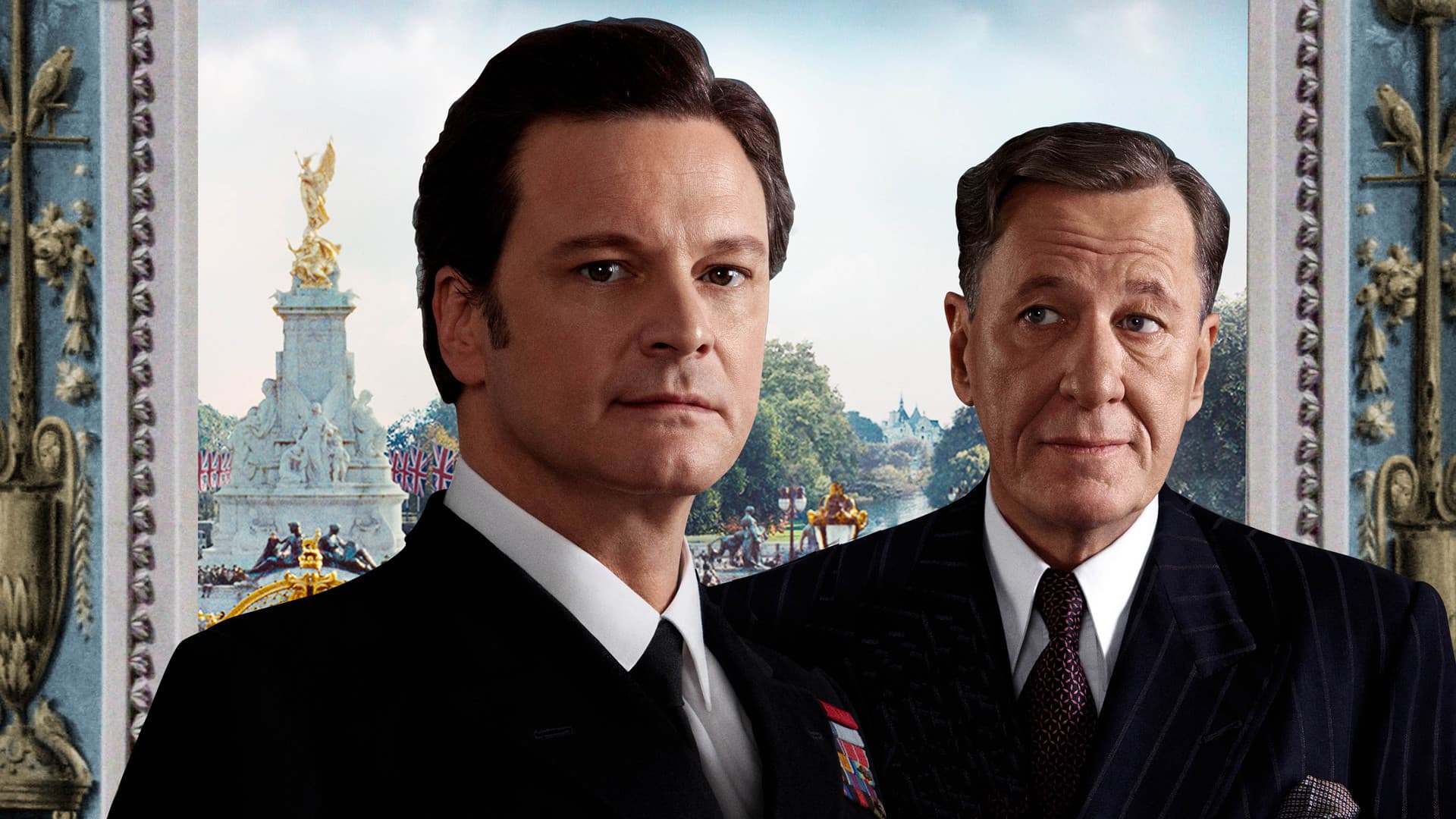
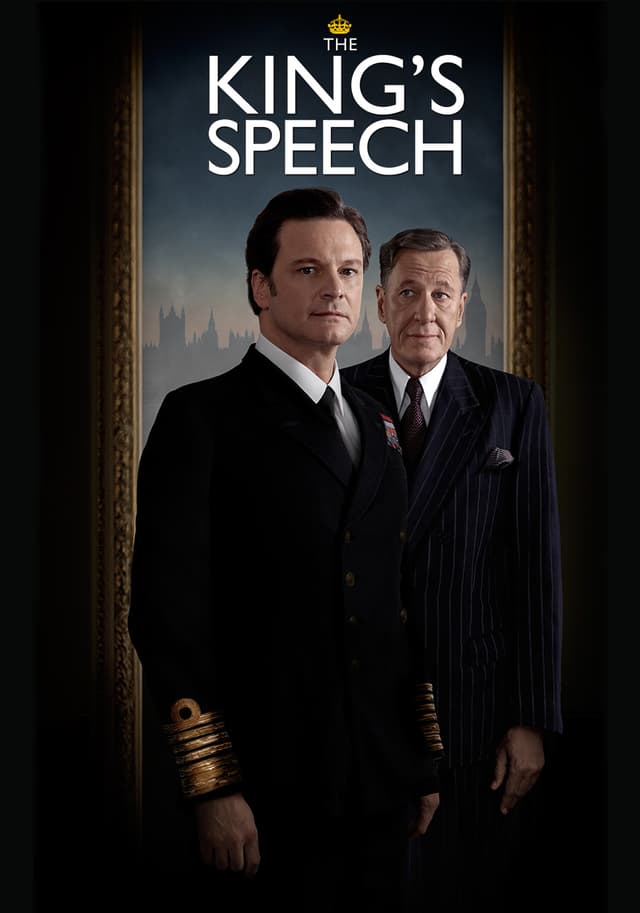
The King's Speech tells the story of the man who became King George VI, the father of Queen Elizabeth II. After his brother abdicates, George ('Bertie') reluctantly assumes the throne. Plagued by a dreaded stutter and considered unfit to be king, Bertie engages the help of an unorthodox speech therapist named Lionel Logue. Through a set of unexpected techniques, and as a result of an unlikely friendship, Bertie is able to find his voice and boldly lead the country into war.
What Is the Budget of The King's Speech?
The King's Speech was produced on a budget of approximately $15 million (roughly £8 to £10 million), making it one of the most modestly financed films ever to win the Academy Award for Best Picture. The film was independently produced by See-Saw Films and Bedlam Productions, with significant investment from the UK Film Council, the publicly funded body that backed British productions before its dissolution in 2011.
The Weinstein Company acquired US distribution rights after Harvey Weinstein saw an early cut of the film at a private screening, recognizing its awards potential. Entertainment One handled UK distribution. The acquisition gave the production significant North American awards campaign backing it would not have had as a purely independent release.
Against a $15 million production cost, the film earned over $414 million worldwide, representing one of the highest returns on investment of any Best Picture winner in the past two decades. Films at similar budget levels rarely cross $100 million worldwide; The King's Speech crossed $400 million on the strength of critical acclaim, awards momentum, and word of mouth from older audiences who turned the film into a sustained theatrical phenomenon across the awards season and beyond.
Key Budget Allocation Categories
- Cast and Above-the-Line Talent: Colin Firth, coming off a BAFTA win and Oscar nomination for A Single Man (2009), anchored the film as King George VI. Geoffrey Rush, an Academy Award winner for Shine (1996), starred opposite him as Lionel Logue. Helena Bonham Carter completed a trio of established British stars as Queen Elizabeth. The combined above-the-line costs for this cast on a £8 to £10 million budget required careful negotiation, with all three principals taking meaningful pay reductions to make the production viable.
- UK Location Photography: Cinematographer Danny Cohen shot across England on a tight 35-day schedule. Ely Cathedral in Cambridgeshire doubled for Westminster Abbey after Westminster itself refused to permit filming. Exterior Buckingham Palace scenes were captured at 16 Berkeley Square in London. Elstree Studios provided soundstage facilities for Lionel Logue's Harley Street consulting room and interior royal sets, keeping location costs manageable while maintaining period authenticity.
- Period Production Design: Production designer Eve Stewart recreated 1930s-era royal interiors, BBC broadcast studios, and wartime Buckingham Palace on a constrained budget. Director Tom Hooper and Cohen made a deliberate stylistic choice to use wide-angle lenses pressed close to subjects, conveying George VI's sense of confinement and psychological pressure without requiring elaborate set construction. The approach allowed the production to achieve a claustrophobic visual texture through camera technique rather than expensive period dressing.
- Alexandre Desplat Score and Music Licensing: French composer Alexandre Desplat wrote an original score that earned an Academy Award nomination. A late-stage editorial decision to incorporate a fragment of Beethoven's 7th Symphony in the climactic speech sequence added a notable music licensing component to post-production costs and became one of the most discussed artistic choices in reviews of the film.
- Research and Historical Consultation: The production worked directly with Antony Logue, Lionel Logue's grandson, who provided access to his grandfather's never-before-published diaries. These diaries contained details about the specific therapy techniques used with George VI and the personal dynamic between patient and therapist that had not previously been available to researchers or biographers. Colin Firth also worked with speech therapists for several months to accurately reproduce the particular stammer patterns specific to George VI's speech impediment.
How Does The King's Speech's Budget Compare to Similar Films?
The King's Speech sits at the most cost-efficient end of the Best Picture winner spectrum. Comparing it against British period dramas, Oscar-winning prestige films, and independently produced films that exceeded expectations shows just how unusual its box office performance was for its budget tier.
- The Queen (2006): Budget $15 million | Worldwide $123 million. Stephen Frears's film about Queen Elizabeth II's response to Princess Diana's death starred Helen Mirren in an Oscar-winning performance. The direct comparison is instructive: nearly identical budget, British royal subject, independent production model, awards campaign success. The King's Speech earned more than three times as much worldwide, demonstrating how awards momentum and audience word-of-mouth compounded across a longer theatrical run.
- Darkest Hour (2017): Budget $30 million | Worldwide $151 million. Joe Wright's film about Winston Churchill in the early days of World War II, starring Gary Oldman in an Oscar-winning performance, cost twice as much as The King's Speech and earned less than 40% of what it earned worldwide. The comparison highlights how the Firth-Rush chemistry and the film's accessible emotional premise resonated with audiences in a way that a more straightforward political war drama did not.
- Shakespeare in Love (1998): Budget $25 million | Worldwide $289 million. The other Weinstein-distributed British period drama that won Best Picture over a widely favored competitor (Saving Private Ryan in 1998, The Social Network in 2011) is an instructive parallel. Shakespeare in Love cost 67% more and earned 70% of what The King's Speech eventually grossed, on a film distributed by the same US studio using the same awards playbook.
- Good Will Hunting (1997): Budget $10 million | Worldwide $225 million. The Miramax-produced drama about a working-class mathematical genius and his therapist offers the closest structural parallel: a story about a resistant individual working through personal barriers with an unconventional helper, produced independently on a small budget, that outperformed all commercial expectations through sustained audience enthusiasm and awards recognition.
The King's Speech Box Office Performance
The King's Speech opened in limited US release on November 26, 2010, on 4 screens, grossing $355,450 its opening weekend. The Weinstein Company then executed a methodical platform expansion, widening the film to 2,584 screens by January 7, 2011, and riding strong word of mouth through awards season. The film earned $138,797,449 in North America, distributed by the Weinstein Company, and $275,414,100 in international markets, distributed by Entertainment One in the UK and various local partners elsewhere, for a worldwide total of $414,211,549.
Against a $15 million production budget, the Weinstein Company invested an estimated $20 million in prints and advertising to mount its awards campaign, bringing total investment to roughly $35 million. Theaters retain approximately 50% of box office gross, leaving an estimated studio share of $207 million from the worldwide total. The film cleared its total investment many times over, turning the modest British period drama into one of the most profitable studio acquisitions of the year.
Box Office Breakdown
The King's Speech

For every dollar invested in production, The King's Speech earned roughly $27 worldwide. Even accounting for the P&A spend and the theatrical split, the film returned its total investment multiple times over and stands as a benchmark for how a well-executed awards campaign behind a modestly budgeted, well-reviewed film can generate returns that rival much more expensive studio productions.
The King's Speech Production History
The film's origins trace to screenwriter David Seidler's childhood. Seidler stammered as a boy growing up in post-war England and drew personal inspiration from knowing that King George VI had managed his own severe stammer well enough to lead Britain through the Second World War. Seidler wrote a stage play about the king's relationship with speech therapist Lionel Logue in the 1980s but was asked by the Queen Mother not to release or produce the material while she was alive, out of concern for George VI's legacy and her own privacy. She died in 2002 at age 101. Seidler then returned to the material and developed it into a screenplay, which producer Gareth Unwin optioned in 2005.
Tom Hooper was attached to direct after producers saw his work on the miniseries Elizabeth I (2005) and the television film Longford (2006), both of which demonstrated his ability to work intimately with actors on historically grounded British subjects. Colin Firth was cast first as George VI; Geoffrey Rush signed on as Lionel Logue after reading the script. Helena Bonham Carter joined as Queen Elizabeth. A crucial research breakthrough came when Antony Logue, Lionel Logue's grandson, provided the production team with access to his grandfather's personal diaries, which had never been published or made available to historians. The diaries revealed specific details about the therapy techniques Logue used and the informal, boundary-crossing dynamic he cultivated with his royal patient, details that became central to the film's screenplay.
Principal photography was completed in approximately 35 days in 2009, a tight schedule for a period production of this ambition. Danny Cohen's cinematography used wide-angle lenses pressed unusually close to the actors' faces, creating a sense of spatial confinement that echoed George VI's psychological experience. Ely Cathedral stood in for Westminster Abbey, with Elstree Studios providing controlled interior sets. Colin Firth spent months working with speech therapists to learn the specific patterns of George VI's stammer, studying archival recordings of the king's public addresses.
The film premiered at the Telluride Film Festival in September 2010, where it received immediate critical attention. It then played at the Toronto International Film Festival, where it won the People's Choice Award, a reliable predictor of awards success. The Weinstein Company had already acquired North American rights at that point and launched a sustained platform release strategy that expanded the film carefully through the fall and winter of 2010 to 2011, positioning it for maximum Oscar-season visibility.
Awards and Recognition
The King's Speech won 4 Academy Awards at the 83rd Academy Awards ceremony on February 27, 2011: Best Picture (producers Iain Canning, Emile Sherman, and Gareth Unwin), Best Director (Tom Hooper), Best Actor (Colin Firth), and Best Original Screenplay (David Seidler, who at 73 became the oldest recipient of that award at the time). The film received 12 nominations in total, including Best Supporting Actor (Geoffrey Rush), Best Supporting Actress (Helena Bonham Carter), Best Cinematography (Danny Cohen), Best Film Editing (Tariq Anwar), Best Original Score (Alexandre Desplat), Best Costume Design, and Best Art Direction.
Colin Firth's awards sweep that year was among the most complete in recent history. He won the Screen Actors Guild Award for Outstanding Performance by a Male Actor in a Leading Role, the BAFTA Award for Best Actor, the Golden Globe Award for Best Actor in a Drama, and the Academy Award for Best Actor, capturing all four of the major acting prizes in a single season. The film also won 7 BAFTA Awards including Outstanding British Film and Best British Film. Tom Hooper won the Directors Guild of America Award for Outstanding Directing before taking the Oscar.
Critical Reception
The King's Speech holds a 95% approval rating on Rotten Tomatoes based on reviews from its initial release. Roger Ebert awarded the film four stars, calling it a film that "does what only the best biographical films do: makes us feel that we know and understand a real person as a human being, not just a historical figure." A.O. Scott in The New York Times described it as "old-fashioned in the best possible way," praising Firth and Rush for creating "one of the most enjoyable odd-couple pairings in recent movie history."
Critics consistently highlighted three elements: the chemistry between Firth and Rush, the humanizing of a remote and formal historical figure through his private struggle, and Hooper's unconventional visual approach. The wide-angle lenses pressed close to actors' faces, creating compositions that placed subjects off-center and crowded by architectural elements, were praised as an intelligent formal expression of the king's psychological confinement.
Some minor controversy emerged after the film's Oscar win over historical inaccuracies, particularly regarding Winston Churchill's role in the abdication crisis. The film implies Churchill supported Edward VIII's abdication, which historians disputed; the Churchill family registered objections publicly. A separate controversy arose over the film's original R rating in the United States for language (a scene involving deliberate cursing as part of speech therapy), which the Weinstein Company appealed and had reduced to a PG-13 to widen the audience for the film. Despite these post-release discussions, the critical and cultural standing of The King's Speech has remained strong, and it continues to be cited as a model of how a well-crafted prestige drama with strong performances can outperform its budget category many times over.
Frequently Asked Questions
How much did it cost to make The King's Speech (2010)?
The production budget was $15,000,000, covering principal photography, cast and crew salaries, locations, sets, post-production, and music. Marketing and distribution (P&A) costs are estimated at an additional $7,500,000 - $12,000,000, bringing the total studio investment to approximately $22,500,000 - $27,000,000.
How much did The King's Speech (2010) earn at the box office?
The King's Speech grossed $138,797,449 domestic, $275,414,100 international, totaling $414,211,549 worldwide.
Was The King's Speech (2010) profitable?
Yes. Against a production budget of $15,000,000 and estimated total costs of ~$37,500,000, the film earned $414,211,549 theatrically - a 2661% ROI on production costs alone.
What were the biggest costs in producing The King's Speech?
The primary cost drivers were above-the-line talent (Colin Firth, Geoffrey Rush, Helena Bonham Carter); talent compensation, authentic period production design, and meticulous post-production; international production across United Kingdom, United States of America.
How does The King's Speech's budget compare to similar drama films?
At $15,000,000, The King's Speech is classified as a low-budget production. The median budget for wide-release drama films in the 2010s ranges from $30 - 80M for mid-budget to $150M+ for tentpoles. Comparable budgets: A Dangerous Method (2011, $15,000,000); Ben-Hur (1959, $15,000,000); Land of the Dead (2005, $15,000,000).
Did The King's Speech (2010) go over budget?
There are no widely reported accounts of significant budget overruns for this production. However, studios rarely disclose precise budget overrun figures publicly. The reported production budget reflects the final estimated cost.
What was the return on investment (ROI) for The King's Speech?
The theatrical ROI was 2661.4%, calculated as ($414,211,549 − $15,000,000) ÷ $15,000,000 × 100. This measures gross revenue against production budget only - it does not account for P&A or exhibitor shares.
What awards did The King's Speech (2010) win?
Won 4 Oscars. 109 wins & 206 nominations total.
Who directed The King's Speech and who were the key crew members?
Directed by Tom Hooper, written by David Seidler, shot by Danny Cohen, with music by Alexandre Desplat, edited by Tariq Anwar.
Where was The King's Speech filmed?
The King's Speech was filmed in United Kingdom, United States of America.
Filmmakers
The King's Speech

Build budgets like this one in Saturation
Start from an industry-standard feature film template, import the schedule and rates you already have, and let the cost report keep itself current as you spend. Real-time collaboration, no spreadsheets.