Sleepers Budget
 CrimeDramaThriller2h 27m
Updated
Synopsis
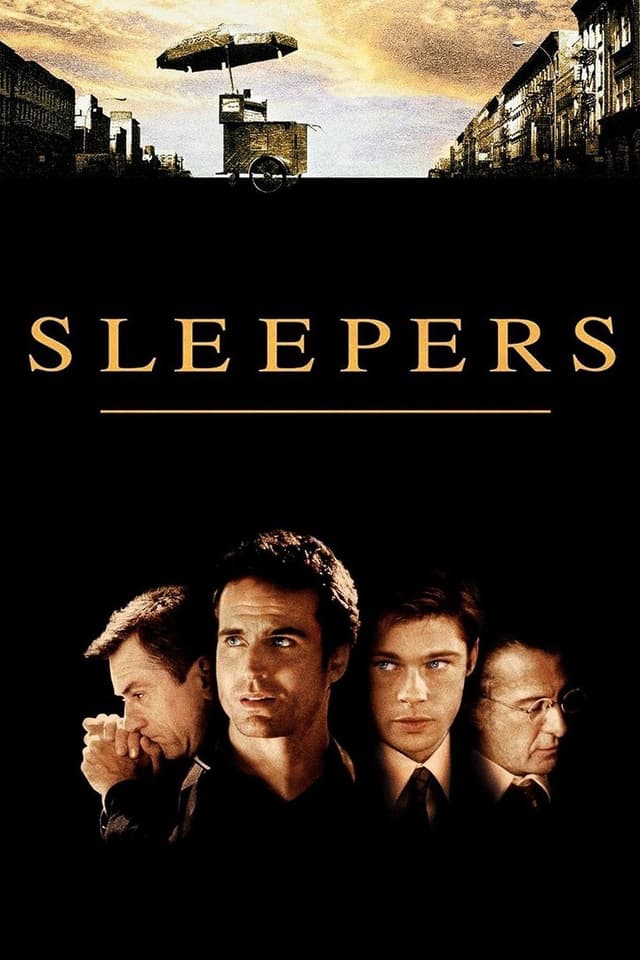
After a childhood prank goes horribly wrong, four boys from Hell's Kitchen are sentenced to a juvenile reformatory where they suffer extreme abuse at the hands of their guards. Years later, two of the boys, now hardened criminals, encounter one of their tormentors and murder him in cold blood. With the help of a sympathetic priest and a vengeful district attorney, the surviving friends conspire to clear their names and exact justice on their former abusers.
What Is the Budget of Sleepers (1996)?
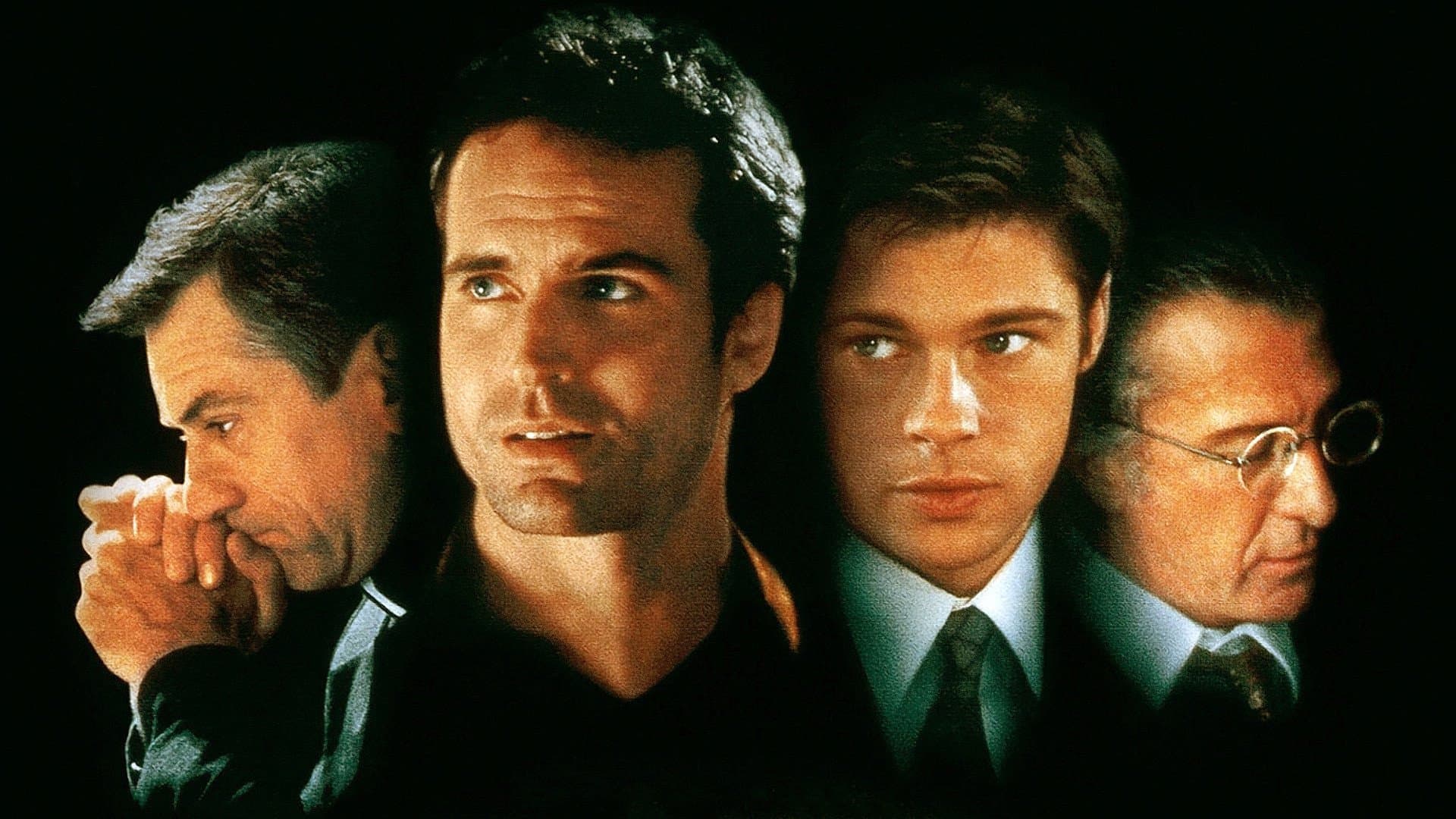
Sleepers (1996), written, produced, and directed by Barry Levinson and distributed by Warner Bros. Pictures, was produced on a reported budget of $44,000,000. The figure reflected the cost of a prestige adult drama assembled around one of the most expensive ensemble casts of the mid-1990s, anchored by Robert De Niro, Dustin Hoffman, Kevin Bacon, Jason Patric, Brad Pitt, and Minnie Driver, with significant supporting work from Vittorio Gassman, Bruno Kirby, and Ron Eldard. Warner Bros. financed the picture in-house through Baltimore Pictures, Levinson and Mark Johnson's longtime production banner.
Compared with other mid-budget character dramas of the same release window, $44,000,000 was a notable outlay. The investment was driven less by spectacle than by salary stacking: locking down four established A-list leads, a four-time Oscar nominee in Brad Pitt, and a deep bench of New York character actors required compensation packages that pushed the line above $20,000,000 by some industry estimates. Warner Bros. positioned the film as a fall awards contender with a wide commercial reach, hoping the cast and the controversial source material would generate both prestige and ticket sales.
Key Budget Allocation Categories
Sleepers' reported $44,000,000 budget was distributed across several core production areas:
- Above-the-Line Talent: The ensemble cast was the single largest cost driver. Robert De Niro and Dustin Hoffman, both two-time Academy Award winners by 1996, commanded top-tier salaries appropriate to their post-Heat and post-Outbreak market value. Brad Pitt, fresh off Seven and 12 Monkeys, was at his commercial peak. Kevin Bacon, Jason Patric, and Minnie Driver rounded out the ensemble at established-lead rates. Writer-director-producer Barry Levinson, coming off Disclosure and Rain Man, drew compensation befitting a Best Director Oscar winner.
- New York Location Shoot: Principal photography took place largely on location in New York City, with extensive work in Hell's Kitchen, the Lower East Side, and Queens. Period dressing for the 1960s and 1970s segments required street closures, vintage vehicles, and reconstruction of storefronts on West 50th and West 51st Streets. Manhattan location work carries a substantially higher unit cost than studio replication.
- Period Production Design: The film moves across three time periods, from the boys' 1966 childhood through their 1967 incarceration at the fictional Wilkinson Home for Boys to the 1981 revenge plot. Production designer Kristi Zea (Goodfellas, The Silence of the Lambs) and costume designer Gloria Gresham oversaw period-specific wardrobe, set dressing, and prop work across three distinct visual eras, with hair and makeup design tracking the same actors and child performers through the timeline.
- Score and Music: John Williams composed the original score, blending choral textures with a recurring main theme that became one of the more elegiac entries in his 1990s drama catalogue. Williams' fee, an orchestra of recording size, the choir, and a soundtrack of period needle drops from the late 1960s and early 1970s accounted for a substantial slice of post-production spend.
- Child and Young-Adult Casting: Casting required finding four young actors who could physically and emotionally credibly grow into De Niro's, Hoffman's, Pitt's, Bacon's, and Patric's adult counterparts. Joseph Perrino, Brad Renfro, Geoffrey Wigdor, and Jonathan Tucker handled the 1966 and 1967 scenes, including the harrowing Wilkinson sequences, with the production carrying the additional cost of on-set tutors, child-welfare workers, and shortened shooting days mandated by New York State labor law.
- Legal and Source-Material Costs: Lorenzo Carcaterra's 1995 memoir was the subject of widespread doubt and at least one early lawsuit threat from a Manhattan church, which forced Warner Bros. and Baltimore Pictures to add explicit disclaimers, deepen the legal review of the screenplay, and retain counsel through the entire post-production schedule. Errors-and-omissions insurance for the picture was negotiated at a premium reflecting the disputed authenticity of the underlying events.
- Marketing-Adjacent Premiere Costs: The October 18, 1996 wide release was preceded by a New York-centered press push and an aggressive fall trailer campaign. Although marketing spend is tracked outside the production budget, the line items that crossed back into production accounting, including additional photography for trailer cutdowns and electronic press kit shoots, added several hundred thousand dollars to the topline.
How Does Sleepers' Budget Compare to Similar Films?
At $44,000,000, Sleepers sat at the upper end of mid-1990s adult ensemble drama spending. The comparison set illustrates how its commercial outcome ranked among the period's prestige crime sagas:
- Once Upon a Time in America (1984): Budget $30,000,000 | Worldwide $5,300,000. Sergio Leone's definitive Lower East Side crime saga was made for two-thirds of Sleepers' budget and grossed a fraction of it on initial release, but has since become the genre's critical reference point and a touchstone Levinson openly drew upon.
- Goodfellas (1990): Budget $25,000,000 | Worldwide $46,800,000. Martin Scorsese's New York mob memoir cost just over half of Sleepers and was a similarly modest theatrical performer relative to its eventual cultural footprint, suggesting Warner Bros. assumed it could outperform the genre's commercial ceiling through star power.
- Heat (1995): Budget $60,000,000 | Worldwide $187,400,000. Michael Mann's Los Angeles crime epic, the only previous De Niro-Pacino pairing on screen, cost 36% more than Sleepers but cleared $180,000,000 globally, the most directly relevant audience benchmark for a star-driven adult crime film of the period.
- Casino (1995): Budget $52,000,000 | Worldwide $116,100,000. Scorsese's Las Vegas mob epic cost 18% more than Sleepers and ran almost 30 minutes longer, with a comparable ensemble strategy of stacked above-the-line talent.
- The Departed (2006): Budget $90,000,000 | Worldwide $291,500,000. Scorsese's Best Picture winner, a decade later, more than doubled Sleepers' budget and crystallized the prestige-crime ensemble template Sleepers had attempted at a lower price point.
- Rain Man (1988): Budget $25,000,000 | Worldwide $354,800,000. Levinson and Hoffman's Best Picture winner cost 43% less than Sleepers and outgrossed it by more than 2-to-1, illustrating the upside Warner Bros. believed it could chase by reuniting Levinson with Hoffman alongside De Niro and Pitt.
Sleepers Box Office Performance
Sleepers opened on October 18, 1996 in wide release across 2,235 theaters in the United States, finishing first at the domestic box office with $13,113,605 over its opening weekend. The film unseated The Ghost and the Darkness and outperformed the same weekend's wider release of That Thing You Do!, marking the strongest October opening Warner Bros. had logged that year. Word of mouth softened in the second and third weekends as audiences and critics weighed the contested truthfulness of the underlying memoir, but the picture held a steady position in the top ten for most of November.
Against a reported production budget of $44,000,000, the film cleared profitability comfortably even after marketing and distribution costs. Here is the financial breakdown:
Box Office Breakdown
Sleepers

Sleepers returned approximately $2.24 in worldwide theatrical revenue for every $1 invested when measured against total estimated production and marketing spend. The domestic share of the gross was $53,300,000 against an international share of $112,300,000, a 32/68 split that signaled unusually strong European and Australian performance for an English-language adult drama with no franchise hook.
Home video, broadcast television, and cable licensing extended the film's commercial life through the late 1990s and 2000s. Subsequent DVD and Blu-ray windows, combined with consistent rotation on premium cable and later streaming licensing, are widely understood to have pushed total revenues well above the theatrical figure across the decade following release.
Sleepers Production History
Development began in 1995 when Lorenzo Carcaterra's memoir Sleepers became a sudden bestseller after publication by Ballantine Books, with Carcaterra claiming the events were a true account of his childhood in Hell's Kitchen and a subsequent year at a juvenile detention facility upstate. Barry Levinson, who had read the manuscript before publication, optioned the film rights through Baltimore Pictures and his Warner Bros. first-look deal, and committed to writing the screenplay himself in addition to directing and producing.
The book was almost immediately the subject of public disputes. The Catholic Archdiocese of New York stated that no Father Robert Carillo had served at any Hell's Kitchen parish in the period described, the New York State Department of Corrections found no record of the events at the Wilkinson Home for Boys, and the Manhattan District Attorney's office said it had no record of the courtroom revenge prosecution described in the book's final act. Warner Bros. and Baltimore Pictures responded by adding a "based on a true story" disclaimer and routing the screenplay through additional legal review, but neither studio nor author retracted the underlying claim that the events were true.
Principal photography ran from August 1995 through January 1996 on location in New York City, with the Hell's Kitchen sequences shot on West 50th and West 51st Streets, the Lower East Side neighborhood scenes around Hester and Elizabeth Streets, and the juvenile-facility interiors captured at a decommissioned correctional building upstate. Levinson worked closely with cinematographer Michael Ballhaus, his frequent collaborator from the Scorsese unit, to give the three timelines distinct color palettes: warm period saturation for 1966, desaturated cool tones for the 1967 Wilkinson sequences, and a darker, contemporary grade for 1981.
Casting was assembled in the spring of 1995, with De Niro committing first as Father Bobby, followed by Hoffman as Danny Snyder and Kevin Bacon as Sean Nokes. Brad Pitt joined as the adult Michael Sullivan in the autumn after wrapping Sleepers' release-window competitor 12 Monkeys, and Jason Patric was cast as Lorenzo "Shakes" Carcaterra over significant studio interest in other names. The child cast was hired in early summer 1995. To preserve the integrity of the Wilkinson sequences, Levinson rehearsed extensively with Brad Renfro, Joseph Perrino, Geoffrey Wigdor, and Jonathan Tucker before any abuse scenes were staged, and shot those sequences with a closed set and shortened daily call sheets.
Post-production extended into late summer 1996. John Williams scored the film while Stuart Klawans and Mary Sweeney supervised the edit, with Williams delivering the choral main theme in two recording sessions at the Sony Pictures Studios scoring stage. The legal department's sign-off on the final cut, including the disclaimer language and credit-roll language about the underlying memoir, was the final box checked before Warner Bros. set its October 18 release date.
Awards and Recognition
Sleepers received one Academy Award nomination, for John Williams in the Best Original Dramatic Score category at the 69th Academy Awards in 1997, an honor Williams lost to Gabriel Yared for The English Patient. Williams was also nominated at the Golden Globe Awards for Best Original Score, losing to the same Yared score.
At the Casting Society of America Artios Awards, Ellen Lewis was nominated for Best Casting in a Feature Film, Drama, recognizing the multi-generational assembly that paired the four child actors with their adult counterparts. The film received no acting nominations at the Academy Awards or Golden Globes, a result widely attributed to the unresolved controversy over the memoir's authenticity and to the heavy late-1996 awards-season competition from Fargo, Shine, The English Patient, and Jerry Maguire.
Brad Renfro's performance as the young Michael Sullivan drew positive attention from the Young Artist Awards, where he received a Young Artist Award nomination for Best Performance in a Feature Film, Leading Young Actor. The remaining child cast members were not individually nominated by the academy or the Golden Globes.
Critical Reception
Sleepers received mixed reviews. The film holds a 75% approval rating on Rotten Tomatoes based on 48 critic reviews and a 49 out of 100 score on Metacritic, indicating mixed or average reviews. Audiences surveyed by CinemaScore gave the film an A-, reflecting strong word of mouth among ticket buyers even as the critical establishment split.
Roger Ebert of the Chicago Sun-Times awarded the film three out of four stars and praised the ensemble work, writing that the film "is a powerful and intriguing drama" while questioning the gap between the story's emotional ambitions and the unresolved factual claims behind it. Janet Maslin in The New York Times called the picture "a robust, satisfyingly hard-edged piece of storytelling" and singled out De Niro's restrained turn as Father Bobby as the film's anchor. Variety's Todd McCarthy was more measured, describing the film as "stronger on atmosphere than on argument."
Negative reviews focused on the moral architecture of the third act, in which the protagonists arrange a courtroom acquittal of a friend who has murdered one of their childhood abusers. The Washington Post's Hal Hinson called the film's ethics "muddled by the air of self-justification that surrounds Carcaterra's book," and the New Yorker's Anthony Lane was dismissive of the film's factual claims. The Catholic Church's ongoing dispute with Carcaterra cast a long shadow across the critical conversation, with multiple reviewers noting that the more emotionally affecting the film was, the more pressing the question of whether any of it had actually happened became. In the years since, Sleepers has held a steady reputation as a well-acted, divisive prestige drama whose place in the Hell's Kitchen crime canon is shaped as much by the legal questions it raised as by what it put on screen.
Frequently Asked Questions
How much did it cost to make Sleepers (1996)?
The reported production budget was $44,000,000. Warner Bros. financed the picture in-house through Barry Levinson and Mark Johnson's Baltimore Pictures banner, with the cost driven primarily by salary stacking for an ensemble that included Robert De Niro, Dustin Hoffman, Brad Pitt, Kevin Bacon, Jason Patric, and Minnie Driver.
How much did Sleepers earn at the box office?
The film grossed approximately $53,300,000 domestically and $112,300,000 internationally, for a worldwide total of $165,640,108. It opened first at the United States box office with $13,113,605 across 2,235 theaters on October 18, 1996.
Was Sleepers a box office success?
Yes. Against a $44,000,000 production budget and an estimated $25,000,000 to $30,000,000 in marketing spend, the film returned approximately $2.24 in worldwide theatrical revenue for every $1 invested. International performance was particularly strong, with overseas grosses more than doubling the domestic figure.
Who directed Sleepers?
Barry Levinson directed the film and also wrote the screenplay and produced through his Baltimore Pictures banner. Levinson had previously won the Academy Award for Best Director for Rain Man (1988) and worked with Dustin Hoffman on three prior collaborations.
Where was Sleepers filmed?
Principal photography took place on location in New York City from August 1995 through January 1996. The Hell's Kitchen sequences were shot on West 50th and West 51st Streets, the Lower East Side scenes around Hester and Elizabeth Streets, and the juvenile-facility interiors at a decommissioned correctional building in upstate New York.
Is the Sleepers story really true?
The factual accuracy of Lorenzo Carcaterra's 1995 memoir, on which the film is based, has been widely disputed. The Catholic Archdiocese of New York stated that no priest matching the Father Bobby character had served at any Hell's Kitchen parish in the relevant period, the New York State Department of Corrections found no record of the events at the Wilkinson Home for Boys, and the Manhattan District Attorney's office had no record of the courtroom revenge prosecution. Carcaterra has continued to maintain that the events are true.
Who composed the score for Sleepers?
John Williams composed the original score, which was nominated for the Academy Award for Best Original Dramatic Score and the Golden Globe for Best Original Score, losing both to Gabriel Yared's score for The English Patient. Williams' choral main theme remains one of the more elegiac entries in his 1990s drama catalogue.
How does Sleepers compare to other 1990s ensemble crime dramas?
Sleepers' $44,000,000 budget sat between Goodfellas (1990) at $25,000,000 and Heat (1995) at $60,000,000. Its $165,640,108 worldwide gross outperformed Goodfellas' theatrical run while trailing Heat's $187,400,000 and Casino's $116,100,000. Scorsese's The Departed (2006), a decade later, took the prestige-crime ensemble template Sleepers had attempted and won the Academy Award for Best Picture at more than double the budget.
Did Sleepers win any Academy Awards?
No. The film received one Academy Award nomination, for John Williams in the Best Original Dramatic Score category at the 69th Academy Awards in 1997, but did not win. The ensemble cast received no acting nominations, a result widely attributed to the unresolved controversy over the memoir's authenticity and to heavy late-1996 awards-season competition from Fargo, Shine, The English Patient, and Jerry Maguire.
What did critics think of Sleepers?
The film received mixed reviews, holding a 75% approval rating on Rotten Tomatoes based on 48 critic reviews and a 49 out of 100 score on Metacritic. Audiences gave the film an A- CinemaScore. Roger Ebert awarded three out of four stars and praised the ensemble work, while critics including the Washington Post's Hal Hinson and the New Yorker's Anthony Lane objected to the moral architecture of the courtroom-acquittal third act and to the unresolved factual claims behind the source memoir.
Filmmakers
Sleepers

Official Trailer
Build budgets like this one in Saturation
Start from an industry-standard feature film template, import the schedule and rates you already have, and let the cost report keep itself current as you spend. Real-time collaboration, no spreadsheets.