Heat Budget
 CrimeDramaAction2h 50m
Updated
Synopsis
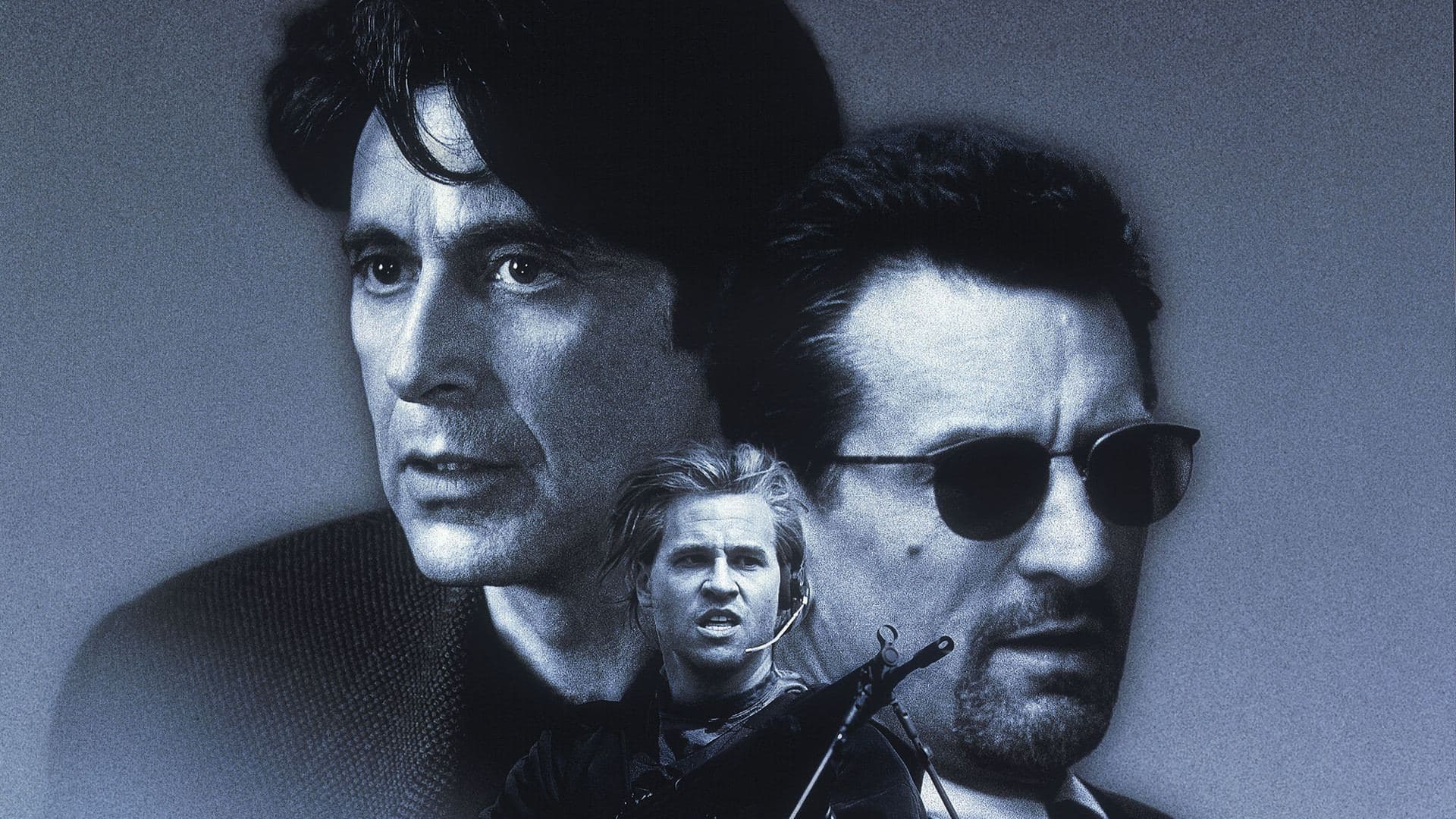
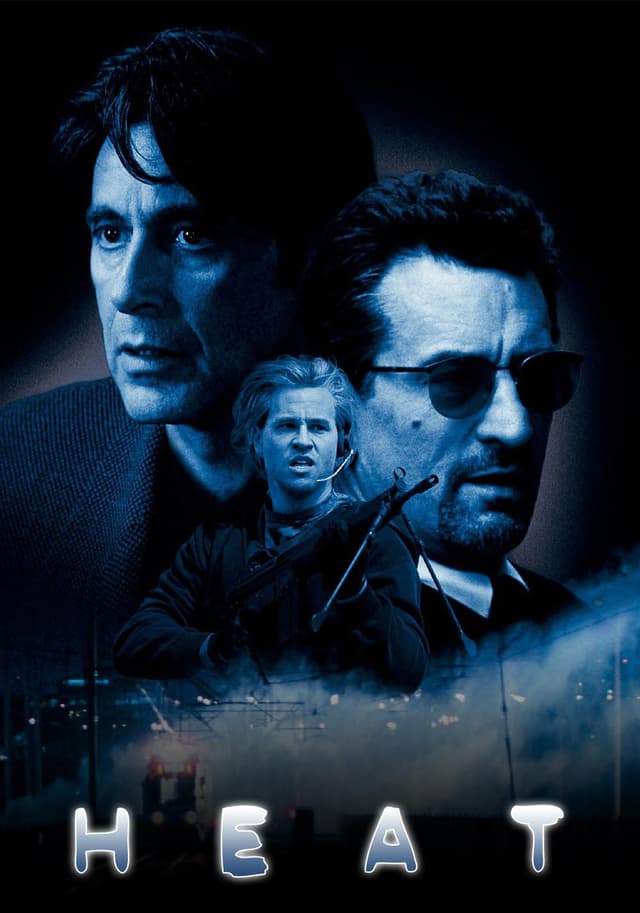
Hunters and their prey--Neil and his professional criminal crew hunt to score big money targets (banks, vaults, armored cars) and are, in turn, hunted by Lt. Vincent Hanna and his team of cops in the Robbery/Homicide police division. A botched job puts Hanna onto their trail while they regroup and try to put together one last big 'retirement' score. Neil and Vincent are similar in many ways, including their troubled personal lives. At a crucial moment in his life, Neil disobeys the dictum taught to him long ago by his criminal mentor--'Never have anything in your life that you can't walk out on in thirty seconds flat, if you spot the heat coming around the corner'--as he falls in love. Thus the stage is set for the suspenseful ending....
What is the budget of Heat?
"Heat," a crime released in 1995, was directed by Michael Mann and stars Al Pacino, Robert De Niro. The production budget was $60,000,000, placing it in the high-budget range for crime productions of the 1990s.
Key Budget Allocation Categories
While specific budget breakdowns are not publicly available, typical cost drivers for a crime production like this include:
- Talent & Director Compensation: Thrillers depend on compelling lead performances to sustain tension, making cast compensation a primary budget concern. Directors with proven thriller credentials command premium fees.
- Cinematography & Location Photography: Thriller aesthetics demand specific visual languages , surveillance-style photography, claustrophobic framing, or expansive location work across multiple cities or countries.
- Editorial & Sound Post-Production: Precision editing , controlling information flow, building suspense through pacing, and orchestrating reveals , requires extended post-production schedules.
- Development: Michael Mann, for Heat (just like for Collateral and Thief), created the character of Neil McCauley, played by Robert De Niro, drawing inspiration from the minimalist and detached style of Alain Delon in Le Samouraï.
What were the major cost factors in Heat?
Several factors contributed to the overall production costs of "Heat."
- Talent: Talent & Director Compensation is one of the primary cost drivers in crime productions of this scale.
- Cinematography: Cinematography & Location Photography is one of the primary cost drivers in crime productions of this scale.
- Editorial: Editorial & Sound Post-Production is one of the primary cost drivers in crime productions of this scale.
How Does Heat's Budget Compare to Similar Films?
At $60,000,000, Heat sits in the high-budget range. Here is how it compares to productions with a similar budget:
- 15 Minutes (2001): Budget $60,000,000, Worldwide Gross $56,359,980
- Almost Famous (2000): Budget $60,000,000, Worldwide Gross $47,386,287
- Analyze That (2002): Budget $60,000,000, Worldwide Gross $55,003,135
- Antz (1998): Budget $60,000,000, Worldwide Gross $171,757,863
- Cats & Dogs (2001): Budget $60,000,000, Worldwide Gross $200,687,492
The median budget for wide-release crime films in the era ranges from $30 to 80M for mid-budget to $150M+ for tentpoles.
Heat Box Office Performance
"Heat" earned $67,436,818 domestically and $187,400,000 worldwide at the box office. Against a production budget of $60,000,000, the film performed strongly at the box office.
A film typically needs to earn approximately twice its production budget to cover marketing and distribution costs. For "Heat," that break-even threshold was roughly $120,000,000. With worldwide earnings of $187,400,000, the film cleared that threshold comfortably.
Box Office Breakdown
Heat

At 212.3%, "Heat" earned roughly $3.12 for every $1 invested in production.
Heat Production History
Michael Mann, for Heat (just like for Collateral and Thief), created the character of Neil McCauley, played by Robert De Niro, drawing inspiration from the minimalist and detached style of Alain Delon in Le Samouraï. The line "I am alone, not lonely" from McCauley (De Niro in Heat) directly echoes the one from Jeff Costello (Delon in Le Samouraï): "I never lose, never really".
De Niro was the first cast member to receive the film script, showing it to Pacino, who also wanted to be part of the film. De Niro believed that Heat was a "very good story, had a particular feel to it, a reality and authenticity". Mann took Kilmer, Sizemore and De Niro to Folsom State Prison to interview actual career criminals to prepare for their roles.
Principal photography for Heat lasted 107 days during the summer of 1995. All of the shooting was done on location in and around Los Angeles due to Mann's decision not to use a soundstage. Both Al Pacino and Robert De Niro prepared extensively for their roles.
Awards and Recognition
15 nominations total
Critical Reception
On Rotten Tomatoes, Heat holds an approval rating of 84%, based on 154 reviews and an average rating of 7.8/10. The website's critical consensus reads, "Though Al Pacino and Robert De Niro share but a handful of screen minutes together, Heat is an engrossing crime drama that draws compelling performances from its stars , and confirms Michael Mann's mastery of the genre." On Metacritic, the film has a weighted average score of 76 out of 100, based on 22 critics, indicating "generally favorable" reviews.
Frequently Asked Questions
How much did it cost to make Heat (1995)?
The production budget was $60,000,000, covering principal photography, cast and crew salaries, locations, sets, post-production, and music. Marketing and distribution (P&A) costs are estimated at an additional $30,000,000 - $48,000,000, bringing the total studio investment to approximately $90,000,000 - $108,000,000.
How much did Heat (1995) earn at the box office?
Heat grossed $67,436,818 domestic, $119,963,182 international, totaling $187,400,000 worldwide.
Was Heat (1995) profitable?
Yes. Against a production budget of $60,000,000 and estimated total costs of ~$150,000,000, the film earned $187,400,000 theatrically - a 212% ROI on production costs alone.
What were the biggest costs in producing Heat?
The primary cost drivers were above-the-line talent (Al Pacino, Robert De Niro, Val Kilmer); talent compensation, location cinematography, and tension-driven editorial.
How does Heat's budget compare to similar crime films?
At $60,000,000, Heat is classified as a mid-budget production. The median budget for wide-release crime films in the era ranges from $30 - 80M for mid-budget to $150M+ for tentpoles. Comparable budgets: 15 Minutes (2001, $60,000,000); Almost Famous (2000, $60,000,000); Analyze That (2002, $60,000,000).
Did Heat (1995) go over budget?
There are no widely reported accounts of significant budget overruns for this production. However, studios rarely disclose precise budget overrun figures publicly. The reported production budget reflects the final estimated cost.
What was the return on investment (ROI) for Heat?
The theatrical ROI was 212.3%, calculated as ($187,400,000 − $60,000,000) ÷ $60,000,000 × 100. This measures gross revenue against production budget only - it does not account for P&A or exhibitor shares.
What awards did Heat (1995) win?
15 nominations total.
Who directed Heat and who were the key crew members?
Directed by Michael Mann, written by Michael Mann, shot by Dante Spinotti, with music by Elliot Goldenthal, edited by Pasquale Buba, William Goldenberg.
Where was Heat filmed?
Heat was filmed in United States of America. Principal photography for Heat lasted 107 days during the summer of 1995. All of the shooting was done on location in and around Los Angeles due to Mann's decision not to use a soundstage. Both Al Pacino and Robert De Niro prepared extensively for their roles.
Filmmakers
Heat

Official Trailer
Build budgets like this one in Saturation
Start from an industry-standard feature film template, import the schedule and rates you already have, and let the cost report keep itself current as you spend. Real-time collaboration, no spreadsheets.