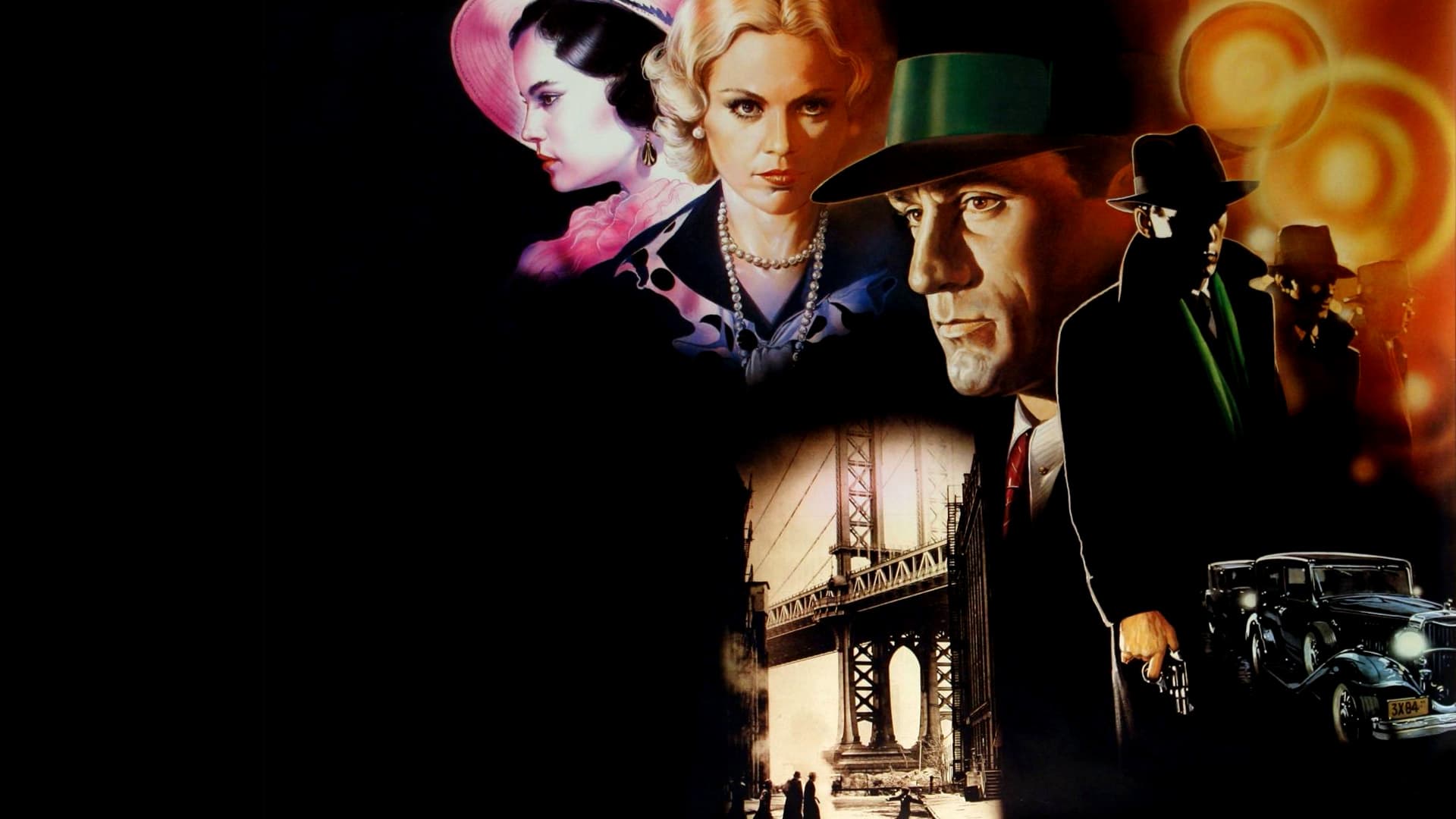
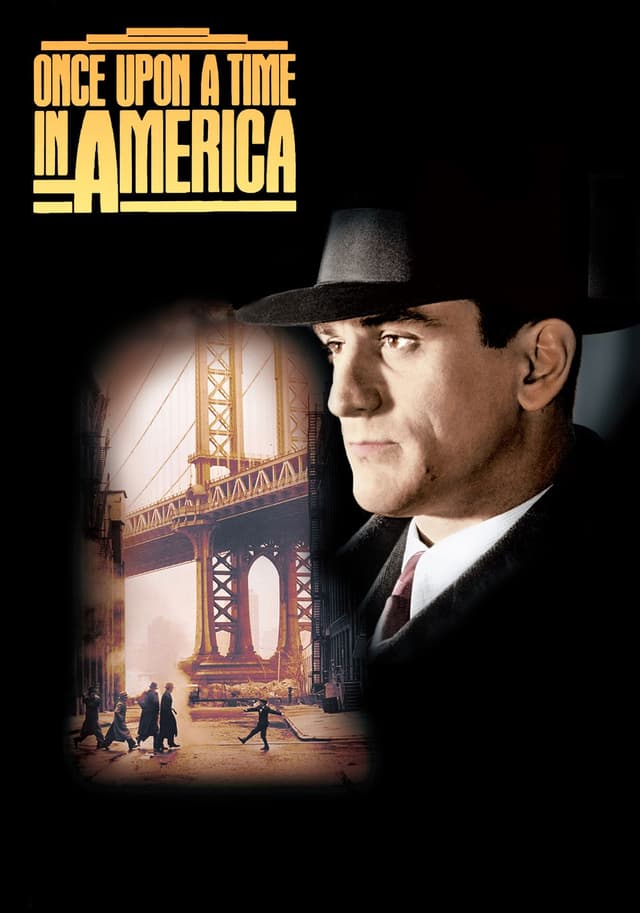
Once Upon a Time in America Budget
 DramaCrime3h 49m
Updated
Synopsis
With the vivid memory of his long-gone childhood friends Max, Patsy, and Cockeye etched in his mind, his ferociously loyal partners-in-crime during their rise to prominence in New York's Prohibition-era Lower East Side, the defeated, penniless, and guilt-ridden former gangster David "Noodles" Aaronson returns to Manhattan. Not knowing what to expect on his mission to shed light on his opaque past, grizzled Noodles reunites with his only living friend Fat Moe after 35 haunted years of self-exile. However, the relentless, piercing sound of culpability stands in the way of finding closure, as the inscrutable content of a well-worn leather suitcase further complicates matters. And now, against the backdrop of a torn conscience, the sad, bittersweet recollections of more than 50 years of love, death, and everything in-between become inextricably intertwined, leading to even more puzzling questions. But what are a man's options when he is left with nothing?
What is the budget of Once Upon a Time in America?
"Once Upon a Time in America," a drama released in 1984, was directed by Sergio Leone and stars Robert De Niro, James Woods. The production budget was $30,000,000, placing it in the mid-budget range for drama productions of the 1980s.
Key Budget Allocation Categories
While specific budget breakdowns are not publicly available, typical cost drivers for a drama production like this include:
- Above-the-Line Talent: Drama films live or die on the strength of their performances.
- Location Filming & Period Production Design: Authentic locations , whether contemporary or historical , require scouting, permits, travel, lodging, and often significant dressing to match the story's time period.
- Post-Production, Color Grading & Score: The editorial process for dramas is typically longer than genre films, with careful attention to pacing and tone.
- Casting: In 1981, at Milchan's suggestion, Leone met Robert De Niro and eventually offered him the role of his choice between Noodles and Max.
What were the major cost factors in Once Upon a Time in America?
Several factors contributed to the overall production costs of "Once Upon a Time in America."
- Above-the-Line Talent: Above-the-Line Talent is one of the primary cost drivers in drama productions of this scale.
- Location Filming: Location Filming & Period Production Design is one of the primary cost drivers in drama productions of this scale.
- Post-Production: Post-Production, Color Grading & Score is one of the primary cost drivers in drama productions of this scale.
How Does Once Upon a Time in America's Budget Compare to Similar Films?
At $30,000,000, Once Upon a Time in America sits in the mid-budget range. Here is how it compares to productions with a similar budget:
- A Hologram for the King (2016): Budget $30,000,000, Worldwide Gross $9,169,507
- A Lot Like Love (2005): Budget $30,000,000, Worldwide Gross $42,886,719
- Big Momma's House (2000): Budget $30,000,000, Worldwide Gross $173,959,438
- Crazy Rich Asians (2018): Budget $30,000,000, Worldwide Gross $238,539,198
- Doomsday (2008): Budget $30,000,000, Worldwide Gross $22,472,631
The median budget for wide-release drama films in the era ranges from $30 to 80M for mid-budget to $150M+ for tentpoles.
Once Upon a Time in America Box Office Performance
"Once Upon a Time in America" earned $5,321,508 domestically and $5,500,000 worldwide at the box office. Against a production budget of $30,000,000, the film faced challenges in theatrical release. Home video, streaming, and ancillary revenue may have contributed to its overall performance.
A film typically needs to earn approximately twice its production budget to cover marketing and distribution costs. For "Once Upon a Time in America," that break-even threshold was roughly $60,000,000. With worldwide earnings of $5,500,000, the film did not reach break-even in theatrical release.
Box Office Breakdown
Once Upon a Time in America

At -81.7%, "Once Upon a Time in America" did not recoup its production budget through theatrical release alone.
Once Upon a Time in America Production History
In 1981, at Milchan's suggestion, Leone met Robert De Niro and eventually offered him the role of his choice between Noodles and Max. De Niro's commitment turned out to be crucial for Milchan's securing the financial backing for the film. For the role of Max, approximately 200 actors were auditioned.
The filming of Once Upon a Time in America started in June 1982 and ended in April the following year. The shooting locations took place in and around the US, Canada, Italy and France, with a focal point in New York City. Interior scenes were filmed mostly at the Cinecittà Studios in Rome.
The musical score was composed by Leone's longtime collaborator Ennio Morricone. "Deborah's Theme" was written for a Franco Zeffirelli film but was rejected. The score is also notable for Morricone's incorporation of the music of Gheorghe Zamfir, who plays a pan flute.
Awards and Recognition
Won 2 BAFTA 11 wins & 13 nominations total
- Silver nugget for the best foreign film
Critical Reception
The initial critical response to Once Upon a Time in America was mixed, primarily because of the different versions released worldwide. Although the film was well received in its original form internationally, American critics were much more dissatisfied with the 139-minute version that was released in North America. The condensed version was a critical and financial disaster, and many American critics who knew of Leone's original cut attacked the shorter version.
Frequently Asked Questions
How much did it cost to make Once Upon a Time in America (1984)?
The production budget was $30,000,000, covering principal photography, cast and crew salaries, locations, sets, post-production, and music. Marketing and distribution (P&A) costs are estimated at an additional $15,000,000 - $24,000,000, bringing the total studio investment to approximately $45,000,000 - $54,000,000.
How much did Once Upon a Time in America (1984) earn at the box office?
Once Upon a Time in America grossed $5,321,508 domestic, $178,492 international, totaling $5,500,000 worldwide.
Was Once Upon a Time in America (1984) profitable?
The film did not break even theatrically, earning $5,500,000 against an estimated $75,000,000 needed. Ancillary revenue may have improved the picture.
What were the biggest costs in producing Once Upon a Time in America?
The primary cost drivers were above-the-line talent (Robert De Niro, James Woods, Elizabeth McGovern); talent compensation, authentic period production design, and meticulous post-production; international production across United States of America, Italy.
How does Once Upon a Time in America's budget compare to similar drama films?
At $30,000,000, Once Upon a Time in America is classified as a low-budget production. The median budget for wide-release drama films in the era ranges from $30 - 80M for mid-budget to $150M+ for tentpoles. Comparable budgets: A Hologram for the King (2016, $30,000,000); A Lot Like Love (2005, $30,000,000); Big Momma's House (2000, $30,000,000).
Did Once Upon a Time in America (1984) go over budget?
There are no widely reported accounts of significant budget overruns for this production. However, studios rarely disclose precise budget overrun figures publicly. The reported production budget reflects the final estimated cost.
What was the return on investment (ROI) for Once Upon a Time in America?
The theatrical ROI was -81.7%, calculated as ($5,500,000 − $30,000,000) ÷ $30,000,000 × 100. This measures gross revenue against production budget only - it does not account for P&A or exhibitor shares.
What awards did Once Upon a Time in America (1984) win?
Won 2 BAFTA 11 wins & 13 nominations total.
Who directed Once Upon a Time in America and who were the key crew members?
Directed by Sergio Leone, written by Sergio Leone, Enrico Medioli, Piero De Bernardi, Franco Arcalli, shot by Tonino Delli Colli, with music by Ennio Morricone, edited by Nino Baragli.
Where was Once Upon a Time in America filmed?
Once Upon a Time in America was filmed in United States of America, Italy. The filming of Once Upon a Time in America started in June 1982 and ended in April the following year. The shooting locations took place in and around the US, Canada, Italy and France, with a focal point in New York City.
Filmmakers
Once Upon a Time in America

Official Trailer
Build budgets like this one in Saturation
Start from an industry-standard feature film template, import the schedule and rates you already have, and let the cost report keep itself current as you spend. Real-time collaboration, no spreadsheets.