Sicario Day of the Soldado Budget
 ActionCrimeThriller2h 2m
Updated
Synopsis
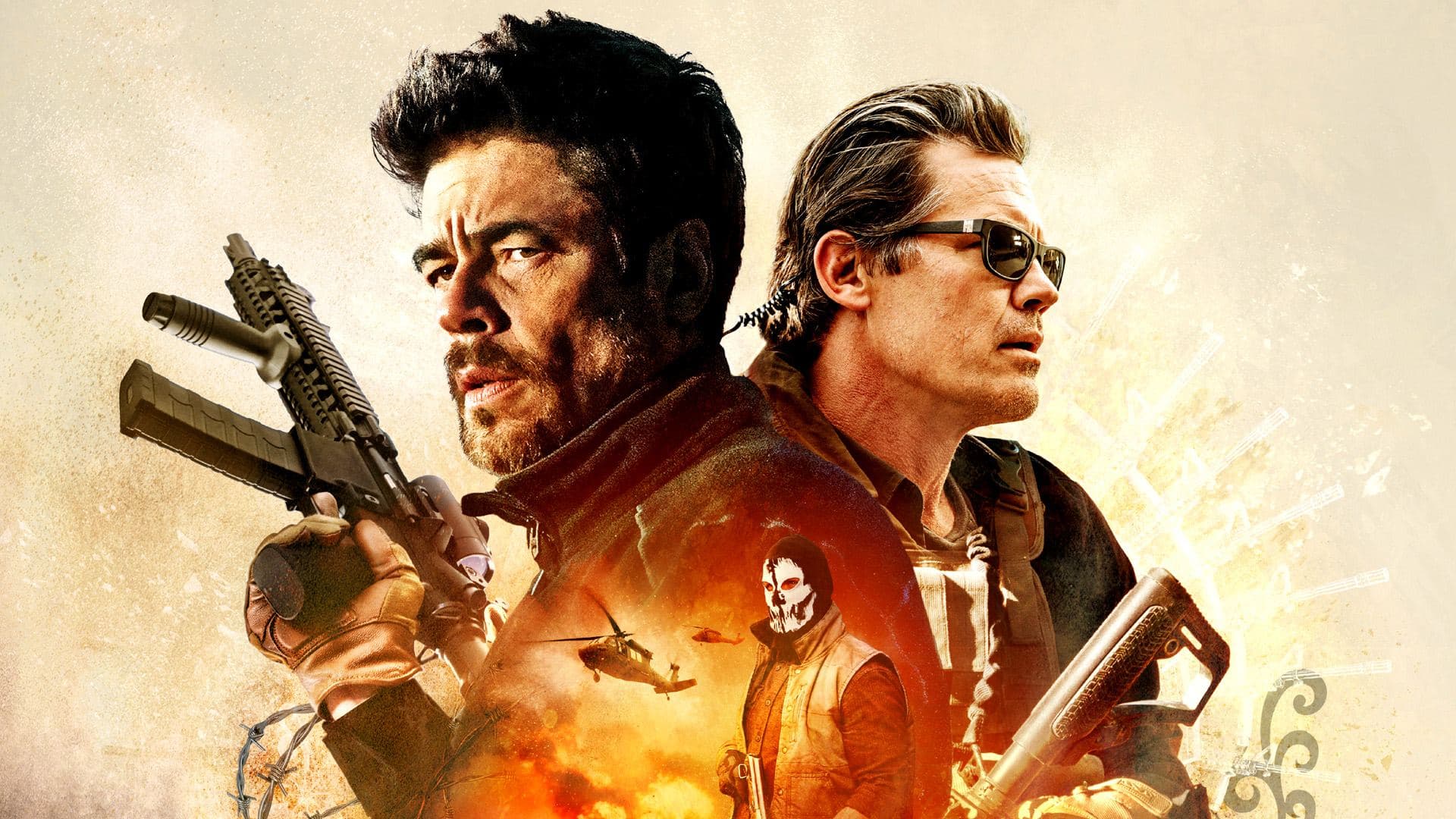
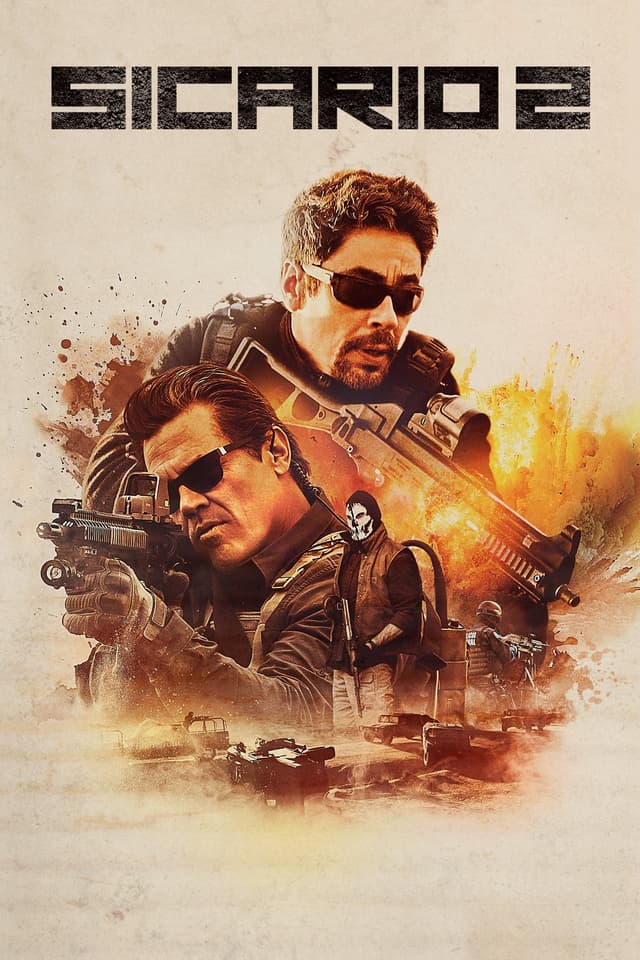
The drug war on the U.S.-Mexico border has escalated as the cartels have begun trafficking terrorists across the border. To fight the war, federal agent Matt Graver re-teams with the mercurial Alejandro Gillick and orchestrates a kidnapping operation that will rip apart the cartels. But when the operation spirals out of control, the two men are pulled into opposite sides of a conflict that no longer has rules.
What Is the Budget of Sicario: Day of the Soldado (2018)?
Sicario: Day of the Soldado (2018), directed by Italian filmmaker Stefano Sollima and distributed in North America by Sony Pictures through its Columbia Pictures label, was produced on a reported budget of $35,000,000, with some industry estimates placing the figure closer to $45,000,000 once cross-border production logistics and reshoots were factored in. The sequel to Denis Villeneuve's Sicario (2015) was financed by Black Label Media and Thunder Road Pictures, with Lionsgate handling international distribution outside the United States and Canada. Screenwriter Taylor Sheridan returned from the first film, but Villeneuve, cinematographer Roger Deakins, composer Jóhann Jóhannsson, and lead actress Emily Blunt did not, leaving Sollima to rebuild the franchise around Benicio del Toro and Josh Brolin's returning operatives.
The budget represented a slight increase over the original film's $30,000,000 cost while remaining decisively in mid-budget territory for a studio thriller. Black Label Media, the Molly Smith and Luckinbill brothers financing entity that had backed the first Sicario, structured the sequel to function as the second installment of a planned trilogy, with margins built around theatrical recoupment in the United States and ancillary television and streaming windows internationally. The compact budget gave Sony and Lionsgate room to greenlight the film without a top-tier action star price tag, with del Toro and Brolin reprising their roles at terms aligned with the original.
Key Budget Allocation Categories
The $35,000,000 production budget was distributed across the following core areas:
- Above-the-Line Talent: Benicio del Toro and Josh Brolin returned as Alejandro Gillick and Matt Graver, with both actors taking compensation tied to backend rather than top-of-budget upfront fees. Director Stefano Sollima, coming off the acclaimed Italian crime series Gomorrah and the global limited series ZeroZeroZero, commanded a feature-director rate aligned with his television track record rather than a Hollywood blockbuster scale. Taylor Sheridan, by this point an in-demand screenwriter following Hell or High Water and Wind River, took a writer-producer fee.
- Cross-Border Locations: The production shot principally in New Mexico, with additional photography in Mexico City and Tijuana, Baja California. Anchoring the shoot in New Mexico unlocked the state's film production tax credit, while the Mexican unit covered urban exteriors, federal police compounds, and street sequences that could not have been replicated on a New Mexico stage. Cross-border logistics added cost compared with a fully domestic shoot but were essential to the film's geographic authenticity.
- Cinematography and Production Design: Dariusz Wolski, the Polish cinematographer best known for his collaborations with Ridley Scott and his work on the Pirates of the Caribbean films, replaced Roger Deakins behind the camera. Wolski's wide-format work covered desert vistas, convoy sequences, and night raids that required significant lighting and grip infrastructure. Production designer Kevin Kavanaugh built convoy interiors, detention facilities, and Mexican cartel compounds for the operations sequences.
- Score and Music: Icelandic composer Hildur Guðnadóttir, who had worked closely with the late Jóhann Jóhannsson on the original Sicario, took over scoring duties for the sequel. Her percussive, low-frequency score continued the sonic identity Jóhannsson had established while adding a more dissonant textural layer. The soundtrack budget covered original composition, orchestral and electronic recording sessions, and licensing.
- Stunts and Action Choreography: Convoy ambushes, military extraction sequences, helicopter set pieces, and a sustained desert firefight required substantial stunt coordination, weapons handling, vehicle work, and second-unit photography. Stunt coordinator Keith Woulard managed the action units across both the New Mexico and Mexico shoots, with armorers and military advisors retained for tactical authenticity.
- Visual Effects: While Sicario: Day of the Soldado is grounded and practical relative to most studio action films, the production still required visual effects support for muzzle flashes, helicopter compositing, blood and ballistic enhancements, and digital extensions of the border crossing sequences. Multiple vendor houses contributed shots, with the heaviest work going to Important Looking Pirates and Worldwide FX.
- Marketing-Adjacent Production Costs: Reshoots in early 2018 added incremental cost as Sony adjusted the film's opening sequence and refined the ending to better set up a planned third installment. Insurance, completion bonds, and finance carrying costs accrued across the 14-month gap between the start of principal photography and release.
How Does Sicario: Day of the Soldado's Budget Compare to Similar Films?
At $35,000,000, Sicario: Day of the Soldado sat firmly within the mid-budget crime-thriller bracket. Its comparison set illustrates the economics of border, cartel, and Taylor Sheridan-adjacent storytelling:
- Sicario (2015): Budget $30,000,000 | Worldwide $84,932,058. Denis Villeneuve's original earned roughly $10 million more worldwide on a slightly smaller budget, validating the franchise economics and triggering the sequel greenlight.
- Hell or High Water (2016): Budget $12,000,000 | Worldwide $38,612,066. Taylor Sheridan's earlier modern western was produced for a fraction of Soldado's cost and earned four Oscar nominations, including Best Picture, demonstrating the upside of Sheridan's tighter, character-driven mode.
- Wind River (2017): Budget $11,000,000 | Worldwide $45,326,032. Sheridan's directorial debut completed the unofficial American frontier trilogy with the original Sicario and Hell or High Water and outperformed its budget by more than four times.
- No Country for Old Men (2007): Budget $25,000,000 | Worldwide $171,627,166. The Coen brothers' border-set crime thriller remains the genre benchmark, winning Best Picture and earning nearly five times its budget worldwide, a multiple Soldado did not approach.
- The Equalizer 2 (2018): Budget $62,000,000 | Worldwide $190,361,395. Sony's contemporaneous summer action sequel cost almost twice as much as Soldado and grossed more than 2.5 times worldwide, showing how a recognizable star vehicle can outperform a franchise reset.
Sicario: Day of the Soldado Box Office Performance
Sicario: Day of the Soldado opened on June 29, 2018 in 3,055 North American theaters, grossing $19,089,471 over its opening weekend and finishing third behind Disney's Incredibles 2 and Universal's Jurassic World: Fallen Kingdom. The opening matched industry expectations for a low-twenties debut but was hampered by direct competition from two family blockbusters in their second and third weekends. The film held reasonably across the July 4 holiday corridor before fading in mid-July as a wave of new releases entered the marketplace.
Against a $35,000,000 production budget, the film needed approximately $80,000,000 to $90,000,000 in worldwide gross to reach theatrical profitability after marketing and distribution costs. Here is the financial breakdown:
Box Office Breakdown
Sicario Day of the Soldado

Sicario: Day of the Soldado returned approximately $1.01 in theatrical revenue for every $1 invested when measured against total estimated production and marketing spend, sitting on the cusp of break-even before ancillary windows. The domestic share of the gross was $50,121,062 against an international share of $25,715,621, a 66/34 split that confirmed the franchise as a North America-anchored property without the global travel of pure action tentpoles.
Ancillary revenue from premium video on demand, home video, and pay television closed the gap and pushed the film into modest overall profitability for Black Label Media and its partners. The performance was sufficient for Sony and Lionsgate to keep the planned third installment alive in development, though the project remained unmade as of the early 2020s.
Sicario: Day of the Soldado Production History
Development on a Sicario sequel began almost immediately after the success of the 2015 original at the Cannes Film Festival and at the global box office. Taylor Sheridan delivered a screenplay in mid-2016 that pivoted away from the FBI procedural framing of the original toward a more operational, mission-driven structure focused on Alejandro Gillick and Matt Graver. Denis Villeneuve declined to return as director, having moved on to Arrival and Blade Runner 2049, and Stefano Sollima was attached in early 2017 on the strength of his work on the Italian crime series Gomorrah and his feature Suburra.
Casting Benicio del Toro and Josh Brolin to reprise their roles was the project's foundation. Emily Blunt did not return because Sheridan's script no longer included Kate Macer, a creative choice that drew criticism from some quarters but was framed by Sheridan and producers as a deliberate shift toward a darker, more morally compromised story. Isabela Moner, then 16, was cast as Isabel Reyes, the kidnapped daughter of a cartel kingpin, and rounded out the central trio. Catherine Keener, Jeffrey Donovan, Manuel Garcia-Rulfo, and Matthew Modine filled out the supporting cast.
Principal photography ran from November 2016 through February 2017, anchored in New Mexico to take advantage of the state's film production tax credit and the desert and border-adjacent locations that had served the original film. The unit also shot in Mexico, including Mexico City and Tijuana, Baja California, for the urban Mexican sequences and the cartel compound material. Dariusz Wolski replaced Roger Deakins as cinematographer, shooting on Arri Alexa cameras in widescreen format to maintain a visual identity in conversation with the original without directly imitating Deakins' compositions.
Hildur Guðnadóttir took over scoring duties from her longtime collaborator Jóhann Jóhannsson, who had died in February 2018 before the film's release. Her score, which would precede her Oscar-winning work on Joker (2019), continued the percussive low-frequency sonic identity of the original while adding a more dissonant textural quality. Reshoots took place in early 2018, refining the opening border crossing sequence and adjusting the film's ending to leave room for a planned third installment. The film premiered on June 26, 2018 in New York and opened wide on June 29, 2018.
Awards and Recognition
Sicario: Day of the Soldado received limited awards recognition, in keeping with its mid-summer release window and its position as a sequel rather than a fresh original. The film was nominated for Best Action Movie at the 2019 Saturn Awards, with additional Saturn nominations for Benicio del Toro (Best Supporting Actor) and the screenplay. It was not nominated at the Oscars, Golden Globes, or BAFTAs.
Hildur Guðnadóttir's score for the film, while not nominated, served as a critical step in her trajectory toward the 2019 Joker score, which won her the Academy Award for Best Original Score, the Golden Globe, the BAFTA, and the Grammy. Sollima's direction was singled out in genre press as a confident handover from Villeneuve, and the film's production design and sound editing received notice from craft guilds without translating to formal nominations.
Critical Reception
Sicario: Day of the Soldado received generally favorable reviews, though noticeably more divided than the original. The film holds a 62% approval rating on Rotten Tomatoes based on 290 critic reviews, with a critical consensus that praised Benicio del Toro's performance and the technical execution while flagging a coarser, less elegant moral framework than Villeneuve's original. On Metacritic, the film scored 61 out of 100, indicating generally favorable reviews. Audiences surveyed by CinemaScore gave the film a B, identical to the original Sicario's grade.
Critics broadly praised Stefano Sollima's muscular direction, Dariusz Wolski's widescreen photography, the convoy and extraction set pieces, and the continued chemistry between Benicio del Toro and Josh Brolin. Variety's Peter Debruge wrote that Sollima "delivers a sequel that's grimier, more violent, and considerably less philosophical than its predecessor," while The New York Times' A. O. Scott called it "a hard-edged thriller that trades the original's ambiguity for blunter geopolitical provocation." Manohla Dargis, also writing for The New York Times, was more skeptical, criticizing the film's framing of border violence as an action-movie premise.
Genre-press reaction was more positive than mainstream criticism. IGN praised the action choreography and del Toro's performance, while Collider singled out Hildur Guðnadóttir's score and Sollima's handling of the moral ambiguity inherited from Taylor Sheridan's screenplay. The mixed but durable reception, combined with the film's ability to recoup costs across theatrical and ancillary windows, has cemented Sicario: Day of the Soldado as a respectable franchise extension rather than a transformative sequel, with the long-rumored third installment still cited in development trades as of the early 2020s.
Frequently Asked Questions
How much did it cost to make Sicario: Day of the Soldado (2018)?
The reported production budget was $35,000,000, with some industry estimates placing the figure closer to $45,000,000 once cross-border production logistics and early 2018 reshoots are factored in. Black Label Media and Thunder Road Pictures financed the film, with Sony Pictures distributing in North America through its Columbia Pictures label and Lionsgate handling international distribution.
How much did Sicario: Day of the Soldado earn at the box office?
The film grossed $50,121,062 domestically and $25,715,621 internationally, for a worldwide total of $75,836,683. It opened to $19,089,471 in the United States on the weekend of June 29, 2018, finishing third behind Incredibles 2 and Jurassic World: Fallen Kingdom.
Was Sicario: Day of the Soldado profitable?
The film recouped its production cost theatrically and reached approximate break-even when measured against the combined $65,000,000 to $75,000,000 production and marketing spend. Ancillary revenue from premium video on demand, home video, and pay television pushed it into modest overall profitability for Black Label Media and its partners.
Who directed Sicario: Day of the Soldado?
Italian filmmaker Stefano Sollima directed the film, working from a screenplay by Taylor Sheridan. Sollima came to the project on the strength of his Italian crime series Gomorrah and his feature Suburra, and would go on to direct Without Remorse (2021) and the global limited series ZeroZeroZero.
Why didn't Denis Villeneuve direct the sequel?
Denis Villeneuve had moved on to Arrival (2016) and Blade Runner 2049 (2017) following the success of the original Sicario. Stefano Sollima was attached as director in early 2017, with Villeneuve remaining attached to the franchise only in an advisory capacity. Cinematographer Roger Deakins also did not return, replaced by Dariusz Wolski.
Why isn't Emily Blunt in Sicario: Day of the Soldado?
Taylor Sheridan's screenplay did not include the FBI agent Kate Macer that Emily Blunt played in the first film. The creative shift was deliberate, framed by Sheridan and the producers as a move toward a darker, more operationally focused story centered on Benicio del Toro's Alejandro Gillick and Josh Brolin's Matt Graver. Isabela Moner joined the cast as the kidnapped cartel daughter Isabel Reyes.
Where was Sicario: Day of the Soldado filmed?
Principal photography ran from November 2016 through February 2017, anchored in New Mexico to take advantage of the state's film production tax credit. Additional photography took place in Mexico City and Tijuana, Baja California, for the urban Mexican sequences and the cartel compound material. Reshoots were conducted in early 2018.
How does Sicario: Day of the Soldado compare to the original Sicario?
The original Sicario (2015) cost $30,000,000 and grossed $84,932,058 worldwide, while the sequel cost $35,000,000 and grossed $75,836,683 worldwide. The sequel earned roughly $9 million less on a slightly larger budget, reflecting a less critically embraced reception and the absence of Denis Villeneuve, Roger Deakins, and Emily Blunt.
Who composed the score for Sicario: Day of the Soldado?
Icelandic composer Hildur Guðnadóttir scored the film, taking over from her longtime collaborator Jóhann Jóhannsson, who had died in February 2018 before the film's release. The Soldado score was a critical step in Guðnadóttir's trajectory toward her 2019 Oscar-winning work on Joker.
What did critics think of Sicario: Day of the Soldado?
The film received generally favorable reviews, holding a 62% approval rating on Rotten Tomatoes based on 290 critic reviews and a 61 out of 100 score on Metacritic. Audiences gave it a B CinemaScore. Critics praised Benicio del Toro's performance, Stefano Sollima's muscular direction, and Dariusz Wolski's widescreen photography while flagging a coarser, less philosophical framework than Denis Villeneuve's original.
Filmmakers
Sicario Day of the Soldado

Official Trailer
Build budgets like this one in Saturation
Start from an industry-standard feature film template, import the schedule and rates you already have, and let the cost report keep itself current as you spend. Real-time collaboration, no spreadsheets.