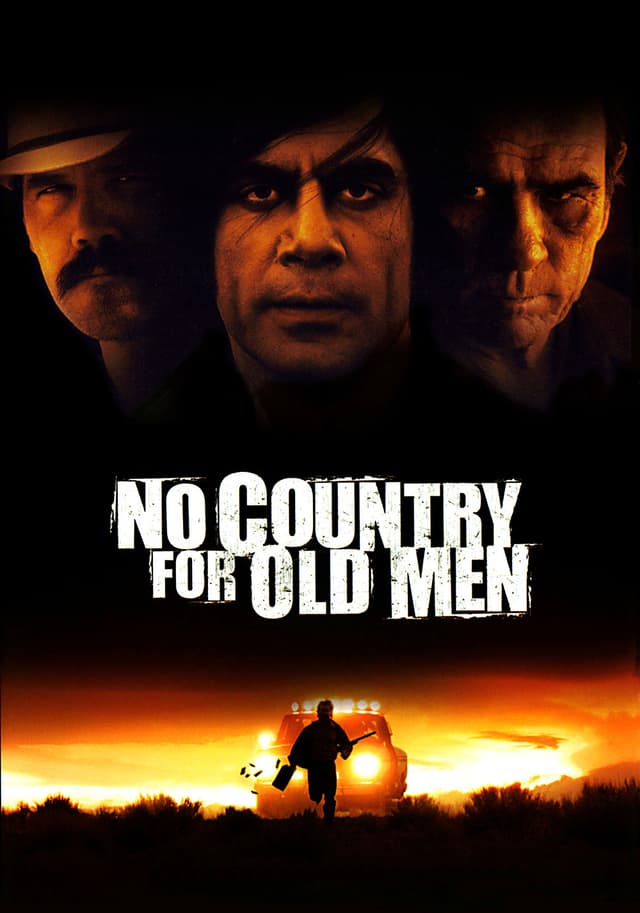
No Country for Old Men Budget
 CrimeThrillerWestern2h 2m
Updated
Synopsis
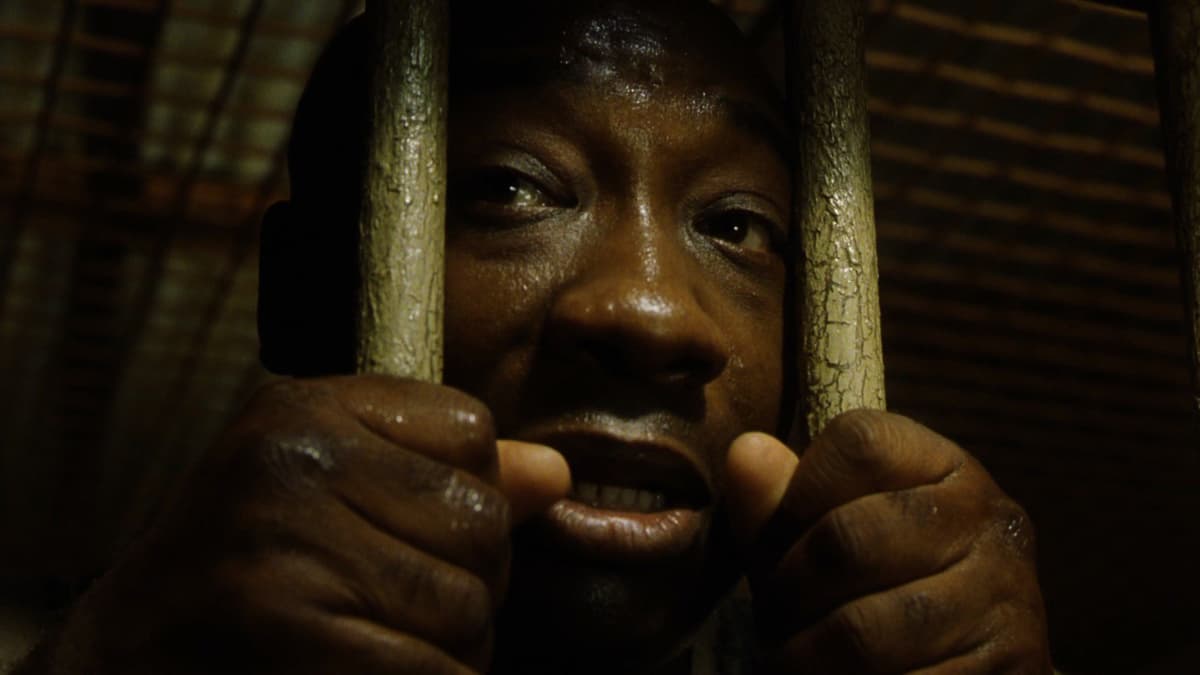
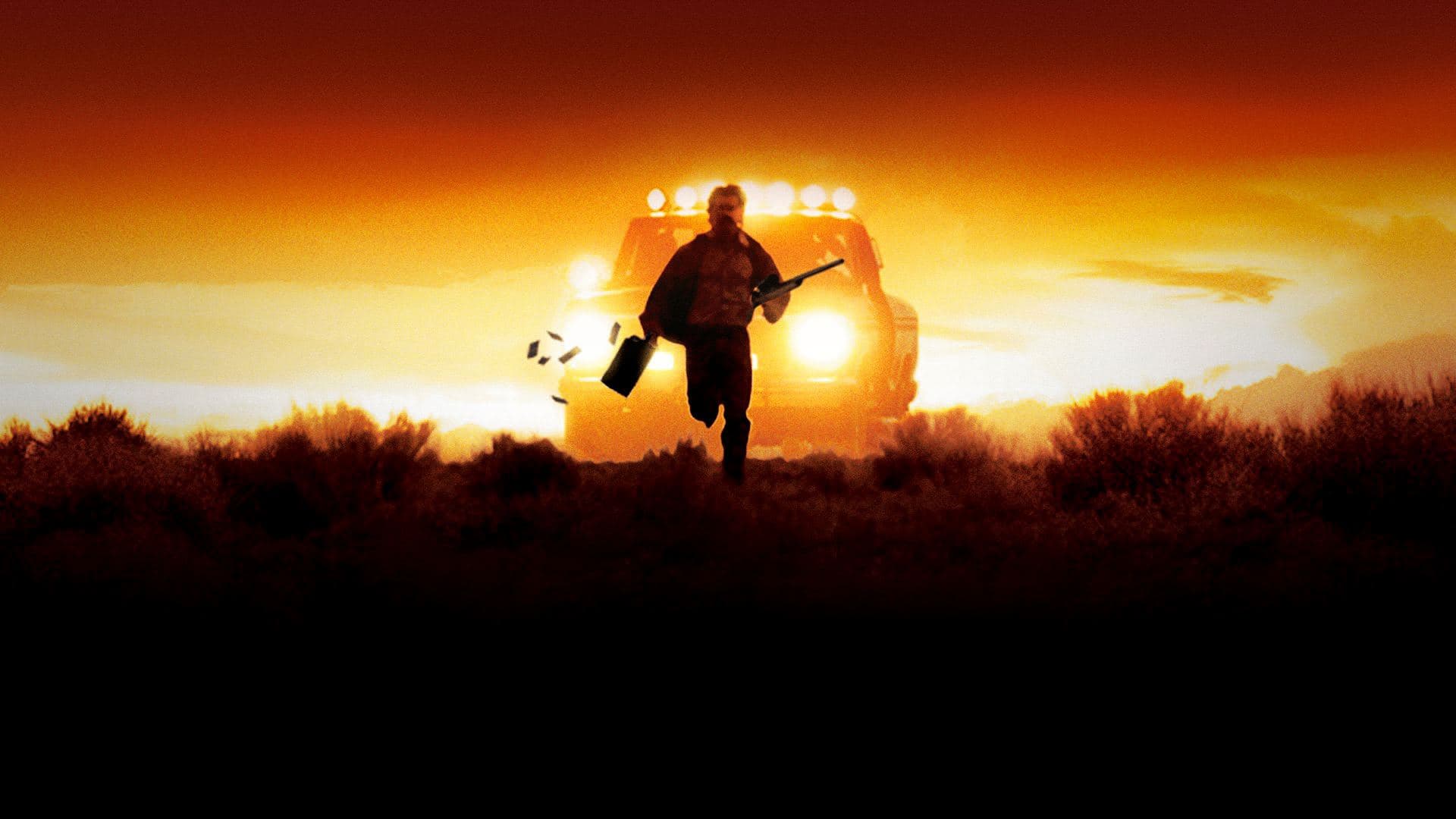
In rural Texas, welder and hunter Llewelyn Moss (Josh Brolin) discovers the remains of several drug runners who have all killed each other in an exchange gone violently wrong. Rather than report the discovery to the police, Moss decides to simply take the two million dollars present for himself. This puts the psychopathic killer, Anton Chigurh (Javier Bardem), on his trail as he dispassionately murders nearly every rival, bystander and even employer in his pursuit of his quarry and the money. As Moss desperately attempts to keep one step ahead, the blood from this hunt begins to flow behind him with relentlessly growing intensity as Chigurh closes in. Meanwhile, the laconic Sheriff Ed Tom Bell (Tommy Lee Jones) blithely oversees the investigation even as he struggles to face the sheer enormity of the crimes he is attempting to thwart.
What is the budget of No Country for Old Men?
"No Country for Old Men," a crime released in 2007, was directed by Joel Coen, Ethan Coen and stars Javier Bardem, Tommy Lee Jones. The production budget was $25,000,000, placing it in the mid-budget range for crime productions of its era.
Key Budget Allocation Categories
While specific budget breakdowns are not publicly available, typical cost drivers for a crime production like this include:
- Talent & Director Compensation: Thrillers depend on compelling lead performances to sustain tension, making cast compensation a primary budget concern. Directors with proven thriller credentials command premium fees.
- Cinematography & Location Photography: Thriller aesthetics demand specific visual languages , surveillance-style photography, claustrophobic framing, or expansive location work across multiple cities or countries.
- Editorial & Sound Post-Production: Precision editing , controlling information flow, building suspense through pacing, and orchestrating reveals , requires extended post-production schedules.
- Writing: The Coens' script was mostly faithful to the source material.
What were the major cost factors in No Country for Old Men?
Several factors contributed to the overall production costs of "No Country for Old Men."
- Talent: Talent & Director Compensation is one of the primary cost drivers in crime productions of this scale.
- Cinematography: Cinematography & Location Photography is one of the primary cost drivers in crime productions of this scale.
- Editorial: Editorial & Sound Post-Production is one of the primary cost drivers in crime productions of this scale.
How Does No Country for Old Men's Budget Compare to Similar Films?
At $25,000,000, No Country for Old Men sits in the mid-budget range. Here is how it compares to productions with a similar budget:
- 1408 (2007): Budget $25,000,000, Worldwide Gross $133,000,000
- A Journal for Jordan (2021): Budget $25,000,000, Worldwide Gross $6,700,000
- Abandon (2002): Budget $25,000,000, Worldwide Gross $10,719,357
- All My Life (2020): Budget $25,000,000, Worldwide Gross $2,000,000
- August Rush (2007): Budget $25,000,000, Worldwide Gross $66,122,026
The median budget for wide-release crime films in the 2000s ranges from $30 to 80M for mid-budget to $150M+ for tentpoles.
No Country for Old Men Box Office Performance
"No Country for Old Men" earned $74,283,625 domestically and $171,627,166 worldwide at the box office. Against a production budget of $25,000,000, the film performed strongly at the box office.
A film typically needs to earn approximately twice its production budget to cover marketing and distribution costs. For "No Country for Old Men," that break-even threshold was roughly $50,000,000. With worldwide earnings of $171,627,166, the film cleared that threshold comfortably.
Box Office Breakdown
No Country for Old Men

At 586.5%, "No Country for Old Men" earned roughly $6.87 for every $1 invested in production.
No Country for Old Men Production History
The Coens' script was mostly faithful to the source material. On their writing process, Ethan said, "One of us types into the computer while the other holds the spine of the book open flat." Also changed from the original was Carla Jean Moss's reaction when finally faced with the imposing figure of Chigurh. As explained by Kelly Macdonald, "the ending of the book is different.
The project was a co-production between Miramax Films and Paramount's classics-based division in a 50/50 partnership, and production was scheduled for May 2006 in New Mexico and Texas. With a total budget of $25 million (at least half spent in New Mexico), production was slated for the New Mexico cities of Santa Fe, Albuquerque, and Las Vegas (which doubled as the border towns of Eagle Pass and Del Rio, Texas), with other scenes shot around the West Texas towns of Sanderson and Marfa. The Coen brothers were actually forced to scrap an entire day of filming for No Country For Old Men when preparations for the oil derrick scene in There Will Be Blood nearby produced enough smoke to ruin all potential scenes.
The Coens minimized the score used in the film, leaving large sections devoid of music. The concept was Ethan's, who persuaded a skeptical Joel to go with the idea. There is some music in the movie, scored by the Coens' longtime composer, Carter Burwell, but after finding that "most musical instruments didn't fit with the minimalist sound sculpture he had in mind ...
Awards and Recognition
Won 4 Oscars. 165 wins & 139 nominations total
- Academy Award for Best Writing, Adapted Screenplay: Joel Coen (80th Academy Awards)
- Academy Award for Best Writing, Adapted Screenplay: Ethan Coen (80th Academy Awards)
- Academy Award for Best Supporting Actor: Javier Bardem (80th Academy Awards)
- National Board of Review: Top Ten Films
- National Board of Review Award for Best Film
- Dallas-Fort Worth Film Critics Association Award for Best Film
- Academy Award for Best Director: Joel Coen (80th Academy Awards)
- Academy Award for Best Director: Ethan Coen (80th Academy Awards)
Frequently Asked Questions
How much did it cost to make No Country for Old Men (2007)?
The production budget was $25,000,000, covering principal photography, cast and crew salaries, locations, sets, post-production, and music. Marketing and distribution (P&A) costs are estimated at an additional $12,500,000 - $20,000,000, bringing the total studio investment to approximately $37,500,000 - $45,000,000.
How much did No Country for Old Men (2007) earn at the box office?
No Country for Old Men grossed $74,283,625 domestic, $97,343,541 international, totaling $171,627,166 worldwide.
Was No Country for Old Men (2007) profitable?
Yes. Against a production budget of $25,000,000 and estimated total costs of ~$62,500,000, the film earned $171,627,166 theatrically - a 587% ROI on production costs alone.
What were the biggest costs in producing No Country for Old Men?
The primary cost drivers were above-the-line talent (Javier Bardem, Tommy Lee Jones, Josh Brolin); talent compensation, location cinematography, and tension-driven editorial.
How does No Country for Old Men's budget compare to similar crime films?
At $25,000,000, No Country for Old Men is classified as a low-budget production. The median budget for wide-release crime films in the 2000s ranges from $30 - 80M for mid-budget to $150M+ for tentpoles. Comparable budgets: 1408 (2007, $25,000,000); A Journal for Jordan (2021, $25,000,000); Abandon (2002, $25,000,000).
Did No Country for Old Men (2007) go over budget?
There are no widely reported accounts of significant budget overruns for this production. However, studios rarely disclose precise budget overrun figures publicly. The reported production budget reflects the final estimated cost.
What was the return on investment (ROI) for No Country for Old Men?
The theatrical ROI was 586.5%, calculated as ($171,627,166 − $25,000,000) ÷ $25,000,000 × 100. This measures gross revenue against production budget only - it does not account for P&A or exhibitor shares.
What awards did No Country for Old Men (2007) win?
Won 4 Oscars. 165 wins & 139 nominations total.
Who directed No Country for Old Men and who were the key crew members?
Directed by Joel Coen, Ethan Coen, written by Ethan Coen, Joel Coen, shot by Roger Deakins, with music by Carter Burwell, edited by Ethan Coen, Joel Coen.
Where was No Country for Old Men filmed?
No Country for Old Men was filmed in United States of America. The project was a co-production between Miramax Films and Paramount's classics-based division in a 50/50 partnership, and production was scheduled for May 2006 in New Mexico and Texas. With a total budget of $25 million (at least half spent in New Mexico), production was slated for the New Mexico cities of Santa Fe, Albuquerque, and Las Vegas (which doubled as the border towns of Eagle Pass and Del Rio, Texas), with other scenes shot around the West Texas towns of Sanderson and Marfa.
Filmmakers
No Country for Old Men

Official Trailer
Build budgets like this one in Saturation
Start from an industry-standard feature film template, import the schedule and rates you already have, and let the cost report keep itself current as you spend. Real-time collaboration, no spreadsheets.