Seventh Son Budget
 AdventureFantasy1h 42m
Updated
Synopsis
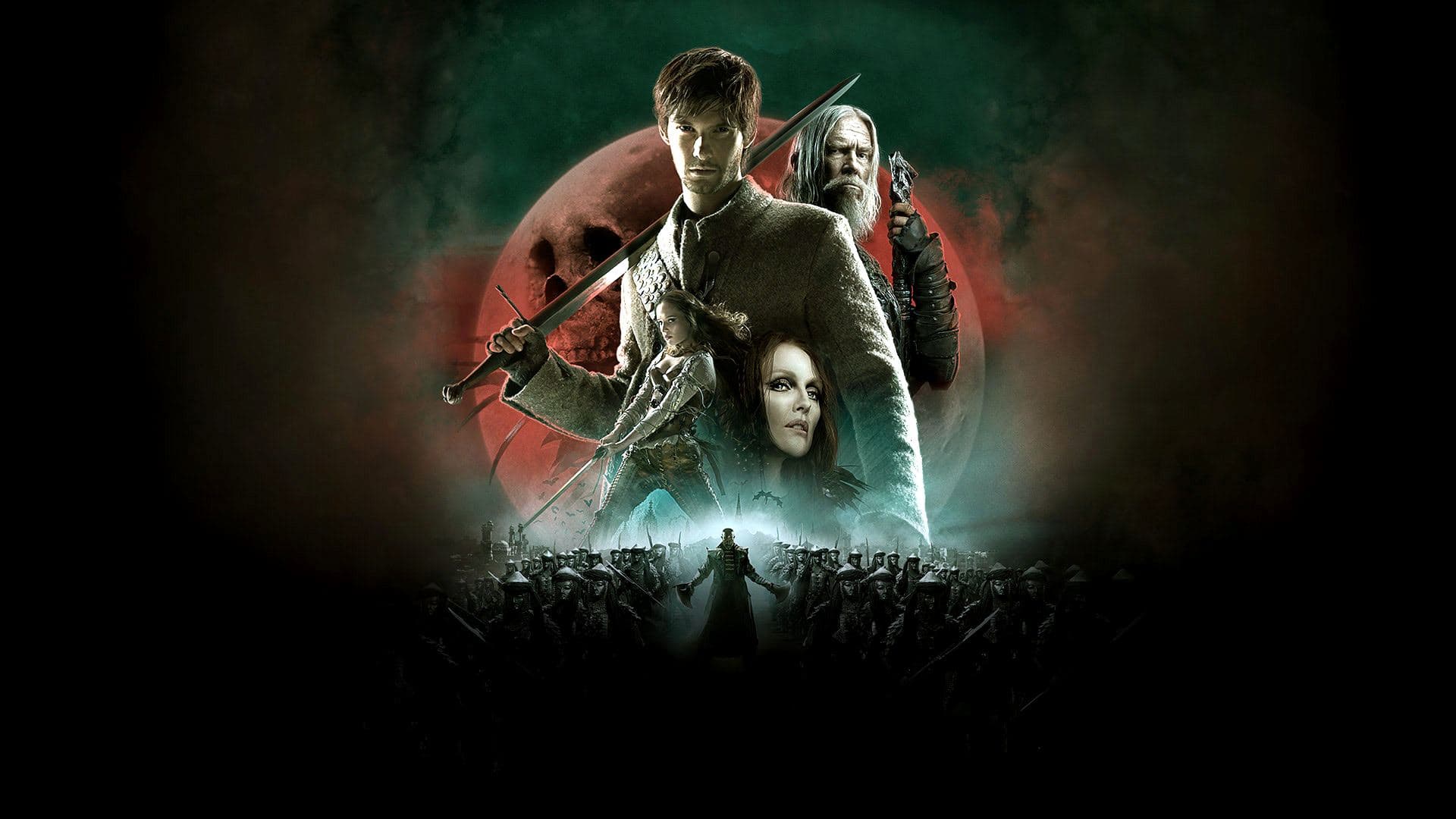
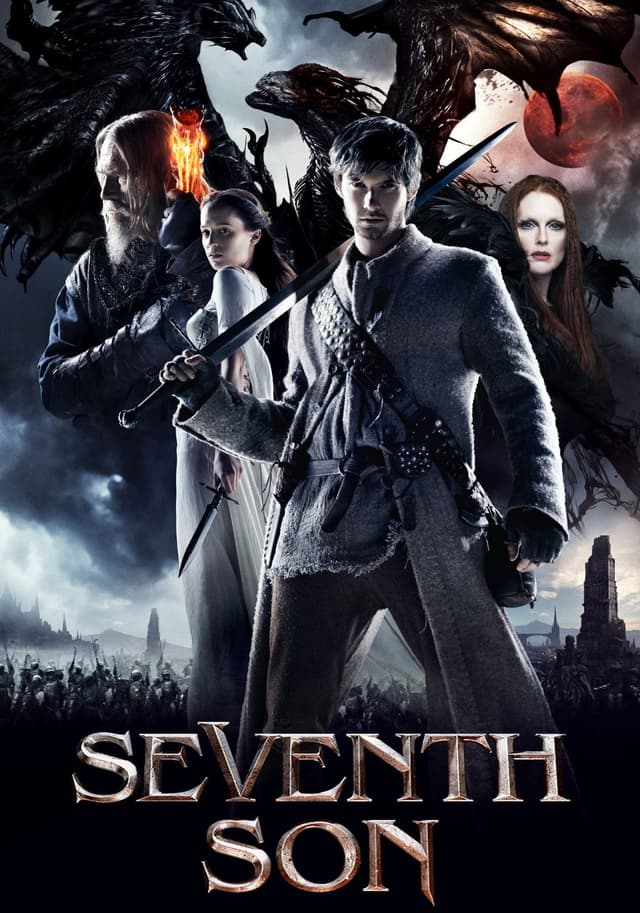
In a time of enchantments when legends and magic collide, the sole remaining warrior of a mystical order travels to find a prophesized hero born with incredible powers, the last Seventh Son. Torn from his quiet life as a farmhand, the unlikely young hero embarks on a daring adventure with his battle-hardened mentor to vanquish a dark queen and the army of supernatural assassins she has dispatched against their kingdom.
What Is the Budget of Seventh Son?
Seventh Son (2014) carried a reported production budget of approximately $95 million, with some industry estimates placing the final cost closer to $110 million after years of production delays, a visual effects crisis, and extensive post-production work. The film was produced by Legendary Entertainment and Thunder Road Pictures and distributed by Universal Pictures.
Despite its substantial budget, the film opened to just $7.1 million domestically in its opening weekend in February 2015, making it one of the more costly misadventures in fantasy blockbuster filmmaking of that era. Including estimated prints and advertising expenditures of roughly $50 million, the total investment likely exceeded $145 million against worldwide receipts of $114 million.
Key Budget Allocation Categories
- Above-the-Line Talent: Jeff Bridges and Julianne Moore commanded significant salaries as established stars anchoring the production, with Bridges portraying grizzled warrior Master Gregory and Moore playing the villain Mother Malkin.
- Visual Effects: The fantasy world required extensive CGI creature creation and environmental work. The production was severely disrupted when visual effects house Rhythm and Hues Studios filed for bankruptcy in 2013, forcing Legendary to advance the company $5 million to complete work already underway.
- Production Delays and Carrying Costs: With principal photography beginning in March 2012 and the film not releasing until February 2015, nearly three years of carrying costs, storage, and crew overhead added substantially to the bottom line.
- Reshoots and Post-Production: Multiple rounds of post-production work, including editorial changes and additional photography, extended the timeline and added to production costs beyond the initial budget.
- Marketing and Distribution: Universal Pictures invested an estimated $50 million in global marketing and distribution costs to support the wide theatrical release, bringing the total investment well above the production budget alone.
- Location Costs: Principal photography was conducted in Vancouver, British Columbia, with additional location work contributing to the production scale of this period fantasy adventure.
How Does Seventh Son Compare to Similar Films?
Seventh Son fits into a wave of big-budget fantasy adaptations from the early 2010s that struggled to connect with audiences. Several comparable films provide context for its commercial performance:
- Jack the Giant Slayer (2013) Budget $195M | Worldwide $197M. Another Warner Bros. and Legendary co-production fantasy epic that barely broke even theatrically, demonstrating that even well-resourced fantasy films struggled in this period without a proven franchise behind them.
- The Golden Compass (2007) Budget $180M | Worldwide $372M. Despite stronger international numbers, The Golden Compass failed to launch the planned His Dark Materials franchise in North America, a cautionary tale about fantasy adaptations that did not resonate domestically.
- 47 Ronin (2013) Budget $175M | Worldwide $151M. Like Seventh Son, 47 Ronin was a costly fantasy action film that opened poorly and failed to recoup its production budget theatrically, representing one of Universal's larger losses of that period.
- Jupiter Ascending (2015) Budget $176M | Worldwide $184M. Released the same month as Seventh Son, Jupiter Ascending was another costly fantasy science fiction film that underperformed significantly at the box office, contributing to a difficult February 2015 at multiplexes.
- Eragon (2006) Budget $100M | Worldwide $250M. An earlier fantasy adaptation that despite modest theatrical returns failed to launch a franchise, sharing with Seventh Son the difficulty of adapting beloved fantasy book series without the depth of character development fans expected.
Seventh Son Box Office Performance
Seventh Son opened in the United States on February 6, 2015, earning just $7.1 million in its opening weekend from 3,065 theaters. The opening represented a dramatic underperformance relative to its budget and studio expectations, placing the film well outside the top five at the domestic box office in its debut frame.
Box Office Breakdown
Seventh Son

International markets, particularly Russia and parts of Eastern Europe where director Sergei Bodrov had an established profile, performed more strongly than the domestic figures. The film earned approximately $97 million outside North America. However, studio revenue shares from international markets are lower than domestic, meaning the global gross still fell short of covering total costs.
Box Office Mojo and The Numbers classify Seventh Son among the significant financial failures of 2015, sitting alongside Jupiter Ascending as a high-profile casualty of the February 2015 release window. The result effectively ended plans for any sequel based on the subsequent Wardstone Chronicles novels.
Seventh Son Production History
The road to Seventh Son reaching theaters was unusually prolonged, even by the standards of major studio fantasy productions. Principal photography began on March 19, 2012, in Vancouver, British Columbia, with director Sergei Bodrov overseeing a large-scale fantasy production that required extensive creature and environment work from the visual effects department.
Originally, the film was scheduled for release on February 15, 2013, but the demands of post-production pushed that date back to October 2013 to allow time to complete the visual effects sequences. The timeline then became dramatically more complicated when Legendary Pictures, which co-produced the film with Warner Bros. as its distribution partner, parted ways with Warner and entered into a new distribution arrangement with Universal Pictures.
The Warner Bros. to Universal transition pulled the release date again, to January 2014, before the distributor ultimately settled on February 6, 2015. The result was a film that spent almost three years in post-production and distribution limbo. Adding to the complications, visual effects company Rhythm and Hues Studios filed for bankruptcy in February 2013 while still working on key sequences for the film. Legendary had to advance the studio $5 million to ensure completion of the contracted work.
Director Sergei Bodrov came to the project with considerable prestige. His Mongol (2007) had earned an Academy Award nomination for Best Foreign Language Film and established him as a director with a strong command of large-scale historical epics. Seventh Son was his English-language Hollywood debut, and the difficult production circumstances limited his ability to realize the film as originally conceived.
The original musical score was composed by A.R. Rahman, the Oscar-winning composer behind Slumdog Millionaire. However, Rahman's score was replaced during post-production by a new score from Marco Beltrami, a frequent collaborator on genre films including several horror and action productions. The reason for the change was not publicly disclosed, but late composer replacements often reflect test screening feedback or editorial adjustments that render the original score a poor fit for the revised cut.
Awards and Recognition
Seventh Son did not receive nominations at major awards organizations. The film's 12 percent Rotten Tomatoes score and 30 out of 100 on Metacritic placed it well outside the consideration range for critics-based awards bodies. CinemaScore, which measures audience reaction on opening night, awarded the film a B-, indicating moderate but not enthusiastic audience reception from the viewers who chose to see it.
The visual effects team worked under difficult circumstances given the Rhythm and Hues bankruptcy crisis during production, but the effects were not singled out for recognition by the visual effects industry. The film did not receive nominations from the Academy of Science Fiction, Fantasy and Horror Films or similar genre-focused bodies. No nominations from the Saturn Awards or the MTV Movie Awards were forthcoming.
Critical Reception
Seventh Son received overwhelmingly negative reviews from critics. The film holds a 12 percent approval rating on Rotten Tomatoes based on 119 reviews, with a critics consensus reading: "Seventh Son squanders an excellent cast and some strange storyline ingredients, leaving audiences with one disappointingly dull fantasy adventure."
Metacritic assigned the film a score of 30 out of 100 based on 32 critic reviews, indicating "generally unfavorable reviews." CinemaScore polling on opening night returned a B-, a relatively soft grade for a wide-release fantasy film targeting younger audiences.
Critics broadly identified the same core problems: a generic fantasy storyline that failed to distinguish itself, underdeveloped characters that wasted a talented cast, and tonal inconsistency. Mark Kermode wrote that the film took a gold-star cast and created something unpolishable. Several reviewers noted the particular difficulty of watching Jeff Bridges deliver his dialogue in a performance that divided opinion sharply, with some finding it entertainingly eccentric and others finding it incomprehensible.
Julianne Moore's performance as the villain Mother Malkin was more frequently cited as a genuine entertainment, with a handful of reviews noting that her commitment to the role provided the film's most watchable moments. Alicia Vikander, in a supporting role released the same year as her breakthrough work in Ex Machina and The Danish Girl, received largely sympathetic notices for doing what she could with limited material.
The strongest criticism centered on a screenplay that failed to build meaningful stakes or character investment despite drawing on source material with a devoted fan base. Joseph Delaney's Wardstone Chronicles novels have sold tens of millions of copies internationally, and readers consistently noted that the adaptation stripped away the emotional depth and world-building that made the books work.
Frequently Asked Questions
What was the production budget for Seventh Son?
Seventh Son had a reported production budget of approximately $95 million, though some estimates place the final cost closer to $110 million after extensive post-production work, visual effects completion, and reshoots. The film was produced by Universal Pictures, Legendary Entertainment, and Thunder Road Pictures.
How much did Seventh Son make at the box office?
Seventh Son earned approximately $114 million worldwide, with a domestic gross of $17.2 million and international earnings of roughly $97 million. Against a production budget of $95 million plus an estimated $50 million in marketing, the film represented a significant financial loss for its distributors, widely reported as a commercial disaster.
Why was Seventh Son a box office failure?
Seventh Son failed commercially for several reasons. The film suffered from years of release delays that eroded audience anticipation, a crowded fantasy film market, and near-universally negative critical reviews scoring just 12 percent on Rotten Tomatoes. Audiences were also unconvinced by marketing materials, giving the film a B- CinemaScore. The prolonged production and distribution complications made it difficult to sustain any marketing momentum.
Is Seventh Son based on a book?
Yes. Seventh Son is based on the novel The Spook's Apprentice by British author Joseph Delaney, published in 2004 in the UK under that title and in North America as The Last Apprentice: Revenge of the Witch. The novel is the first in the Wardstone Chronicles series. The screenplay was written by Charles Leavitt and Steven Knight.
What happened to Kit Harington in Seventh Son?
Kit Harington appeared in Seventh Son in a supporting role as Mr. Bradley, a knight in service to Mother Malkin. Harington had been announced as joining the cast during early production in 2012, prior to Game of Thrones making him a household name. He completed his role in the finished film, though the character has limited screen time.
Who directed Seventh Son?
Seventh Son was directed by Sergei Bodrov, a Russian filmmaker best known for directing Mongol (2007), which earned an Academy Award nomination for Best Foreign Language Film. Seventh Son represented his English-language Hollywood debut. The film starred Jeff Bridges and Ben Barnes, with Julianne Moore as the primary antagonist.
Filmmakers
Seventh Son

Official Trailer
Build budgets like this one in Saturation
Start from an industry-standard feature film template, import the schedule and rates you already have, and let the cost report keep itself current as you spend. Real-time collaboration, no spreadsheets.