Howl's Moving Castle Budget
 FantasyAnimationAdventure1h 59m
Updated
Synopsis
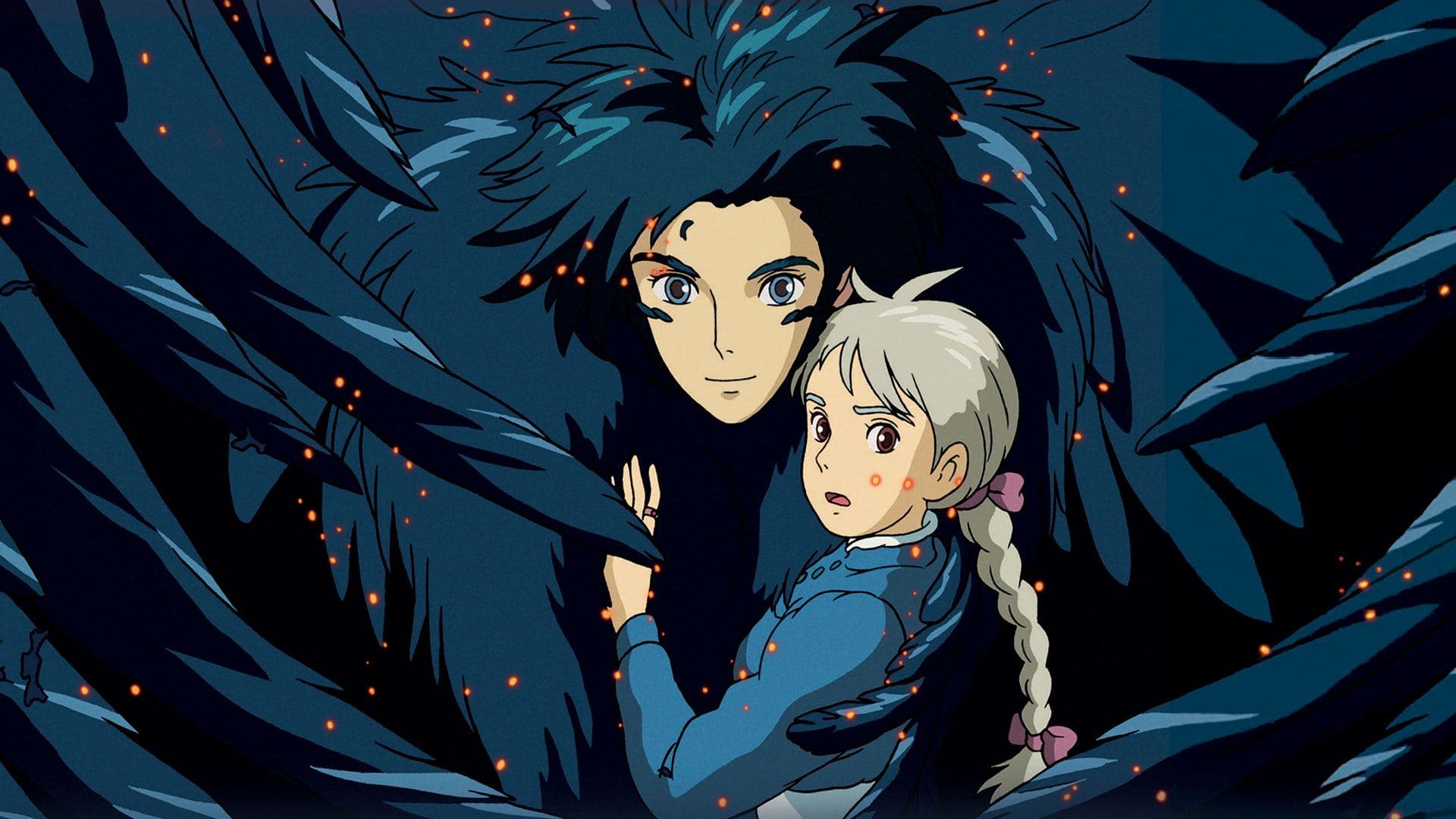
When Sophie, a quiet young hatter, is transformed into an elderly woman by a vengeful witch, she takes refuge in the ambulatory castle of the mysterious wizard Howl. As a devastating war engulfs the kingdom, Sophie discovers that breaking her curse means understanding the secret bargain between Howl and the fire demon Calcifer, and confronting the cost of magic in a world consumed by conflict.
What Is the Budget of Howl's Moving Castle (2004)?
Howl's Moving Castle (2004), directed by Hayao Miyazaki and produced at Studio Ghibli, was made on a reported production budget of $24,000,000. Adapted from the 1986 fantasy novel by British author Diana Wynne Jones, the film was financed primarily through Tokuma Shoten, Studio Ghibli's longtime parent company, with additional backing from a Japanese production committee that included Nippon Television Network, Dentsu, Hakuhodo DY Media Partners, Buena Vista Home Entertainment, Mitsubishi, and Toho. Toho distributed the film theatrically in Japan, while Walt Disney Pictures handled the English-language release through Buena Vista International.
That $24,000,000 figure made Howl's Moving Castle Studio Ghibli's most expensive production at the time of its release, exceeding the $19,000,000 spent on Spirited Away (2001) three years earlier. The increase reflected the scale of the film's elaborate steampunk-era European setting, the volume of frame-by-frame transformations required by Sophie's curse-driven aging, and the integration of computer-generated imagery used to render the castle's mechanical exterior. By Hollywood animation standards the figure remained modest, falling well below the $94,000,000 to $150,000,000 budgets of contemporaneous Pixar and DreamWorks features.
Key Budget Allocation Categories
The $24,000,000 production budget for Howl's Moving Castle covered several distinctive cost centers tied to Studio Ghibli's hand-drawn craft and the specific demands of Miyazaki's adaptation:
- Studio Ghibli Animation Team: A core staff of roughly 150 animators, in-betweeners, and background artists worked on the film across two years of production at the studio's Koganei facility in Tokyo. Lead animation direction was handled by Akihiko Yamashita, with Takeshi Inamura and Kitarou Kousaka supervising key sequences. Studio Ghibli's policy of paying salaried wages rather than per-frame piece rates was a substantial line item, particularly for the lengthy production schedule.
- Hand-Drawn and Digital Hybrid Animation: The film combined traditional cel-style hand-drawn character animation with computer-generated imagery for the castle's mechanical body, the flying machines, and Calcifer's flame effects. CG supervision under Mitsunori Kataama required custom rigging for the four-legged castle and integration with the painted backgrounds, a workflow that consumed roughly a quarter of the production schedule.
- Joe Hisaishi Original Score: Composer Joe Hisaishi, Miyazaki's collaborator since Nausicaä of the Valley of the Wind (1984), wrote an orchestral score anchored by the now-iconic waltz "Merry-Go-Round of Life." The score was recorded with the New Japan Philharmonic at a full symphonic scale. Score recording, orchestra fees, and music licensing represented one of the larger above-the-line costs.
- Japanese Voice Cast: Chieko Baisho voiced both the young and elderly versions of Sophie, a casting choice Miyazaki made specifically to unify the character across her transformations. Pop star Takuya Kimura of SMAP voiced Howl, with Akihiro Miwa as the Witch of the Waste and Tatsuya Gashuin as Calcifer. Kimura's celebrity scale commanded a fee above the standard Japanese animation rate.
- English Dub Production: Walt Disney Pictures commissioned a separate English-language dub under the supervision of Pixar's John Lasseter, with Pete Docter directing. The cast featured Christian Bale as Howl, Emily Mortimer and Jean Simmons as young and old Sophie, Lauren Bacall as the Witch of the Waste, and Billy Crystal as Calcifer. Disney financed the dub separately from the production budget as part of its distribution deal.
- Background and Production Design: Production designer Yoji Takeshige and art director Noboru Yoshida led the painting of more than 1,400 background plates, many depicting the fictional European city of Kingsbury inspired by Colmar in France, where Miyazaki had traveled in 2002. The watercolor-style backgrounds, painted by hand at Studio Ghibli's in-house art department, were a signature line item in the budget.
How Does Howl's Moving Castle's Budget Compare to Similar Films?
At $24,000,000, Howl's Moving Castle sits modestly above the rest of the Miyazaki canon and significantly below contemporaneous American animated features. The comparison set illustrates the value Studio Ghibli extracted from a hand-drawn workflow:
- Spirited Away (2001): Budget $19,000,000 | Worldwide $395,800,000. Miyazaki's previous film cost roughly 21% less than Howl's and ultimately out-earned it on the global stage, anchored by the highest-grossing Japanese theatrical run in history and an Academy Award win for Best Animated Feature.
- Princess Mononoke (1997): Budget $23,500,000 | Worldwide $169,785,629. Miyazaki's late-1990s epic cost almost exactly the same as Howl's and demonstrated that a Studio Ghibli production at this budget tier could clear $150,000,000 worldwide when paired with strong word of mouth and an international distribution push.
- Ponyo (2008): Budget $34,000,000 | Worldwide $204,727,772. Miyazaki's subsequent feature increased the budget by roughly 42% with a smaller global haul, reflecting both the continued inflation of Studio Ghibli production costs and Howl's standing as the upper end of the studio's commercial performance.
- Kiki's Delivery Service (1989): Budget $6,900,000 | Worldwide $40,200,000. The 1989 Miyazaki coming-of-age film cost a fraction of Howl's and earned proportionally less, marking the era before Studio Ghibli scaled its features for the international market.
- The Incredibles (2004): Budget $92,000,000 | Worldwide $631,442,092. Pixar's same-year release cost nearly four times what Howl's did and earned 2.7x the worldwide gross, illustrating the structural cost gap between Tokyo hand-drawn production and Emeryville computer animation.
Howl's Moving Castle Box Office Performance
Howl's Moving Castle opened in Japan on November 20, 2004 on 448 screens, posting an opening weekend gross of approximately $14,500,000 and the largest opening-weekend audience for any Japanese film at that time. It held the number one spot at the Japanese box office for the rest of the year and into early 2005, eventually surpassing Spirited Away as the highest-grossing Japanese theatrical release until Howl's was itself overtaken later in the decade. Disney's North American rollout followed on June 10, 2005 in limited release before expanding nationwide.
Against a reported production budget of $24,000,000, the film needed approximately $50,000,000 in worldwide gross to clear break-even after marketing and distribution. The financial breakdown:
Box Office Breakdown
Howl's Moving Castle

Howl's Moving Castle returned roughly $4.39 in theatrical revenue for every $1 invested when measured against total estimated production and marketing spend, placing it among the most profitable Studio Ghibli releases on a per-dollar basis. Japan accounted for approximately $190,000,000 of the worldwide total, with the remaining $47,000,000 spread across North America, Europe, and East Asia. The film's modest $4,700,000 domestic United States gross reflected Disney's deliberate art-house release strategy rather than any failure of the film itself.
Re-release revenue further widened the margin. GKIDS, which assumed North American rights from Disney in 2017, has periodically returned the film to theaters through its Studio Ghibli Fest program, with each annual screening cycle adding incremental gross to the lifetime total. Home video, streaming licensing to HBO Max and later to Netflix outside the United States, and a continuous merchandising income stream have compounded the original theatrical return into an enduring franchise property.
Howl's Moving Castle Production History
Studio Ghibli optioned Diana Wynne Jones's 1986 novel Howl's Moving Castle in the late 1990s, with director Mamoru Hosoda originally attached to adapt it. Hosoda, then at Toei Animation, spent roughly two years in development before creative differences with Studio Ghibli's leadership led to his departure in 2002. The project was inherited by Hayao Miyazaki, who had previously announced his intention to retire after Spirited Away but returned to direct what he described as a personal response to the 2003 United States invasion of Iraq.
Miyazaki's adaptation reshaped the source material significantly. Where Wynne Jones's novel was a comic British fantasy concerned with sibling rivalry, royal succession, and the rules of magic, Miyazaki's film foregrounded an anti-war argument and added an entire wartime subplot that does not appear in the book. He has discussed in interviews how the destruction of Kingsbury by aerial bombing and the depiction of Howl's transformation into a winged creature drew directly from images of the Iraq War as it unfolded during production. Wynne Jones, who met with Miyazaki in 2004, gave the adapted film her blessing despite the substantial creative liberties.
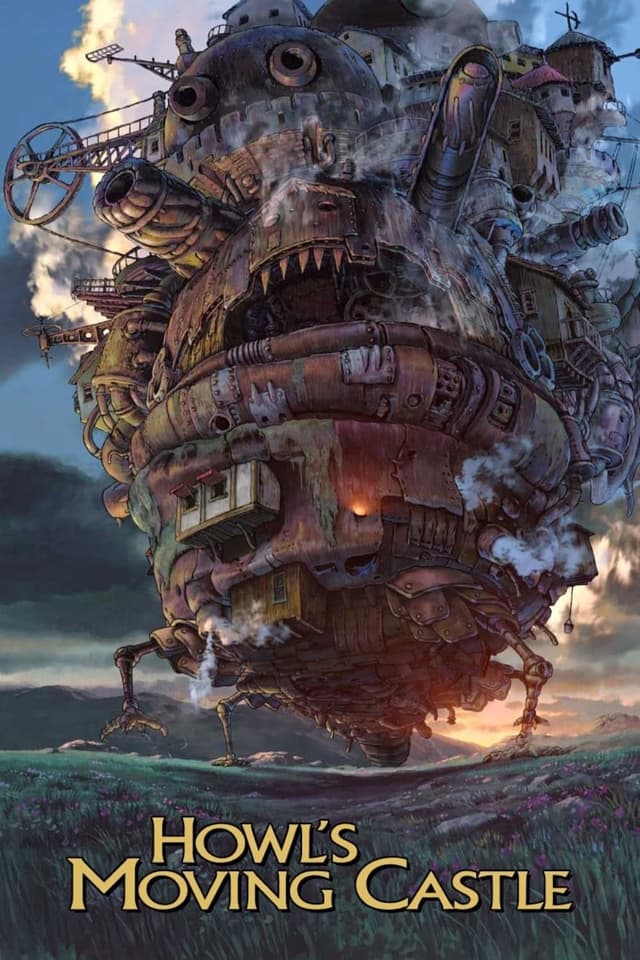
Production at Studio Ghibli's Koganei facility in Tokyo, Japan, began in earnest in February 2003 and continued through September 2004, a roughly twenty-month schedule. Miyazaki traveled to Colmar and Riquewihr in the Alsace region of France in 2002 to gather visual reference for the city of Kingsbury, and to the Swiss countryside for the wasteland sequences. The castle itself went through more than forty design iterations before settling on the four-legged, multi-chimneyed mechanical assembly that appears in the final film, with computer-generated rigging supervised by Mitsunori Kataama integrated under hand-drawn surface animation.
Joe Hisaishi composed the score on the Yamaha CFX concert grand piano before orchestrating it for the New Japan Philharmonic. The waltz "Merry-Go-Round of Life," used as Sophie's theme, was written before the film was animated and became one of the defining cues of the Miyazaki and Hisaishi partnership. The film was completed in October 2004, four weeks before its Japanese theatrical opening.
Awards and Recognition
Howl's Moving Castle was nominated for the Academy Award for Best Animated Feature at the 78th Academy Awards in 2006, losing to Wallace & Gromit: The Curse of the Were-Rabbit. It was the second Miyazaki film to be nominated in the category and remains one of only a handful of Japanese animated features ever shortlisted at the Oscars.
The film won the Osella Award for Technical Achievement at the 61st Venice International Film Festival in September 2004, where it premiered in competition. At the Tokyo Anime Award the same year it took Animation of the Year, Best Director for Miyazaki, Best Voice Actor for Chieko Baisho, and Best Music for Joe Hisaishi. The Mainichi Film Concours named it Best Animation Film of 2005, and the Japan Academy Prize awarded it Best Music Score. The film also received the Nebula Award for Best Script in 2006 from the Science Fiction and Fantasy Writers of America, a recognition that extended to Wynne Jones for the novel and to Miyazaki for the adaptation. Cumulatively the film won more than 20 international awards and festival prizes.
Critical Reception
Howl's Moving Castle received broadly positive reviews. The film holds an 87% approval rating on Rotten Tomatoes based on 200 critic reviews, with a critical consensus praising its visual imagination and emotional warmth while noting that the plot density may challenge first-time viewers. On Metacritic the film scored 80 out of 100 based on 39 reviews, indicating generally favorable reception. The audience score on Rotten Tomatoes is 90%, reflecting the durability of the film's appeal more than two decades after release.
Roger Ebert of the Chicago Sun-Times awarded the film four stars out of four, writing that "Miyazaki's drawings are evocative as always, his characters direct and unaffected, his story rich with the ambiguities of real myth." A.O. Scott of The New York Times called it "an enchanting fable, by turns lovely and harrowing," and Manohla Dargis described the castle itself as "a creation worthy of the great industrial designers." Mick LaSalle of the San Francisco Chronicle was among the more measured reviewers, writing that the film "is a marvel to look at, even when its story turns dense."
Genre press was uniformly enthusiastic. IGN called it "one of the most visually inventive animated films of the decade," and Empire magazine ranked it among the top ten animated films of the 2000s. Some Western critics did flag the substantial deviations from the Diana Wynne Jones novel, particularly the addition of the wartime subplot, but on balance reviewers treated the changes as a successful re-imagining rather than a flaw. The film's reputation has only grown in the years since release, and it is now widely regarded as one of Miyazaki's definitive late-career works alongside Spirited Away and The Wind Rises.
Frequently Asked Questions
How much did it cost to make Howl's Moving Castle (2004)?
The reported production budget was $24,000,000, financed primarily by Studio Ghibli's parent company Tokuma Shoten alongside a Japanese production committee that included Nippon Television Network, Dentsu, Hakuhodo DY Media Partners, Buena Vista Home Entertainment, Mitsubishi, and Toho. The figure made it Studio Ghibli's most expensive production at the time of release, exceeding the $19,000,000 spent on Spirited Away three years earlier.
How much did Howl's Moving Castle earn at the box office?
The film grossed approximately $237,184,432 worldwide, with roughly $190,000,000 of that total coming from Japan and around $47,000,000 from international markets. It opened to approximately $14,500,000 in Japan on November 20, 2004, the largest opening weekend for any Japanese film at the time, and held the number one spot at the Japanese box office for weeks. The North American Disney release on June 10, 2005 added roughly $4,700,000 in domestic gross.
Was Howl's Moving Castle a box office success?
Yes. Against a $24,000,000 production budget and approximately $20,000,000 to $30,000,000 in marketing spend, the film returned roughly $4.39 in worldwide gross for every $1 invested. It became the highest-grossing Japanese theatrical release at the time, surpassing Spirited Away, and ranks among the most profitable Studio Ghibli releases on a per-dollar basis.
Who directed Howl's Moving Castle?
Hayao Miyazaki directed the film at Studio Ghibli, also writing the screenplay adapted from Diana Wynne Jones's 1986 novel. The project was originally developed by director Mamoru Hosoda before Miyazaki inherited it in 2002 after Hosoda departed over creative differences. Miyazaki has described the film as a personal response to the 2003 United States invasion of Iraq.
What book is Howl's Moving Castle based on?
The film is adapted from Howl's Moving Castle, a 1986 fantasy novel by British author Diana Wynne Jones. Miyazaki's adaptation made substantial creative changes to the source, most notably adding a wartime subplot inspired by the Iraq War that does not appear in the book. Wynne Jones met with Miyazaki in 2004 and approved the adaptation despite the liberties.
Who composed the music for Howl's Moving Castle?
Joe Hisaishi composed the original score, his longstanding collaboration with Miyazaki dating back to Nausicaä of the Valley of the Wind in 1984. The waltz "Merry-Go-Round of Life" serves as Sophie's theme and has become one of the most recognized cues in the Miyazaki and Hisaishi partnership. The score was recorded with the New Japan Philharmonic.
Who voices Howl in the English dub?
Christian Bale voices Howl in the Disney English-language dub, which was supervised by Pete Docter under Pixar's John Lasseter. Emily Mortimer voiced young Sophie, with Jean Simmons as elderly Sophie, Lauren Bacall as the Witch of the Waste, Billy Crystal as Calcifer, and Josh Hutcherson as Markl. In the original Japanese version, pop star Takuya Kimura voiced Howl and Chieko Baisho voiced both versions of Sophie.
How does Howl's Moving Castle compare to other Studio Ghibli films?
The film cost $24,000,000, slightly more than Princess Mononoke ($23,500,000) and Spirited Away ($19,000,000) but less than Ponyo ($34,000,000). On worldwide gross it earned $237,184,432, ranking it second only to Spirited Away ($395,800,000) among Miyazaki's catalogue and ahead of Princess Mononoke ($169,785,629), Ponyo ($204,727,772), and Kiki's Delivery Service ($40,200,000).
Did Howl's Moving Castle win an Academy Award?
No. The film was nominated for Best Animated Feature at the 78th Academy Awards in 2006 but lost to Wallace & Gromit: The Curse of the Were-Rabbit. It did win the Osella Award for Technical Achievement at the Venice Film Festival in September 2004, the Tokyo Anime Award for Animation of the Year, the Mainichi Film Concours for Best Animation Film, and the Japan Academy Prize for Best Music Score, among more than twenty international awards.
What did critics think of Howl's Moving Castle?
Reviews were broadly positive. The film holds an 87% approval rating on Rotten Tomatoes (based on 200 critics) and an 80 out of 100 score on Metacritic. Roger Ebert awarded four stars out of four and called the film "rich with the ambiguities of real myth." Some Western reviewers flagged the substantial deviations from the Diana Wynne Jones novel, particularly the addition of the wartime subplot, but on balance treated the changes as a successful re-imagining.
Filmmakers
Howl's Moving Castle

Build budgets like this one in Saturation
Start from an industry-standard feature film template, import the schedule and rates you already have, and let the cost report keep itself current as you spend. Real-time collaboration, no spreadsheets.