George and the Dragon Budget
 Adventure1h 33m
Updated
Synopsis
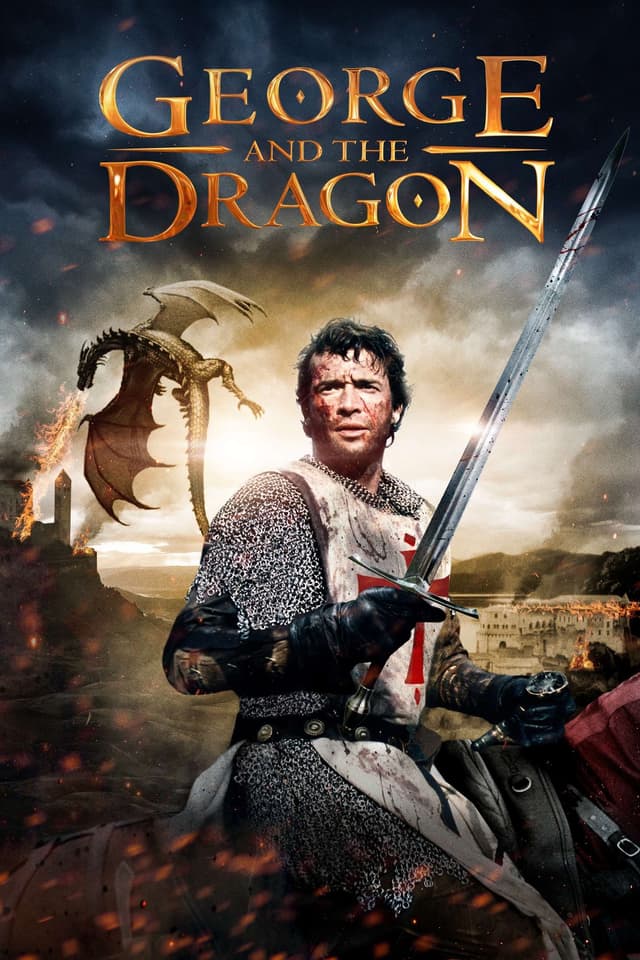
In 12th century England, the noble knight George leaves the Crusades behind to follow his dream of a peaceful life on his own piece of land. However, in order to obtain his land from the ruling king, he must help find the missing princess and confront the legendary dragon whose lair lies between him and the future he has imagined.
What Is the Budget of George and the Dragon (2004)?
George and the Dragon (2004), directed by Tom Reeve and produced through ApolloMedia, The Carousel Picture Company, and Ravenhouse Entertainment, was made on a reported budget of $32,000,000. The figure has been cited across multiple trade sources and home-entertainment licensing documents and is consistent with the production scale, the recognizable Anglo-American cast led by James Purefoy, Piper Perabo, Patrick Swayze, and Michael Clarke Duncan, the visual-effects load for the title dragon, and the multi-country European production footprint.
George and the Dragon was developed as a UK-Luxembourg-Germany co-production seeking advantage of multi-territory European film-financing structures. The film never received a wide North American theatrical release, with the title moving directly to home video in the United States through Lionsgate, and instead released theatrically across European territories beginning in March 2004 before its eventual home-entertainment release.
Key Budget Allocation Categories
The reported $32,000,000 budget covered a multi-country European production, period reconstruction, and the title dragon's visual-effects requirements:
- Above-the-Line Talent: Patrick Swayze and Michael Clarke Duncan together commanded the largest above-the-line spend, with the recognizable Anglo-American cast pairing serving as the financing package's commercial hook for international distribution. James Purefoy took the title role of George at a UK theatrical lead rate, with Piper Perabo as the central female lead and Bill Treacher and Paul Freeman filling out the supporting ensemble. Director Tom Reeve also co-wrote the screenplay with executive producer Michael Burks.
- Period Reconstruction and Costume: The 12th century English setting required full period reconstruction including armor, weaponry, period interior dressing across castle and village settings, and costume across the principal cast and the dozens of period-dressed extras populating the action set pieces. The period costume and armor package consumed substantial production-design resources.
- Visual Effects and Dragon Sequence: The title dragon required substantial visual-effects vendor work including character design, modeling, animation, integration with practical photography, and lighting matching across the multiple dragon-encounter set pieces. Multiple effects houses contributed shots, with the climactic dragon sequence carrying the heaviest VFX load.
- Multi-Country European Location Production: Principal photography took place across the United Kingdom and Luxembourg, with additional shooting in Germany. The multi-country European co-production structure exploited the financing advantages of British, Luxembourgish, and German tax-and-equity programs available to qualifying productions in 2002-2003. The multi-country logistics consumed substantial below-the-line resources.
- Action Sequences and Stunt Coordination: The film stages multiple action set pieces including the opening Crusades battle sequence, the village siege, and the climactic dragon-encounter battle. Stunt coordination, fight choreography across sword-and-spear combat, mounted-horse work, and the rigging and safety provisions across the major battle sequences added a substantial line item appropriate to the action-fantasy register.
- Cinematography and Score: Director of photography Joost van Starrenburg shot the film across the multi-country European locations and constructed interior settings. Composer Gast Waltzing delivered an original orchestral score that anchored the fantasy register, with the music recording sessions and orchestral arrangement adding to the musical-package cost.
How Does George and the Dragon's Budget Compare to Similar Films?
George and the Dragon sits within the early 2000s European-co-production fantasy bracket and the broader period-fantasy landscape:
- Dungeons & Dragons (2000): Budget $45,000,000 | Worldwide $33,800,000. Courtney Solomon's New Line/Hollywood Pictures fantasy at roughly 40% above the George and the Dragon budget illustrates the early 2000s studio-fantasy ceiling and the genre's theatrical struggles. Dungeons & Dragons earned less than its production cost worldwide, a fate George and the Dragon largely shared.
- Reign of Fire (2002): Budget $60,000,000 | Worldwide $82,151,114. Rob Bowman's Touchstone Pictures dragon-action film at nearly double the George and the Dragon budget demonstrates the upper end of dragon-feature spending in the early 2000s and the theatrical performance the genre could achieve with major-studio marketing.
- Eragon (2006): Budget $100,000,000 | Worldwide $250,456,394. Stefen Fangmeier's 20th Century Fox YA dragon-fantasy at more than three times the George and the Dragon budget illustrates the mid-2000s YA-fantasy boom that followed the success of Harry Potter and The Lord of the Rings.
- A Knight's Tale (2001): Budget $41,000,000 | Worldwide $117,500,000. Brian Helgeland's Columbia medieval-adventure at roughly 30% above the George and the Dragon budget illustrates the early 2000s studio period-adventure ceiling and the upside that the genre could achieve when packaged with a star vehicle.
George and the Dragon Box Office Performance
George and the Dragon received a limited theatrical release across European territories beginning in March 2004, with theatrical engagements in the United Kingdom, Germany, Luxembourg, France, and other select European markets. The film never received a wide North American theatrical release. Lionsgate moved the title directly to home video in the United States in 2005. Reported theatrical revenue across the limited European release window was minimal and is not separately tracked in major aggregators.
Against the reported $32,000,000 production budget, the full financial picture relied on European theatrical, North American home video, and downstream television-and-streaming licensing rather than a wide theatrical model. The theatrical numbers alone:
Box Office Breakdown
George and the Dragon

George and the Dragon stands as a cautionary example of early 2000s multi-country European co-production financing structures applied to a fantasy genre that struggled to find theatrical traction in the period between the early Lord of the Rings releases and the subsequent YA-fantasy boom. The film's production financing advantage did not translate into a corresponding theatrical-revenue advantage.
George and the Dragon Production History
George and the Dragon developed as a UK-Luxembourg-Germany co-production through ApolloMedia, The Carousel Picture Company, and Ravenhouse Entertainment. Tom Reeve directed and co-wrote the screenplay with executive producer Michael Burks. Producers Todd Moyer and Romain Schroeder assembled the multi-country financing package across British, Luxembourgish, and German equity and tax-credit partners. Principal photography took place across the United Kingdom and Luxembourg in 2002-2003, with additional shooting in Germany. The multi-country production exploited the financing structures available to qualifying European co-productions in the period before the 2008 introduction of the modern UK Film Tax Relief.
Patrick Swayze and Michael Clarke Duncan took the marquee supporting roles, with the Anglo-American cast pairing serving as the financing package's commercial hook for international distribution. James Purefoy, coming off Resident Evil (2002) and Vanity Fair (2004), took the title role as George the returning Crusader. Piper Perabo, post-Coyote Ugly (2000), took the central female lead. Bill Treacher, the long-running EastEnders performer, and Paul Freeman, the Raiders of the Lost Ark antagonist, filled out the British supporting ensemble.
The film released theatrically across European territories beginning in March 2004 but never received a wide North American theatrical release. Lionsgate moved the title directly to home video in the United States in 2005. The film has subsequently appeared on streaming platforms across home-entertainment licensing windows but has not received a significant theatrical reissue or critical reappraisal in the years since its 2004-2005 release window.
Awards and Recognition
George and the Dragon received no major awards recognition. The film was not nominated at the British Academy Film Awards, the European Film Awards, the Saturn Awards, or any major industry guild ceremonies. It did not feature on critical end-of-year roundups of standout 2004 European or fantasy releases and did not receive technical-craft recognition in visual effects, production design, or costume categories despite the substantial production-scale investment in those areas.
Critical Reception
George and the Dragon received broadly negative reviews from the limited critical sample that engaged with the title. The film holds a low critical aggregate score on Rotten Tomatoes based on a small sample of critic reviews, with Metacritic not aggregating a score given the limited number of qualifying reviews from major outlets. The film did not receive a CinemaScore poll given its limited theatrical release.
The few critics who did weigh in cited a screenplay that struggled to differentiate itself from the broader early-2000s period-fantasy field, visual effects work that some reviewers argued sat uneasily between studio-tentpole and direct-to-video production scale, and a tonal register that several critics found uncertain between earnest period adventure and lighter family-action register. James Purefoy's lead performance and Patrick Swayze's and Michael Clarke Duncan's supporting turns drew the bulk of the positive notice the film received. Industry trade press at the 2004-2005 release window framed George and the Dragon as a representative example of European-co-production financing structures applied to a genre and a release pattern that did not align with the multi-country investment scale, a structural mismatch that the film's commercial outcome confirmed.
Frequently Asked Questions
How much did it cost to make George and the Dragon (2004)?
The reported production budget is $32,000,000. The figure has been cited across multiple trade sources and home-entertainment licensing documents and is consistent with the production scale, the recognizable Anglo-American cast, the visual-effects load for the title dragon, and the multi-country European production footprint.
Where did George and the Dragon release?
The film received a limited theatrical release across European territories beginning in March 2004, including engagements in the United Kingdom, Germany, Luxembourg, France, and other select European markets. The film never received a wide North American theatrical release. Lionsgate moved the title directly to home video in the United States in 2005.
Who directed George and the Dragon?
Tom Reeve directed the film and co-wrote the screenplay with executive producer Michael Burks. The film was Reeve's only feature directorial credit.
Who stars in George and the Dragon (2004)?
James Purefoy plays the title role of George the returning Crusader. Piper Perabo plays the central female lead, with Patrick Swayze and Michael Clarke Duncan in marquee supporting roles. Bill Treacher and Paul Freeman fill out the British supporting ensemble.
Where was George and the Dragon filmed?
Principal photography took place across the United Kingdom and Luxembourg in 2002-2003, with additional shooting in Germany. The multi-country production exploited the financing structures available to qualifying European co-productions in the period before the 2008 introduction of the modern UK Film Tax Relief.
Was George and the Dragon a box office hit?
No. The film received only a limited European theatrical release in March 2004 and never received a wide North American theatrical release, moving directly to home video in the United States through Lionsgate in 2005. Reported theatrical revenue across the limited European release window was minimal.
Is there a dragon in George and the Dragon?
Yes. The title dragon is a central element of the screenplay and required substantial visual-effects vendor work including character design, modeling, animation, integration with practical photography, and lighting matching across the multiple dragon-encounter set pieces. Multiple effects houses contributed shots.
How does George and the Dragon compare to other dragon films?
George and the Dragon's $32,000,000 budget sits well below Reign of Fire (2002) at $60,000,000 and Eragon (2006) at $100,000,000, both of which received wide major-studio theatrical releases. It sits closer to Dungeons & Dragons (2000) at $45,000,000, another early 2000s fantasy that struggled to recoup its production cost theatrically.
Did George and the Dragon win any awards?
No. The film was not nominated at the British Academy Film Awards, the European Film Awards, the Saturn Awards, or any major industry guild ceremonies. It did not feature on critical end-of-year roundups of standout 2004 European or fantasy releases.
What did critics think of George and the Dragon?
Reviews were broadly negative from the limited critical sample that engaged with the title. Critics cited a screenplay that struggled to differentiate itself from the broader early-2000s period-fantasy field, visual effects work that sat uneasily between studio-tentpole and direct-to-video production scale, and a tonal register that several critics found uncertain between earnest period adventure and lighter family-action register.
Filmmakers
George and the Dragon

Official Trailer
Build budgets like this one in Saturation
Start from an industry-standard feature film template, import the schedule and rates you already have, and let the cost report keep itself current as you spend. Real-time collaboration, no spreadsheets.