Mutiny on The Bounty Budget
Updated
Synopsis
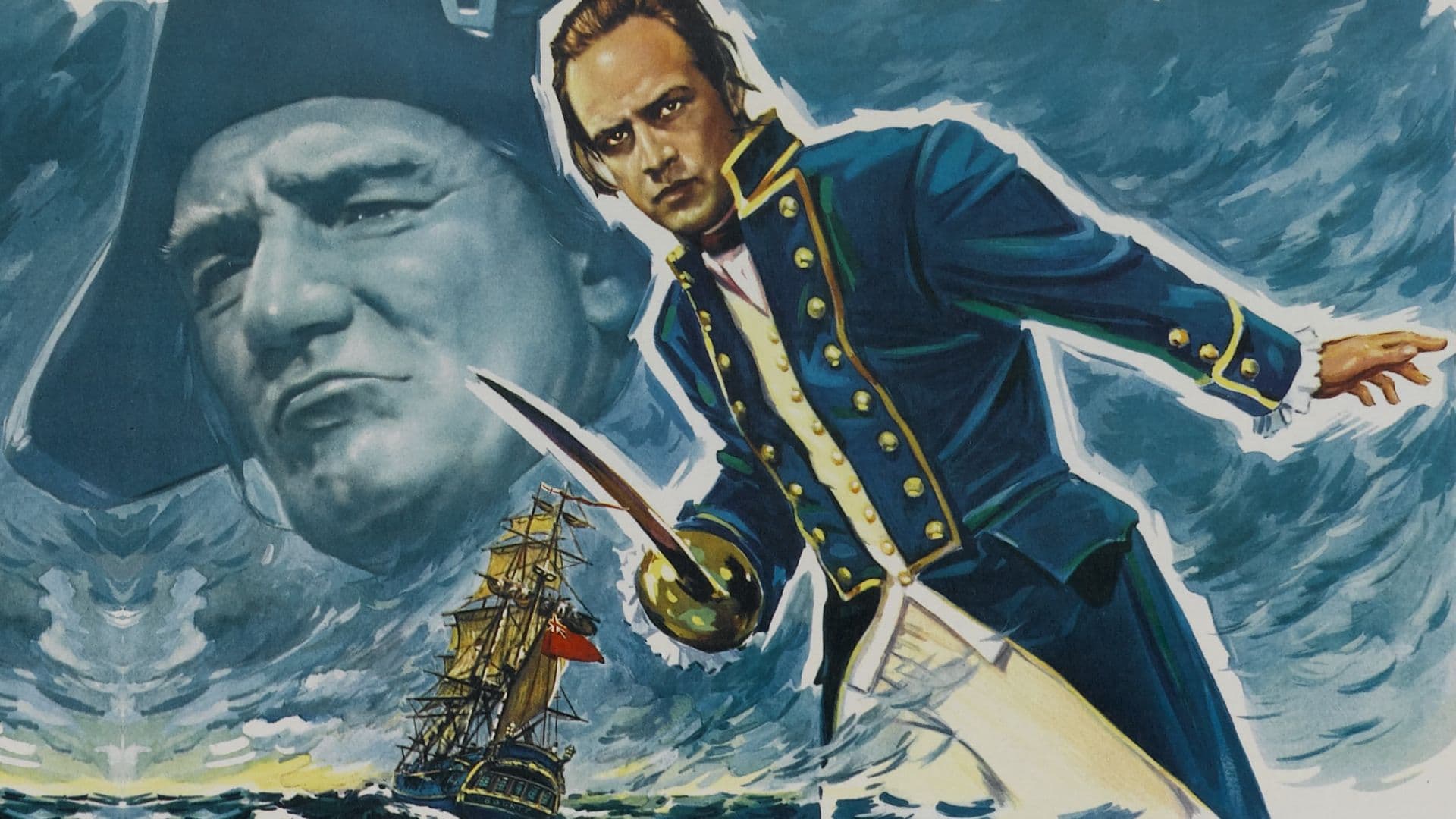
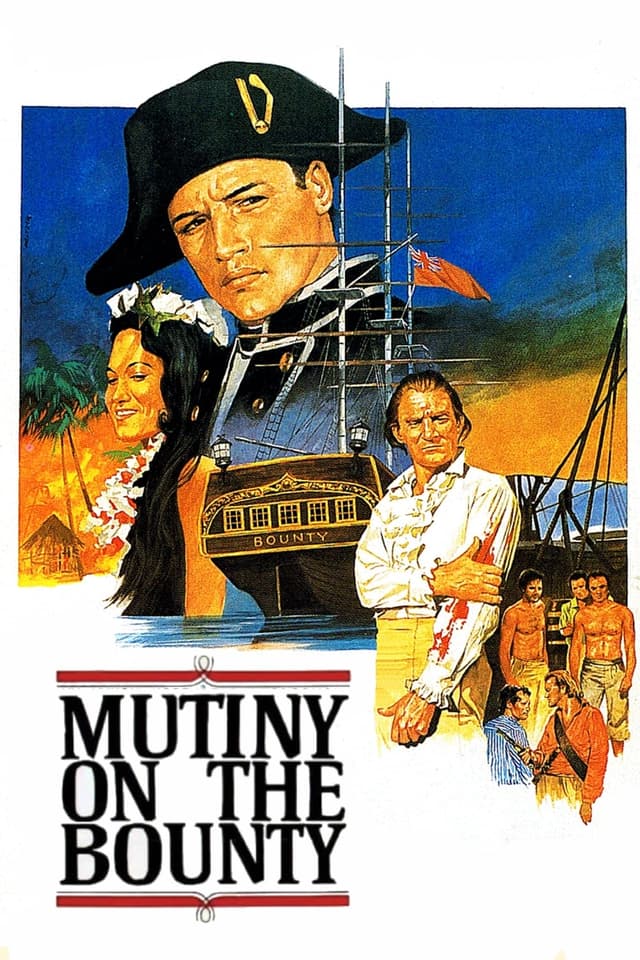
In 1787, the British naval vessel HMS Bounty sets sail from Portsmouth under the command of the brutal Captain William Bligh on a mission to Tahiti to collect breadfruit plants. After months in Tahiti, the homeward voyage descends into cruelty under Bligh, and his cultured first mate Fletcher Christian leads the crew in mutiny, casting Bligh and his loyalists adrift before retreating to Pitcairn Island.
What Is the Budget of Mutiny on the Bounty (1962)?
Mutiny on the Bounty (1962), directed primarily by Lewis Milestone after Carol Reed was fired during production, was made by Metro-Goldwyn-Mayer at a final negative cost of approximately $19,000,000, with some studio accounting and contemporary trade reports placing the figure closer to $27,000,000 once all overages, completion costs, and capitalized interest were tallied. The remake of the 1935 Clark Gable picture was originally greenlit at roughly $5,000,000, and the runaway overages on the Tahiti location shoot, the construction of a full-scale sailing replica of the HMS Bounty, and Marlon Brando's contractual leverage made it one of the most expensive films of its era, comparable on a nominal-dollar basis with Cleopatra (1963) as a defining example of late-studio-system fiscal collapse.
The financial structure of the picture was extraordinary even by 1960s standards. Brando signed for $500,000 against 10% of the gross, plus overtime payments of $5,000 a day after the originally scheduled wrap, a clause that became a near-blank cheque once the production stretched from a planned six months to more than fourteen months of on-and-off shooting. Adjusted for inflation, the final $19,000,000 negative cost is equivalent to roughly $200,000,000 in 2026 dollars, placing it squarely among the largest production budgets in Hollywood history at the time and the catalyst for the management upheaval that toppled MGM head of production Sol Siegel.
Key Budget Allocation Categories
Mutiny on the Bounty's escalating costs broke down across several extraordinary line items, each of which contributed to the picture overshooting its initial estimate by roughly four times:
- Above-the-Line Talent: Marlon Brando earned $500,000 against 10% of the gross, plus a contractual $5,000 a day in overtime once the originally scheduled production calendar lapsed, ultimately drawing roughly $1,250,000 in salary and overage payments alone. Trevor Howard, Richard Harris, and Hugh Griffith were paid feature-lead rates befitting their post-Lawrence and post-Ben-Hur stature, while Carol Reed (fired in early 1961) and his replacement Lewis Milestone both drew director fees against an extended schedule.
- HMS Bounty Replica Ship: MGM commissioned Smith & Rhuland of Lunenburg, Nova Scotia to build a full-scale, fully rigged sailing replica of the original HMS Bounty at a reported cost of $750,000 in 1960 dollars, equivalent to roughly $8,000,000 in 2026 terms. The vessel was launched in August 1960 and sailed under her own power from Nova Scotia through the Panama Canal to Tahiti, a delivery voyage that itself absorbed weeks of crew payroll and insurance.
- Tahiti Location Shoot: The production established a full base of operations in Papeete and the surrounding islands of French Polynesia, building period villages, importing Hollywood crew, contracting hundreds of local extras, and shipping in Technicolor and Ultra Panavision 70 camera equipment. Weather delays, the cyclone season, and the logistical isolation of the location absorbed several million dollars beyond the original Tahiti budget.
- Ultra Panavision 70 Photography: Cinematographer Robert Surtees shot the film in Ultra Panavision 70 with a 2.76:1 aspect ratio, a large-format roadshow process that required custom anamorphic lenses, expensive 65mm negative stock, and slower production rates to handle the format's narrow depth of field. Print costs for the 70mm roadshow release added a further marketing line item.
- Script Rewrites and Production Delays: Writers Eric Ambler, Charles Lederer, Borden Chase, John Gay, and Howard Clewes cycled on and off the screenplay across more than a year, with Lederer eventually receiving sole credit. Lederer was on the Tahiti set rewriting pages daily under pressure from producer Aaron Rosenberg, Brando, and the rotating director. The constant rewrites meant scenes were shot, abandoned, and reshot, an extraordinarily expensive way to find a movie.
- Brando-Driven Overages: Brando, who had story approval over his own character, would refuse to perform takes he did not believe in and routinely arrived late on set. Lewis Milestone publicly described the situation as being in a hurricane on a rudderless ship. Each shooting day Brando was unavailable or non-cooperative continued to draw full crew payroll, equipment rental, and Tahiti location overhead.
- Score and Roadshow Release: Bronisław Kaper composed an original orchestral score recorded with a full studio orchestra, and the song Follow Me, with lyrics by Paul Francis Webster, was nominated for the Academy Award for Best Original Song. MGM committed an additional sum for the roadshow release pattern, including reserved-seat engagements with souvenir programs in major markets.
How Does Mutiny on the Bounty's Budget Compare to Similar Films?
At a final negative cost of approximately $19,000,000, Mutiny on the Bounty sits among the most expensive films of its era. The comparison set, drawn from contemporaneous roadshow epics and other notoriously troubled productions, illustrates how its overages and commercial failure reshaped industry attitudes toward big-budget studio filmmaking:
- Cleopatra (1963): Budget $44,000,000 | Worldwide $57,777,778. The Joseph L. Mankiewicz Elizabeth Taylor epic nearly bankrupted 20th Century Fox the year after Mutiny on the Bounty nearly took down MGM, with the two pictures together becoming the canonical case study in runaway production overages from the late studio system.
- Lawrence of Arabia (1962): Budget $15,000,000 | Worldwide $70,000,000. David Lean's desert epic cost less than Mutiny on the Bounty, won seven Academy Awards including Best Picture, and out-grossed the Bounty by a wide margin, demonstrating that big budgets could still pay off when the creative vision held together.
- Ben-Hur (1959): Budget $15,175,000 | Worldwide $90,000,000. MGM's previous big roadshow gamble, made by William Wyler just three years earlier, cost less than the Bounty remake and delivered a record eleven Oscars plus runaway profits, the result MGM management hoped to replicate with Mutiny.
- Heaven's Gate (1980): Budget $44,000,000 | Worldwide $3,484,331. Michael Cimino's Western was the next generation's defining runaway production, eclipsing Mutiny on the Bounty in absolute dollars and famously bankrupting United Artists, a clear lineal descendant of the Bounty playbook of director-driven cost overruns and box office collapse.
- The Bounty (1984): Budget $25,000,000 | Worldwide $8,613,462. Roger Donaldson's revisionist remake with Mel Gibson as Fletcher Christian and Anthony Hopkins as William Bligh attempted to right the perceived historical wrongs of the 1962 picture and itself flopped commercially, a sign that the Bounty story carried a commercial curse across multiple eras.
- One-Eyed Jacks (1961): Budget $6,000,000 | Worldwide $4,300,000. Marlon Brando's contemporaneous directorial vehicle had already shown the actor's tendency to drive production costs sharply over budget through endless reshoots and a 12-month edit, a pattern MGM ignored at its peril when casting him as Fletcher Christian.
Mutiny on the Bounty Box Office Performance
Mutiny on the Bounty had its world premiere in Loew's State Theatre in New York on November 8, 1962, and opened in a reserved-seat roadshow pattern. Domestic rentals reached approximately $9,800,000, with worldwide rentals of roughly $13,680,000 against a final negative cost of $19,000,000. Once prints, advertising, distribution overhead, and the cost of the roadshow release pattern were included, total studio investment ran to more than $25,000,000 and the picture posted a loss in the range of $14,000,000 on its initial release, a figure that contemporary trade reports identified as one of the largest single-picture write-downs in MGM history.
Against a reported production budget of $19,000,000, the film required approximately $30,000,000 to $40,000,000 in worldwide rentals to reach breakeven. The financial breakdown:
Box Office Breakdown
Mutiny on The Bounty

Mutiny on the Bounty returned approximately $0.51 in worldwide rental revenue for every $1 invested when measured against total studio outlay, placing it among the most consequential financial losses of the late studio era. The shortfall directly precipitated the departure of MGM head of production Sol Siegel in early 1962, his replacement by Robert Weitman, and a broader management overhaul at the studio that continued for several years.
The picture eventually reduced its red ink through subsequent reissues, television sales, and decades of home video and ancillary income, but it never returned a positive line on MGM's books in the 1960s and is universally cited alongside Cleopatra as the picture that helped end the roadshow epic era and accelerate the studios' shift toward the New Hollywood production model of the late 1960s and 1970s.
Mutiny on the Bounty Production History
Mutiny on the Bounty originated as a deliberate MGM attempt to recapture the glory of its 1935 Best Picture winner starring Clark Gable, with producer Aaron Rosenberg developing the remake from 1958. The creative pitch, championed by Marlon Brando, was to focus less on the mutiny itself and more on the fate of the Bounty crew after the rebellion, with Captain Bligh in a secondary role and an extended Tahitian middle act. Eric Ambler delivered the first screenplay drafts on a brief to make Fletcher Christian's part as interesting as Bligh's, and the picture was officially announced as a Brando vehicle in 1960.
Carol Reed was hired as director on the strength of his post-Third Man reputation and his work with leading men. Smith & Rhuland of Lunenburg, Nova Scotia, were commissioned to build a fully functional 1:1 replica of the HMS Bounty at a cost of approximately $750,000. The vessel was launched in August 1960 and sailed under her own power through the Panama Canal to Tahiti, where principal photography began in late 1960. From the outset the shoot was hampered by an unfinished screenplay, cyclone-season weather, the logistical complexity of moving a Hollywood unit to French Polynesia, and an increasingly fraught relationship between Reed and Brando.
In January 1961, after three months of filming, Reed flew back to California with what was publicly described as an undisclosed ailment. When MGM demanded he finish within 100 days, Reed countered with 139 and was promptly fired. Lewis Milestone, the veteran of All Quiet on the Western Front and Ocean's 11, was brought in as a replacement and would later describe the production as being in a hurricane on a rudderless ship. Brando, exercising contractual story and self-approval, frequently arrived late or refused to perform takes, while writer Charles Lederer rewrote pages daily under pressure from Brando, Rosenberg, and the studio. Richard Harris and Brando openly clashed on set.
The unit returned to Tahiti in April 1961 for additional location work, then moved to MGM studios in Culver City, California, for the storm and shipboard sequences, with shooting continuing into 1962. Ultra Panavision 70 cameras captured the action in a 2.76:1 aspect ratio with cinematographer Robert Surtees, and Bronisław Kaper composed the orchestral score. By the time the picture wrapped, Sol Siegel had been removed as MGM head of production, the negative cost had quadrupled from the original $5,000,000 estimate, and the picture had become a public symbol of late-studio-system fiscal collapse.
Marlon Brando emerged from the production having fallen in love with Tahiti, ultimately acquiring a 99-year lease on the atoll of Tetiaroa in 1966, a personal coda to a production whose creative and financial reputation never fully recovered.
Awards and Recognition
Mutiny on the Bounty was nominated for seven Academy Awards at the 35th Oscars ceremony in 1963 but won none, an outcome widely seen at the time as a rejection of MGM's troubled production. The nominations were for Best Picture (Aaron Rosenberg, producer), Best Cinematography Color (Robert Surtees), Best Art Direction Color (George W. Davis, J. McMillan Johnson, Henry Grace, and Hugh Hunt), Best Film Editing (John McSweeney Jr.), Best Music Original Score (Bronisław Kaper), Best Original Song (Follow Me, music by Kaper and lyrics by Paul Francis Webster), and Best Special Effects (A. Arnold Gillespie and Milo B. Lory).
At the 35th Academy Awards, the Best Picture trophy went to Columbia's Lawrence of Arabia, which also swept most of the technical categories Mutiny on the Bounty was nominated in. The picture also received Golden Globe nominations including Best Motion Picture Drama and Best Original Score (Kaper). The full-scale HMS Bounty replica vessel built for the production became a cultural artifact in its own right, sailing as a tourist attraction for decades and appearing in subsequent films before sinking off the coast of North Carolina during Hurricane Sandy in 2012.
Critical Reception
Mutiny on the Bounty received mixed reviews on release, with most critics acknowledging the spectacle while objecting to the inflated runtime (185 minutes in the roadshow cut) and Brando's mannered, English-accented performance as Fletcher Christian. Bosley Crowther in The New York Times called the picture beautifully photographed but found Brando's Christian a curiously fey figure. Time praised the Ultra Panavision 70 vistas of Tahiti but described the screenplay as long, formless, and ultimately dramatically inert. Trade reaction in Variety and The Hollywood Reporter focused as much on the production's notorious overages as on the picture itself.
Retrospective critical assessment has been more generous. The picture holds an 88% approval rating on Rotten Tomatoes based on later critic reviews, with the modern consensus describing it as a flawed but visually breathtaking widescreen epic whose troubled production has been overshadowed in cultural memory by its enduring imagery of the HMS Bounty under sail. Brando's performance, divisive on release, has been reappraised by writers including David Thomson as a deliberate inversion of the conventional masculine lead, anticipating the more interior and contradictory leading men of the New Hollywood generation.
The picture is now most commonly invoked in tandem with Cleopatra (1963) as the canonical example of late-studio-system fiscal collapse and as a case study in how star power, contractual leverage, and management indecision could combine to produce a runaway production. Within the Bounty cinematic tradition, the 1962 picture has settled into the middle position between Frank Lloyd's tighter and more commercially successful 1935 Best Picture winner and Roger Donaldson's revisionist 1984 The Bounty, with the 1962 picture remembered above all for the scale of its ambition and the scale of its overages.
Frequently Asked Questions
How much did it cost to make Mutiny on the Bounty (1962)?
The film's final negative cost was approximately $19,000,000, with some studio accounting and contemporary trade reports placing the figure closer to $27,000,000 once all overages, completion costs, and capitalized interest were included. The original 1958 greenlight was for roughly $5,000,000, meaning the picture overshot its initial estimate by approximately four times. Adjusted for inflation, the final cost is equivalent to roughly $200,000,000 in 2026 dollars.
How much did Mutiny on the Bounty (1962) earn at the box office?
Mutiny on the Bounty earned approximately $9,800,000 in domestic rentals and $13,680,000 in worldwide rentals on its initial release, well below the $30,000,000 to $40,000,000 it needed to break even against its production cost, prints and advertising, and roadshow release expenses. It posted an initial-release loss in the range of $13,000,000 to $14,000,000, one of the largest single-picture write-downs in MGM history.
Was Mutiny on the Bounty (1962) a box office bomb?
Yes. The picture returned approximately $0.51 in worldwide rentals for every $1 of total studio outlay, contributing directly to the removal of MGM head of production Sol Siegel in early 1962 and a broader management overhaul at the studio. Alongside 20th Century Fox's Cleopatra (1963), it is widely cited as one of the defining financial disasters of the late studio system and a key cause of the end of the roadshow epic era.
Who directed Mutiny on the Bounty (1962)?
Lewis Milestone received sole director credit, but Carol Reed shot the first three months of principal photography in Tahiti before being fired by MGM in early 1961 in a dispute over the schedule. Reed's uncredited contributions remain part of the finished film. Milestone, a two-time Best Director Oscar winner for All Quiet on the Western Front and Two Arabian Knights, later described the production as being in a hurricane on a rudderless ship without a captain.
Where was Mutiny on the Bounty (1962) filmed?
The picture was shot primarily on location in Tahiti and the surrounding islands of French Polynesia, with substantial sequences filmed aboard the full-scale sailing replica of HMS Bounty as she traveled between locations. Studio work, including storm and interior shipboard scenes, was completed at MGM studios in Culver City, California. The Bounty replica was built by Smith & Rhuland of Lunenburg, Nova Scotia, and sailed under her own power through the Panama Canal to the Tahiti location.
How much was the HMS Bounty replica ship?
The full-scale, fully rigged sailing replica of the HMS Bounty was built by Smith & Rhuland of Lunenburg, Nova Scotia, at a reported cost of approximately $750,000 in 1960 dollars, equivalent to roughly $8,000,000 in 2026 terms. Launched in August 1960, the ship sailed under her own power to Tahiti, served as a tourist attraction and film location for decades afterward, and sank off the coast of North Carolina during Hurricane Sandy in October 2012.
How much was Marlon Brando paid for Mutiny on the Bounty?
Marlon Brando signed for $500,000 against 10% of the gross, plus a contractual $5,000 a day in overtime payments once the originally scheduled wrap date lapsed. Once the runaway production stretched from a planned six months to more than fourteen months of shooting, his total compensation reached approximately $1,250,000, a figure that contemporaneous trade reports identified as among the largest single-actor paydays of the early 1960s.
Did Mutiny on the Bounty (1962) win any Academy Awards?
Mutiny on the Bounty was nominated for seven Academy Awards at the 35th Oscars ceremony in 1963 but won none. The nominations were Best Picture, Best Cinematography Color, Best Art Direction Color, Best Film Editing, Best Music Original Score, Best Original Song (Follow Me), and Best Special Effects. The Best Picture trophy went to Columbia's Lawrence of Arabia, which swept most of the same technical categories.
How does the 1962 Mutiny on the Bounty compare to the 1935 and 1984 versions?
Frank Lloyd's 1935 Mutiny on the Bounty with Clark Gable and Charles Laughton won Best Picture and was a major commercial hit. The 1962 remake cost roughly four times its budget and lost approximately $14,000,000 on initial release. Roger Donaldson's 1984 The Bounty with Mel Gibson and Anthony Hopkins cost approximately $25,000,000 and grossed only $8,613,462 worldwide, suggesting the Bounty story carried a commercial curse across multiple eras despite its dramatic richness.
What did critics think of Mutiny on the Bounty (1962)?
Reviews on release were mixed, with critics including Bosley Crowther in The New York Times praising the Ultra Panavision 70 cinematography while objecting to the 185-minute runtime and Marlon Brando's mannered, English-accented Fletcher Christian. Retrospective criticism has been more generous, and the film holds an 88% approval rating on Rotten Tomatoes. Brando's once-divisive performance is now sometimes reappraised as a deliberate inversion of the conventional masculine lead, anticipating the interior, contradictory protagonists of the New Hollywood generation.
Filmmakers
Mutiny on The Bounty

Official Trailer
Build budgets like this one in Saturation
Start from an industry-standard feature film template, import the schedule and rates you already have, and let the cost report keep itself current as you spend. Real-time collaboration, no spreadsheets.