Saturation
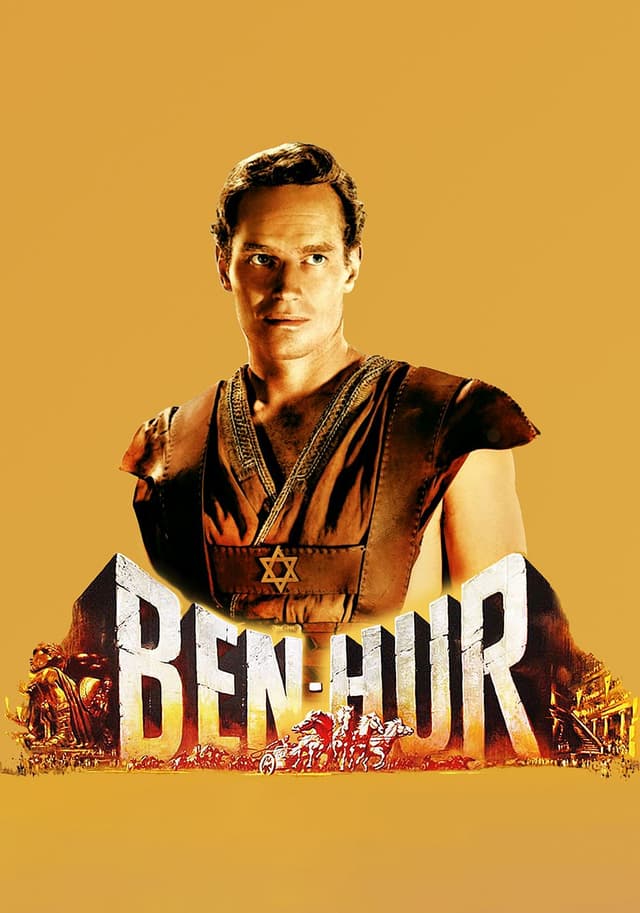
Ben-Hur movie poster

Ben-Hur

GHistory, Drama, Adventure
Budget$15M
Domestic Box Office$74.4M
Worldwide Box Office$164M

Synopsis

Judah Ben-Hur lives as a rich Jewish prince and merchant in Jerusalem at the beginning of the 1st century. Together with the new governor his old friend Messala arrives as commanding officer of the Roman legions. At first they are happy to meet after a long time but their different politic views separate them. During the welcome parade a roof tile falls down from Judah's house and injures the governor. Although Messala knows they are not guilty, he sends Judah to the galleys and throws his mother and sister into prison. But Judah swears to come back and take revenge.

Production Budget Analysis

What was the production budget for Ben-Hur?

Directed by William Wyler, with Charlton Heston, Stephen Boyd, Hugh Griffith leading the cast, Ben-Hur was produced by Metro-Goldwyn-Mayer with a confirmed budget of $15,000,000, placing it in the low-budget category for history films.

At $15,000,000, Ben-Hur was produced on a modest budget. Lower-budget films benefit from reduced break-even thresholds, with profitability achievable at approximately $37,500,000.

Budget Comparison — Similar Productions

• A Dangerous Method (2011): Budget $15,000,000 | Gross $27,462,041 → ROI: 83% • Austin Powers: International Man of Mystery (1997): Budget $16,500,000 | Gross $67,711,748 → ROI: 310% • Away We Go (2009): Budget $17,000,000 | Gross $15,779,455 → ROI: -7% • Ashfall (2019): Budget $17,700,000 | Gross $61,321,941 → ROI: 246% • 127 Hours (2010): Budget $18,000,000 | Gross $35,700,000 → ROI: 98%

Key Budget Allocation Categories

▸ Above-the-Line Talent Drama films live or die on the strength of their performances. Securing award-caliber actors and experienced directors represents the single largest budget line item, often consuming 30–40% of the total production budget.

▸ Location Filming & Period Production Design Authentic locations — whether contemporary or historical — require scouting, permits, travel, lodging, and often significant dressing to match the story's time period. Period dramas add the cost of era-accurate props, vehicles, and set decoration.

▸ Post-Production, Color Grading & Score The editorial process for dramas is typically longer than genre films, with careful attention to pacing and tone. Color grading, a nuanced musical score, and detailed sound mixing are critical to achieving the emotional resonance that defines the genre.

Key Production Personnel

CAST: Charlton Heston, Stephen Boyd, Hugh Griffith, Jack Hawkins, Haya Harareet Key roles: Charlton Heston as Judah Ben-Hur; Stephen Boyd as Messala; Hugh Griffith as Scheich Ildirim; Jack Hawkins as Quintus Arrius

DIRECTOR: William Wyler CINEMATOGRAPHY: Robert Surtees MUSIC: Miklós Rózsa EDITING: Ralph E. Winters, John D. Dunning PRODUCTION: Metro-Goldwyn-Mayer FILMED IN: United States of America

Box Office Performance

Ben-Hur earned $74,432,704 domestically and $89,567,296 internationally, for a worldwide total of $164,000,000. Revenue was split 45% domestic / 55% international.

Break-Even Analysis

Using the industry-standard 2.5x multiplier (P&A + exhibitor shares of 40–50% + distribution fees), Ben-Hur needed approximately $37,500,000 to break even. The film surpassed this threshold by $126,500,000.

Return on Investment (ROI)

Revenue: $164,000,000 Budget: $15,000,000 Net: $149,000,000 ROI: 993.3%

Profitability Assessment

VERDICT: Highly Profitable

Ben-Hur was a clear financial success, generating $164,000,000 worldwide against a $15,000,000 production budget — a 993% ROI. After estimated marketing costs, the film still delivered substantial profit to Metro-Goldwyn-Mayer.

INDUSTRY IMPACT

The outsized success of Ben-Hur likely influenced studio greenlight decisions for similar history projects.

PRODUCTION NOTES

▸ Development

Lew Wallace's 1880 novel, Ben-Hur: A Tale of the Christ, ran to about 550 pages. Zimbalist hired a number of screenwriters to cut the story down and turn the novel into a script. According to Gore Vidal, more than 12 versions of the script had been written by various writers by the spring of 1958. Vidal himself had been asked to write a version of the script in 1957, refused, and been placed on suspension for his decision. According to Wyler, Vidal, their biographers (see bibliography below) and the sources that follow them, Zimbalist was unhappy with Tunberg's script, considering it to be "pedestrian"

The writing effort changed direction when director Sidney Franklin fell ill and was removed from the production. Zimbalist offered the project to William Wyler, who had been one of 30 assistant directors on the 1925 film, in early 1957. Wyler initially rejected it, considering the quality of the script to be "very primitive, elementary" and no better than hack work. Zimbalist showed Wyler some preliminary storyboards for the chariot race and informed him that MGM would be willing to spend up to $10 million, and as a result, Wyler began to express an interest in the picture. MGM permitted Wyler to start casting, and in April 1957, mainstream media outlets reported that Wyler was giving screen tests to Italian leading men, such as Cesare Danova.

Wyler did not formally agree to direct the film until September 1957, Even though he still lacked a leading man, Wyler took the assignment for many reasons: He was promised a base salary of $350,000 as well as 8 percent of the gross box office (or 3 percent of the net profits, whichever was greater), and he wanted to work in Rome again (in Hollywood on the Tiber, where he had filmed Roman Holiday). His base salary was, at the time, the largest ever paid to a director for a single film. In later years, William Wyler would joke that it took a Jew to make a good film about Christ.

▸ Writing

Wyler felt Tunberg's draft was too much of a morality play overlaid with current Western political overtones, and that the dialogue was too modern-sounding. Zimbalist brought in playwright S. N. Behrman (who also wrote the script for Quo Vadis) and then playwright Maxwell Anderson to write drafts. Vidal was researching a book on the 4th century Roman emperor Julian and knew a great deal about ancient Rome. That book was eventually published in 1964 under the title Julian.

Vidal's working style was to finish a scene and review it with Zimbalist. Once Vidal and Zimbalist had come to agreement, the scene would be passed to Wyler. Vidal admitted to William Morris in March 1959 that Fry rewrote as much as a third of the dialogue which Vidal had added to the first half of the script. Vidal made one structural change which was not revised, however. The Tunberg script had Ben-Hur and Messala reuniting and falling out in a single scene. Vidal broke the scene in two, so that the men first reunite at the Castle Antonia and then later argue and end their friendship at Ben-Hur's home. Vidal also added small character touches to the script, such as Messala's purchase of a brooch for Tirzah and Ben-Hur's purchase of a horse for Messala.

Vidal's claim about a homoerotic subtext is hotly debated. Vidal first made the claim in an interview in the 1995 documentary film The Celluloid Closet, and asserted that he persuaded Wyler to direct Stephen Boyd to play the role as if he were a spurned homosexual lover. Vidal said that he believed that Messala's vindictiveness could only be motivated by the feeling of rejection that a lover would feel, and claimed to have suggested to Wyler that Stephen Boyd should play the role that way, and that Heston be kept in the dark about the Messala character's motivations. Wyler himself said that he did not remember any conversation about this part of the script or Boyd's acting with Gore Vidal, Film critic F. X.

▸ Casting

MGM opened a casting office in Rome in mid-1957 to select the 50,000 people who would act in minor roles and as extras in the film, and a total of 365 actors had speaking parts in the film, although only 45 of them were considered "principal" performers. He typically cast the Romans with British actors and the Jews with American actors to help underscore the divide between the two groups. The Romans were the aristocrats in the film, and Wyler believed that American audiences would interpret British accents as patrician. and belittling to Christianity. Paul Newman turned it down because he said he didn't have the legs to wear a tunic. Marlon Brando, Kirk Douglas was interested in the role, but was turned down in favor of Heston, who was formally cast on January 22, 1958. His salary was $250,000 for 30 weeks, a prorated salary for any time over 30 weeks, and travel expenses for his family.

Stephen Boyd was cast as the antagonist, Messala, on April 13, 1958. William Wyler originally wanted Heston for the role, but sought another actor after he moved Heston into the role of Judah Ben-Hur. Because both Boyd and Heston had blue eyes, Wyler had Boyd outfitted with brown contact lenses as a way of contrasting the two men. Marie Ney was originally cast as Miriam, but was fired after two days of work because she could not cry on cue. Heston says that he was the one who suggested that Wyler cast Martha Scott as Miriam, and she was hired on July 17, 1958. Cathy O'Donnell was Wyler's sister-in-law, and although her career was in decline, Wyler cast her as Tirzah. The Israeli actress Haya Harareet, a relative newcomer to film, was cast as Esther on May 16, 1958, Wyler had met her at the Cannes Film Festival, where she impressed him with her conversational skills and force of personality. Sam Jaffe was cast as Simonides on April 3, 1958, and Finlay Currie was cast as Balthasar on the same day.

▸ Production

Metro-Goldwyn-Mayer (MGM) originally announced a remake of the 1925 silent film Ben-Hur in December 1952, ostensibly as a way to spend its Italian assets. Stewart Granger and Robert Taylor were reported to be in the running for the lead. In November 1953, MGM announced it had assigned producer Sam Zimbalist to the picture and hired screenwriter Karl Tunberg to write it. Sidney Franklin was scheduled to direct, with Marlon Brando intended for the lead. In September 1955, Zimbalist, who continued to claim that Tunberg's script was complete, announced that a $7 million, six- to seven-month production would begin in April 1956 in either Israel or Egypt in MGM's new 65mm widescreen process, MGM Camera 65. MGM, however, suspended production in early 1956, following Franklin's resignation.

By the late 1950s, the consent decree of 1948 forcing film studios to divest themselves of theater chains and the competitive pressure of television had caused significant financial distress at MGM. In a gamble to save the studio, and inspired by the success of Paramount Pictures' 1956 Biblical epic The Ten Commandments, Filming started in May 1958 and wrapped in January 1959, and post-production took six months.

Italy was MGM's top choice for hosting the production. However, a number of countries—including France, Mexico, Spain, and the United Kingdom—were also considered. Cinecittà Studios, a very large motion picture production facility constructed in 1937 on the outskirts of Rome, was identified early on as the primary shooting location. Zimbalist hired Wyler's long-term production supervisor, Henry Henigson, to oversee the film, and art directors William A. Horning and Edward Carfagno created the overall look of the film, relying on the more than five years of research which had already been completed for the production. A skeleton crew of studio technicians arrived in the summer of 1956 to begin preparing the Cinecittà soundstages and back lot.

▸ Filming & Locations

Pre-production began at Cinecittà Studios around October 1957. More than a million props were ultimately manufactured. Location shooting in Africa was actively under consideration, and in mid-January 1958, MGM said that filming in North Africa (later revealed to be Libya) would begin on March 1, 1958, and that 200 camels and 2,500 horses had already been procured for the studio's use there. The production was then scheduled to move to Rome on April 1, where Andrew Marton had been hired as second unit director and 72 horses were being trained for the chariot race sequence. However, the American Film Institute claims the filming permit was revoked in Israel for religious reasons as well (although when is not clear), and no footage from the planned location shooting near Jerusalem appeared in the film. Shooting lasted for 12 to 14 hours a day, six days a week. On Sundays, Wyler would meet with Fry and Zimbalist for story conferences. The pace of the film was so grueling that a doctor was brought onto the set to give a vitamin B complex injection to anyone who requested it (shots which Wyler and his family later suspected may have contained amphetamines). To speed things up, Wyler often kept principal actors on stand-by, in full costume and make-up, so that he could shoot pick-up scenes if the first unit slowed down. Actresses Martha Scott and Cathy O'Donnell spent almost the entire month of November 1958 in full leprosy make-up and costumes so that Wyler could shoot "leper scenes" when other shots did not go well. Shooting took nine months, which included three months for the chariot race scene alone. Principal photography ended on January 7, 1959, with filming of the crucifixion scene, which took four days to shoot.

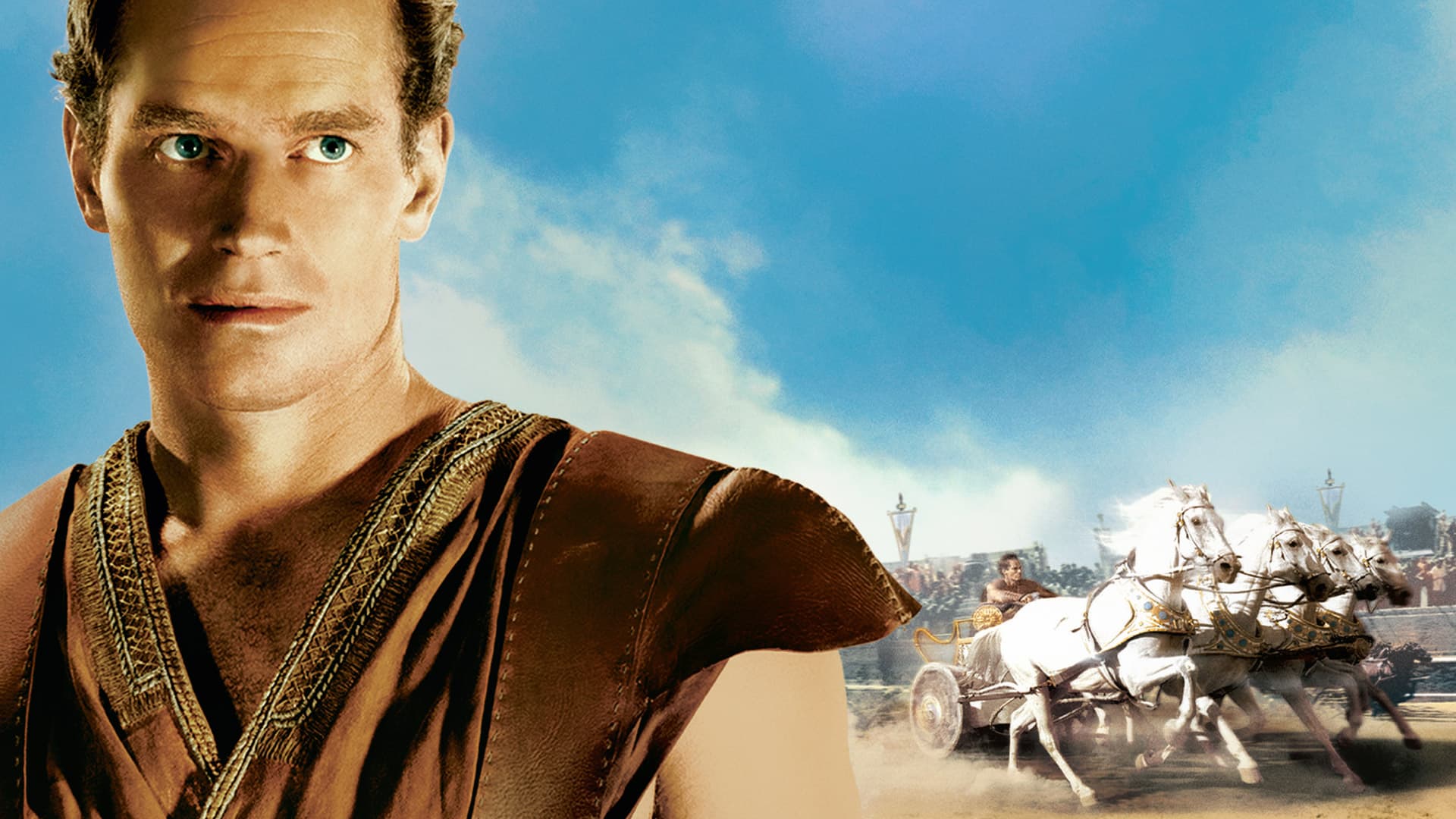
The chariot scene took five weeks (spread over three months) to film at a total cost of $1 million Seven thousand extras were hired to cheer in the stands.

▸ Music & Score

The film score was composed and conducted by Miklós Rózsa, who had scored Quo Vadis and most of MGM's historical films of the 1950s. Rózsa researched Greek and Roman music, incorporating this work into his score for authenticity. Rózsa himself directed the 100-piece MGM Symphony Orchestra during the 12 recording sessions (which stretched over 72 hours). The soundtrack was recorded in six-channel stereo. and two-and-a-half hours of it were finally used, making it at the time the longest score ever composed for a motion picture. It was finally surpassed in 2021 by the near 4-hour long score of Zack Snyder's Justice League.

Rózsa won his third Academy Award for his score. Like most film musical soundtracks, it was issued as an album for the public to enjoy as a distinct piece of music. The score was so lengthy that it had to be released in 1959 on three LP records, although a one-LP version with Carlo Savina conducting the Symphony Orchestra of Rome was also issued. In addition, to provide a more "listenable" album, Rózsa arranged his score into a "Ben-Hur Suite", which was released on Lion Records (an MGM subsidiary that issued low-priced records) in 1959. This made the Ben-Hur film musical score the first to be released not only in its entirety but also as a separate album. The musical soundtrack to Ben-Hur remained deeply influential into the mid-1970s, when film music composed by John Williams for films such as Jaws, Star Wars, and Raiders of the Lost Ark became more popular among composers and film-goers. Rózsa's score has since seen several notable re-releases, including by the Nuremberg Symphony Orchestra on Capitol Records in 1967, several of the tracks by the United Kingdom's National Philharmonic Orchestra and Chorus on Decca Records in 1977 and a Sony Music reissue as a two-CD set in 1991. In 2012, Film Score Monthly WaterTower Music issued a limited edition five-CD set of music from the film.

AWARDS & RECOGNITION

Summary: Won 11 Oscars. 29 wins & 13 nominations total

Awards Won: ★ Academy Award for Best Sound — Franklin Milton (32nd Academy Awards) ★ Academy Award for Best Original Dramatic or Comedy Score — Miklós Rózsa (32nd Academy Awards) ★ National Board of Review: Top Ten Films ★ Academy Award for Best Picture — Sam Zimbalist (32nd Academy Awards) ★ Academy Award for Best Special Effects — Albert Arnold Gillespie (32nd Academy Awards) ★ Academy Award for Best Special Effects — Milo B. Lory (32nd Academy Awards) ★ Academy Award for Best Special Effects — Robert MacDonald (32nd Academy Awards) ★ Academy Award for Best Costume Design, Color — Elizabeth Haffenden (32nd Academy Awards) ★ Academy Award for Best Actor — Charlton Heston (32nd Academy Awards) ★ Academy Award for Best Supporting Actor — Hugh Griffith (32nd Academy Awards) ★ Academy Award for Best Cinematography, Color — Robert L. Surtees (32nd Academy Awards) ★ Academy Award for Best Director — William Wyler (32nd Academy Awards) ★ Academy Award for Best Film Editing — John Dunning (32nd Academy Awards) ★ Academy Award for Best Film Editing — Ralph E. Winters (32nd Academy Awards) ★ Academy Award for Best Art Direction, Color — Hugh Hunt (32nd Academy Awards) ★ Academy Award for Best Art Direction, Color — Edward Carfagno (32nd Academy Awards) ★ Academy Award for Best Art Direction, Color — William A. Horning (32nd Academy Awards)

Nominations: ○ Academy Award for Best Film Editing (32nd Academy Awards) ○ Academy Award for Best Original Dramatic or Comedy Score (32nd Academy Awards) ○ Academy Award for Best Actor (32nd Academy Awards) ○ Academy Award for Best Supporting Actor (32nd Academy Awards) ○ Academy Award for Best Special Effects (32nd Academy Awards) ○ Academy Award for Best Sound (32nd Academy Awards) ○ Academy Award for Best Cinematography, Color (32nd Academy Awards) ○ Academy Award for Best Art Direction, Color (32nd Academy Awards) ○ Academy Award for Best Costume Design, Color (32nd Academy Awards) ○ Academy Award for Best Director (32nd Academy Awards) ○ Academy Award for Best Writing, Adapted Screenplay (32nd Academy Awards) ○ Academy Award for Best Picture (32nd Academy Awards)

Additional Recognition: ;32nd Academy Awards :# Best Picture – Sam Zimbalist (posthumous award) :# Best Director – William Wyler :# Best Actor in a Leading Role – Charlton Heston :# Best Actor in a Supporting Role – Hugh Griffith :# Best Art Direction-Set Decoration – Color – Edward C. Carfagno and William A. Horning (posthumous award) (art direction); Hugh Hunt (set decoration) :# Best Cinematography – Color – Robert L. Surtees :# Best Costume Design – Color – Elizabeth Haffenden :# Best Film Editing – John D. Dunning and Ralph E. Winters :# Best Sound Recording – Franklin Milton, MGM Studio Sound Department :# Best Music – Scoring of a Dramatic or Comedy Picture – Miklós Rózsa :# Best Special Effects – A. Arnold Gillespie, Robert MacDonald, and Milo Lory ;17th Golden Globe Awards :# Best Motion Picture – Drama :# Best Director – William Wyler :# Best Supporting Actor – Motion Picture – Stephen Boyd

Ben-Hur was nominated for 12 Academy Awards and won an unprecedented 11. , only Titanic in 1998 and The Lord of the Rings: The Return of the King in 2004 have matched the film's wins. The only category that Ben-Hur did not win was for Best Adapted Screenplay (losing to Room at the Top), and most observers attributed this to the controversy over the writing credit.

CRITICAL RECEPTION

Ben-Hur received overwhelmingly positive reviews upon its release. Bosley Crowther, writing for The New York Times, called Ben-Hur "a remarkably intelligent and engrossing human drama". While praising the acting and William Wyler's "close-to" direction, he also had high praise for the chariot race: "There has seldom been anything in movies to compare with this picture's chariot race. It is a stunning complex of mighty setting, thrilling action by horses and men, panoramic observation and overwhelming use of dramatic sound."

Philip K. Scheuer of the Los Angeles Times called it "magnificent, inspiring, awesome, enthralling, and all the other adjectives you have been reading about it". He also called the editing "generally expert" although at times abrupt. The chariot race "will probably be preserved in film archives as the finest example of the use of the motion picture camera to record an action sequence. The race, directed by Andrew Marton and Yakima Canutt, represents some 40 minutes of the most hair-raising excitement that film audiences have ever witnessed." Film critic Dwight Macdonald also was largely negative. British film critic John Pym, writing for Time Out, called the film a "four-hour Sunday school lesson". Many French and American film critics who subscribed to the auteur theory saw the film as confirmation of their belief that William Wyler was "merely a commercial craftsman" rather than a serious artist. On Metacritic, the film has a weighted average score of 90 out of 100 based on 9 critics, indicating "universal acclaim".

The Japanese filmmaker Akira Kurosawa cited this film as one of his 100 favorite films.

In 2025, The Hollywood Reporter listed Ben-Hur as having the best stunts of 1959.

SAG Feature Film template
AFI template
Amazon template
Podcast template
Digital Content template
BET template
Commercial Bid template
Disney Films template
New Jersey Tax Credit template
Short Film template
Malta Film Incentive template
BBC Television template
New York Tax Credit template
Marvel Studios template
Feature Film template
Photography template
Netflix Productions template
hotdocs template
Paramount template
HBO Series template
UK Channel 4 template
Georgia Film Tax Credit template
Unscripted template
California Tax Credit template
Documentary template
CBS Television template
Music Video template
Events template
Post Production template
Canada Productions Telefilm template
Screen Australia template
Dreamworks template
Discovery Networks template
SAG Feature Film template
AFI template
Amazon template
Podcast template
Digital Content template
BET template
Commercial Bid template
Disney Films template
New Jersey Tax Credit template
Short Film template
Malta Film Incentive template
BBC Television template
New York Tax Credit template
Marvel Studios template
Feature Film template
Photography template
Netflix Productions template
hotdocs template
Paramount template
HBO Series template
UK Channel 4 template
Georgia Film Tax Credit template
Unscripted template
California Tax Credit template
Documentary template
CBS Television template
Music Video template
Events template
Post Production template
Canada Productions Telefilm template
Screen Australia template
Dreamworks template
Discovery Networks template
SAG Feature Film template
AFI template
Amazon template
Podcast template
Digital Content template
BET template
Commercial Bid template
Disney Films template
New Jersey Tax Credit template
Short Film template
Malta Film Incentive template
BBC Television template
New York Tax Credit template
Marvel Studios template
Feature Film template
Photography template
Netflix Productions template
hotdocs template
Paramount template
HBO Series template
UK Channel 4 template
Georgia Film Tax Credit template
Unscripted template
California Tax Credit template
Documentary template
CBS Television template
Music Video template
Events template
Post Production template
Canada Productions Telefilm template
Screen Australia template
Dreamworks template
Discovery Networks template
UK Channel 4 template
Amazon template
BET template
Canada Productions Telefilm template
BBC Television template
California Tax Credit template
Documentary template
Dreamworks template
Commercial Bid template
HBO Series template
Photography template
Short Film template
Discovery Networks template
Netflix Productions template
Disney Films template
Georgia Film Tax Credit template
Screen Australia template
Digital Content template
New York Tax Credit template
New Jersey Tax Credit template
Feature Film template
hotdocs template
Podcast template
SAG Feature Film template
Music Video template
AFI template
Malta Film Incentive template
Paramount template
Unscripted template
CBS Television template
Marvel Studios template
Post Production template
Events template
UK Channel 4 template
Amazon template
BET template
Canada Productions Telefilm template
BBC Television template
California Tax Credit template
Documentary template
Dreamworks template
Commercial Bid template
HBO Series template
Photography template
Short Film template
Discovery Networks template
Netflix Productions template
Disney Films template
Georgia Film Tax Credit template
Screen Australia template
Digital Content template
New York Tax Credit template
New Jersey Tax Credit template
Feature Film template
hotdocs template
Podcast template
SAG Feature Film template
Music Video template
AFI template
Malta Film Incentive template
Paramount template
Unscripted template
CBS Television template
Marvel Studios template
Post Production template
Events template
UK Channel 4 template
Amazon template
BET template
Canada Productions Telefilm template
BBC Television template
California Tax Credit template
Documentary template
Dreamworks template
Commercial Bid template
HBO Series template
Photography template
Short Film template
Discovery Networks template
Netflix Productions template
Disney Films template
Georgia Film Tax Credit template
Screen Australia template
Digital Content template
New York Tax Credit template
New Jersey Tax Credit template
Feature Film template
hotdocs template
Podcast template
SAG Feature Film template
Music Video template
AFI template
Malta Film Incentive template
Paramount template
Unscripted template
CBS Television template
Marvel Studios template
Post Production template
Events template
Discovery Networks template
AFI template
Events template
BBC Television template
Unscripted template
Paramount template
BET template
Music Video template
Digital Content template
Short Film template
California Tax Credit template
Screen Australia template
Feature Film template
CBS Television template
Canada Productions Telefilm template
Podcast template
Commercial Bid template
Marvel Studios template
Amazon template
Malta Film Incentive template
Georgia Film Tax Credit template
Netflix Productions template
hotdocs template
Photography template
UK Channel 4 template
Post Production template
Disney Films template
New Jersey Tax Credit template
HBO Series template
Dreamworks template
New York Tax Credit template
SAG Feature Film template
Documentary template
Discovery Networks template
AFI template
Events template
BBC Television template
Unscripted template
Paramount template
BET template
Music Video template
Digital Content template
Short Film template
California Tax Credit template
Screen Australia template
Feature Film template
CBS Television template
Canada Productions Telefilm template
Podcast template
Commercial Bid template
Marvel Studios template
Amazon template
Malta Film Incentive template
Georgia Film Tax Credit template
Netflix Productions template
hotdocs template
Photography template
UK Channel 4 template
Post Production template
Disney Films template
New Jersey Tax Credit template
HBO Series template
Dreamworks template
New York Tax Credit template
SAG Feature Film template
Documentary template
Discovery Networks template
AFI template
Events template
BBC Television template
Unscripted template
Paramount template
BET template
Music Video template
Digital Content template
Short Film template
California Tax Credit template
Screen Australia template
Feature Film template
CBS Television template
Canada Productions Telefilm template
Podcast template
Commercial Bid template
Marvel Studios template
Amazon template
Malta Film Incentive template
Georgia Film Tax Credit template
Netflix Productions template
hotdocs template
Photography template
UK Channel 4 template
Post Production template
Disney Films template
New Jersey Tax Credit template
HBO Series template
Dreamworks template
New York Tax Credit template
SAG Feature Film template
Documentary template

Budget Templates

Build your own production budget

Create professional budgets with industry-standard feature film templates. Real-time collaboration, no spreadsheets.

Start Budgeting Free