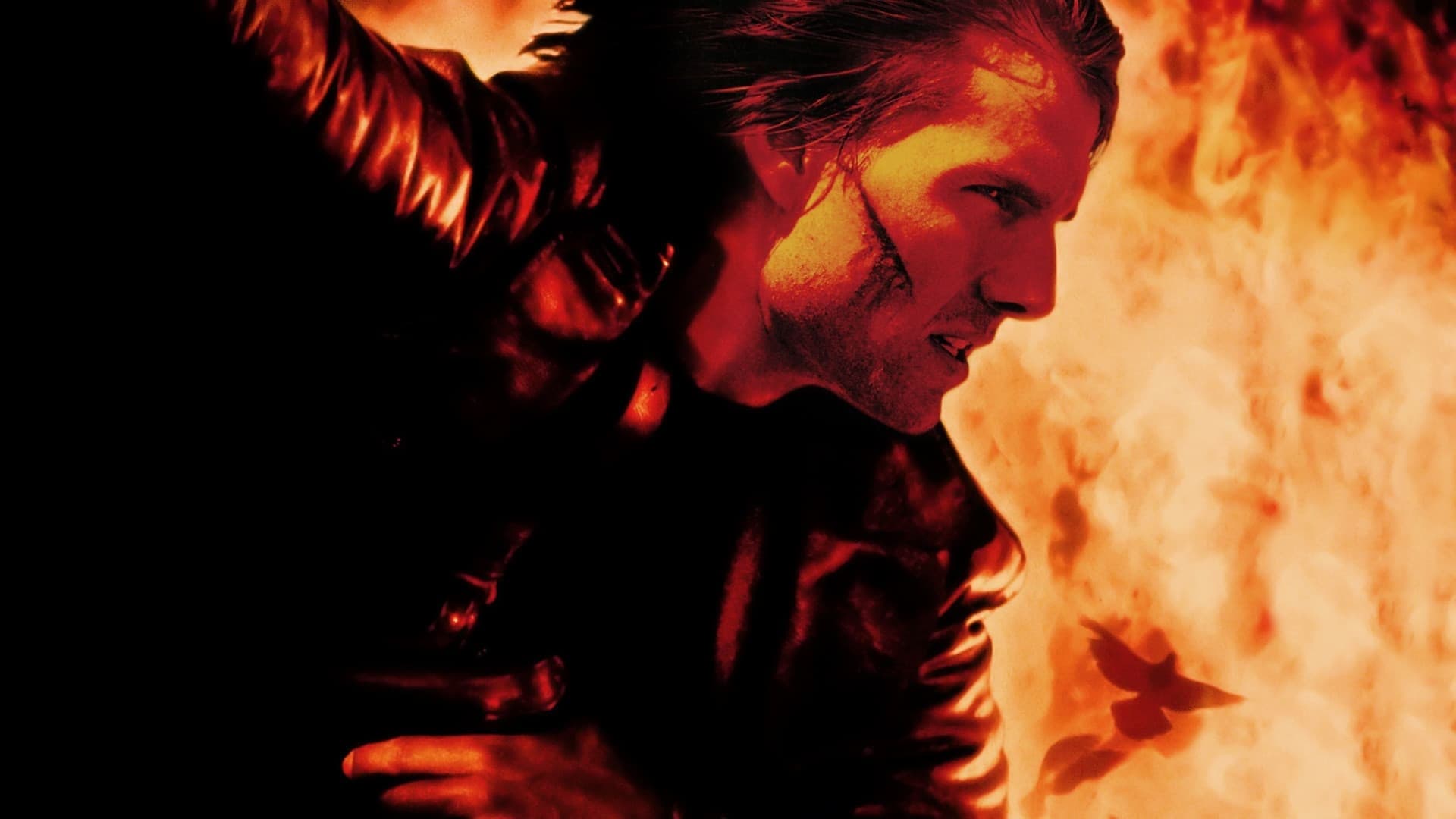
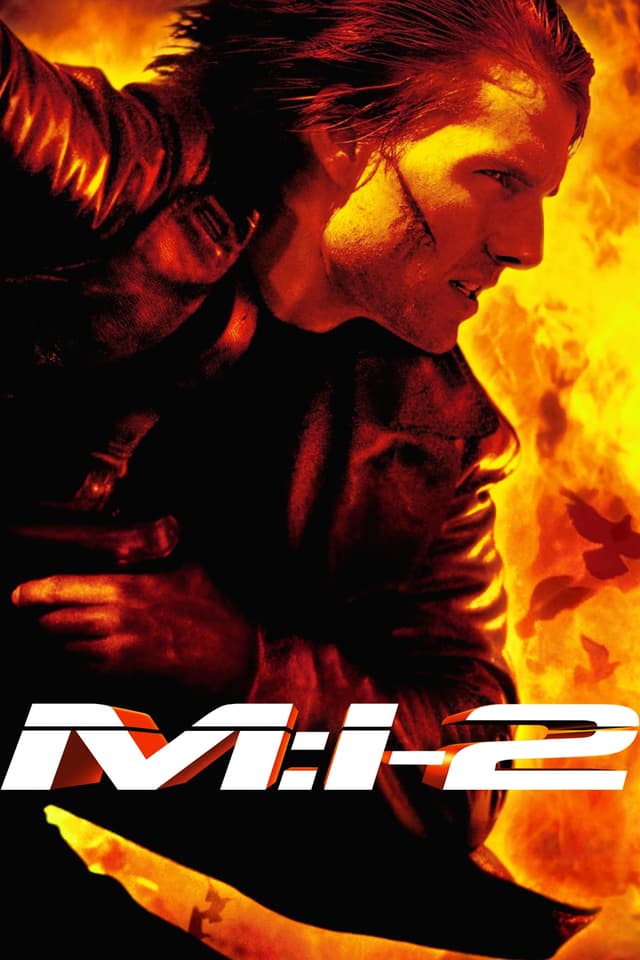
Mission: Impossible 2 Budget
 ActionThrillerAdventure2h 50m
Updated
Synopsis
IMF agent Ethan Hunt is sent to Sydney, Australia to find and destroy a genetically modified disease called Chimera and its cure, Bellerophon, before former IMF agent turned rogue Sean Ambrose can weaponize it for profit. Hunt recruits Ambrose's ex-girlfriend Nyah Nordoff-Hall to infiltrate Ambrose's operation, leading to a deadly game of deception that culminates in a high-speed motorcycle pursuit and brutal hand-to-hand combat on the cliffs of the Australian coast.
What Is the Budget of Mission: Impossible 2?
Mission: Impossible 2 (2000), directed by John Woo and released by Paramount Pictures, was produced on a budget of $125 million. At the time of its release, this made it one of the most expensive films ever produced. The sequel to Brian De Palma's 1996 original marked a significant tonal shift for the franchise, trading espionage thriller mechanics for Hong Kong action cinema stylings under Woo's direction. Tom Cruise returned as Ethan Hunt, with Robert Towne (Chinatown) providing the screenplay from a story by Ronald D. Moore and Brannon Braga.
The production leaned heavily into Woo's signature visual language: slow-motion gunplay, dove imagery, and extended hand-to-hand combat choreography. Cruise, already establishing himself as a hands-on action star, performed several of his own stunts, including the film's iconic free-climbing sequence on Dead Horse Point in Utah. The combination of Cruise's star power and Woo's proven box office appeal in Asia made M:I-2 a global event, ultimately becoming the highest-grossing film of 2000.
Key Budget Allocation Categories
The $125 million budget was distributed across several major production areas:
- Lead Actor and Above-the-Line Talent: Tom Cruise commanded a substantial fee as both star and producer, with reports placing his total compensation (including back-end participation) at approximately $75-100 million when all revenues were tallied. Director John Woo, coming off Face/Off and a proven commodity in the action genre, and screenwriter Robert Towne also represented significant above-the-line costs.
- Action Sequences and Stunt Coordination: The film features extensive motorcycle chase sequences filmed on location in Australia, a lengthy rock-climbing sequence shot at Dead Horse Point in Utah, and multiple gunfight set pieces choreographed in Woo's distinctive style. Cruise performed the cliff-hanging sequence without a stunt double at a height of 2,000 feet, requiring specialized safety rigging and insurance coverage.
- International Location Filming: Principal photography took place primarily in Sydney, Australia, with additional shooting in Seville, Spain and various locations across the American Southwest. The Sydney production utilized Fox Studios Australia and multiple exterior locations throughout New South Wales, generating substantial logistics, transportation, and local crew costs.
- Visual Effects and Post-Production: While M:I-2 relied more on practical action than CGI, the film still required significant visual effects work for wire removal, environment extensions, and the climactic sequences. Hans Zimmer composed the score, incorporating elements of the iconic Lalo Schifrin theme, and the sound design emphasized Woo's balletic action choreography.
- Marketing and Franchise Investment: Paramount invested heavily in establishing Mission: Impossible as a franchise rather than a one-off, positioning each installment as a director-driven action showcase. The marketing campaign leveraged Cruise's rock-climbing stunt as its central image, spending an estimated $60 million on prints and advertising worldwide.
How Does Mission: Impossible 2's Budget Compare to Similar Films?
At $125 million, M:I-2 was among the priciest action films of its era. Comparing it with contemporaries and franchise entries:
- Mission: Impossible (1996): Budget $80,000,000 | Worldwide $457,700,000. The original Brian De Palma film cost significantly less and established the franchise as a viable tentpole. M:I-2's budget increase of 56% reflected both Cruise's growing leverage and the escalating arms race of late-1990s action blockbusters.
- The Matrix (1999): Budget $63,000,000 | Worldwide $467,200,000. The Wachowskis achieved revolutionary action filmmaking at half the cost of M:I-2, though the sequel The Matrix Reloaded (2003) would balloon to $150 million, following the same inflationary trajectory.
- Gladiator (2000): Budget $103,000,000 | Worldwide $465,400,000. Ridley Scott's epic released in the same year as M:I-2, cost $22 million less and won Best Picture. Both films demonstrated that $100 million-plus budgets had become standard for major studio tentpoles by the turn of the millennium.
- X-Men (2000): Budget $75,000,000 | Worldwide $296,300,000. Fox's superhero gamble cost 40% less than M:I-2 and launched the modern comic book film era, showing that blockbuster returns didn't necessarily require blockbuster budgets.
- Mission: Impossible III (2006): Budget $150,000,000 | Worldwide $398,500,000. J.J. Abrams' franchise entry cost 20% more than M:I-2 but earned significantly less worldwide, marking the franchise's commercial nadir before the Christopher McQuarrie era revitalized it.
Mission: Impossible 2 Box Office Performance
Mission: Impossible 2 was a massive commercial success, becoming the highest-grossing film worldwide in 2000. The film opened on May 24, 2000 (Memorial Day weekend) and dominated the summer box office.
Box Office Breakdown
Mission: Impossible 2

At approximately +50%, Mission: Impossible 2 returned roughly $1.50 for every $1 of production budget invested during its theatrical run.
With a worldwide gross of $546.4 million against a $125 million production budget, M:I-2 delivered a strong 337% ROI before ancillary revenues. The break-even threshold, factoring in theatrical distribution fees and the $60 million marketing spend, was approximately $250-310 million, which the film surpassed comfortably. International markets contributed 61% of the total gross ($331 million), with particularly strong performance in Asia where John Woo's name carried significant commercial weight.
The film's financial success cemented Mission: Impossible as a reliable franchise for Paramount and validated Cruise's strategy of hiring distinctive auteur directors for each installment. Despite mixed critical reception, the commercial performance ensured the franchise would continue, leading to J.J. Abrams taking the director's chair for Mission: Impossible III six years later.
Mission: Impossible 2 Production History
Development on a Mission: Impossible sequel began almost immediately after the 1996 original grossed $457 million worldwide. Paramount initially explored several directorial options before settling on John Woo, whose Hong Kong action cinema credentials (The Killer, Hard Boiled) and recent Hollywood success with Face/Off (1997) made him an ideal choice for the franchise's director-driven approach.
Robert Towne, the Oscar-winning screenwriter of Chinatown, wrote the screenplay from a story by Ronald D. Moore and Brannon Braga. The script underwent significant revisions during production, with Towne reportedly rewriting scenes on set to accommodate Woo's evolving action sequences. This flexible approach to the screenplay was characteristic of the collaborative, stunt-driven production methodology that defined the shoot.
Principal photography took place primarily at Fox Studios Australia in Sydney, with extensive location work across New South Wales. The production also filmed in Seville, Spain and at Dead Horse Point State Park in Utah for the iconic opening climbing sequence. Tom Cruise trained extensively for the rock-climbing scenes, performing the actual ascent at 2,000 feet with minimal safety apparatus visible on camera. The motorcycle chase through the Australian countryside involved weeks of preparation and multiple camera setups to capture Woo's signature action choreography.
The film's editing process proved challenging, as Woo's initial cut ran significantly longer than the studio's preferred runtime. The final 123-minute cut represented a compromise between Woo's expansive action vision and Paramount's commercial instincts. Hans Zimmer's score, featuring an electric guitar-driven arrangement of Lalo Schifrin's original theme performed by guitarist Metallica's Kirk Hammett among others, became one of the film's most distinctive elements.
Awards and Recognition
Mission: Impossible 2 received limited awards recognition, reflecting the critical divide over the film's style-over-substance approach. The film was nominated for the Academy Award for Best Sound and received recognition from technical guilds for its stunt work and action choreography. The MTV Movie Awards honored the film with nominations for Best Action Sequence and Best Male Performance (Tom Cruise).
John Woo's direction, while divisive among Western critics, was celebrated within the action filmmaking community for its integration of Hong Kong cinema techniques into a Hollywood blockbuster framework. The slow-motion dove sequences and dual-pistol choreography, Woo's signature trademarks, became some of the most parodied (and imitated) action tropes of the early 2000s.
Critical Reception
Mission: Impossible 2 received mixed reviews from critics, earning a 57% approval rating on Rotten Tomatoes and a 59 out of 100 on Metacritic. The critical consensus praised the film's action set pieces while finding fault with its thin plotting and over-reliance on stylistic excess.
Supporters highlighted John Woo's kinetic direction, particularly the motorcycle chase and the climactic hand-to-hand fight between Cruise and Dougray Scott's villain Sean Ambrose. The film's action sequences were widely acknowledged as technically accomplished, even by detractors who found them indulgent. Tom Cruise's physical commitment to the role, especially the cliff-climbing sequence, drew praise as a genuine movie-star spectacle.
Detractors argued that the film sacrificed the espionage intrigue of De Palma's original in favor of generic action movie conventions wrapped in Woo's visual flourishes. The romantic subplot between Cruise and Thandiwe Newton was criticized as underdeveloped, and Dougray Scott's villain was seen as one-dimensional compared to the ensemble dynamics of the first film. Robert Towne's screenplay, constrained by the action-first production approach, drew particular criticism for its predictable structure. Despite these reservations, audiences embraced the film enthusiastically, with its $546 million worldwide gross reflecting a disconnect between critical and commercial reception that characterized many action blockbusters of the era.
Frequently Asked Questions
How much did it cost to make Mission: Impossible 2 (2000)?
Mission: Impossible 2 had a production budget of $125 million. The costs were driven by Tom Cruise's compensation as star and producer, extensive location filming in Sydney, Australia, John Woo's elaborate action sequences, and the practical stunt work including Cruise's real cliff-climbing scene at Dead Horse Point, Utah.
How much did Mission: Impossible 2 earn at the box office?
The film grossed $215,409,889 domestically and $331 million internationally for a worldwide total of $546,388,105. It was the highest-grossing film of 2000 worldwide.
Was Mission: Impossible 2 a box office success?
Yes. Against its $125 million production budget, M:I-2 earned $546.4 million worldwide, delivering a 337% return on investment before ancillary revenues. The film comfortably exceeded its estimated break-even point of $250-310 million.
Who directed Mission: Impossible 2?
John Woo directed the film. The Hong Kong action cinema legend, known for The Killer and Hard Boiled, brought his signature slow-motion gunplay and balletic choreography to the franchise, marking a radical tonal departure from Brian De Palma's espionage thriller approach in the 1996 original.
Did Tom Cruise do his own stunts in Mission: Impossible 2?
Yes. Cruise performed the film's iconic rock-climbing sequence at Dead Horse Point in Utah at a height of 2,000 feet with minimal safety apparatus visible on camera. He also participated extensively in the motorcycle chase and fight sequences, establishing the pattern of practical stunt work that would define the franchise.
Where was Mission: Impossible 2 filmed?
The film was shot primarily at Fox Studios Australia in Sydney and on location throughout New South Wales. Additional filming took place in Seville, Spain and at Dead Horse Point State Park in Utah for the opening climbing sequence.
Why did Mission: Impossible 2 get mixed reviews?
Critics were divided over John Woo's style-over-substance approach. While the action sequences were praised as technically accomplished, many reviewers felt the film sacrificed the espionage intrigue of the original in favor of generic action conventions. The romantic subplot and villain characterization were criticized as underdeveloped. The film holds a 57% on Rotten Tomatoes and 59 on Metacritic.
How does Mission: Impossible 2 compare to other films in the franchise?
M:I-2 remains the franchise's most commercially successful entry relative to its era (adjusted for inflation) and the most stylistically distinctive due to John Woo's direction. However, its critical reception ranks among the lowest in the series. Later entries under Christopher McQuarrie's direction are generally considered the franchise's creative peak.
Who composed the music for Mission: Impossible 2?
Hans Zimmer composed the score, creating an electric guitar-driven arrangement that incorporated Lalo Schifrin's iconic original theme. The soundtrack featured contributions from various rock artists and became one of the film's most distinctive elements.
What awards did Mission: Impossible 2 receive?
The film received limited awards recognition, including a nomination for the Academy Award for Best Sound. It was honored at the MTV Movie Awards and received recognition from technical guilds for stunt coordination and action choreography.
Filmmakers
Mission: Impossible 2

Official Trailer
Build budgets like this one in Saturation
Start from an industry-standard feature film template, import the schedule and rates you already have, and let the cost report keep itself current as you spend. Real-time collaboration, no spreadsheets.