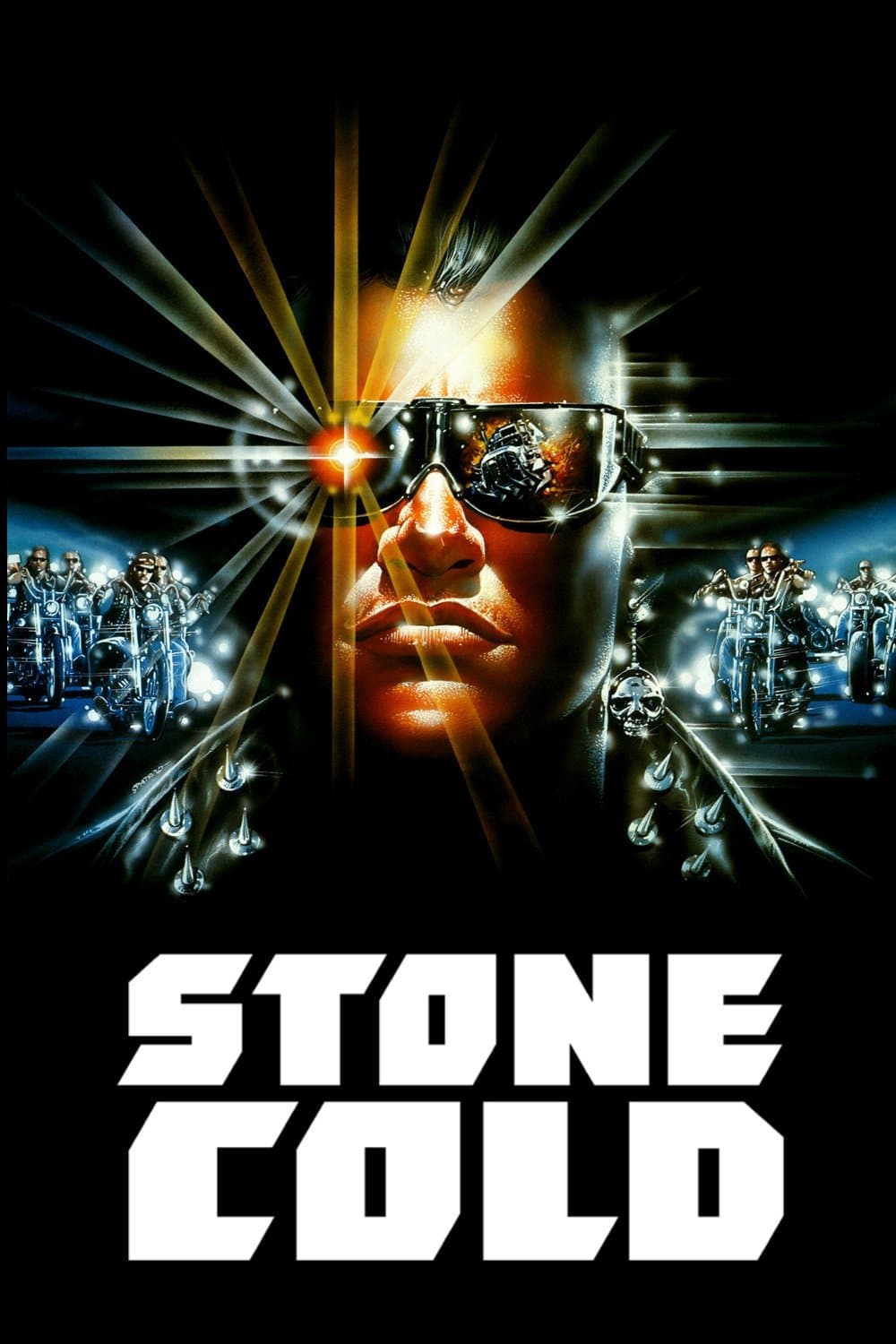
Stone Cold Budget
 Action
Updated
Synopsis
Joe Huff, a maverick Alabama cop on suspension, is recruited by the FBI to infiltrate The Brotherhood, a violent Mississippi biker gang led by the ruthless Chains Cooper and his volatile lieutenant Ice. As Huff earns the gang's trust under the alias John Stone, the Brotherhood plots an assassination attack on the Mississippi State Capitol, forcing him to make his stand before the entire courthouse is leveled.
What Is the Budget of Stone Cold (1991)?
Stone Cold (1991), directed by stunt coordinator turned filmmaker Craig R. Baxley and distributed by Columbia Pictures through its Stone Group Pictures label, was produced on a reported budget of approximately $25,000,000. The figure positioned the film as a mid-tier studio action vehicle for former NFL linebacker Brian Bosworth, who was making his feature debut after a high-profile but injury-shortened professional football career with the Seattle Seahawks. Columbia and producer Yoram Ben-Ami committed the capital on the bet that Bosworth could translate his bleached-blond, fringe-haired public persona into the kind of action stardom Arnold Schwarzenegger and Sylvester Stallone had monopolized through the late 1980s.
That bet shaped how the money was spent. Bosworth received a reported $5,000,000 acquisition deal that covered his salary and signing bonus, an unusually rich payday for a screen newcomer with no acting track record. The remainder of the budget was loaded into physical action: a working undercover-cop-infiltrates-a-biker-gang plot that required extensive motorcycle stunts, multiple vehicle chases, dozens of squib hits, a full-scale courthouse shootout, and an explosive helicopter finale that consumed a meaningful share of the production days and budget.
Key Budget Allocation Categories
The $25,000,000 budget for Stone Cold was distributed across several large physical-production line items that pushed the film toward the upper end of the action-genre mid-budget range:
- Brian Bosworth Signing Deal: Bosworth was signed in a reported $5,000,000 package that included his acting fee and a development arrangement with Stone Group Pictures. The deal reflected Columbia's wager on a charismatic crossover from sports rather than a tested actor, and the cost was carried by the film as the single largest above-the-line item.
- Helicopter, Motorcycle, and Vehicle Stunts: Director Craig R. Baxley came out of the stunt department and built the film around large-scale physical action. Production used real working Harley-Davidson motorcycles for the Brotherhood biker gang, staged multiple highway and warehouse chases, and finished with a climactic shootout in which a hijacked helicopter is rammed through the Mississippi State Capitol rotunda. The helicopter sequence alone required practical effects rigging, partial set reconstruction, and aerial stunt coordination that absorbed a significant share of the production schedule.
- Mississippi and Alabama Location Shoot: Principal photography took place in Jackson, Mississippi and across northern Alabama, with the Mississippi State Capitol building used for the finale and rural highways doubling for the biker gang's open-road sequences. Out-of-state travel, lodging for cast and crew, location permits, and law enforcement coordination for the live-fire and pyrotechnic sequences added cost compared with a Los Angeles backlot shoot.
- Stunt Coordination and Pyrotechnics: Veteran stunt coordinator Bennie Dobbins led a large physical-effects unit responsible for fight choreography, motorcycle gags, vehicle rollovers, and the heavy pyrotechnics required for the courthouse climax. The film employed multiple stunt doubles for Bosworth and for the biker ensemble, including extended sequences shot during a famously chaotic and accident-prone production.
- Supporting Cast: Columbia surrounded Bosworth with seasoned character actors to anchor the picture. Lance Henriksen was cast as Brotherhood leader Chains Cooper, William Forsythe as his volatile lieutenant Ice, and Arabella Holzbog as the gang girlfriend Nancy. Each commanded compensation appropriate to their established genre profile and was carried as a meaningful above-the-line item.
- Score and Music: Composer Sylvester Levay scored the film with an aggressive orchestral and rock-leaning soundtrack. The music budget covered original composition, orchestra recording, and licensing of the southern-rock and metal needle drops that punctuated the bar fight and biker rally sequences.
How Does Stone Cold's Budget Compare to Similar Films?
At a reported $25,000,000, Stone Cold sits at the lower end of major-studio action releases from the late 1980s and early 1990s. The comparison set below illustrates how the film's commercial result diverged sharply from its closest budgetary peers:
- Road House (1989): Budget $15,000,000 | Worldwide $61,700,000. The Patrick Swayze cooler-as-philosopher action film cost roughly 60% of Stone Cold and earned almost seven times its budget worldwide, the kind of star-driven action playbook Columbia hoped to replicate with Bosworth.
- Action Jackson (1988): Budget $7,000,000 | Worldwide $20,300,000. Carl Weathers' Detroit-cop action vehicle cost less than a third of Stone Cold and still failed to launch a franchise, an early signal of how hard it was to manufacture a new action star in the Schwarzenegger and Stallone era.
- Tango & Cash (1989): Budget $55,000,000 | Worldwide $120,000,000. The Sylvester Stallone and Kurt Russell buddy-cop film cost more than twice as much as Stone Cold and out-grossed it by a factor of more than thirteen, demonstrating the box office gap between established stars and a debuting NFL player.
- Universal Soldier (1992): Budget $23,000,000 | Worldwide $102,400,000. The Jean-Claude Van Damme and Dolph Lundgren reanimated-soldier film cost roughly the same as Stone Cold and earned more than four times its budget worldwide, illustrating how a comparable mid-budget action play could succeed with the right star pairing.
- Hard to Kill (1990): Budget $10,000,000 | Worldwide $59,000,000. Steven Seagal's second leading role cost less than half of Stone Cold and earned nearly six times its budget worldwide, the textbook example of a low-cost action breakout that Columbia could not match with Bosworth.
Stone Cold Box Office Performance
Stone Cold opened on May 17, 1991 in 1,202 North American theaters, finishing sixth on its opening weekend with $3,879,506. The debut placed it well behind genre peers and confirmed early that Columbia's push to manufacture a new action star around Brian Bosworth was not landing with audiences. The film dropped quickly in subsequent weeks and exited theaters with a final domestic total well below the threshold needed to cover its production cost alone.
Against a reported production budget of $25,000,000, the film needed an estimated $50,000,000 to $60,000,000 in worldwide gross to reach profitability after marketing and distribution costs. The financial breakdown reads as follows:
Box Office Breakdown
Stone Cold (1991)

Stone Cold returned approximately $0.23 in theatrical revenue for every $1 invested when measured against total estimated production and marketing spend, placing it among the most decisive studio action losses of 1991. Domestic gross of $9,151,500 essentially equaled the worldwide total, with the film never receiving a meaningful international theatrical release after the soft domestic opening.
The collapse effectively ended Brian Bosworth's prospects as a theatrical leading man. Stone Group Pictures, the Columbia label set up around the project, dissolved without producing another feature, and Bosworth's subsequent work shifted to direct-to-video action titles and supporting roles in films such as The Longest Yard (2005) and 3 Ninjas Kick Back (1994). The film has since acquired a vocal cult following on home video and cable that prizes the production's unhinged practical-stunt ambition and Lance Henriksen and William Forsythe's villain performances.
Stone Cold Production History
Stone Cold originated as a Columbia Pictures development project built specifically around Brian Bosworth. Bosworth had been one of the most marketable college football players of the 1980s, winning the Dick Butkus Award twice at Oklahoma and entering the NFL as the Seattle Seahawks' first-round supplemental draft pick in 1987. A shoulder injury cut his professional career to three seasons, and his agent steered him toward Hollywood while the persona built during his college and Seahawks years was still commercially active. Columbia signed Bosworth in a reported $5,000,000 package and set up Stone Group Pictures as a dedicated production label for his features.
Director Craig R. Baxley was hired on the strength of his stunt-coordination resume rather than his short feature directing track record. Baxley had built his reputation as a second-unit and stunt director on television series including The A-Team and Predator before making his feature debut with Action Jackson (1988). Producers Yoram Ben-Ami and Walter Doniger believed his physical-action instincts and ability to stage large set pieces on schedule were a better fit for the Bosworth vehicle than a more conventional dramatic director.
Principal photography took place in 1990 across Jackson, Mississippi and northern Alabama, with the Mississippi State Capitol building serving as the location for the climactic courthouse helicopter assault. The shoot in Mississippi was reportedly one of the most accident-prone studio productions of the year. A stunt motorcyclist was killed during a sequence involving a motorcycle jump, and multiple crew members were injured during the heavy pyrotechnic and aerial sequences. The helicopter rotor effect that closes the film required partial reconstruction of the Capitol rotunda interior on a soundstage to accommodate the practical pyrotechnics.
Columbia released Stone Cold on May 17, 1991, opening the picture against Backdraft and What About Bob. The marketing campaign leaned heavily on Bosworth's NFL profile and the film's practical-stunt set pieces, but the studio quickly pulled back P&A spending after the soft opening weekend. The combination of the chaotic production, the death on set, and the commercial failure ended Stone Group Pictures and closed the window on a Bosworth-led franchise.
Awards and Recognition
Stone Cold received no significant industry awards recognition. The film was not nominated at the Saturn Awards, the Motion Picture Sound Editors Golden Reels, or the Stuntmen's Association of Motion Pictures Taurus World Stunt Awards (which were not yet established at the time of release but have retrospectively honored other early-1990s practical-stunt productions).
At the 12th Golden Raspberry Awards, Brian Bosworth was nominated for Worst New Star for his work in the film, ultimately losing the dishonor to Vanilla Ice for Cool as Ice. The Razzie nomination was the film's only meaningful awards-circuit mention and reinforced the contemporary critical assessment of Bosworth's screen presence. Stone Cold has since been retrospectively honored by genre-specific outlets that program early-1990s action curiosities, but it accumulated no statues during its release year.
Critical Reception
Stone Cold received broadly negative reviews on release. The film holds a 38% approval rating on Rotten Tomatoes based on contemporary and retrospective critic reviews, with the consensus framing it as a self-serious vehicle for an actor with limited range buoyed by inventive practical stunts and a committed Lance Henriksen villain performance. No Metacritic score was generated for the film, which predates the site's coverage window.
Roger Ebert of the Chicago Sun-Times gave the film one and a half stars, writing that Bosworth had "the personality of a coil of barbed wire" and that the screenplay traded "any sense of plausibility for the next motorcycle gag." Variety called the film "loud, ludicrous and lethal," noting that Henriksen and William Forsythe were "the only humans in sight" and that Bosworth was "asked to do little more than scowl." The Washington Post's Hal Hinson observed that the film was "constructed entirely out of leftover parts from better action movies."
Audience reaction was warmer than the critical response, particularly on home video and cable in the years immediately following release. The combination of the helicopter rotunda finale, the Henriksen and Forsythe performances, and the unselfconscious commitment of the entire production has driven a sustained cult following, with the film regularly appearing on best-of lists devoted to forgotten 1990s action and on programmer slates for revival theaters that focus on practical-stunt cinema. Despite the cult revival, Stone Cold has remained the textbook example of a Hollywood studio overpaying to manufacture a leading man out of a charismatic athlete with no acting foundation.
Frequently Asked Questions
How much did it cost to make Stone Cold (1991)?
The reported production budget was approximately $25,000,000. Columbia Pictures financed the film through its Stone Group Pictures label, which was established specifically to develop features around former NFL linebacker Brian Bosworth. A reported $5,000,000 of the budget went to Bosworth as a signing and acting deal.
How much did Stone Cold earn at the box office?
Stone Cold grossed $9,151,500 in domestic theatrical release, with negligible international gross. The film opened on May 17, 1991 with $3,879,506 in 1,202 theaters, finishing sixth on its opening weekend behind Backdraft, What About Bob, and other holdovers. The total worldwide gross of roughly $9,151,500 fell well below the production budget alone.
Was Stone Cold a box office bomb?
Yes. Against a $25,000,000 production budget and an estimated $12,000,000 to $15,000,000 in marketing spend, the film returned approximately $0.23 in worldwide gross for every $1 invested. It is one of the most clear-cut studio action losses of 1991 and effectively ended the planned Brian Bosworth feature franchise at Columbia.
Who directed Stone Cold?
Craig R. Baxley directed the film. Baxley came from a stunt-coordination background, working on television series including The A-Team before making his feature directing debut with Action Jackson (1988). He was hired for Stone Cold on the strength of his ability to stage large physical-action set pieces on schedule.
Who starred in Stone Cold?
Brian Bosworth starred as undercover Alabama cop Joe Huff in his feature film debut. Lance Henriksen played Brotherhood biker gang leader Chains Cooper, William Forsythe played his volatile lieutenant Ice, and Arabella Holzbog played gang girlfriend Nancy. Sam McMurray and Richard Gant played supporting FBI roles.
Where was Stone Cold filmed?
Principal photography took place in 1990 across Jackson, Mississippi and northern Alabama. The Mississippi State Capitol building served as the location for the climactic courthouse helicopter sequence, with partial set reconstruction of the rotunda interior built on a soundstage to accommodate the practical pyrotechnics.
Why was Stone Cold considered a chaotic production?
The shoot was reportedly one of the most accident-prone studio productions of 1990. A stunt motorcyclist was killed during a motorcycle jump sequence, and multiple crew members were injured during the heavy pyrotechnic and aerial work. The combination of the on-set death, the commercial failure, and the dissolution of Stone Group Pictures has fueled the film's reputation as a famously troubled production.
Did Brian Bosworth win any awards for Stone Cold?
No. Bosworth was nominated for Worst New Star at the 12th Golden Raspberry Awards in 1992 but lost to Vanilla Ice for Cool as Ice. The Razzie nomination was the film's only meaningful awards-circuit recognition and reflected the broadly negative critical reception of his lead performance.
What did critics think of Stone Cold?
The film received broadly negative reviews. It holds a 38% approval rating on Rotten Tomatoes. Roger Ebert gave it one and a half stars, writing that Bosworth had "the personality of a coil of barbed wire." Variety called the film "loud, ludicrous and lethal" and singled out Lance Henriksen and William Forsythe as "the only humans in sight." Audiences responded more warmly than critics, particularly on home video and cable, building a sustained cult following.
Why is Stone Cold considered a cult film?
The film has acquired a sustained cult following on home video and cable for its unhinged practical-stunt ambition, the climactic helicopter assault on the Mississippi State Capitol, and the committed villain performances by Lance Henriksen and William Forsythe. Genre programmers and revival theaters that focus on practical-stunt cinema routinely include it on best-of lists devoted to forgotten early-1990s action.
Filmmakers
Stone Cold (1991)

Build budgets like this one in Saturation
Start from an industry-standard feature film template, import the schedule and rates you already have, and let the cost report keep itself current as you spend. Real-time collaboration, no spreadsheets.