Batman Returns Budget
 ActionFantasy126 minutes
Updated
Synopsis
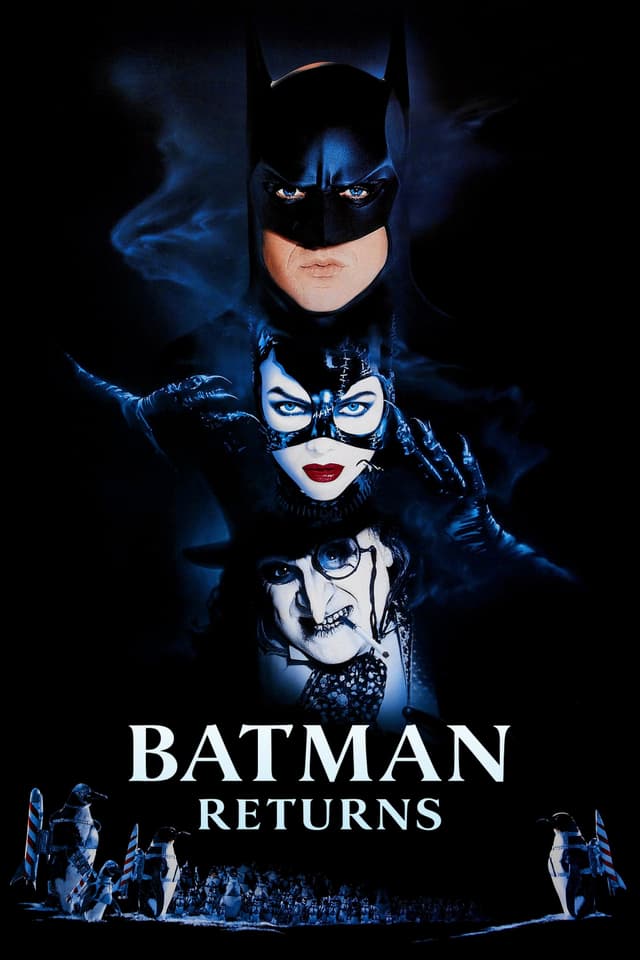
In the sewers of gotham city to the rooftops of the gotham city the penguin wants to know where he came from well in his villain ways catwoman plans to kill rich man of gotham max shreak but as he battles with millionaire Bruce Wayne both ladies men have their own secrets Bruce Wayne is back as Bat man trying to stop the penguin Max is helping penguin steal gotham city while selina Kyle/catwoman tries to help penguin not knowing her man murder target also her murder is helping him but all four men have their goals taking gotham from crime winning gotham city assassination for two men and more money to be gotham citys number one rich man.
What Is the Budget of Batman Returns (1992)?
Tim Burton's Batman Returns was produced by Warner Bros. on a budget of $80 million, more than twice the $35 million budget of the 1989 original. That increase reflected the expanded scope of Burton's ambition, the addition of two new villain characters requiring elaborate costume and prosthetic work, and dramatically higher talent fees as Keaton, Burton, and composer Danny Elfman returned from the original while the studio added Michelle Pfeiffer and Danny DeVito in roles that each demanded extensive transformation. Producers Denise Di Novi and Tim Burton oversaw the production.
The $80 million budget funded a massive practical production centered at Warner Bros.'s own backlot in Burbank, California, where production designer Bo Welch constructed a complete Gotham Plaza with working ice rink, a sewer labyrinth for the Penguin's lair, and elaborate street environments. The film was released on June 19, 1992, and carried an estimated $40 million in print and advertising costs.
Key Budget Allocation Categories
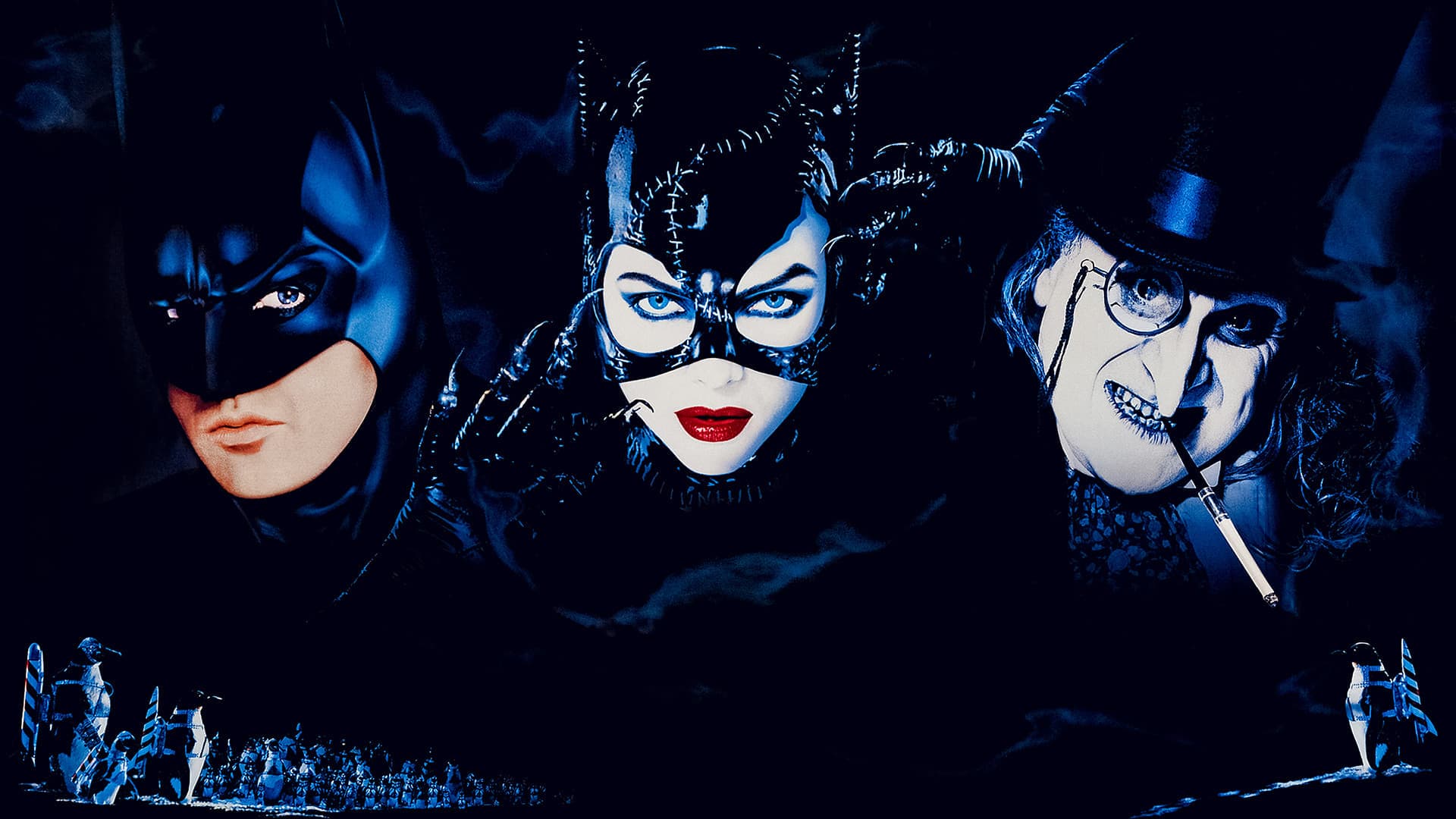
- Costume and Prosthetics for Michelle Pfeiffer and Danny DeVito: Michelle Pfeiffer's hand-stitched Catwoman suit required multiple versions and took a reported 10 days per suit to construct, as the vinyl had to be individually sewn and could not be repaired on set. Danny DeVito spent four hours daily in the makeup chair having the Penguin prosthetics applied, including the beak, elongated fingers, and full body suit. These costume and makeup programs were among the most expensive in the franchise to that point.
- Gotham City Sets at Warner Bros. Burbank: Production designer Bo Welch built the Gotham Plaza set on the Warner Bros. backlot in Burbank with a fully operational ice rink, central square, and retail facades. The Penguin's sewer headquarters was built as a separate massive practical set. Where the 1989 film used Pinewood's large sound stages in England, this production remained in California, making the backlot sets the primary visual environment.
- Above-the-Line Talent and Tim Burton's Deal: Michael Keaton returned as Batman at a dramatically higher fee than the original. Jack Nicholson's participation-based deal from the 1989 film had set a new ceiling for talent compensation, and the returning cast benefited from that precedent. Danny DeVito and Michelle Pfeiffer commanded leading-actor salaries. Tim Burton's director fee also increased substantially from his 1989 deal following the original's record-breaking gross.
- Danny Elfman's Expanded Score: Elfman composed a larger and more complex orchestral score for Returns than he had written for the original, reflecting the expanded cast of villains and the film's more operatic tone. The Christmas-themed setting allowed Elfman to incorporate choral elements and a leitmotif structure that he applied to Catwoman and the Penguin separately, requiring additional recording sessions and orchestration costs beyond the original film's score budget.
- Penguin Army and Practical Creature Effects: The film used a combination of trained real penguins and animatronic penguin soldiers. Coordinating the real birds required animal trainers and veterinary oversight throughout production. The rocket-equipped penguin soldiers were mechanical builds controlled on set. These practical creature effects added cost that a digitally oriented production would have handled differently, but Burton's preference for tactile, in-camera work kept these budgets within the physical effects department.
How Does Batman Returns' Budget Compare to Similar Films?
Batman Returns was one of the most expensive films of 1992 and occupies an unusual position in franchise economics: it cost more than twice the original, attracted a more divisive response from audiences and corporate partners, and earned less at the box office. The comparison set reveals how sharply the franchise's commercial trajectory changed between 1989 and 1992.
- Batman (1989): Budget $35M | Worldwide $411.3M | The original film cost less than half as much and earned roughly 54% more worldwide, illustrating how the sequel's darker tone, the McDonald's controversy, and the shift from new franchise excitement to sequelitis affected the commercial outcome.
- Batman Forever (1995): Budget $100M | Worldwide $336.5M | Joel Schumacher's reboot after Burton's departure cost $20M more than Returns and grossed more globally by returning to a lighter, more family-friendly tone. The contrast between Returns and Forever illustrates how directly the McDonald's controversy changed the franchise's commercial and creative direction.
- Lethal Weapon 3 (1992): Budget $35M | Worldwide $321.7M | Released the same summer, the Mel Gibson and Danny Glover action sequel cost less than half of Batman Returns and significantly outperformed it globally, reflecting how broadly appealing franchise action films could perform with a fraction of the production investment.
- Dick Tracy (1990): Budget $46M | Worldwide $162.7M | The Warren Beatty comic adaptation released between the two Batman films offers a useful comparison of the era's stylized comic-property adaptations. Dick Tracy earned roughly the same domestic gross as Batman Returns at a lower budget, suggesting the market for hyper-stylized superhero films had limits that neither film fully navigated.
Batman Returns Box Office Performance
Batman Returns opened on June 19, 1992, distributed by Warner Bros., and earned $45.7 million in its opening weekend domestically, a strong opening that nonetheless trailed the 1989 original's pace. The film ultimately earned $162,831,698 domestically and $267,641,347 worldwide. While those numbers would be considered a success for most films, the sequel's $80 million budget combined with Warner Bros.' expectations following the original's $411 million worldwide performance made Returns a relative disappointment at the studio.
With a production budget of $80 million and estimated P&A costs of $40 million, total investment reached approximately $120 million. Theaters retain roughly 50% of gross ticket receipts, giving the studio an estimated share of $133.8 million of the $267.6 million worldwide gross. That studio share approximately covers the total investment, indicating the film barely broke even theatrically before accounting for home video and licensing. The McDonald's Happy Meal controversy, in which the fast food chain pulled its Batman Returns Happy Meal promotion midway through the campaign after parents complained about the film's dark violence, contributed to a sharper-than-expected drop after opening weekend.
Box Office Breakdown
Batman Returns

Batman Returns earned roughly $3.35 for every $1 invested in production, a return that sounds strong in isolation but was profoundly disappointing in the context of the original's $11.75-per-dollar return. When P&A is factored into the investment, the film earned approximately $1.12 for every $1 spent in total, a near-breakeven outcome theatrically. Home video, cable licensing, and international television rights would have produced profit over the film's full financial life, but the theatrical outcome directly led Warner Bros. to replace Tim Burton with Joel Schumacher for Batman Forever.
Batman Returns Production History
Tim Burton and writers Daniel Waters (script) and Wesley Strick (revisions) developed a sequel that moved further into Burton's expressionist aesthetic, introducing two new villains: Oswald Cobblepot, the Penguin, a grotesque figure abandoned as an infant and raised in Gotham's sewers by a penguin colony; and Selina Kyle, the Catwoman, a mousy secretary who becomes a feline vigilante after her boss Max Shreck (Christopher Walken) throws her from a window. The film's conception was considerably darker than the original, with sexual menace in the Catwoman characterization and explicit violence from the Penguin that would have been out of place in the 1989 film.
Principal photography took place primarily at the Warner Bros. backlot in Burbank, California, in 1991. Production designer Bo Welch built a Christmas-themed Gotham that extended the visual world of Anton Furst's original design while adding new environments: the skating plaza, the Arctic World zoo, and the labyrinthine sewer network. The production was notable for its use of real penguins alongside animatronic builds, requiring on-set animal wranglers and creating significant logistical complexity during the sewers sequences.
Michelle Pfeiffer underwent extensive physical training and spent hours daily in her latex Catwoman suit, which was so tight it reportedly gave her breathing difficulties during filming. Danny DeVito wore full body prosthetics and spent much of his screen time submerged in dark liquid. Director of photography Stefan Czapsky used deep shadows and practical light sources to create a visual palette that was even darker than Roger Pratt's work on the original.
The film's controversial response from corporate partners was crystallized by McDonald's, which had commissioned Happy Meal toys tied to the film but withdrew the promotion after receiving complaints that the film was too dark and violent for a children's meal. The episode directly influenced Warner Bros.' decision to remove Tim Burton from the director's chair for subsequent entries and hire Joel Schumacher with a mandate to make the franchise more family-friendly and merchandising-compatible.
Awards and Recognition
Batman Returns received Academy Award nominations for Best Visual Effects and Best Makeup at the 65th Academy Awards in 1993. The film won the Saturn Award for Best Fantasy Film and Best Costumes. Bob Ringwood and Mary Vogt's costume design, particularly the Catwoman suit and Penguin prosthetics, has been studied extensively in fashion and costume design academic literature and remains among the most referenced superhero film costumes in the genre's history. Michelle Pfeiffer's Catwoman performance has been frequently cited in retrospective criticism as one of the defining villain performances in blockbuster cinema.
Critical Reception
Batman Returns holds an 81% approval rating on Rotten Tomatoes and a 73 out of 100 on Metacritic, with an IMDb user rating of 7.0 out of 10. Original critical reception was stronger than the commercial performance suggested, with many critics preferring it to the original on artistic grounds. Peter Travers in Rolling Stone wrote that "Burton pours on the darkness until he's created something genuinely disturbing and exhilarating at the same time." Janet Maslin in The New York Times called it "gorgeous, obsessive filmmaking, a summer movie with the soul of a passion play." Hal Hinson in The Washington Post found it "more ambitious and overreaching than the original, but much more emotionally complex." In subsequent decades, the film's reputation has continued to rise among critics and audiences who favor Burton's expressionist approach over Schumacher's later entries. It is now routinely cited as one of the best superhero sequels ever made, even as it remains a commercial cautionary tale about the limits of auteur vision in franchise filmmaking.
Frequently Asked Questions
How much did Batman Returns cost to make?
The production budget was $80,000,000, a substantial increase from the $35,000,000 budget of Batman (1989). Warner Bros. invested heavily after the original film grossed over $411,000,000 worldwide.
How much did Batman Returns earn at the box office?
Batman Returns grossed $162,831,698 domestically and $103,170,000 internationally, for a worldwide total of approximately $266,000,000. It opened to $45,687,711 on June 19, 1992, then a record for a three-day weekend.
Who directed Batman Returns?
Tim Burton returned to direct the sequel after Batman (1989) grossed $411,500,000 worldwide. Burton received greater creative control than on the first film and pushed the property in a darker, more personal direction.
Who stars in Batman Returns?
Michael Keaton returns as Bruce Wayne/Batman. Danny DeVito plays the Penguin, Michelle Pfeiffer plays Selina Kyle/Catwoman, and Christopher Walken plays the corrupt industrialist Max Shreck. Pat Hingle and Michael Gough return as Commissioner Gordon and Alfred Pennyworth.
How did Annette Bening get replaced by Michelle Pfeiffer?
Annette Bening was originally cast as Catwoman but had to drop out in early 1991 after becoming pregnant with her first child with Warren Beatty. Michelle Pfeiffer replaced her on short notice and trained for several weeks in martial arts and whip-cracking for the role.
Where was Batman Returns filmed?
Principal photography took place entirely on Warner Bros. soundstages in Burbank, California. Production designer Bo Welch built an elaborate, expressionist Gotham City on six interconnected stages, a major contrast to the partial London-based Pinewood production of the 1989 original.
What did critics think of Batman Returns?
Reviews were mixed-to-positive, with an 81% approval rating on Rotten Tomatoes and a 68 out of 100 score on Metacritic. Critics praised the visual design, Michelle Pfeiffer's performance, and Danny Elfman's score, while objecting to the dark tone for a family-marketed franchise.
Did parents complain about Batman Returns?
Yes. The film's darker tone, sexual undertones in the Catwoman characterization, and graphic violence from the Penguin prompted significant complaints from parent groups. McDonald's pulled its Happy Meal Batman Returns tie-in toys after backlash, costing the partnership millions.
Why did Tim Burton not direct Batman Forever?
Warner Bros. felt Batman Returns underperformed creatively and commercially relative to the original, particularly in family audiences. The studio replaced Burton with Joel Schumacher and shifted the franchise toward a brighter, more toy-friendly aesthetic for Batman Forever (1995).
How does Batman Returns compare to the rest of the Burton-Schumacher franchise?
Batman Returns' $266,000,000 worldwide gross fell below Batman (1989, $411,500,000 worldwide) but was followed by Batman Forever (1995, $336,500,000 worldwide) and Batman & Robin (1997, $238,200,000 worldwide). Its critical reputation has appreciated significantly since the early 1990s reception.
Official Trailer
Build budgets like this one in Saturation
Start from an industry-standard feature film template, import the schedule and rates you already have, and let the cost report keep itself current as you spend. Real-time collaboration, no spreadsheets.