Mission Impossible Budget
Updated
Synopsis
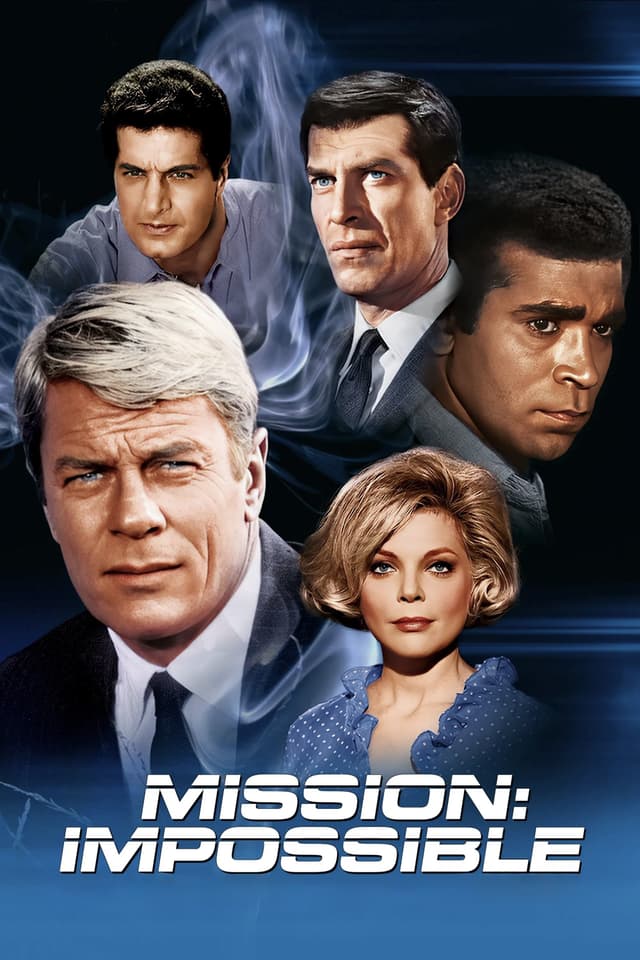
Mission: Impossible (1966) is the original CBS espionage television series created by Bruce Geller, following a covert team of specialists, the Impossible Missions Force, as they execute elaborate confidence-style operations against foreign dictators, mob bosses, and rogue intelligence agents. The show ran for seven seasons and 171 episodes between September 1966 and March 1973 and won the Primetime Emmy Award for Outstanding Dramatic Series in 1967 and 1968. Lalo Schifrin's 5/4 main theme remains one of the most recognizable cues in television history.
What Is the Budget of Mission: Impossible (1966)?
Mission: Impossible (1966), the original CBS espionage television series created by Bruce Geller, ran for seven seasons and 171 episodes between September 1966 and March 1973. The show was produced by Desilu Productions (and, from 1968, by Paramount Television after Gulf+Western acquired Desilu), with first-season per-episode budgets reported at roughly $225,000 in 1966 dollars, an unusually high figure for a one-hour network drama of that era. Across the full run, that per-episode spend climbed steadily as production costs inflated and the show pushed for more ambitious location work, elaborate practical effects, and an extended ensemble cast.
On a series basis the total production outlay across all seven seasons is estimated at roughly $50,000,000 in period dollars, putting Mission: Impossible among the most expensive scripted hours on American television during the late 1960s and early 1970s. Lucille Ball, who as president of Desilu personally greenlit the pilot over the objections of her own board, was reported to have spent more than $750,000 just to mount the first two-hour pilot, a figure that established the show as a premium production from day one and helped justify CBS's long-term commitment to the format.
Key Budget Allocation Categories
The per-episode budget for Mission: Impossible was distributed across several core production areas that defined the show's distinctive look and pacing:
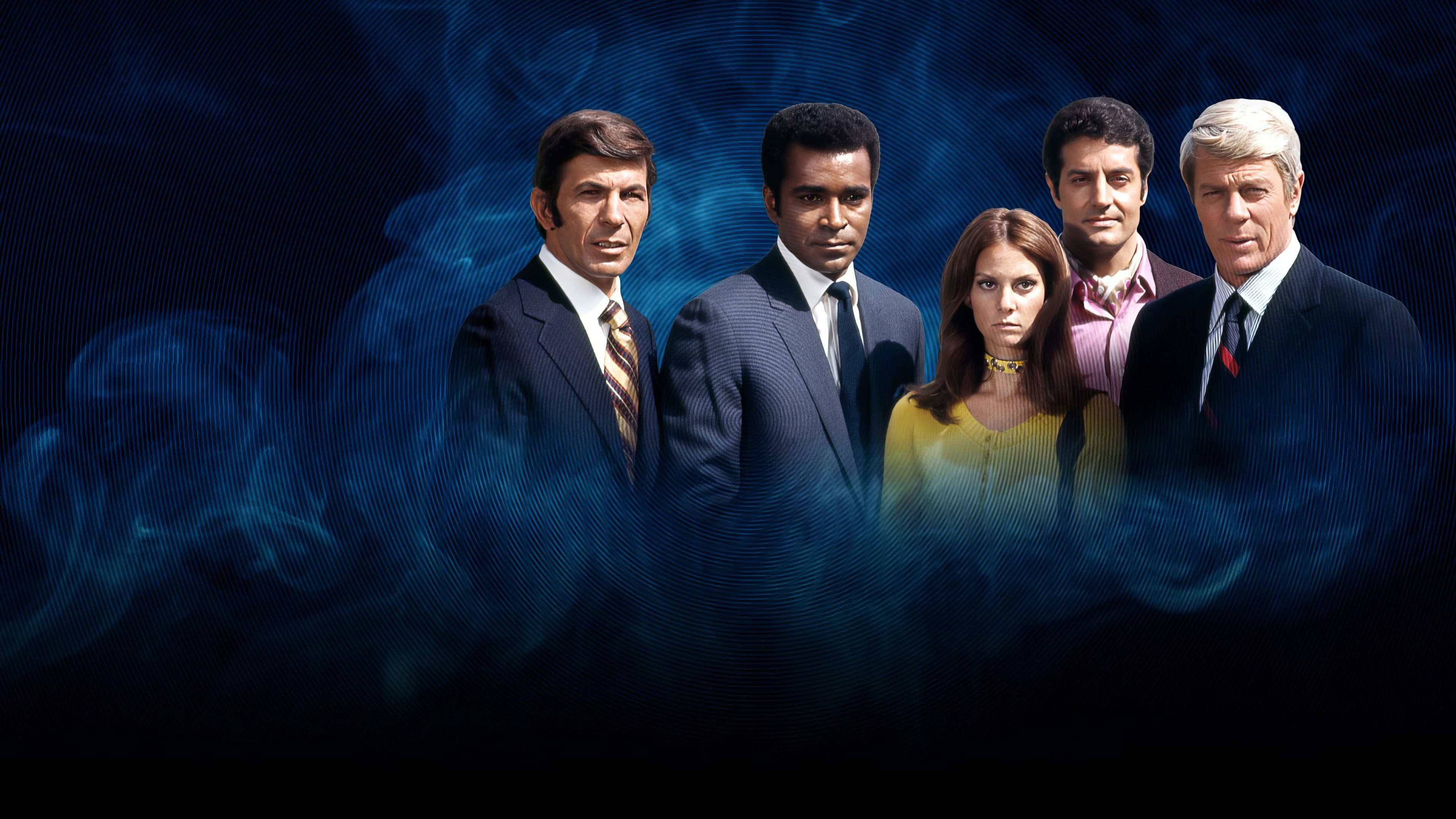
- Above-the-Line Talent: Creator and showrunner Bruce Geller commanded executive producer compensation, and the rotating ensemble lineup, including Steven Hill in season one, Peter Graves from season two onward, plus Martin Landau, Barbara Bain, Greg Morris, Peter Lupus, Leonard Nimoy, Lesley Ann Warren, and Lynda Day George across the run, drove a higher recurring cast cost than most contemporaneous hour-long dramas. Landau and Bain in particular reportedly left the show after season three over compensation disputes with Paramount Television.
- Lalo Schifrin Score and Music: Argentine-American composer Lalo Schifrin wrote the iconic 5/4 time-signature main theme along with a substantial library of cues that scored individual missions. Each episode featured original recorded music rather than canned library tracks, and Schifrin's scoring stems were tracked with a sizeable studio orchestra. The music budget, including residuals to the AFM, was significant by 1960s television standards.
- Practical Effects, Masks, and Gadgets: The show's recurring use of latex face-mask reveals, miniature explosive devices, tape-recorder briefings, and elaborate one-off rigs for safes, vaults, and surveillance equipment required a dedicated effects unit. Make-up artist John Chambers, who would later win an honorary Oscar for Planet of the Apes (1968), developed mask techniques for the series that anticipated his later film work.
- Wardrobe and Foreign-Country Set Dressing: Almost every episode was set in a fictional Eastern Bloc or Latin American country, requiring period and regional wardrobe, foreign-language signage, embassy and police uniforms, currency, and propaganda posters. Costume designer Bruce Walkup built a substantial in-house wardrobe inventory that was reused and modified across the run to control episode costs.
- Stage and Backlot Construction: The show shot almost entirely on the Desilu Culver lot (later the Culver Studios after the Paramount acquisition), with foreign embassies, hotel rooms, presidential palaces, and casino interiors all built as standing or semi-standing sets. Stock European street exteriors on the backlot were redressed weekly. The standing set inventory was a major upfront capital expense in season one that paid back across the seven-year run.
- Stock Footage and Optical Effects: To convey foreign capitals on a television budget, the production licensed substantial second-unit and stock footage of Geneva, Lisbon, Vienna, and various Latin American capitals, married to optical effects work for the tape-self-destructs and split-screen briefings that opened most episodes.
- Episodic Director and Guest-Cast Day Rates: The show rotated a deep bench of episodic directors including Bruce Geller himself, Paul Krasny, Reza Badiyi, and Barry Crane, with each director typically helming several episodes per season. Guest stars playing foreign premiers, generals, and underworld figures, often character actors with significant film resumes, commanded competitive day rates that added up across a 25 to 28 episode season.
How Does Mission: Impossible's Budget Compare to Similar Shows and Films?
At roughly $225,000 per episode in 1966 dollars, Mission: Impossible was at the high end of one-hour scripted television budgets of its era. The comparison set illustrates how its production scale stacked up against other 1960s espionage television and against the later film franchise it spawned:
- Star Trek (1966): Per-episode budget approximately $190,000 to $200,000 | Series total approximately $45,000,000 across three seasons. Gene Roddenberry's sister Desilu space opera, greenlit by Lucille Ball in the same 1966 development cycle, was cheaper per episode despite its visual-effects load because it leaned on standing starship sets while Mission: Impossible burned through fresh foreign-country builds every week.
- Batman (1966): Per-episode budget approximately $75,000 to $100,000 | ABC's campy Adam West vehicle ran two episodes per week at less than half the cost of a Mission: Impossible hour. The comparison underscores how Geller's show priced itself as a prestige hour rather than a Pop Art half-hour.
- The Man from U.N.C.L.E. (1964): Per-episode budget approximately $150,000 | NBC's rival spy series ran for four seasons and 105 episodes at a meaningfully lower episode cost. U.N.C.L.E. relied more heavily on backlot New York exteriors and lighter mask-and-gadget work, which kept its weekly spend below Mission: Impossible's.
- I Spy (1965): Per-episode budget approximately $200,000 | NBC's Bill Cosby and Robert Culp series was the first network drama to shoot internationally on a regular basis, with location work in Hong Kong, Tokyo, Athens, and Mexico City driving its cost. Mission: Impossible matched its budget while staying entirely stage-bound, a deliberate Geller choice that kept production controllable.
- Mission: Impossible (1996): Budget $80,000,000 | Worldwide $457,696,359. Brian De Palma's Tom Cruise feature film reboot cost roughly 355 times what an original episode cost in 1966 dollars and grossed nearly ten times the entire series production outlay in its theatrical run alone, establishing the IP value of Geller's creation.
- Mission: Impossible - Fallout (2018): Budget $178,000,000 | Worldwide $791,710,338. The sixth Cruise film cost roughly the equivalent of producing the entire original 1966 series three and a half times over in inflation-adjusted dollars, an order-of-magnitude shift in scripted-espionage economics.
Mission: Impossible Season Performance and Ratings
Mission: Impossible debuted on CBS on September 17, 1966 at 9:00 p.m. on Saturdays opposite NBC's The Saturday Night Movie. Season one drew modest ratings and finished outside the Nielsen top thirty, but CBS, at Lucille Ball's urging, renewed the show on the strength of its critical reception and an Emmy Award win for Outstanding Dramatic Series. The audience built steadily across seasons two and three, peaking when the show moved to Sunday nights at 10:00 p.m.
Because the show predates modern dollar-grossing metrics for television, its financial performance is best read through advertising rates, syndication value, and longevity rather than box office. The economic picture across the seven-year run breaks down as follows:
- Production Budget: approximately $225,000 per episode in season one, rising over seven seasons to a series total of approximately $50,000,000 in period dollars
- Estimated Prints & Advertising (P&A): not applicable for first-run network television; CBS amortized promotional spend across its full primetime schedule
- Total Estimated Investment: approximately $50,000,000 in period dollars across all seven seasons
- Worldwide Gross: no theatrical gross; first-run CBS license fees plus an estimated $35,000,000 in domestic syndication revenue between 1973 and 1985 and material additional foreign-territory sales
- Net Return: profitable for Paramount Television by the close of the network run; syndication and library value extended the return long after cancellation
- ROI: Paramount's ongoing exploitation of the Mission: Impossible trademark, including the 1988 to 1990 ABC revival series and the Tom Cruise feature film franchise launched in 1996, has generated multibillion-dollar enterprise value against the original $50,000,000 production outlay, making the show one of the highest-ROI television IP investments of the 1960s
On a pure television basis, Mission: Impossible returned well above $1 in long-term revenue for every $1 invested by Desilu and Paramount, with the IP value compounding decades after cancellation. The seven-year network run yielded enough episode inventory, 171 hours, to make the syndication package highly attractive to local stations through the 1970s and 1980s.
The show's true commercial legacy is the franchise it seeded. The 1988 ABC revival, the eight Tom Cruise feature films released between 1996 and 2025, the spinoff video games, and the home-video and streaming licensing have collectively generated enterprise value in the billions of dollars, dwarfing the original series' modest 1966 to 1973 production spend.
Mission: Impossible Production History
Creator Bruce Geller pitched Mission: Impossible to Desilu Productions in 1965 as a procedural espionage drama built around a cell of intelligence operatives who would receive a self-destructing taped briefing at the start of each episode, plan an elaborate confidence-style operation in the middle act, and execute it with split-second precision in the final act. Desilu president Lucille Ball personally championed the pilot, reportedly committing more than $750,000 of company capital to mount it over the objections of her own board, who considered the budget reckless for an unproven format.
Steven Hill was cast as the original Impossible Missions Force leader Dan Briggs for season one (1966 to 1967). Hill, an Orthodox Jew, observed the Sabbath and refused to work from sundown Friday to sundown Saturday, which created persistent scheduling conflicts on a six-day production week. After one season, the producers replaced him with Peter Graves, who joined the show in season two as Jim Phelps and remained the face of the franchise through to its 1973 cancellation. Martin Landau and Barbara Bain, who were married off-screen, played impressionist Rollin Hand and femme-fatale Cinnamon Carter from the pilot through season three. The couple departed in 1969 over a compensation dispute with the new Paramount ownership and were replaced by Leonard Nimoy (Paris) coming directly off Star Trek and Lesley Ann Warren (Dana Lambert).
Principal photography ran on the Desilu Culver lot in Culver City, California, which Paramount Television absorbed when Gulf+Western acquired Desilu in 1967 (the lot is the present-day Culver Studios). The show almost never shot on practical foreign locations; stock footage of Geneva, Vienna, Lisbon, Sofia, and other capitals was married to Culver Studios soundstage interiors and to a redressed European street on the backlot. Bruce Geller insisted on rigorous continuity between the taped briefing, the plan-formation beat, and the execution, which forced an unusually long pre-production cycle of three to four weeks per episode and a tight six-day shooting week.
Bruce Geller was killed in a private-plane crash in May 1978, five years after the original series ended. Lucille Ball, who greenlit the pilot, died in 1989, one year after the ABC revival series began airing using a writers-strike-driven format of remade scripts from the original run. Lalo Schifrin's 5/4 main theme, recorded in 1966, has been reused in some form on every subsequent Mission: Impossible production through to the Cruise film franchise, making it one of the most commercially enduring television cues ever written.
Awards and Recognition
Mission: Impossible won the Primetime Emmy Award for Outstanding Dramatic Series in 1967 (season one) and 1968 (season two), back-to-back honors that established the show as a critical favorite even before its ratings peaked. Barbara Bain won three consecutive Primetime Emmys for Outstanding Lead Actress in a Dramatic Series in 1967, 1968, and 1969, an unprecedented run at the time. Martin Landau was nominated three times in the lead-actor category between 1968 and 1970 but did not win.
Bruce Geller won the Primetime Emmy for Outstanding Achievement in Film and Sound Editing in 1968. Lalo Schifrin received Grammy Awards in 1968 for Best Instrumental Theme (the Mission: Impossible main title) and Best Original Score Written for a Motion Picture or Television Show. The Mission: Impossible main theme has been inducted into the Grammy Hall of Fame.
The Television Critics Association and Writers Guild of America both placed Mission: Impossible on multiple best-of-the-century lists in 1999 and 2002. The American Film Institute ranked the original Lalo Schifrin theme among its top television music cues, and TV Guide has consistently included the series on its all-time best dramatic series rankings, most recently at number 92 in its 2013 update.
Critical Reception
The original Mission: Impossible was a critical favorite throughout its seven-year run and remains highly regarded in retrospective assessments. Contemporary 1966 to 1973 reviews in The New York Times, Variety, and the Los Angeles Times praised the show's tight procedural construction, the rotating ensemble's ability to play multiple identities within a single hour, and Lalo Schifrin's muscular musical signature. Variety in its 1966 pilot review called it "the most sophisticated and adult espionage series yet to come out of episodic television," and The New York Times noted in 1968 that the show "treats its audience as adults capable of following an intricate plan rather than being walked through it."
Modern retrospective reception has been similarly positive. The series holds an aggregate critic score in the high 80s on review-aggregator surveys and a strong audience reputation, with viewers regularly singling out the season one to season three Landau and Bain era for its chemistry and the season four to season five Peter Graves and Leonard Nimoy era for its production polish. Common complaints about the later seasons, particularly season six and season seven, focus on a shift away from foreign Cold War missions toward domestic organized-crime plots, a Paramount cost-saving move that critics at the time and since have described as a creative dilution.
The Lalo Schifrin theme is universally cited as one of the greatest pieces of television music ever composed, and the tape-self-destruct briefing format has been quoted, homaged, and parodied in everything from Get Smart to The Simpsons to the eight Tom Cruise feature films. The show's structural template, the cold-open briefing, the planning montage, the precision execution, has become foundational to modern caper storytelling, with Steven Soderbergh's Ocean's Eleven trilogy and the Leverage television series both citing Bruce Geller's original as a direct inspiration.
Frequently Asked Questions
How much did each episode of Mission: Impossible (1966) cost to produce?
The reported per-episode production budget in season one (1966 to 1967) was approximately $225,000 in period dollars, an unusually high figure for a one-hour network drama of that era. Across seven seasons and 171 episodes, the total series production outlay is estimated at roughly $50,000,000 in period dollars.
Who created Mission: Impossible (1966)?
Bruce Geller created Mission: Impossible and served as the show's executive producer. He pitched the series to Desilu Productions in 1965, and Lucille Ball, then the president of Desilu, personally greenlit the pilot over the objections of her own board. Geller wrote the iconic taped-briefing cold open and the procedural three-act structure that became the show's template.
How long did the original Mission: Impossible series run?
The series ran for seven seasons and 171 episodes on CBS, premiering on September 17, 1966 and ending its first-run network broadcast on March 30, 1973. It is one of the longest-running scripted dramas of its era.
Why did Steven Hill leave Mission: Impossible after season one?
Steven Hill, who played original IMF leader Dan Briggs in season one, was an Orthodox Jew who observed the Sabbath and refused to work from sundown Friday to sundown Saturday. This created persistent scheduling conflicts on a six-day production week, and the producers replaced him with Peter Graves in the role of Jim Phelps from season two onward.
Who composed the Mission: Impossible theme song?
Argentine-American composer Lalo Schifrin wrote the iconic 5/4 time-signature main theme in 1966. The cue won the Grammy Award for Best Instrumental Theme in 1968 and has been reused in some form on every subsequent Mission: Impossible production, including the eight Tom Cruise feature films released between 1996 and 2025. The theme has been inducted into the Grammy Hall of Fame.
How many Emmys did Mission: Impossible win?
The series won the Primetime Emmy Award for Outstanding Dramatic Series in 1967 (season one) and 1968 (season two), back-to-back honors. Barbara Bain won three consecutive Primetime Emmys for Outstanding Lead Actress in a Dramatic Series in 1967, 1968, and 1969. Bruce Geller also won the Primetime Emmy for Outstanding Achievement in Film and Sound Editing in 1968.
Is Mission: Impossible (1966) the same as the Tom Cruise films?
No. The original 1966 to 1973 CBS series, created by Bruce Geller, is a separate property from the Mission: Impossible feature film franchise launched by Tom Cruise and director Brian De Palma in 1996. The films use the Bruce Geller premise, the IMF acronym, and Lalo Schifrin's theme music, but they reframe the story around a single agent, Ethan Hunt, rather than the rotating ensemble cell of the original show.
Where was Mission: Impossible (1966) filmed?
The series was shot almost entirely on the Desilu Culver lot in Culver City, California, which Paramount Television absorbed when Gulf+Western acquired Desilu in 1967. The lot is the present-day Culver Studios. The show almost never shot on practical foreign locations; stock footage of Geneva, Vienna, Lisbon, Sofia, and other capitals was married to soundstage interiors and to a redressed European street on the backlot.
How does Mission: Impossible (1966) compare to other 1960s spy television?
Mission: Impossible was at the high end of one-hour scripted television budgets of its era at roughly $225,000 per episode. Star Trek (1966) ran at approximately $190,000 to $200,000, The Man from U.N.C.L.E. (1964) at approximately $150,000, and Batman (1966) at approximately $75,000 to $100,000. I Spy (1965) matched Mission: Impossible at approximately $200,000 per episode but used the budget for international location shooting rather than stage-bound foreign-country builds.
Why did Martin Landau and Barbara Bain leave Mission: Impossible?
Martin Landau and Barbara Bain, who were married off-screen, played Rollin Hand and Cinnamon Carter from the pilot through season three (1966 to 1969). They departed at the end of season three in a compensation dispute with Paramount Television, which had taken over the series after Gulf+Western's 1967 acquisition of Desilu. They were replaced by Leonard Nimoy (Paris) coming directly off Star Trek and Lesley Ann Warren (Dana Lambert).
Filmmakers
Mission Impossible

Official Trailer
Build budgets like this one in Saturation
Start from an industry-standard feature film template, import the schedule and rates you already have, and let the cost report keep itself current as you spend. Real-time collaboration, no spreadsheets.