
Spider-Man Budget
Updated
Synopsis
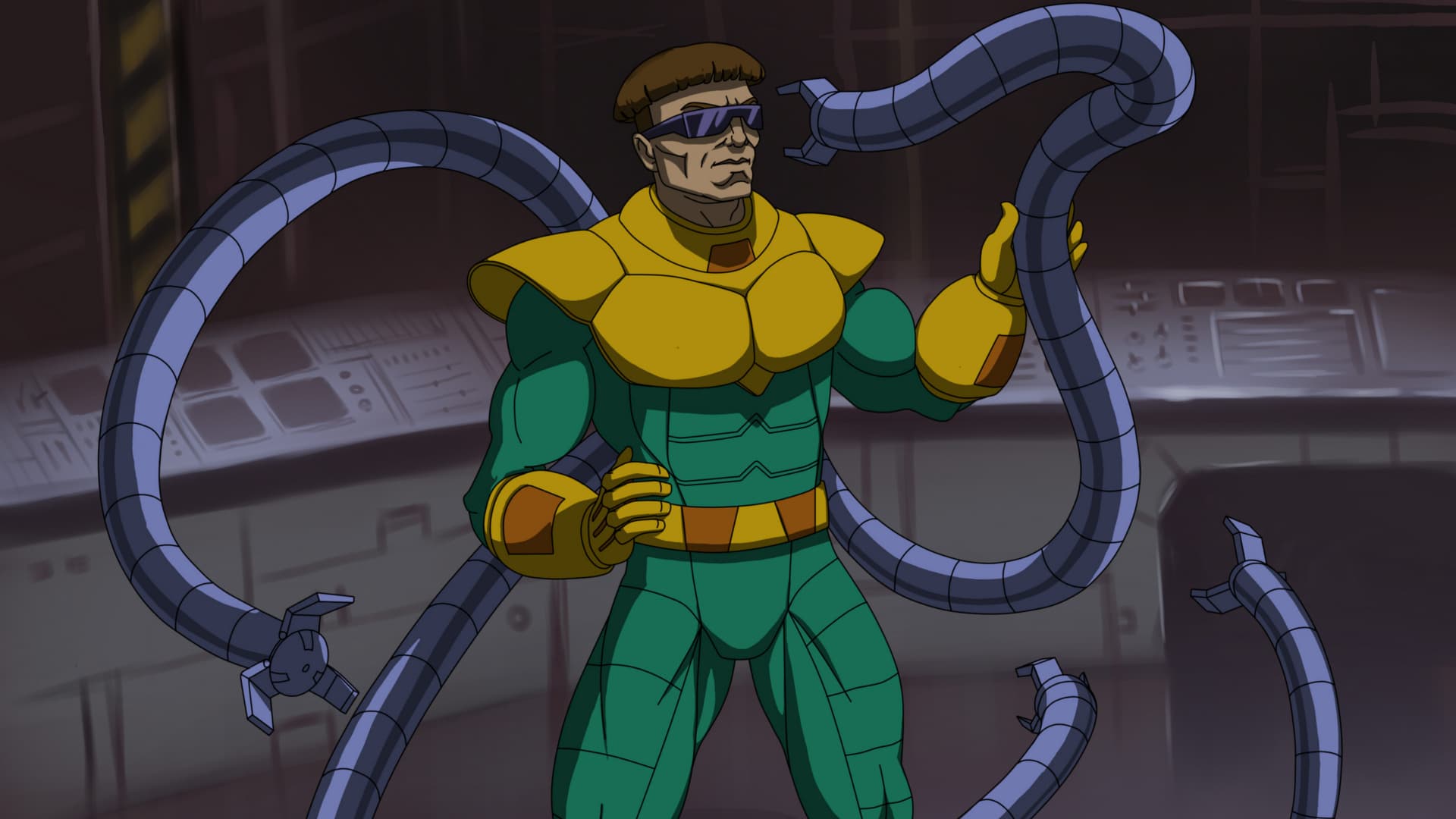
Bitten by a radioactive spider, teenage Peter Parker becomes Spider-Man, balancing high school, his job photographing the Daily Bugle for J. Jonah Jameson, and the responsibility of protecting New York City from villains including Doctor Octopus, the Green Goblin, Venom, Carnage, the Lizard, Mysterio, and Kingpin. Across five seasons of serialized storytelling, Peter contends with the alien symbiote, an interdimensional Spider Wars crossover, and the ongoing question of whether he can balance the woman he loves, Mary Jane Watson, against the costs of being a hero.
What Is the Budget of Spider-Man (1994)?
Spider-Man (1994), the animated television series that ran on Fox Kids from November 19, 1994 through January 31, 1998, did not have its per-episode or total series budget publicly disclosed. As a syndicated network animated production from Marvel Films Animation and New World Animation (later folded into Saban Entertainment), the show was financed under standard Saturday-morning television economics rather than the feature animation model that publishes budget figures. Industry estimates place per-episode costs in the range of roughly $400,000 to $600,000, consistent with overseas-outsourced primetime-quality 2D animation of the mid-1990s.
Across its 65-episode run spanning five seasons, the total production spend is estimated at roughly $30 million to $40 million, though Marvel, Saban, and Fox Children's Productions have never confirmed a figure. The series was developed by John Semper Jr., who served as showrunner and head writer, and used a writer's room rooted in Marvel comics continuity while contracting animation to South Korean studios including Tokyo Movie Shinsha and various Saban-affiliated houses. Christopher Daniel Barnes voiced Peter Parker / Spider-Man for the entirety of the run, and the series became the second-longest American Spider-Man animated series after Ultimate Spider-Man.
Key Budget Allocation Categories
Based on standard Saturday-morning animation economics of the period and information disclosed in interviews with producer John Semper Jr., production spending was distributed across these areas:
- Overseas Animation Production: The bulk of the per-episode cost went to overseas animation houses, primarily in South Korea, that handled key animation, in-between frames, and ink-and-paint on cels. Fox Kids primetime-quality series of this period typically allocated 60 to 70 percent of an episode budget to overseas production, a model pioneered by Warner Bros. Animation on Batman: The Animated Series and adopted across the Fox Kids lineup.
- Domestic Pre-Production and Storyboarding: Marvel Films Animation and New World Animation handled creative pre-production in Los Angeles, including scripting, character design, storyboarding, and timing direction. John Semper Jr. supervised the writers' room, and supervising producer Bob Richardson oversaw episode direction. This pipeline drove the show's distinctive style and its tight adherence to Marvel comics continuity.
- Voice Cast and Recording: The voice ensemble was substantial. Christopher Daniel Barnes as Peter Parker, Edward Asner as J. Jonah Jameson, Sara Ballantine as Mary Jane Watson, Linda Gary as Aunt May, and a deep bench of guest stars including Mark Hamill (Hobgoblin), Roscoe Lee Browne (Kingpin), David Warner (Herbert Landon), and many others. Voice recording sessions took place in Los Angeles under the direction of casting director Mary Jo Slater.
- Original Music and Theme: Composers Shuki Levy and Kussa Mahchi (a Haim Saban pseudonym) provided the score and the iconic opening theme song performed by Joe Perry of Aerosmith. The rock-influenced theme, with its driving guitar riff and shouted Spider-Man chorus, became one of the most recognized animated television themes of the 1990s. Music licensing and original composition fees were rolled into Saban Entertainment's in-house music division.
- Licensing and Marvel Rights: Marvel Entertainment licensed the Spider-Man character and the broader Marvel Universe to the production, with strict creative oversight on characterization, costume design, and continuity. Avi Arad, then president of Marvel Films, served as executive producer and held final approval on character introductions, ensuring the show could spotlight figures like the Punisher, Daredevil, the X-Men, Iron Man, and the Fantastic Four despite separate film and television rights agreements that constrained how those characters could be used.
- Network Delivery and Standards Compliance: Fox Kids imposed strict Broadcast Standards and Practices rules, including a no-punching mandate, no visible blood, no use of the word kill, and no death by gunshot. Edits and rewrites to comply with these rules added overhead. Saban Entertainment's standards team worked alongside the production to ensure every script and storyboard satisfied network requirements before overseas production began.
How Does Spider-Man's Budget Compare to Similar Animated Series?
Without a disclosed figure, the series sits within a clear comparison set of 1990s superhero and action animation produced for Fox Kids and competing Saturday-morning blocks. Per-episode and series-total figures below are based on industry estimates and trade press reporting:
- X-Men (1992): Estimated per-episode budget approximately $400,000 to $500,000 | 76 episodes across five seasons. The Fox Kids predecessor that proved Marvel superhero animation could anchor a Saturday-morning lineup. Spider-Man inherited the same overseas production pipeline, network economics, and continuity-heavy storytelling approach, though Spider-Man's writer's room under John Semper Jr. pushed even harder on serialized arcs.
- Batman: The Animated Series (1992): Estimated per-episode budget approximately $500,000 to $800,000 | 85 episodes across two seasons. The Warner Bros. Animation production that set the prestige bar for 1990s superhero animation. Batman's higher per-episode spend showed in its film-noir art direction and orchestral score, areas where Spider-Man operated on a tighter budget but matched the storytelling ambition.
- Iron Man (1994): Estimated per-episode budget approximately $300,000 to $400,000 | 26 episodes across two seasons. Marvel Films Animation's other half of The Marvel Action Hour block (paired with Fantastic Four). Iron Man's lower budget showed in flatter animation and a smaller voice cast, and the series ended after two seasons while Spider-Man continued through five.
- Fantastic Four (1994): Estimated per-episode budget approximately $300,000 to $400,000 | 26 episodes across two seasons. The companion show to Iron Man in The Marvel Action Hour. Like Iron Man, it was cancelled after two seasons as Marvel Films Animation consolidated resources around Spider-Man, which became the surviving flagship of the early Marvel television initiative.
- The Incredible Hulk (1996): Estimated per-episode budget approximately $400,000 to $500,000 | 21 episodes across two seasons. UPN-aired Marvel animated series produced concurrently with Spider-Man. It was retitled The Incredible Hulk and She-Hulk in season two to satisfy network demands. The shorter run reflects UPN's smaller reach compared to the Fox Kids platform that sustained Spider-Man.
- Spectacular Spider-Man (2008): Estimated per-episode budget approximately $700,000 to $900,000 | 26 episodes across two seasons. The Sony-produced successor series that aired on Kids' WB and Disney XD. Despite a higher per-episode budget, Spectacular Spider-Man was cancelled when the Marvel-Sony rights split forced its end, while the 1994 series remains the longest-running Spider-Man animated show until the Disney XD Marvel's Spider-Man (2017).
Spider-Man Season Performance and Syndication
As a network-financed Saturday-morning animated series, Spider-Man (1994) was not measured by box office grosses. Performance was tracked through Nielsen Saturday-morning ratings, advertising revenue on Fox Kids, and downstream syndication and home video sales. The series aired its 65 episodes across five seasons from November 19, 1994 to January 31, 1998, anchoring the Fox Kids lineup throughout that window.
The full financial and performance breakdown reflects the network animation release model:
- Production Budget (Total Series): not publicly disclosed (industry estimates: approximately $30,000,000 to $40,000,000 across 65 episodes)
- Estimated Per-Episode Cost: approximately $400,000 to $600,000
- Episodes Produced: 65 across 5 seasons (1994 to 1998)
- Network Ratings (peak): top-rated Fox Kids series, frequently the number one Saturday-morning animated show in its target demographic during seasons one through three
- Syndication and Home Video: sold to international markets through Saban, later reissued on DVD by Buena Vista Home Entertainment and now streaming on Disney+
- ROI: not calculable from public data; measured by Marvel Entertainment through advertising revenue, character licensing uplift, and library value
Without disclosed advertising revenue or syndication fees, the series' return on investment cannot be calculated using conventional theatrical or streaming math. Industry coverage at the time placed Spider-Man among the highest-rated Saturday-morning animated series of its era, regularly competing with the X-Men animated series for the top demographic slot. The show's commercial value to Marvel Entertainment was substantial: it kept the Spider-Man brand active on television throughout a period when no live-action Spider-Man film existed, and it supported a robust merchandising line including Toy Biz action figures, lunch boxes, and tie-in video games.
The series' library value continues to compound. After Disney acquired Marvel in 2009 and the rights consolidated, Spider-Man (1994) was added to Disney+ in 2019 and remains one of the platform's longest-form animated Spider-Man catalog titles. Home video releases on VHS, DVD, and digital storefronts have provided a long tail of revenue across the three decades since its original broadcast.
Spider-Man Production History
Development began in 1992 at Marvel Films Animation, the in-house animation division established by Avi Arad to bring Marvel characters back to Saturday-morning television following the success of X-Men (1992). Marvel partnered with New World Entertainment (which owned a stake in Marvel at the time) and Genesis Entertainment to launch the Marvel Action Hour block in 1994, pairing Iron Man and Fantastic Four. With those shows underway, Marvel turned to its flagship character.
John Semper Jr., a veteran animation writer with credits on Where in the World Is Carmen Sandiego and DuckTales, was brought on as supervising producer, story editor, and head writer. Semper has spoken extensively in interviews about Marvel's insistence on continuity-heavy storytelling and his decision to structure the series around long-form arcs, including the Alien Costume Saga (drawn from the Secret Wars and the symbiote storyline) and a multi-episode arc culminating in Madame Web's interdimensional Spider Wars finale. Bob Richardson served as supervising producer overseeing direction.
Animation production was outsourced to South Korean studios under standard Saturday-morning network economics. The pre-production pipeline operated out of Marvel Films Animation and Saban Entertainment's offices in Los Angeles, where storyboarding, character design, voice direction, and timing direction were handled. Voice recording took place in Los Angeles under casting director Mary Jo Slater. Christopher Daniel Barnes, who had previously voiced Prince Eric in Disney's The Little Mermaid, was cast as Peter Parker / Spider-Man after auditioning against multiple actors. The supporting cast assembled across the run included Edward Asner (J. Jonah Jameson), Roscoe Lee Browne (Kingpin), Mark Hamill (Hobgoblin), David Warner (Herbert Landon), Linda Gary (Aunt May), Sara Ballantine (Mary Jane Watson), and Joseph Campanella (Doctor Curt Connors / Lizard).
The production navigated complex rights constraints throughout its run. Because separate live-action and animation rights had been granted to other studios in the 1980s and early 1990s, the writers' room could not portray Spider-Man punching villains, could not use the word kill, and could not depict on-screen death. The team developed workarounds: villains were dispatched to alternate dimensions, characters frequently said destroy or eliminate in place of kill, and combat focused on web-slinging gadgetry rather than direct punches. Producer John Semper Jr. has described these network and rights constraints as the most challenging aspect of the production.
The series' Marvel Knights-era continuity sensibility, with its serialized arcs and rotating supporting cast of Marvel heroes (Daredevil, Iron Man, the Punisher, the X-Men, the Fantastic Four, Captain America, Doctor Strange, and Blade), distinguished it from contemporary action animation. The final season culminated in Spider Wars, a Madame Web-narrated multi-Spider-Man crossover that anticipated the live-action multiverse storytelling that would later define theatrical Spider-Man films. The series was cancelled abruptly in early 1998 when the merger of Saban Entertainment's parent companies and corporate restructuring at News Corp ended Marvel's deal with the network, leaving a planned sixth season featuring the Six Forgotten Warriors arc continuation and Mary Jane Watson's return unmade.
Awards and Recognition
Spider-Man (1994) received limited formal awards recognition, reflecting the relative scarcity of Saturday-morning animation categories at major guild and industry awards during the 1990s. The series was nominated for a Daytime Emmy Award for Outstanding Performer in an Animated Program, and its voice cast received recognition within the animation industry for the high caliber of the ensemble, particularly the late-career performances of Edward Asner and Roscoe Lee Browne.
Industry retrospectives have been more generous than its contemporary awards profile suggests. The series is frequently cited alongside Batman: The Animated Series and the X-Men animated series as one of the defining superhero animated shows of the 1990s. IGN, Comic Book Resources, and ScreenRant have ranked it among the best Spider-Man adaptations in any medium. The voice performance of Christopher Daniel Barnes is widely regarded by fans and critics as one of the definitive Peter Parker interpretations, with Barnes returning to the character in later video games and Spider-Man: Shattered Dimensions (2010). John Semper Jr. has been recognized at fan conventions and through interview-driven oral histories as one of the formative figures in modern superhero adaptation.
Critical Reception
Spider-Man (1994) received generally strong reviews from animation critics during its original run and stronger retrospective evaluation in the decades since. Without aggregator scores from Rotten Tomatoes or Metacritic at the time of its original broadcast (the platforms had not yet established television coverage), critical reception was tracked primarily through trade press, fan publications, and demographic-targeted reviews in publications like Wizard magazine, Animato, and the Los Angeles Times Saturday morning television columns.
Supporters highlighted the show's commitment to comics continuity, its rotating supporting cast of Marvel guest stars, the rock-driven theme song by Joe Perry, and Christopher Daniel Barnes' nuanced voice performance as both Peter Parker and Spider-Man. The Alien Costume Saga, which adapted the symbiote storyline across multiple episodes and introduced Venom (voiced by Hank Azaria) and later Carnage, was singled out by Wizard magazine and other comics-focused outlets as one of the high points of 1990s superhero animation. The series Spider Wars finale, which crossed five alternate-universe Spider-Men years before Spider-Man: Into the Spider-Verse (2018), drew retrospective praise as ahead of its time.
Detractors noted the limited animation quality compared to Batman: The Animated Series, including stiff motion, recycled flight cycles, and inconsistent character model fidelity across episodes outsourced to different overseas studios. Fox Kids' Broadcast Standards and Practices restrictions (no punches, no visible deaths, no use of the word kill) struck some viewers as awkward, particularly in the show's handling of violent villains like the Punisher, Carnage, and Morbius. The final season's abrupt cancellation, leaving the Mary Jane Watson cliffhanger unresolved, drew sustained fan criticism that has persisted in retrospective coverage. Despite these limitations, the series' commercial success on Fox Kids, its long life on DVD and now Disney+, and its enduring influence on Spider-Man adaptations (including comparisons to the multiverse-focused Spider-Man: Into the Spider-Verse) have cemented its place as one of the most important Marvel animated productions of the 1990s.
Frequently Asked Questions
How much did it cost to make Spider-Man (1994)?
Marvel and Saban never publicly disclosed the production budget for the Spider-Man animated series. Industry estimates place per-episode costs in the range of roughly $400,000 to $600,000, with a total series spend of approximately $30 million to $40 million across the 65 episodes produced between 1994 and 1998. The figures are consistent with overseas-outsourced Saturday-morning animation of the period and have not been confirmed by Marvel Films Animation, New World Animation, or Saban Entertainment.
How many seasons of Spider-Man (1994) were made?
The series ran for five seasons and 65 episodes from November 19, 1994 to January 31, 1998, on the Fox Kids Saturday-morning block. A planned sixth season that would have continued the Six Forgotten Warriors arc and resolved the Mary Jane Watson cliffhanger was cancelled when corporate restructuring at News Corp and the dissolution of the Marvel-Saban arrangement ended the production.
Who voiced Spider-Man in the 1994 animated series?
Christopher Daniel Barnes voiced Peter Parker and Spider-Man for the entire run of the series. Barnes had previously voiced Prince Eric in Disney's The Little Mermaid and was cast after a competitive audition process supervised by casting director Mary Jo Slater. His performance is widely regarded as one of the definitive Peter Parker interpretations, and he reprised the role in the 2010 video game Spider-Man: Shattered Dimensions.
Who created the Spider-Man (1994) animated series?
John Semper Jr. served as showrunner, supervising producer, story editor, and head writer for the entire run. The series was developed at Marvel Films Animation under executive producer Avi Arad, with Bob Richardson as supervising producer overseeing episode direction. Saban Entertainment and New World Animation co-produced, with overseas animation handled primarily by South Korean studios including Tokyo Movie Shinsha.
Why was Spider-Man (1994) cancelled after season five?
The cancellation was triggered by corporate restructuring at News Corp, the parent company of Fox, and the late-1990s dissolution of the Marvel-Saban arrangement that had financed the series. A sixth season had been planned, and John Semper Jr. has discussed in interviews the storylines that would have unfolded, including a continuation of the Six Forgotten Warriors arc and the resolution of the Mary Jane Watson cliffhanger left by the season-five finale.
What is the theme song for the Spider-Man (1994) animated series?
The opening theme was composed by Shuki Levy and Kussa Mahchi (a Haim Saban pseudonym) and performed by Joe Perry of Aerosmith. The driving rock arrangement, with its shouted Spider-Man chorus, became one of the most recognized animated television themes of the 1990s and remains a cultural touchstone for the show's audience three decades later.
Where can you watch Spider-Man (1994) today?
The complete 65-episode series is available on Disney+ following Disney's acquisition of Marvel Entertainment in 2009 and the consolidation of streaming rights to the Marvel animated library. The series was previously released on VHS and DVD by Buena Vista Home Entertainment, and selected episodes have appeared on various Marvel-licensed digital storefronts over the years.
Why couldn't Spider-Man punch villains in the 1994 series?
Fox Kids Broadcast Standards and Practices imposed strict content rules on Saturday-morning animation, including a no-punching mandate, no use of the word kill, no visible deaths, and no firearms-related deaths. The writers' room under John Semper Jr. developed workarounds: combat focused on web-slinging gadgetry, villains were dispatched to alternate dimensions, and dialogue substituted words like destroy or eliminate for more violent language.
Which Marvel characters appeared as guest stars in Spider-Man (1994)?
The series featured a rotating roster of Marvel guest stars including Daredevil, Iron Man, the Punisher, the X-Men (Beast, Storm, Wolverine, Cyclops), the Fantastic Four (in arc cameos), Captain America, Doctor Strange, Blade, and the Black Cat. The Spider Wars finale crossed five alternate-universe Spider-Men, anticipating the multiverse storytelling later popularized by Spider-Man: Into the Spider-Verse.
How does Spider-Man (1994) compare to other 90s Marvel animated series?
It is the longest-running of the 1990s Marvel animated lineup, with 65 episodes across five seasons, compared to X-Men (1992) at 76 episodes across five seasons, and Iron Man (1994), Fantastic Four (1994), and The Incredible Hulk (1996), each of which ended after two seasons. Spider-Man and the X-Men animated series are widely cited as the strongest of the era, with Spider-Man leaning further into long-form serialized storytelling and the multiverse mechanics that would define modern Spider-Man adaptations.
Filmmakers
Spider-Man

Official Trailer
Build budgets like this one in Saturation
Start from an industry-standard feature film template, import the schedule and rates you already have, and let the cost report keep itself current as you spend. Real-time collaboration, no spreadsheets.